NEMT Software5 min read
NEMT Digital Driver Forms: Shift Checklists & Review
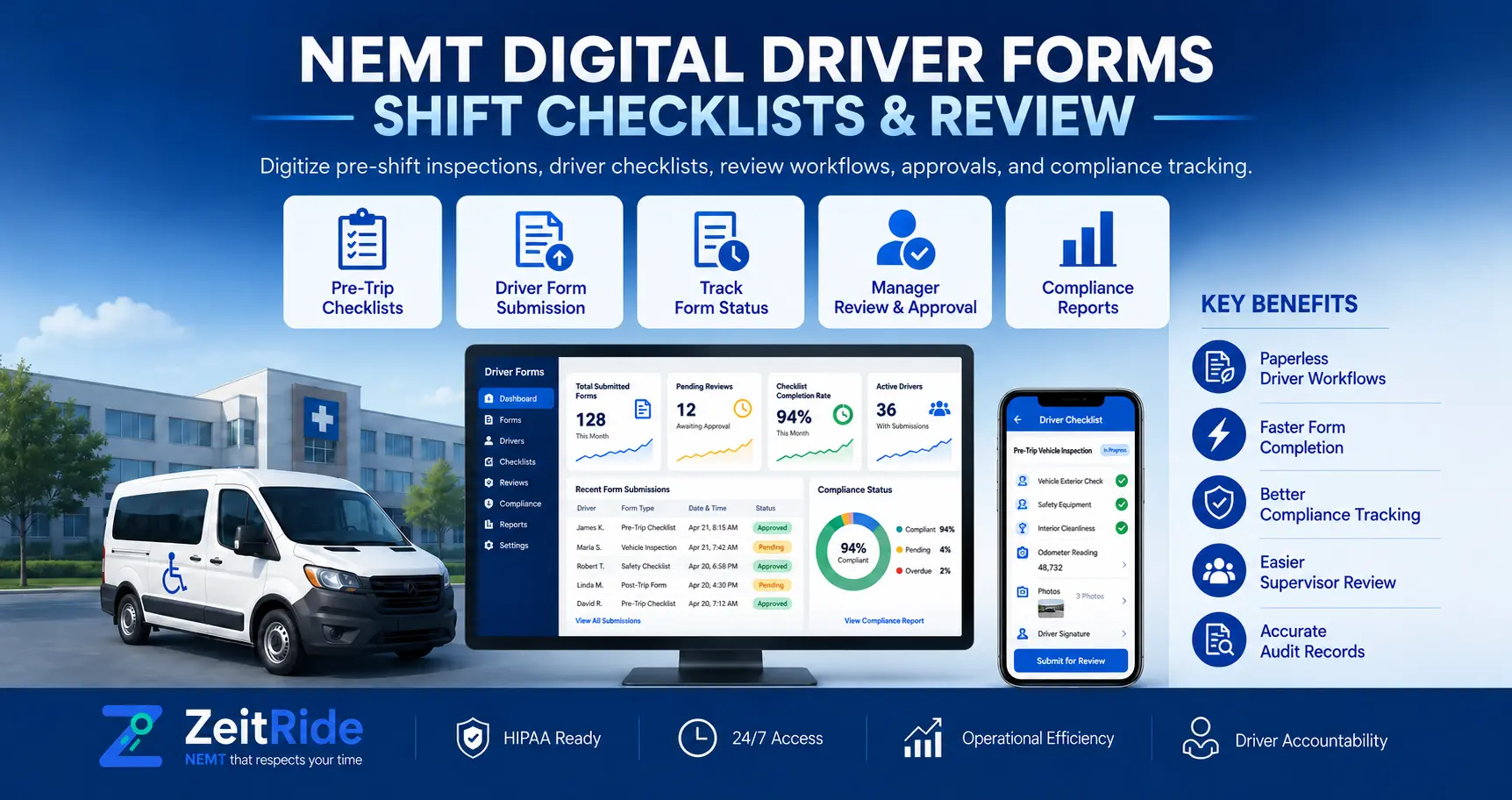
See how NEMT fleets replace paper shift reports with driver mobile forms, saved drafts, and supervisor review using ZeitRide.
October 21, 2026Read
Honest takes on scheduling, dispatch, routing, billing, brokers, and the tools that make them easier. Written by operators, for operators.
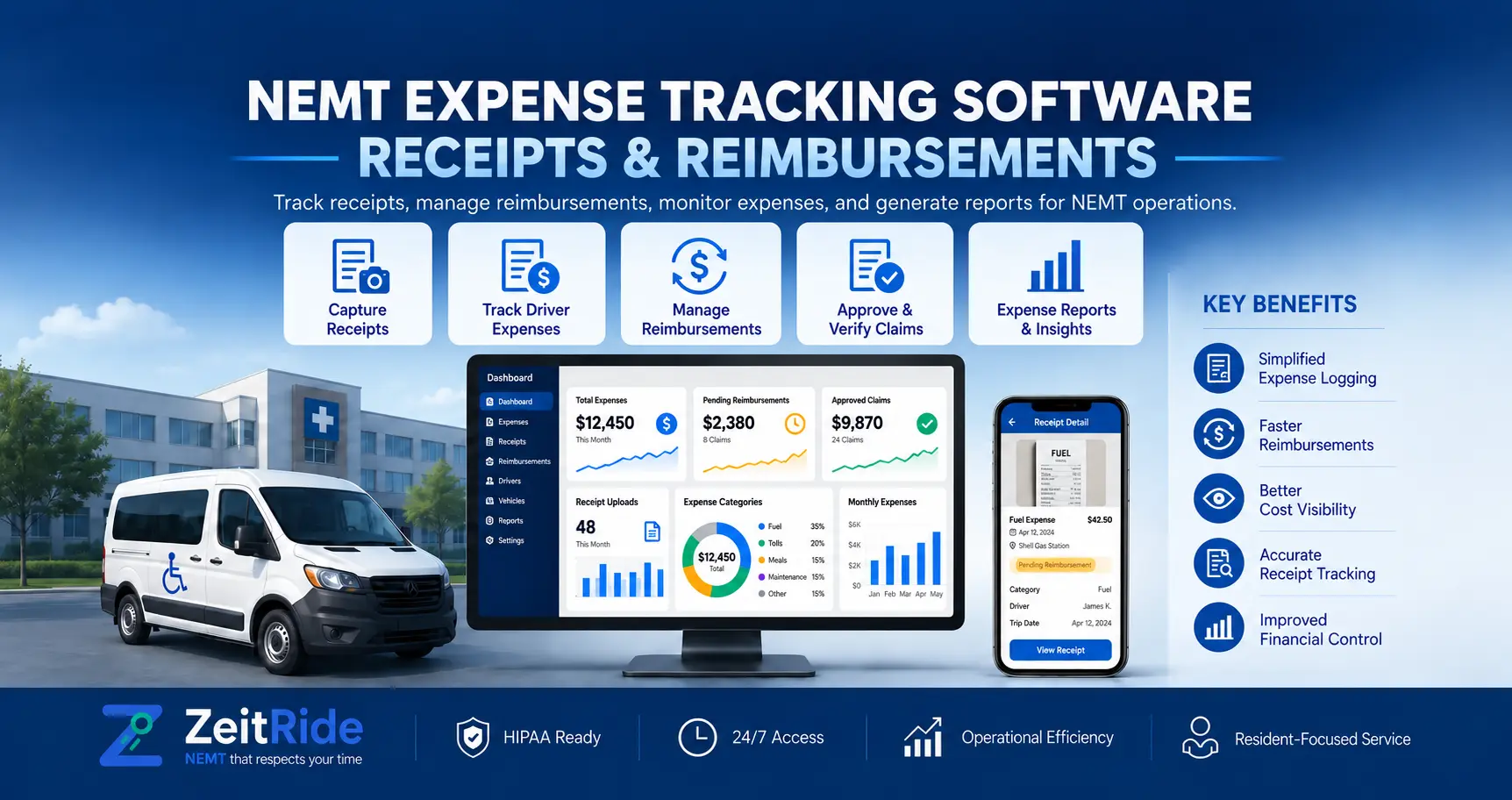
Learn how NEMT drivers submit fuel receipts, managers approve expenses, and fleets track reimbursements using ZeitRide.
Read the pieceSee how NEMT fleets replace paper shift reports with driver mobile forms, saved drafts, and supervisor review using ZeitRide.
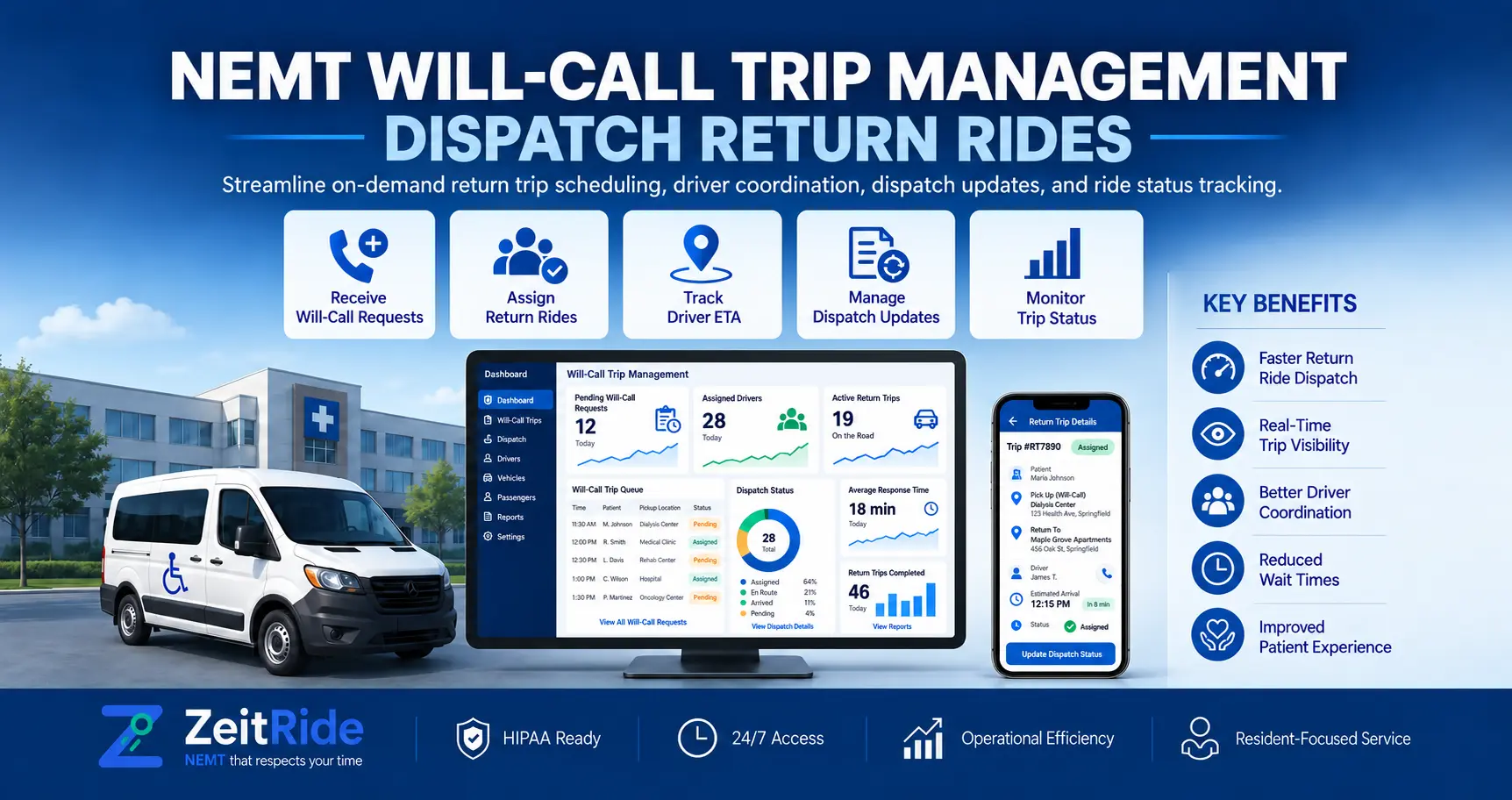
Learn how NEMT providers keep will-call returns visible, handle readiness calls, and assign suitable drivers using the ZeitRide Will Call Queue.
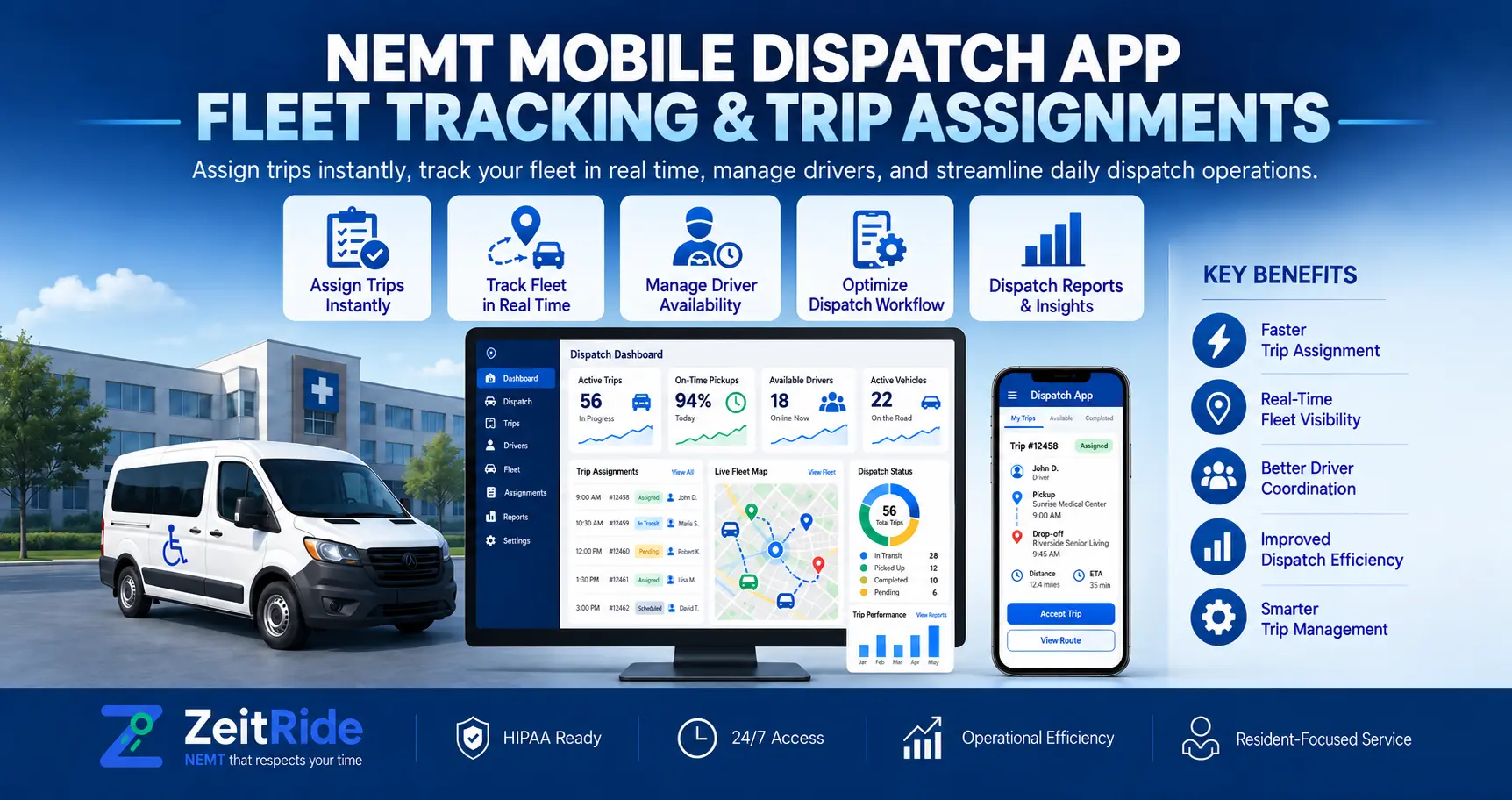
Learn how NEMT dispatchers check fleet locations, review unassigned trips, and reassign suitable drivers from a phone with ZeitRide Admin.
Learn how NEMT fleets capture GPS clock-ins, manage breaks and missed punches, and review driver hours before payroll with ZeitRide.
Plan safer pediatric NEMT trips with practical guidance on car seats, escorts, guardian consent, scheduling, and documented handoffs.
A practical guide to oxygen-safe NEMT trips: verify passenger needs, secure portable equipment, define driver duties, and manage dispatch exceptions.
A practical guide for NEMT providers to verify bariatric vehicle capacity, plan qualified crews, and dispatch specialized trips with confidence.
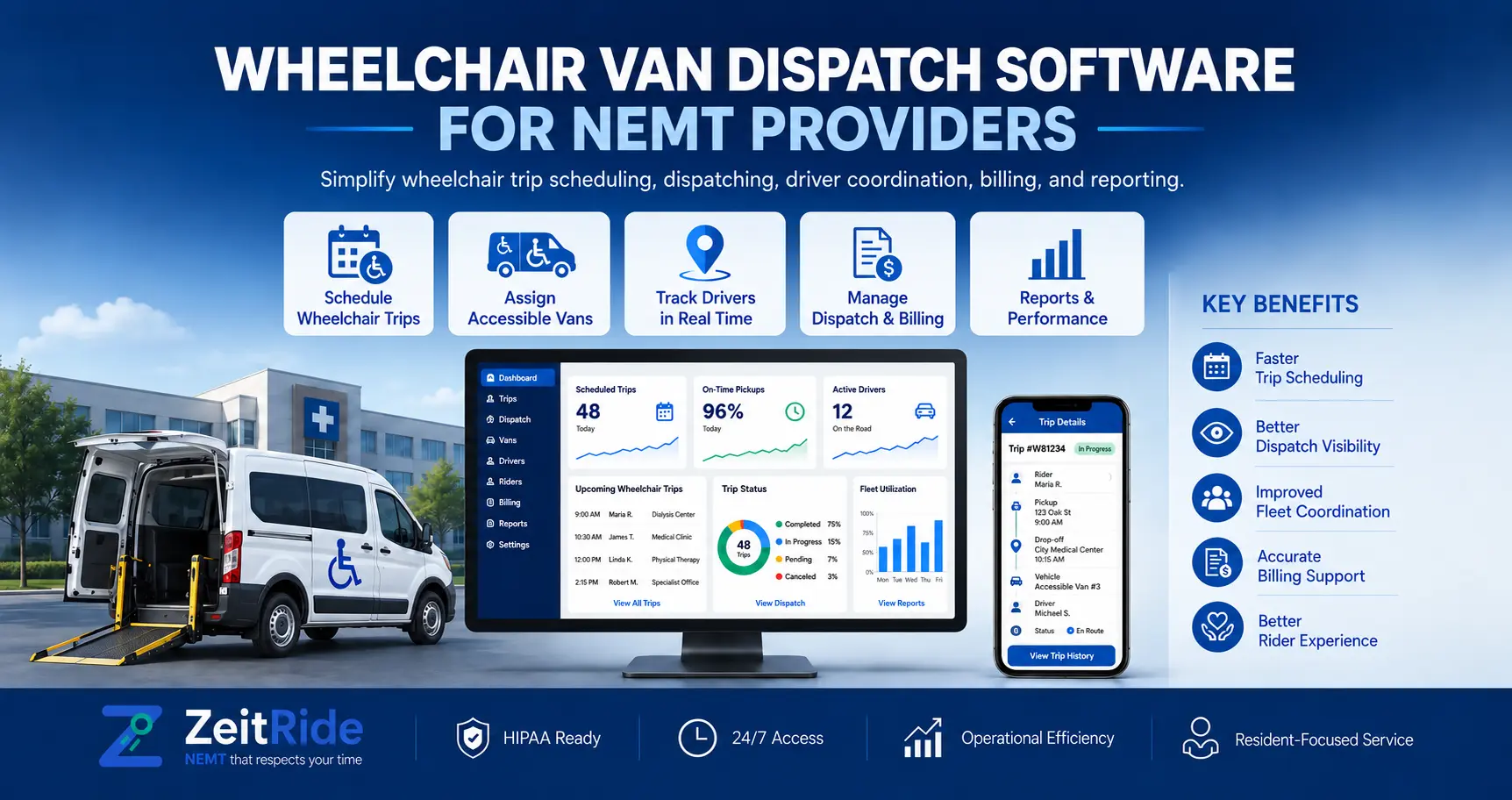
Wheelchair trips need more than a pickup time. Learn how NEMT fleets handle accessible vehicles, rider matching, capacity, live dispatch and billing.
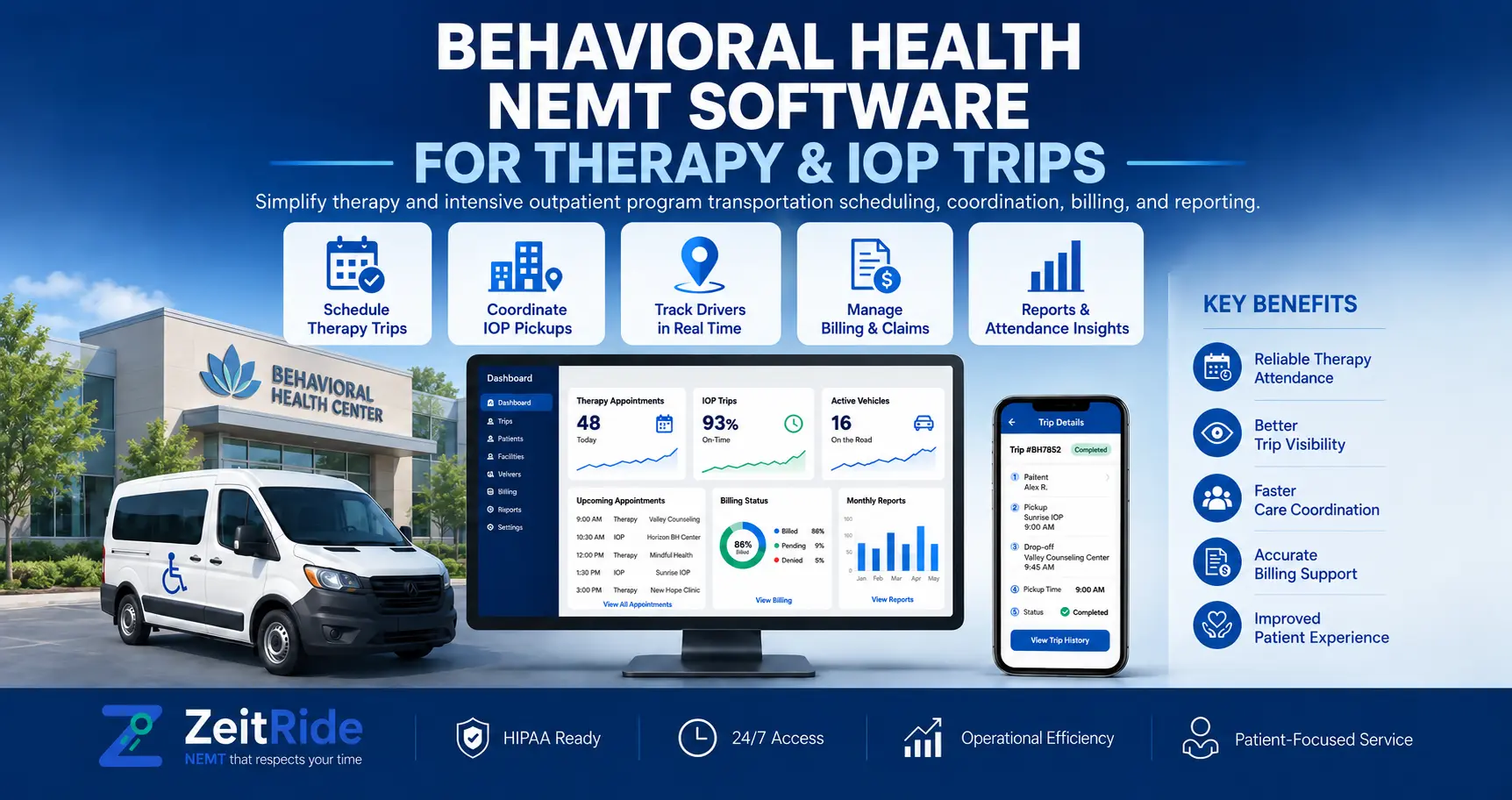
Learn how NEMT providers schedule therapy and IOP rides, handle dispatch changes, protect rider privacy, and document completed treatment trips.
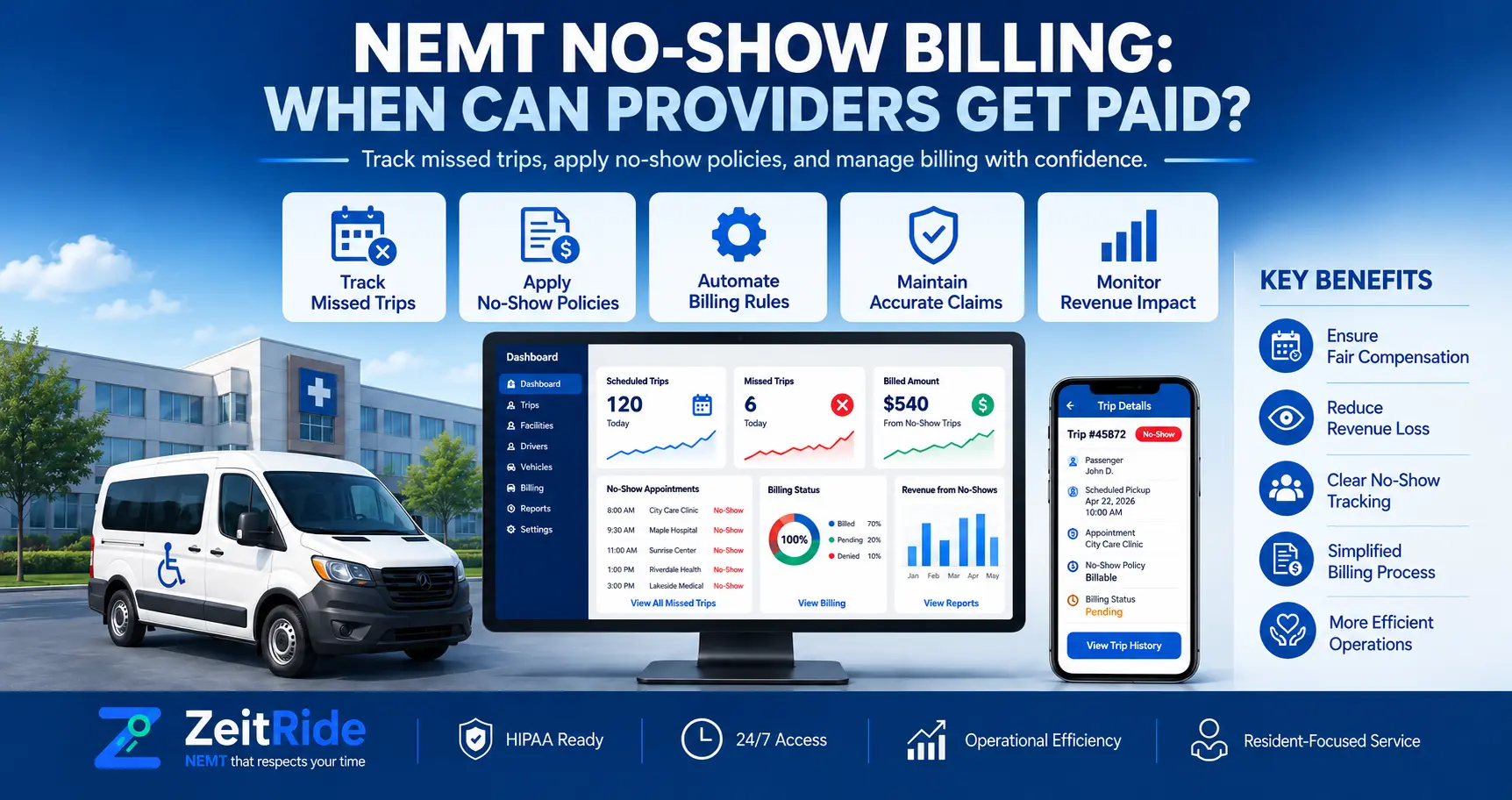
A driver arrives, but the rider does not. Learn when NEMT no-shows or dry runs may be paid, which Medicaid rules apply, and what proof to keep.
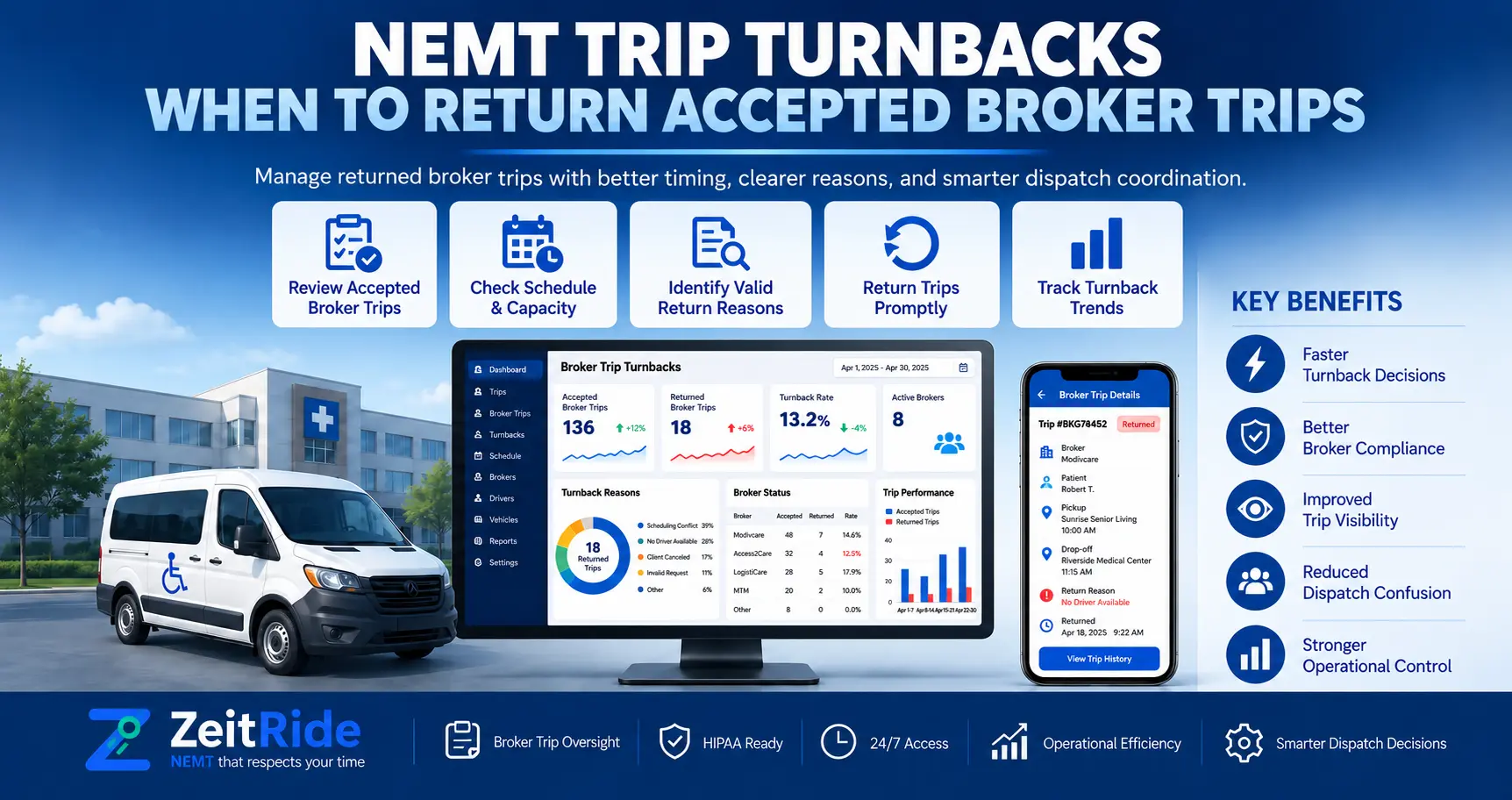
Learn when to return accepted NEMT broker trips, what notice and penalty rules to check, and how to document a safe, accountable handoff.
Learn how NEMT mileage billing works, including loaded miles, HCPCS codes, Medicaid rules, documentation, and common mileage billing errors.
Learn how NEMT wait time billing works, including T2007, Medicaid rules, documentation requirements, reimbursement, and common billing mistakes.
H.R. 10618 proposes federal electronic verification for Medicaid NEMT in 2027. Learn what it says, what is not law yet, and how providers can prepare.
A practical NEMT broker transition checklist for protecting standing orders, credentials, trip assignments, billing, and revenue during a broker switch.
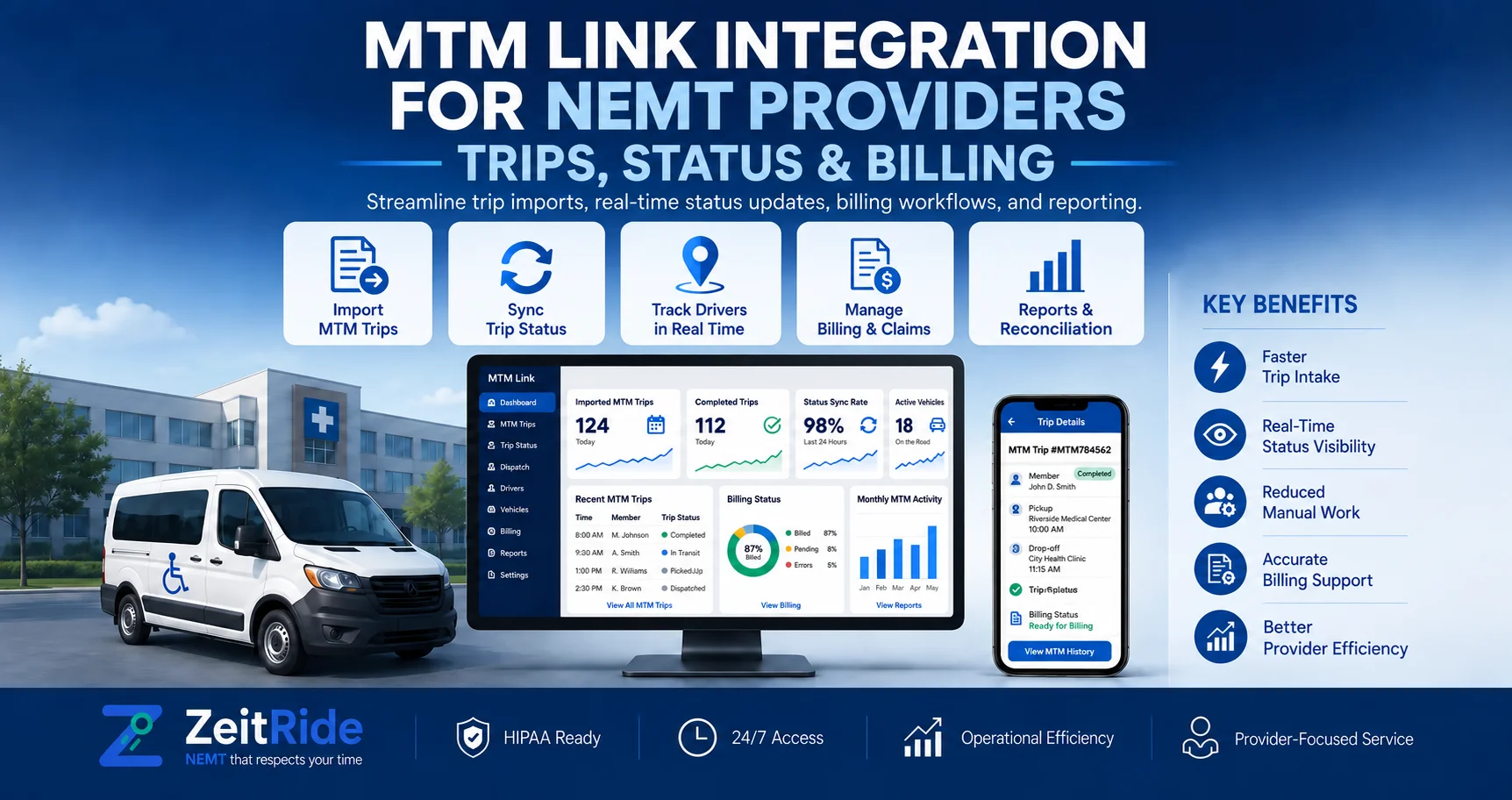
See how MTM Link integration connects trip imports, status updates, GPS evidence, and billing workflows for NEMT transportation providers.
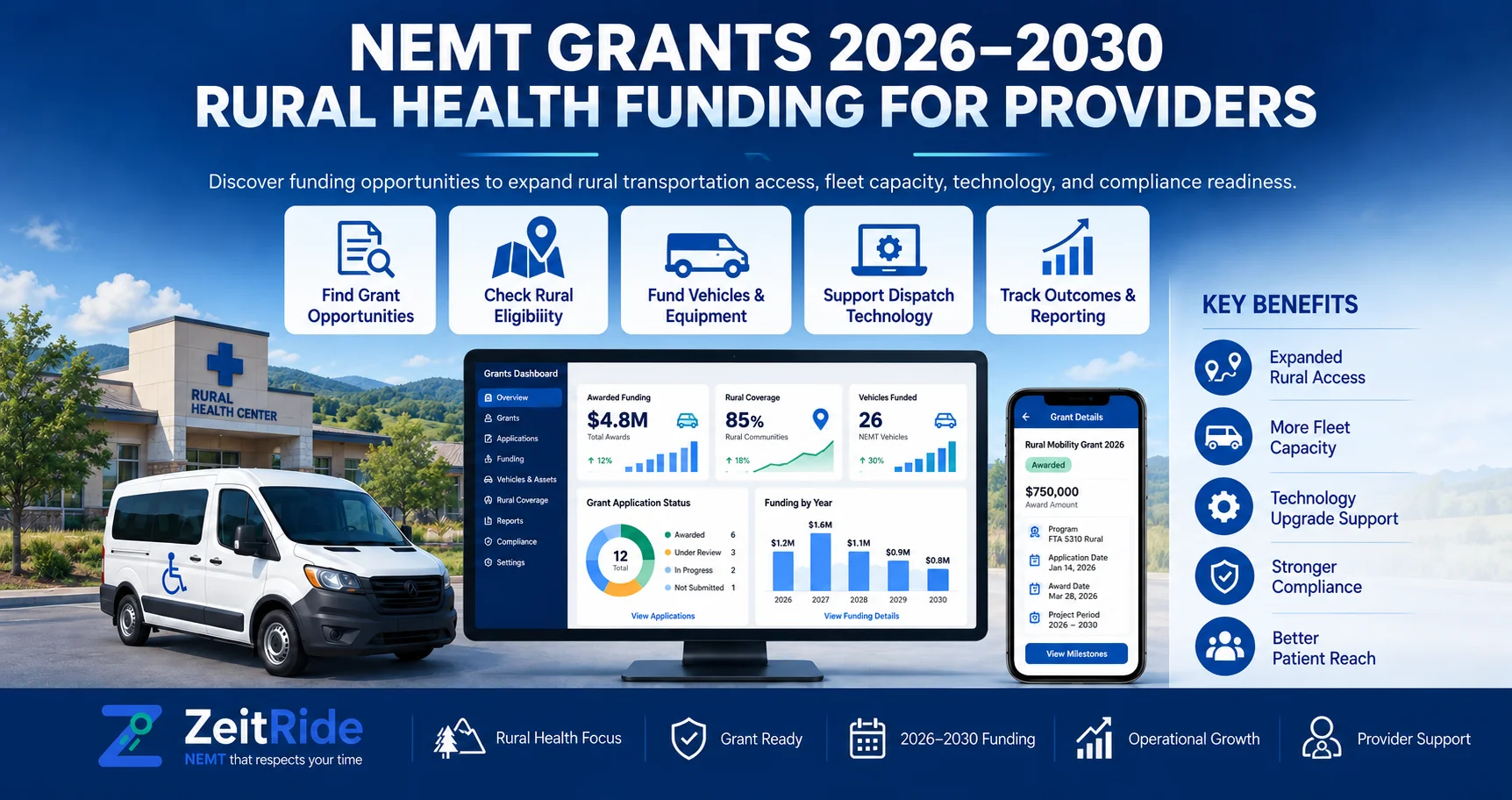
Explore NEMT grants, Rural Health Transformation funding, provider eligibility, current state programs, and practical steps to prepare.
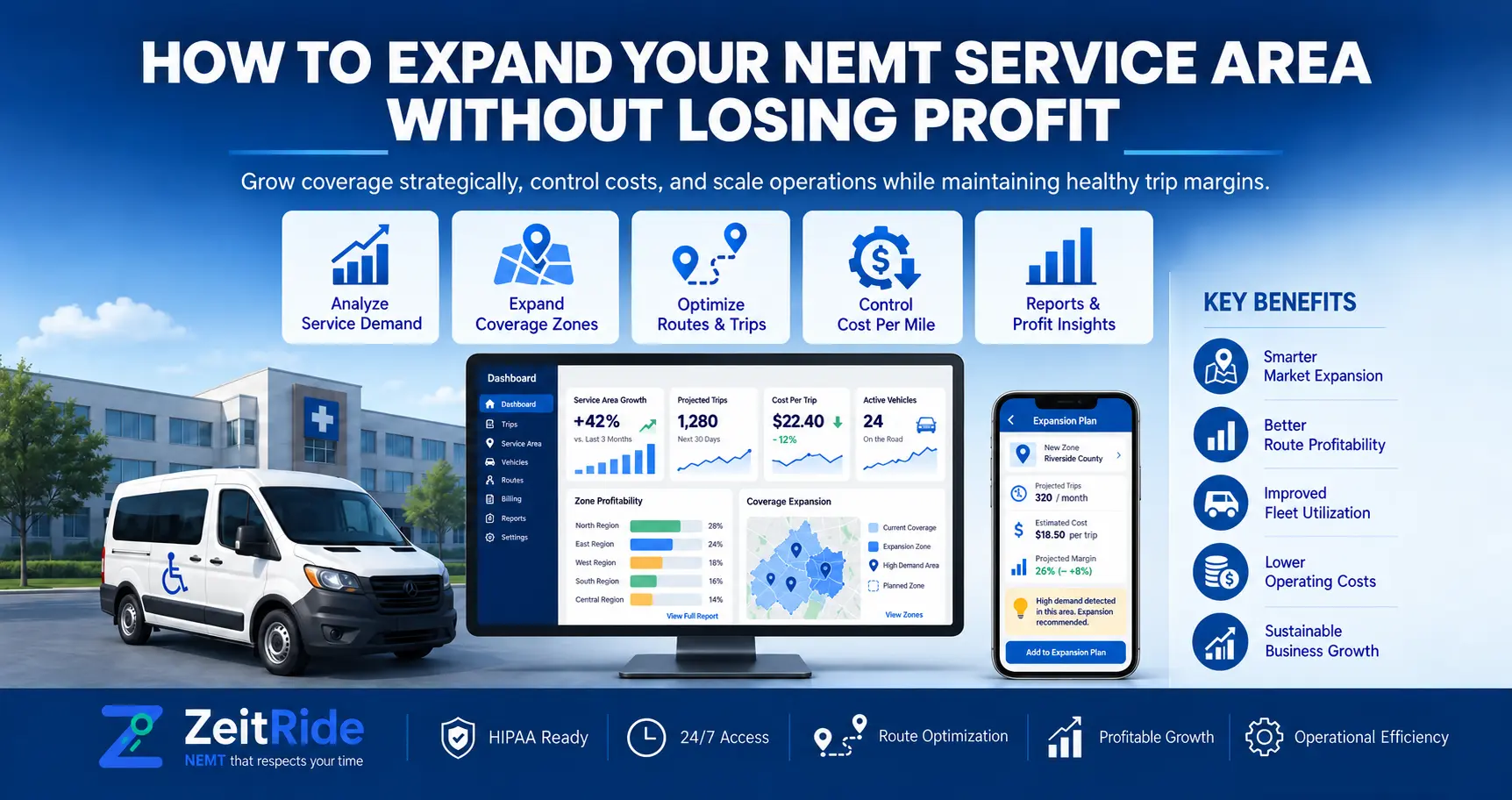
Learn how to expand your NEMT service area by evaluating demand, deadhead, fleet capacity, broker access, and profitability before you grow.
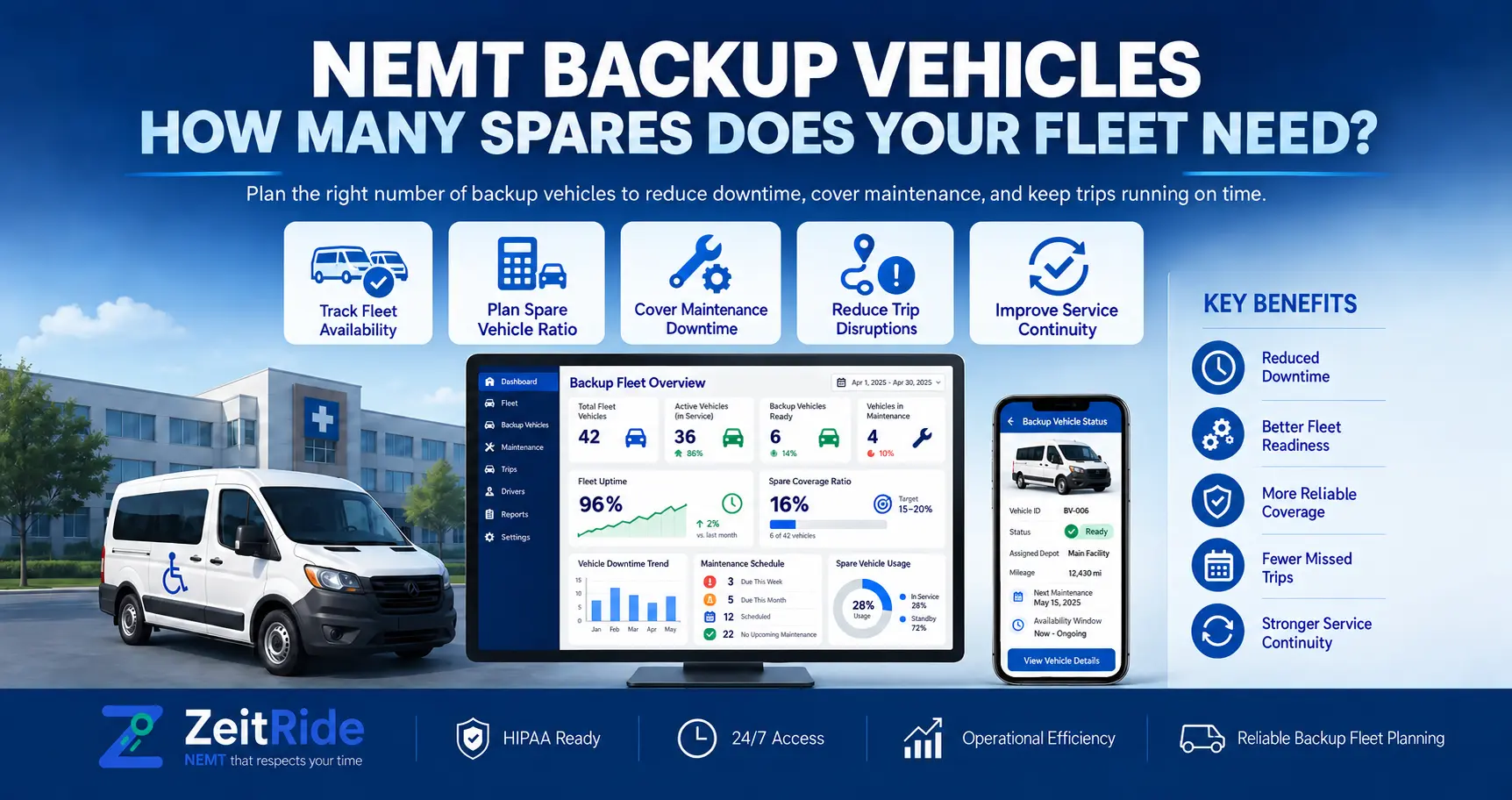
Learn how to size NEMT backup vehicles using peak demand, downtime, vehicle type, maintenance history, and contract requirements.
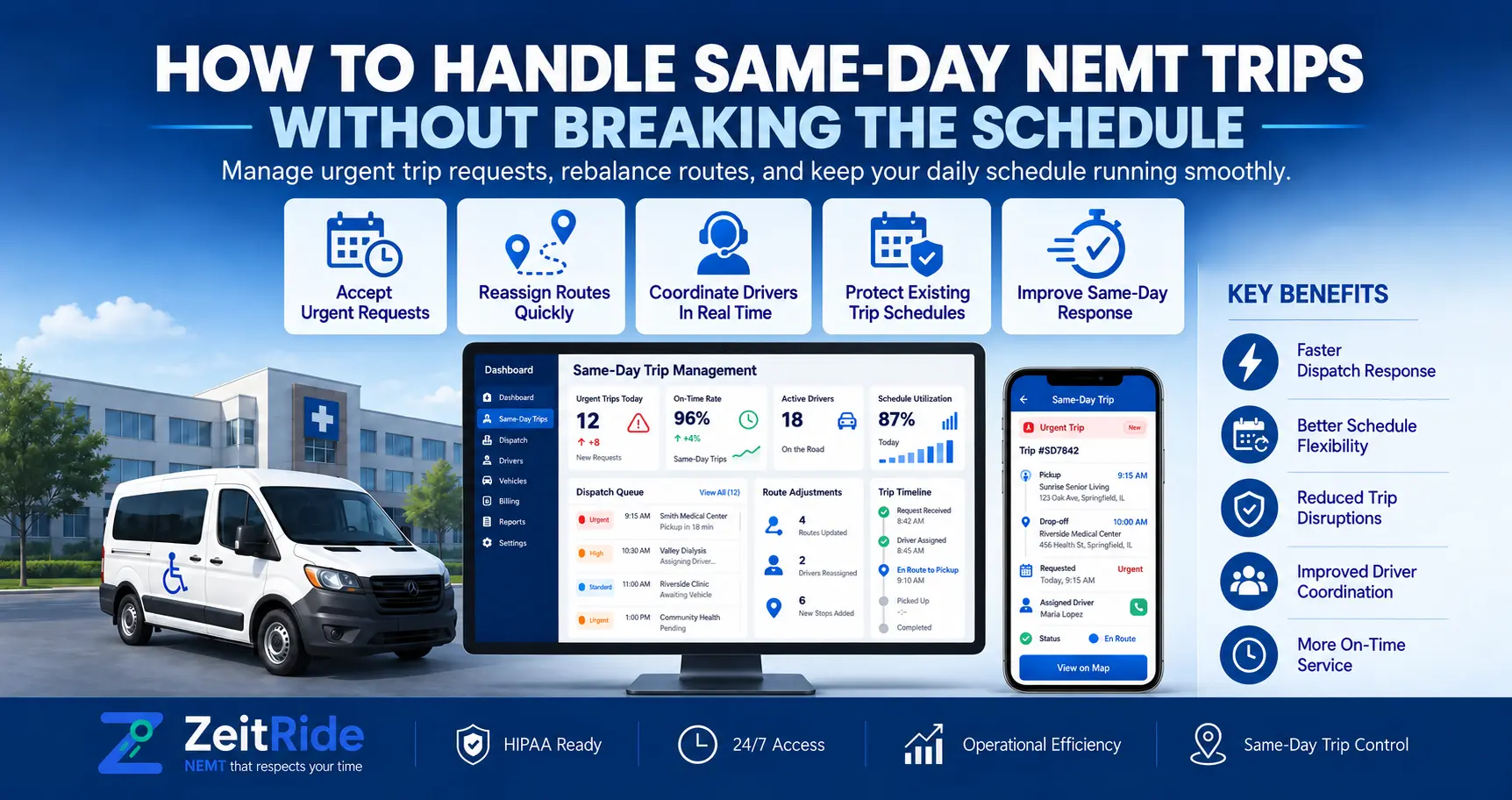
Learn how to handle same-day NEMT trips without disrupting scheduled rides by checking vehicle fit, driver availability, route impact, and timing.
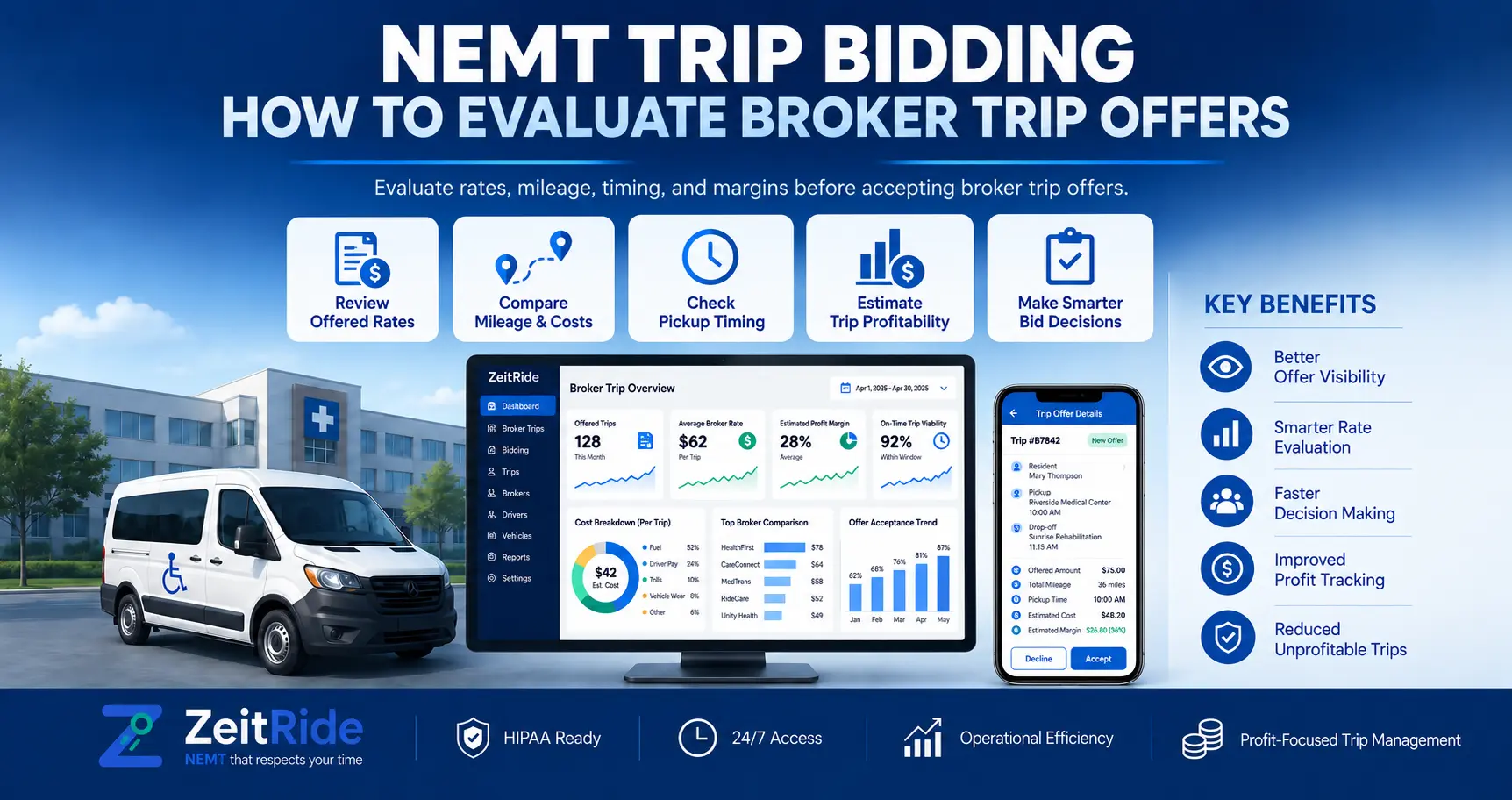
Learn how to evaluate NEMT broker trip offers using rate, deadhead, vehicle capacity, schedule fit, and full-cycle economics before accepting.
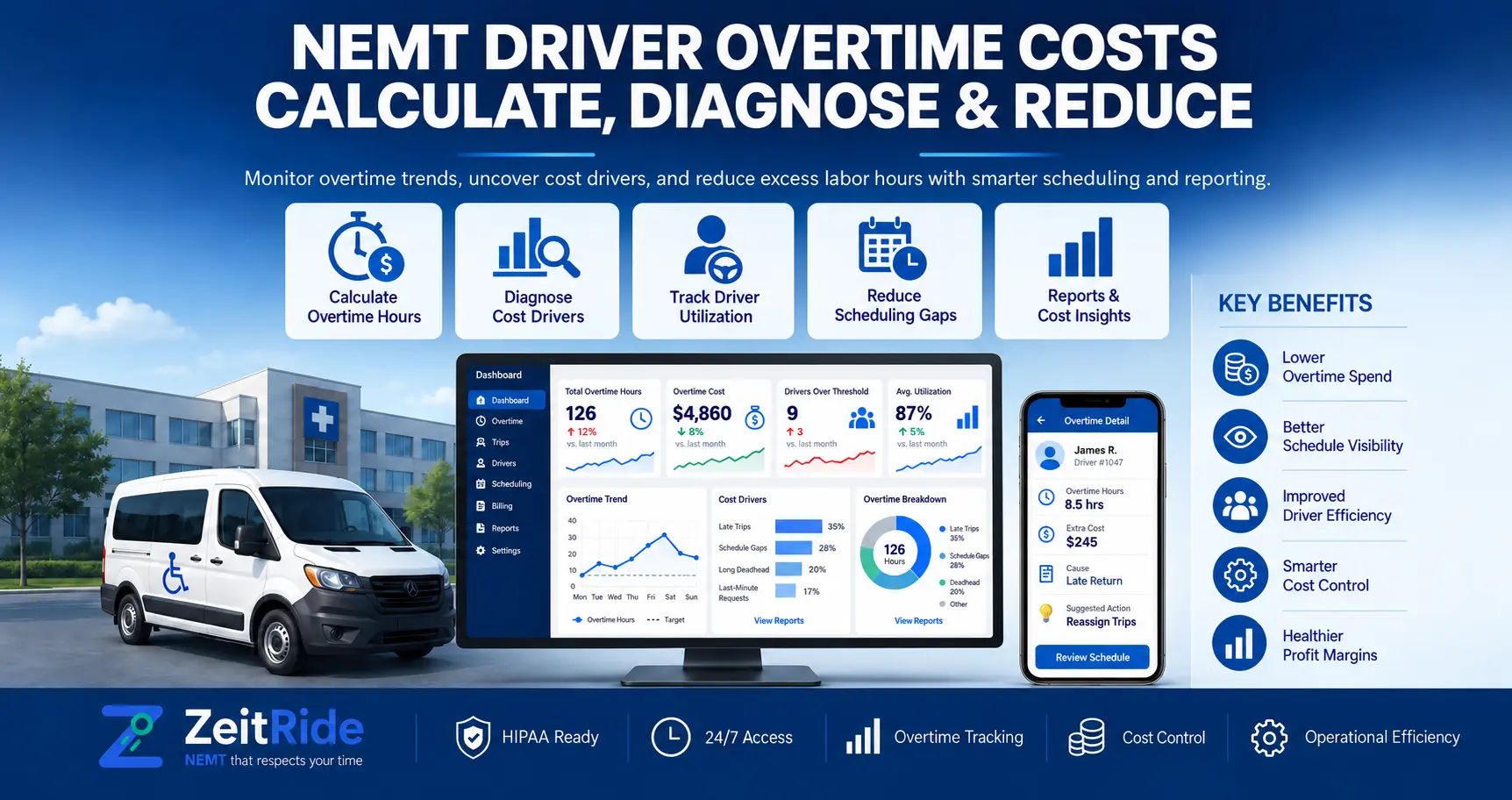
Learn how to calculate NEMT driver overtime costs, find what causes extra hours, and reduce preventable overtime without cutting trip coverage.
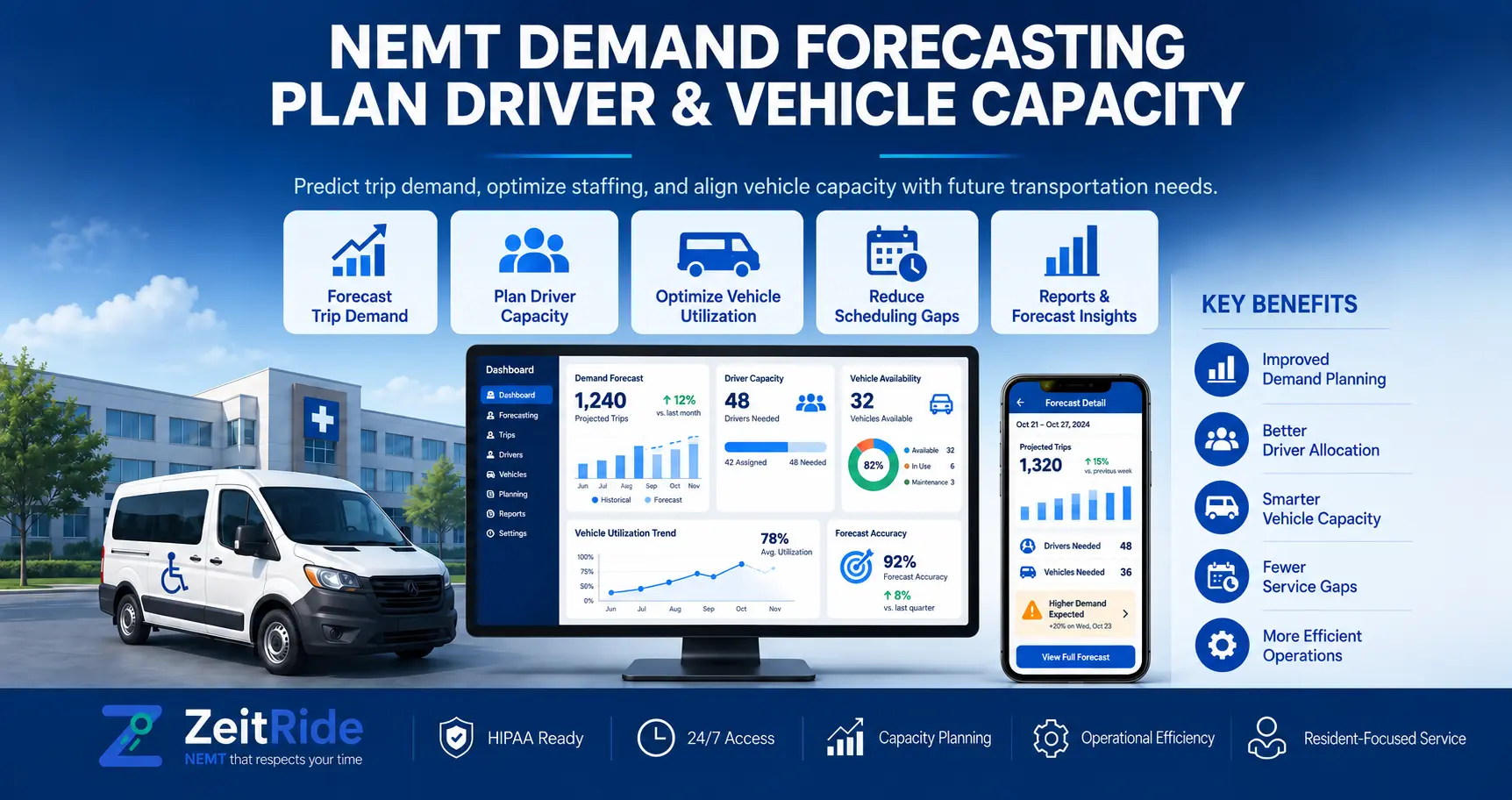
Learn how to forecast NEMT trip demand and turn expected volume into practical driver and vehicle capacity before busy periods hit.
Create an NEMT vehicle breakdown policy with clear driver response, dispatch steps, backup vehicle procedures, documentation, and a free SOP template.
Learn the main NEMT levels of service, how curb-to-curb differs from door-to-door and hand-to-hand, and what each means for trip planning.
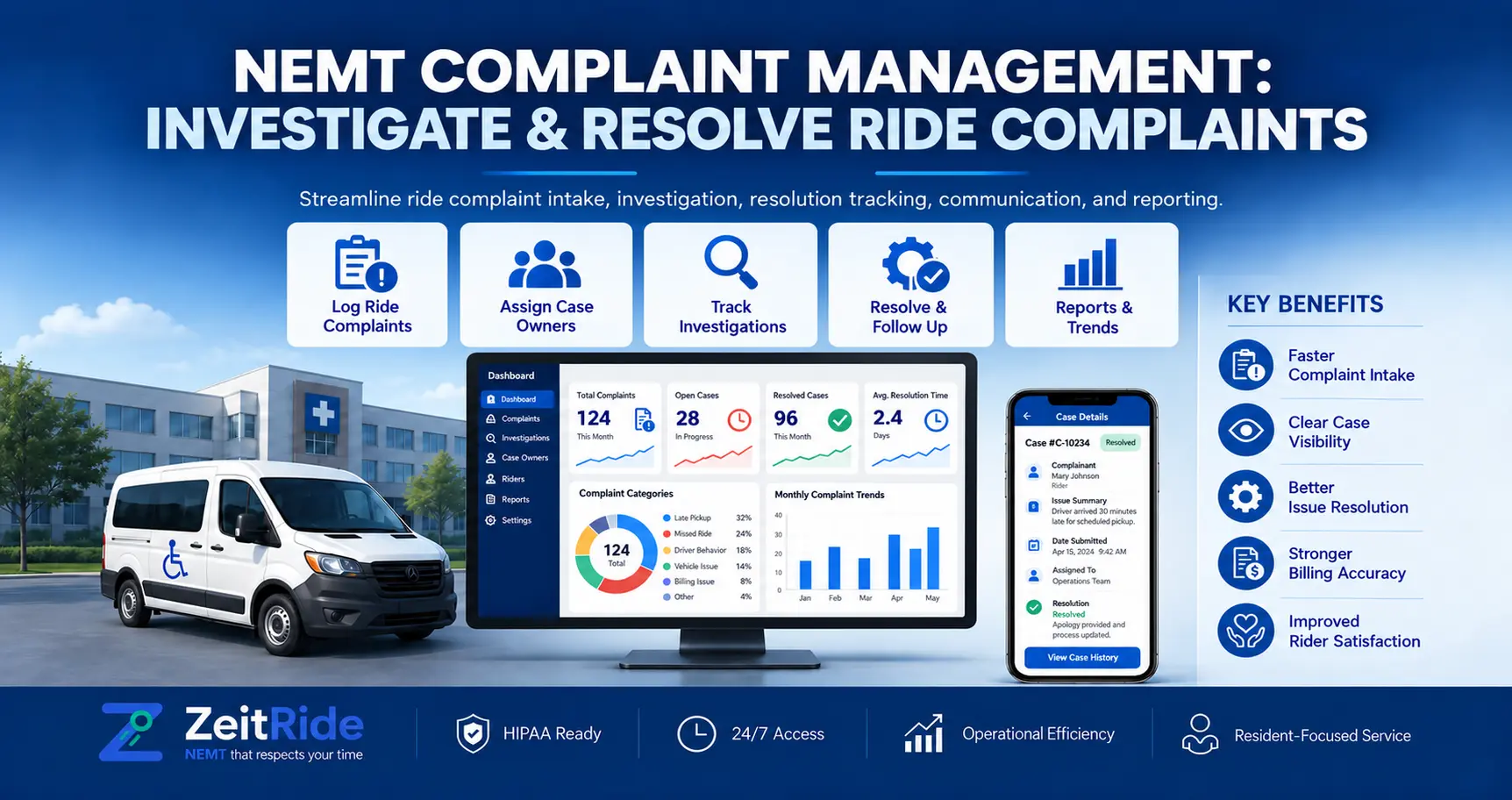
A practical guide to investigating NEMT ride complaints, documenting evidence, resolving issues, and reducing repeat service problems.
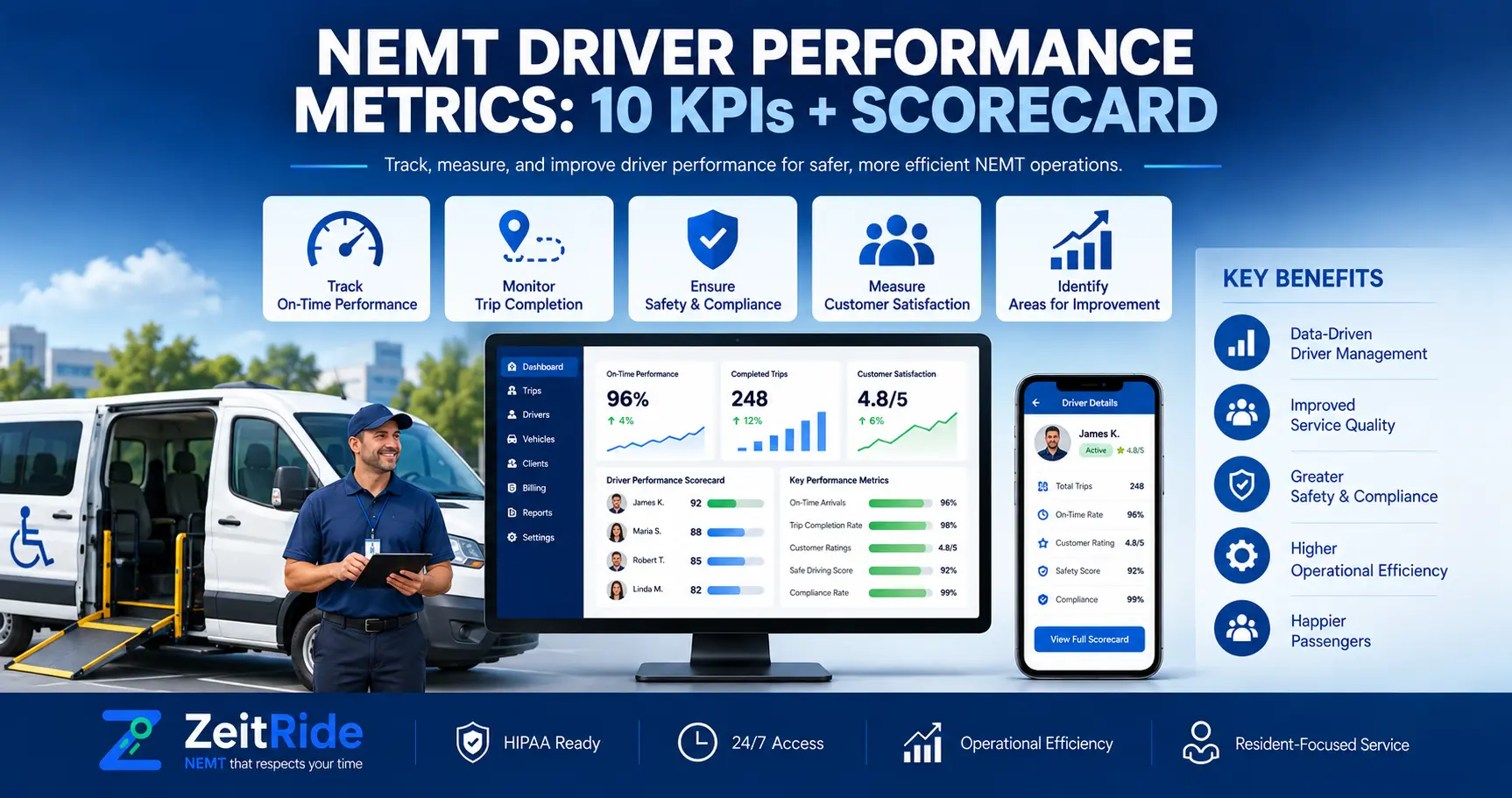
Learn 10 NEMT driver performance metrics and build a practical scorecard for productivity, on-time service, safety, documentation, and compliance.
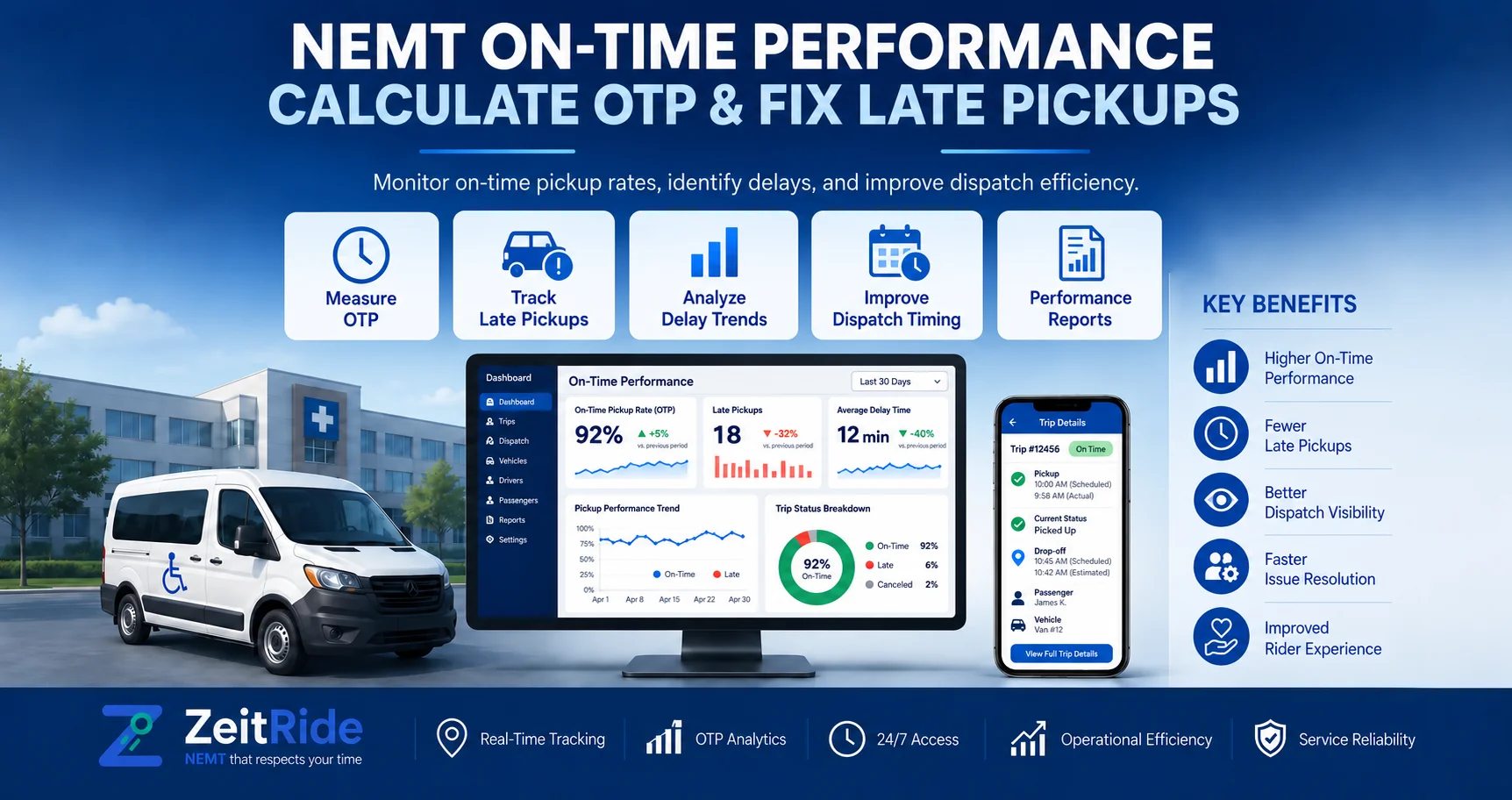
Learn how to calculate NEMT on-time performance, diagnose late pickups, recover at-risk trips, and improve dispatch reliability.
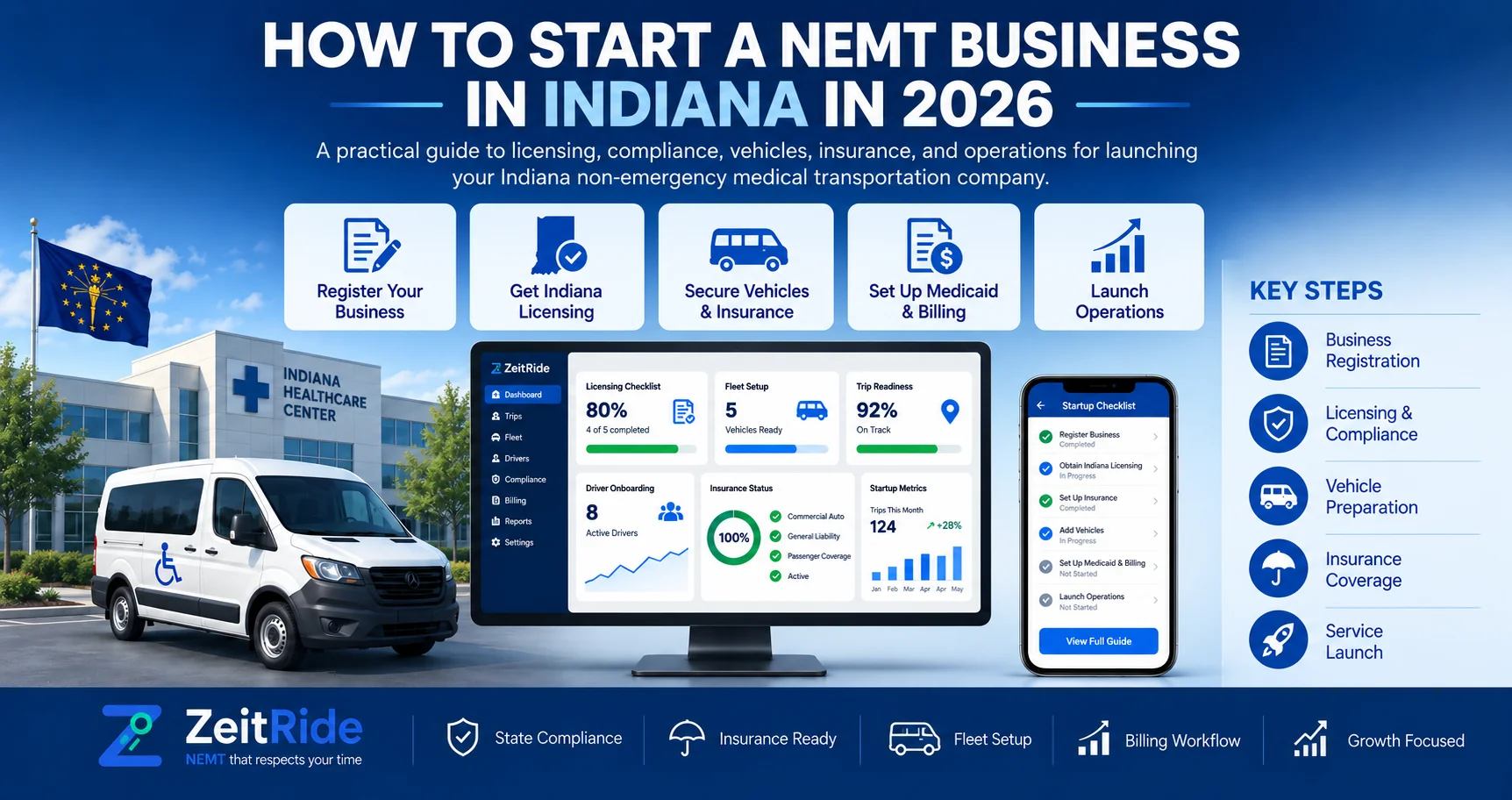
Start an Indiana NEMT business in 2026 with IHCP enrollment, Verida, licensing, startup costs, and the steps needed before your first trip.
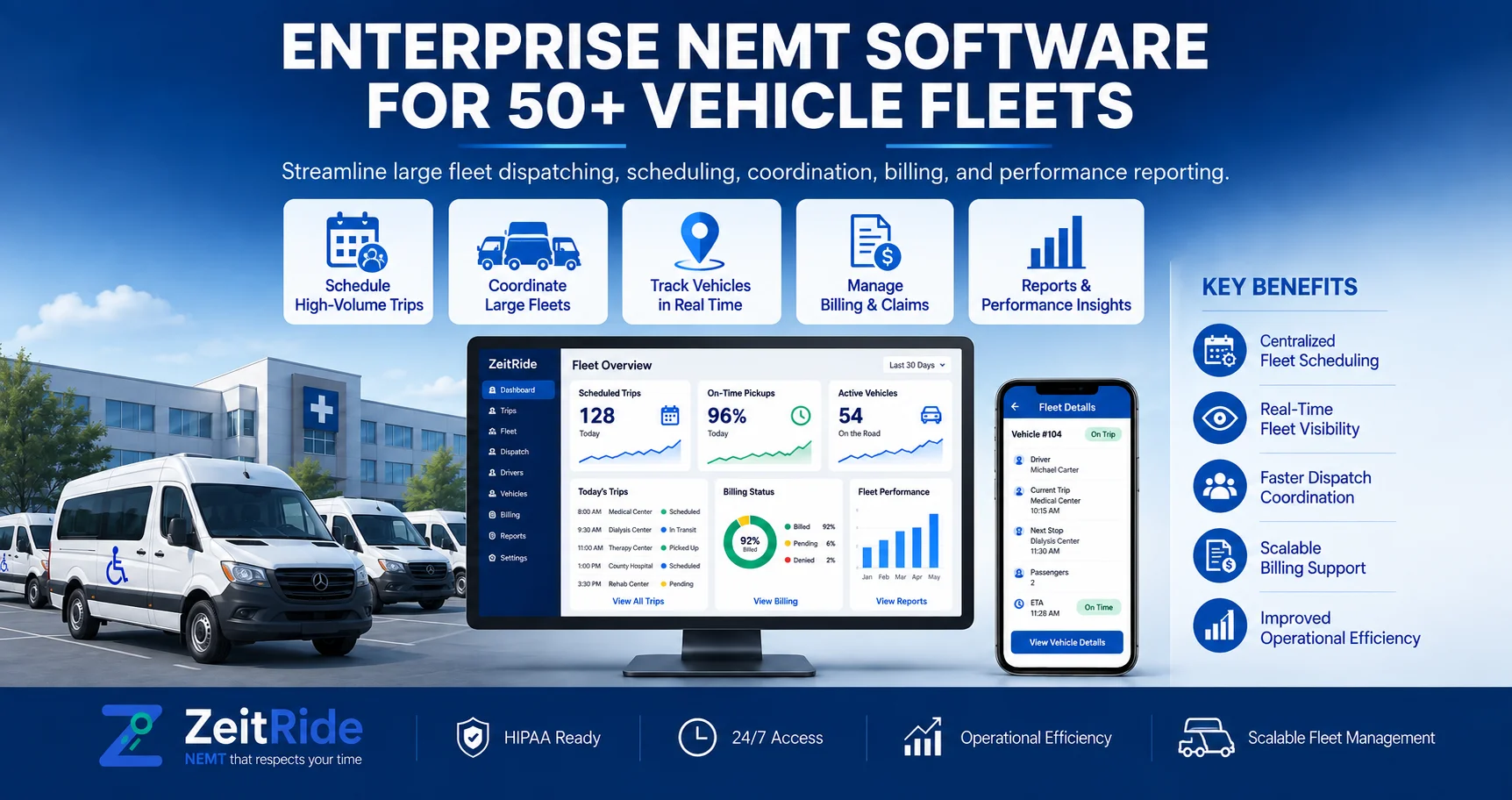
Learn what enterprise NEMT software should handle for 50+ vehicle fleets, from dispatch and multi-location operations to billing and reporting.
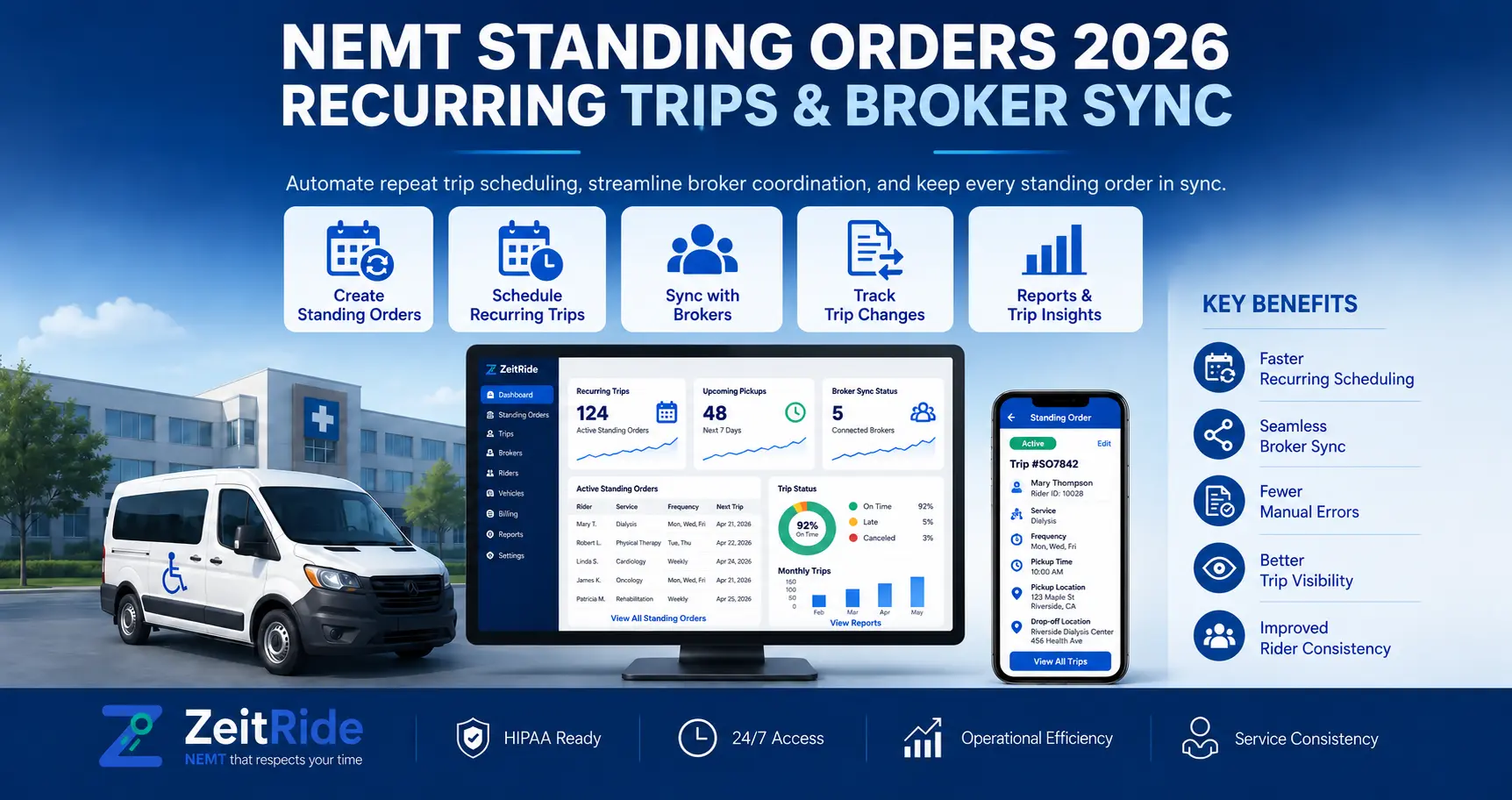
Learn how NEMT standing orders work, manage recurring trip changes, prevent duplicate broker trips, and keep schedules accurate.
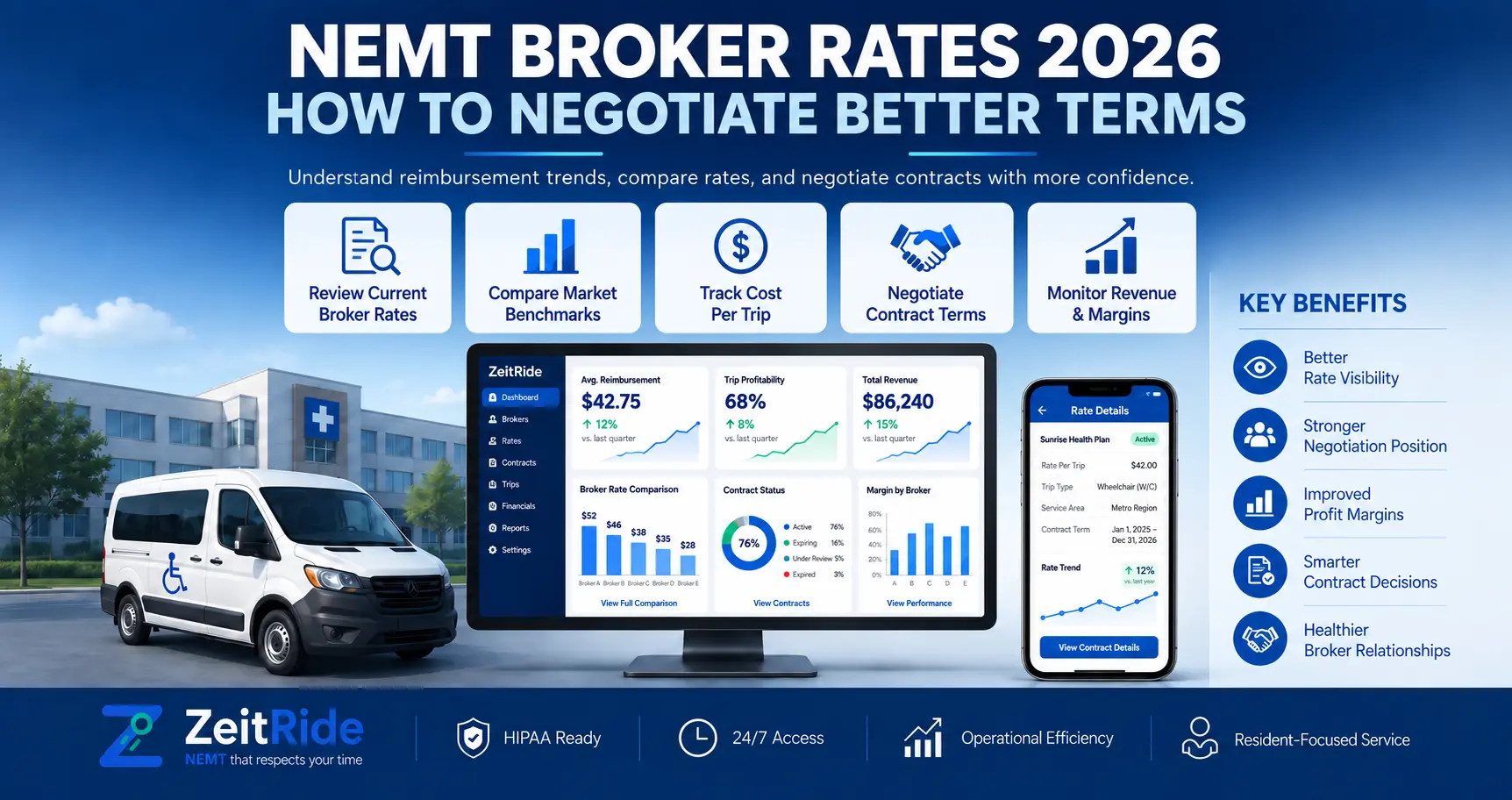
Learn how to evaluate NEMT broker rates, calculate your cost floor, use performance KPIs, and negotiate stronger contract terms.
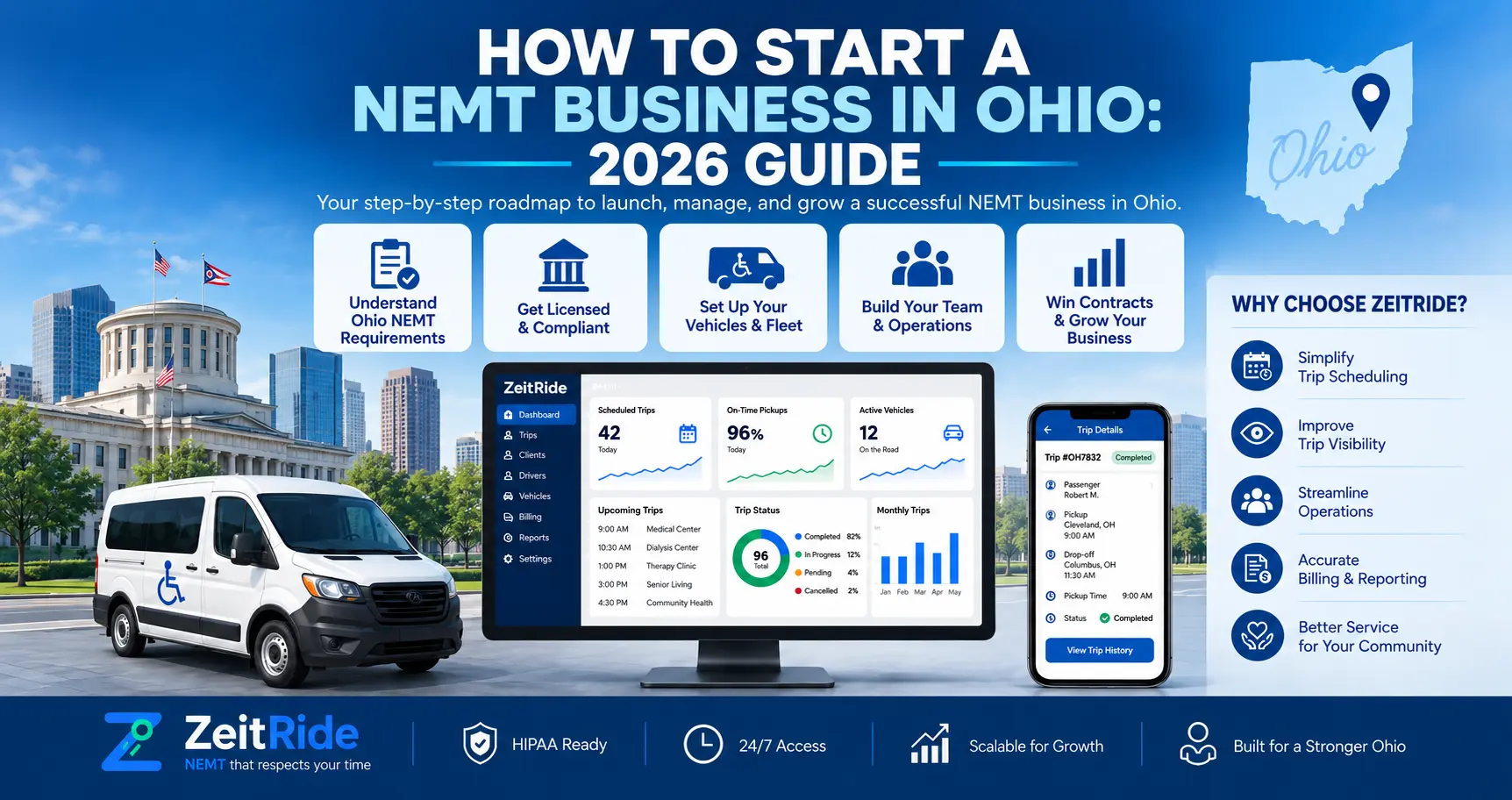
Starting an Ohio NEMT business? Learn the licensing, PUCO, Medicaid, ambulette, startup cost, GPS, and software steps for 2026.
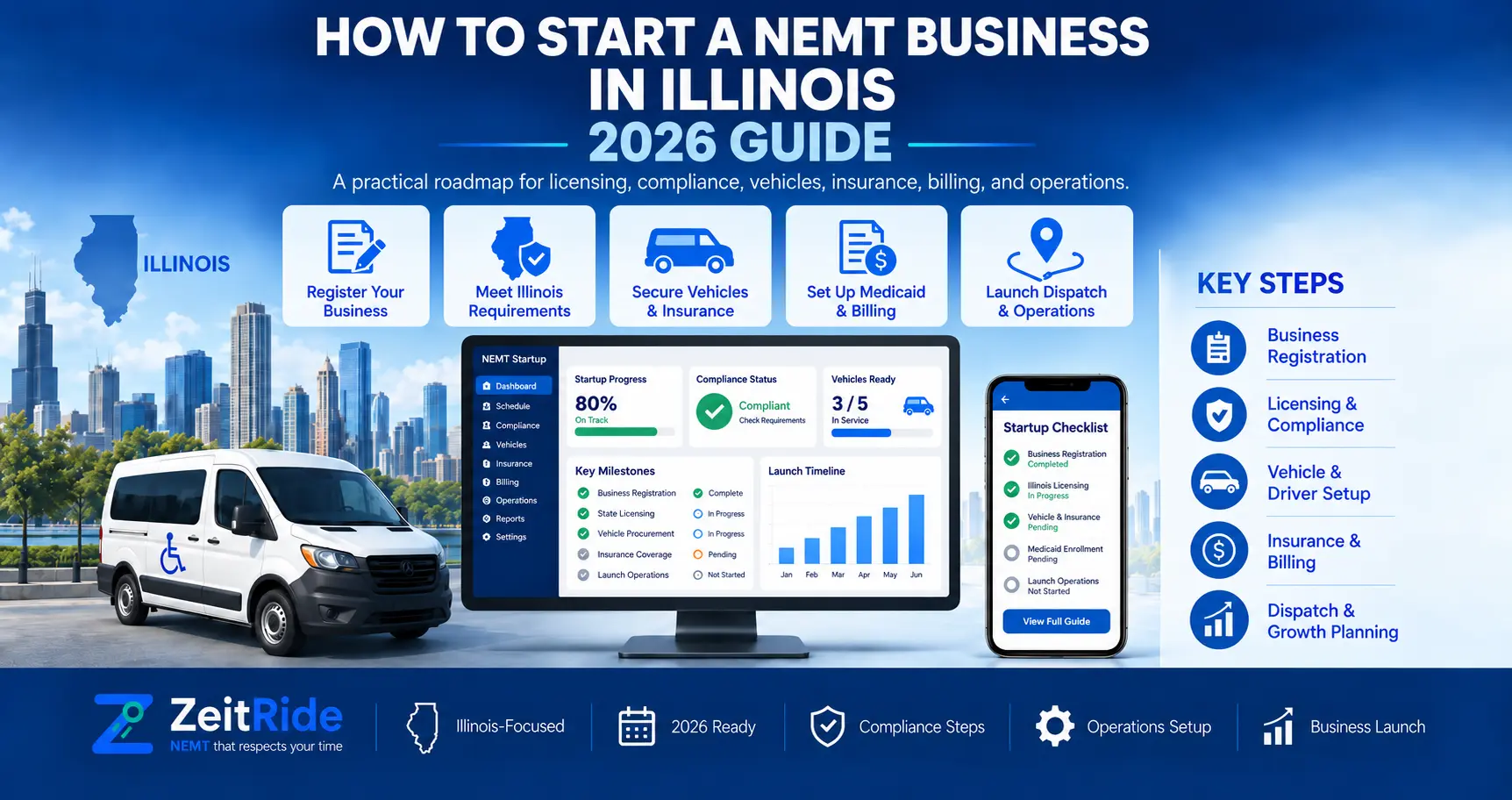
Start an Illinois NEMT business in 2026 with this guide to licensing, Medicaid enrollment, insurance, startup costs, drivers, and operations.

Learn how NEMT credential management software tracks driver and vehicle credentials, expirations, renewal reminders, documents, and operational status.

Learn how NEMT broker software manages provider networks, trip assignment, compliance, billing, reporting, and transportation oversight.
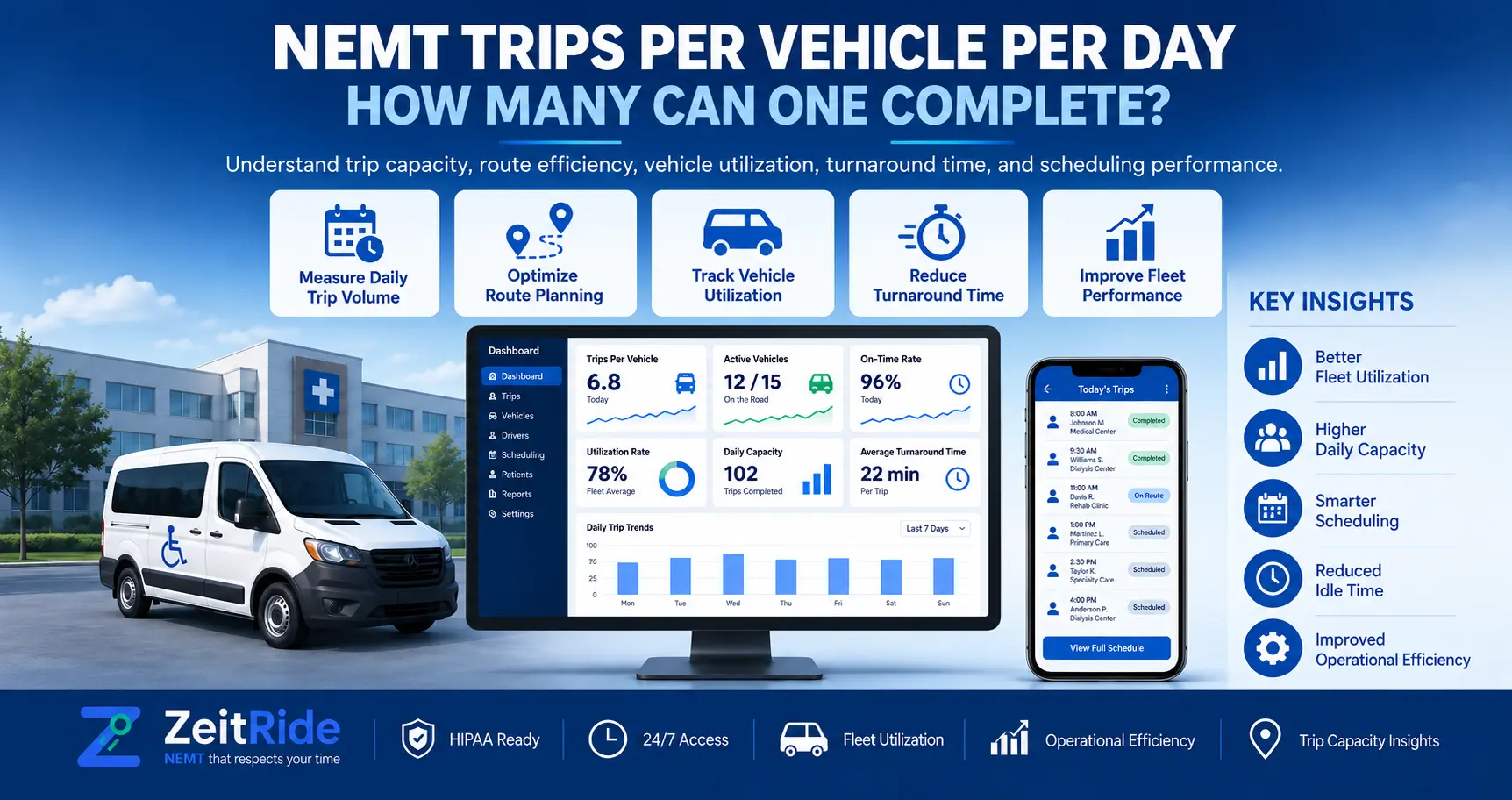
Learn how many NEMT trips one vehicle can complete per day, what affects capacity, and when to improve utilization before adding another vehicle.
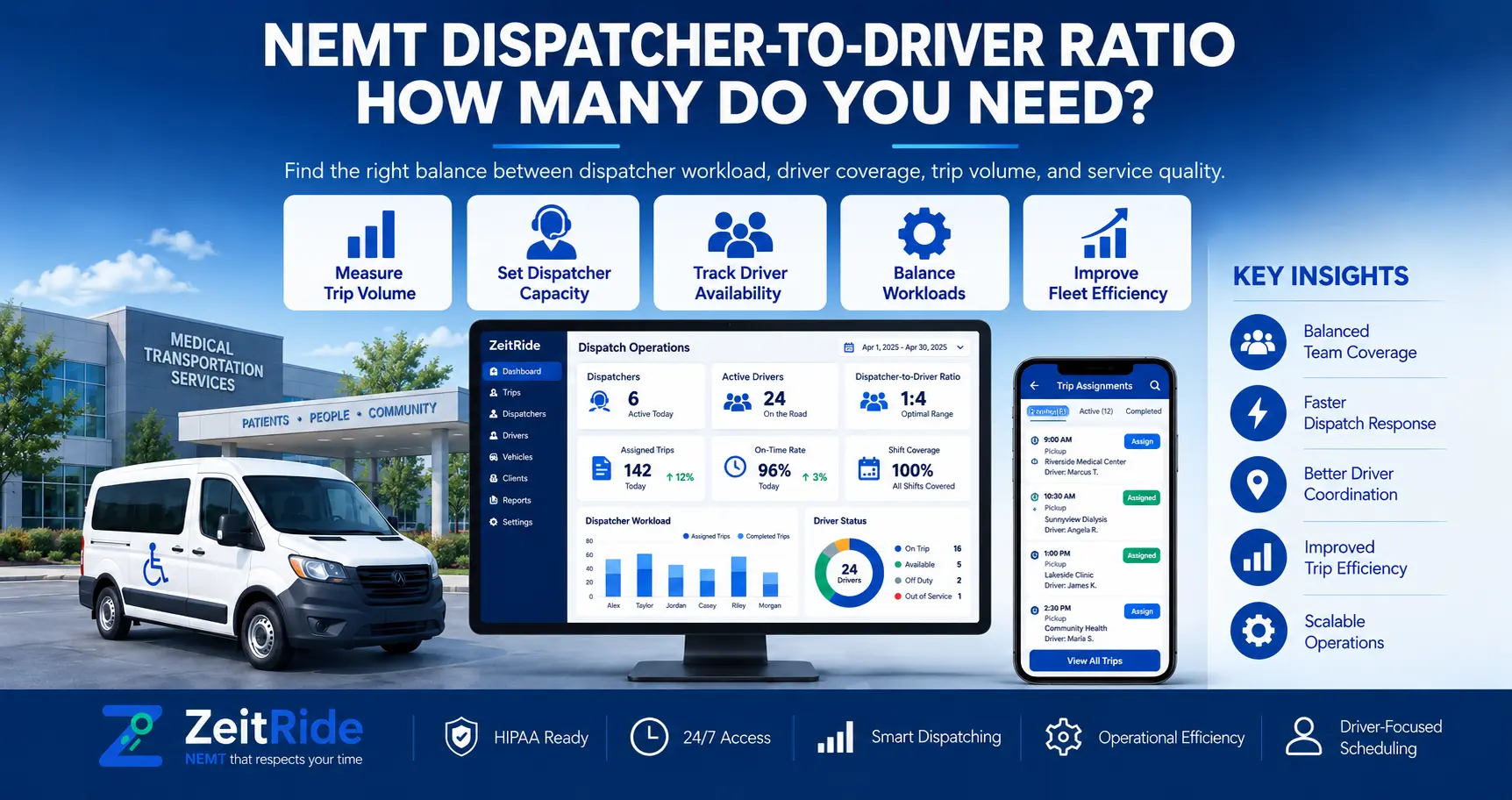
Learn how to calculate your NEMT dispatcher-to-driver ratio, measure workload, spot overload, and decide when to add staff or automate.
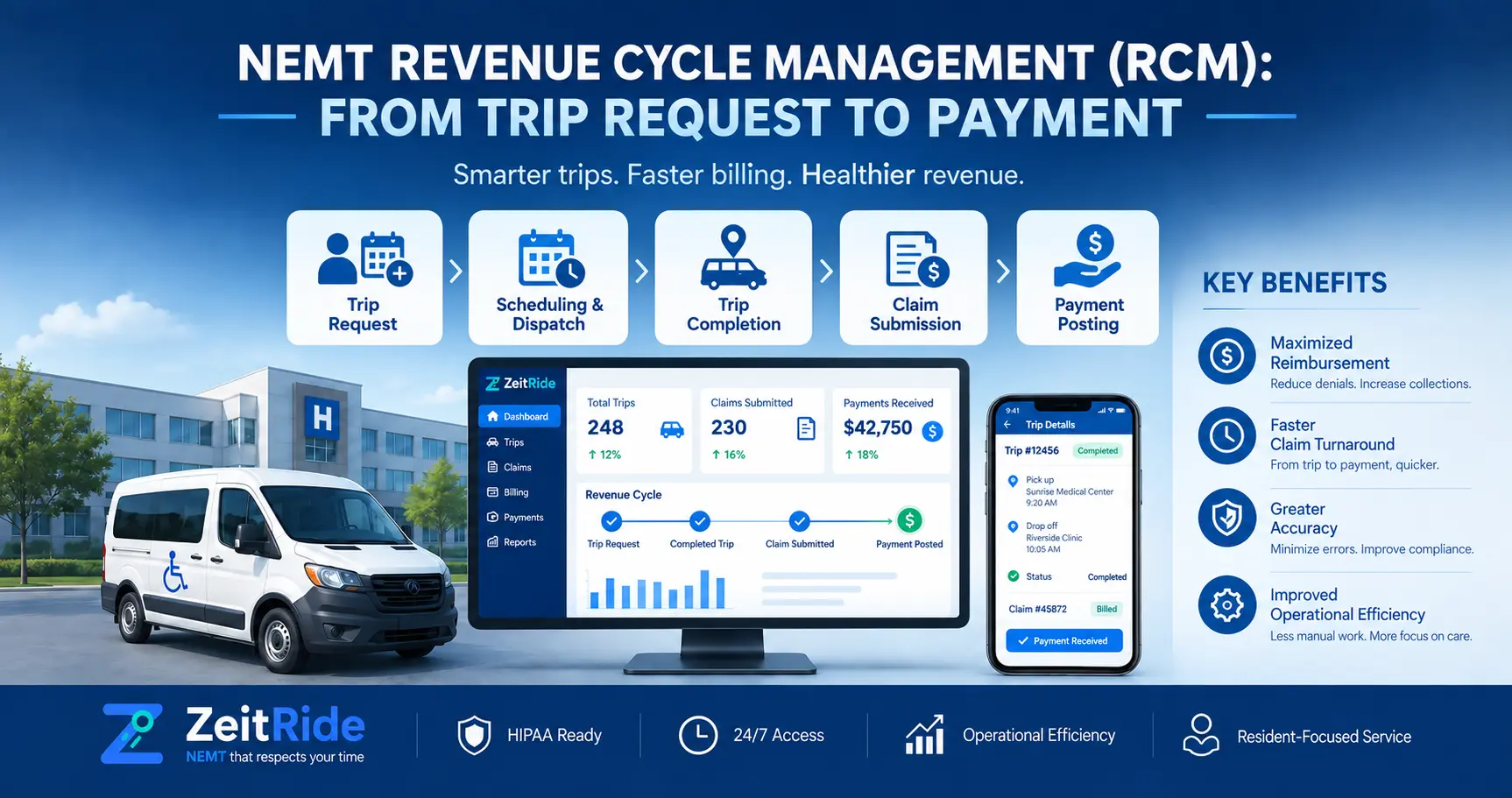
Learn how NEMT revenue cycle management connects eligibility, trip documentation, billing, denials, payments, and reconciliation from request to cash.
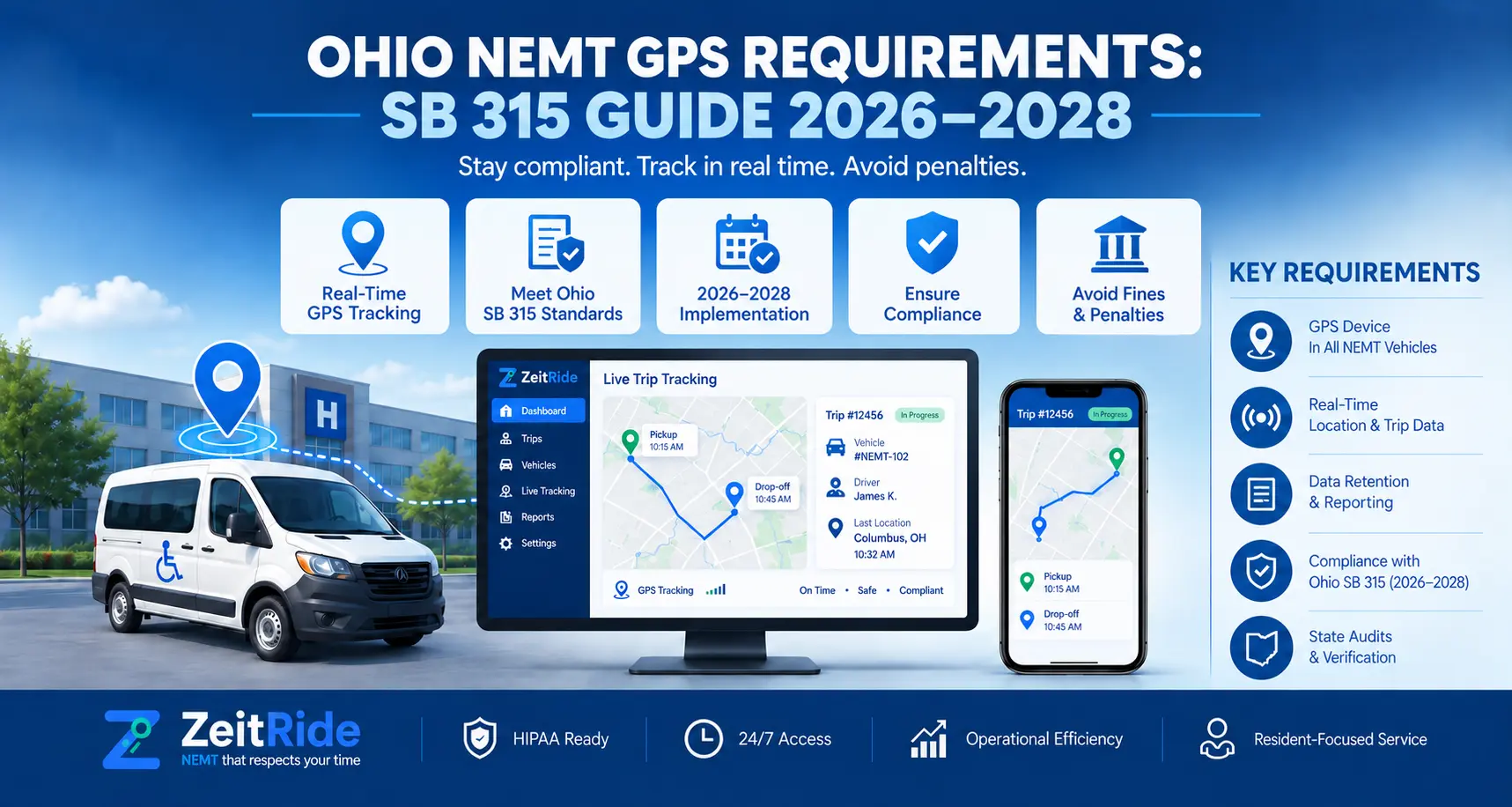
Ohio SB 315 introduces GPS verification for Medicaid NEMT. Learn the rollout timeline, required trip data, payment rules, and how providers can prepare.
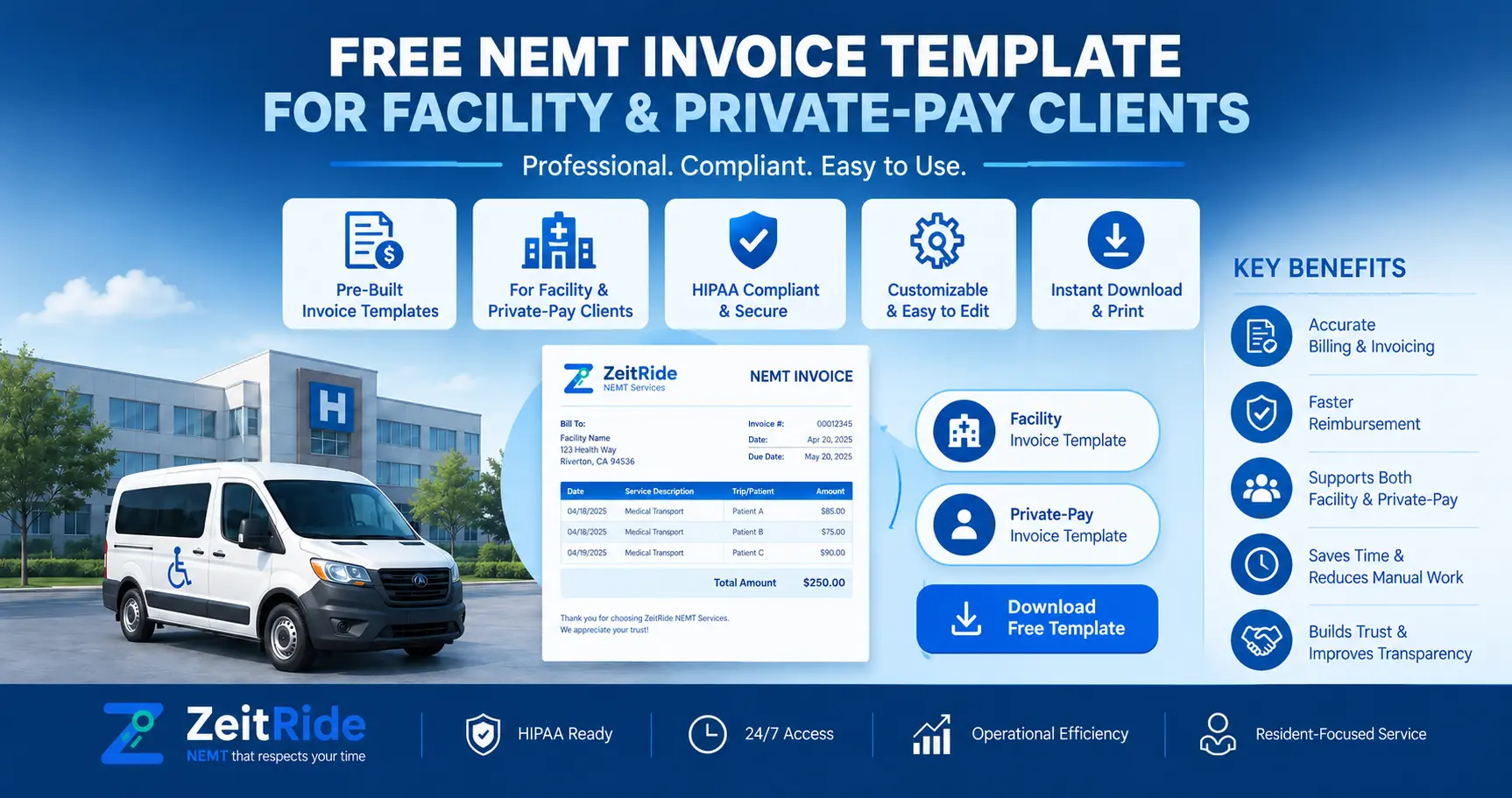
Copy a free NEMT invoice template for Excel or Google Sheets and learn how to bill healthcare facilities and private-pay clients from completed trips.
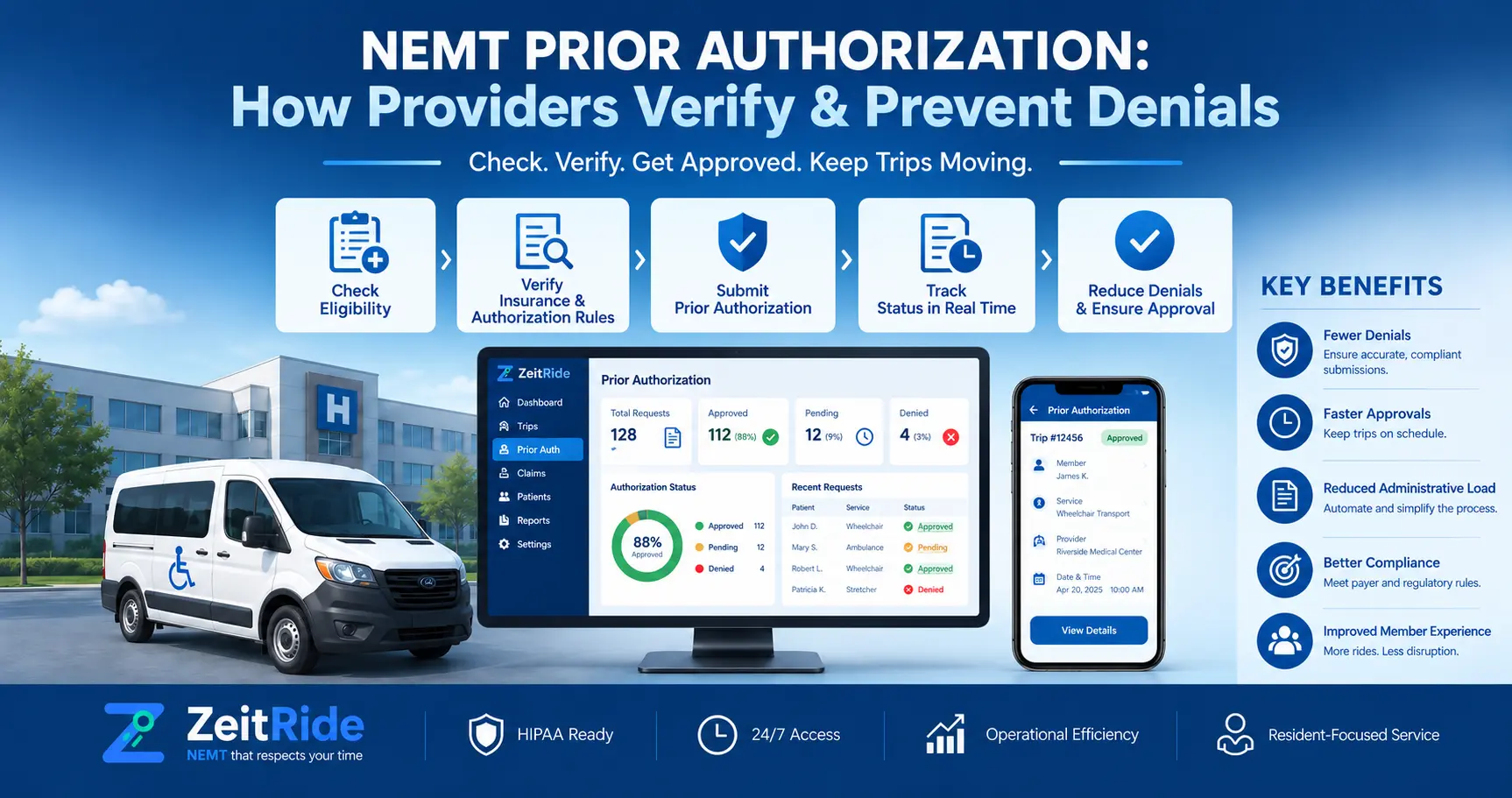
Learn how NEMT prior authorization works, what providers should verify, how requirements vary, and how to prevent authorization-related claim denials.
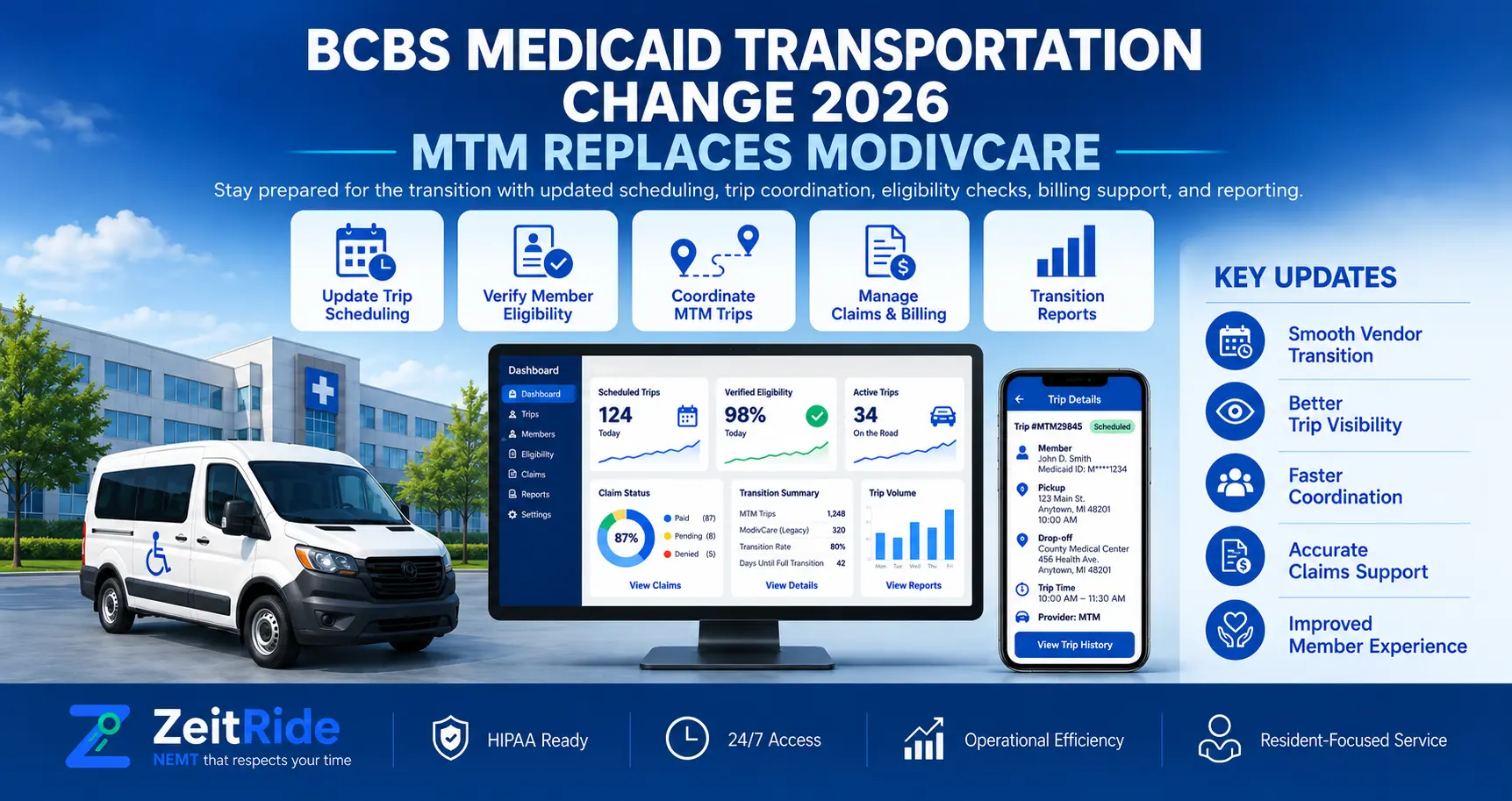
BCBS Medicaid NEMT moves from Modivcare to MTM Health in Illinois and Texas on Oct. 1, 2026. Learn what transportation providers should check now.
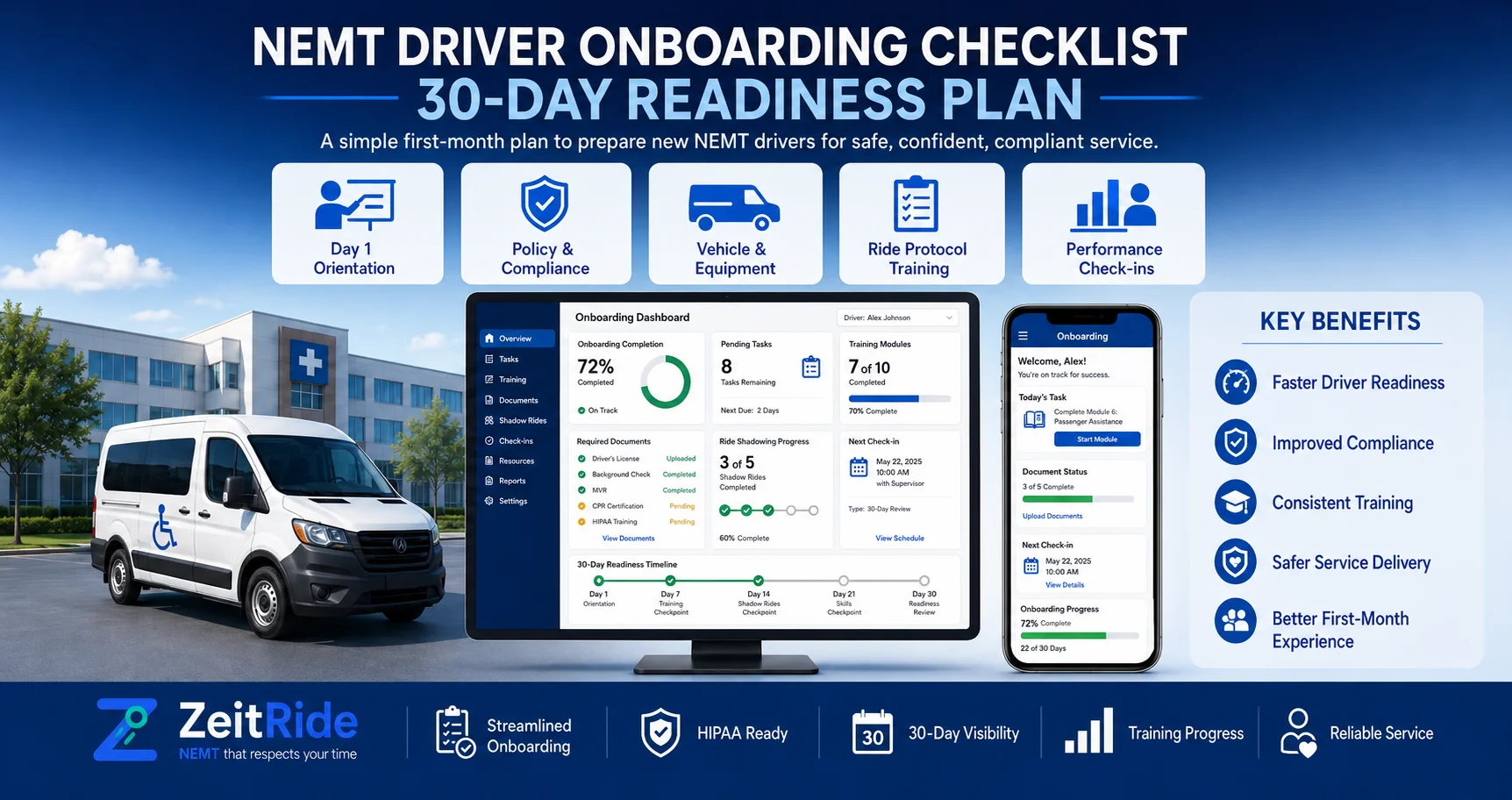
A practical 30-day NEMT driver onboarding checklist for training, first-trip readiness, documentation, and consistent new-driver workflows.
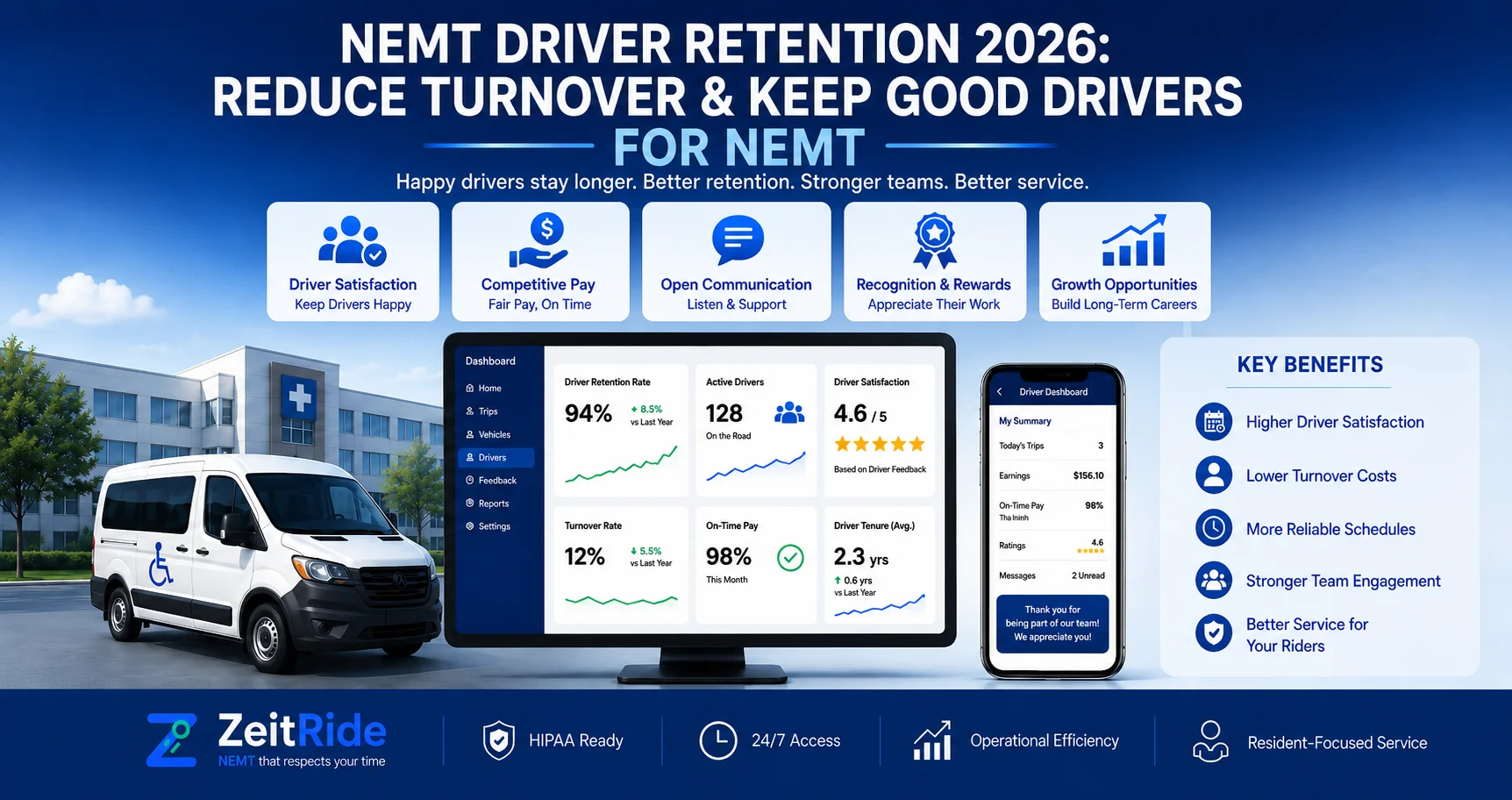
Learn why NEMT drivers leave and how to reduce turnover with better scheduling, communication, onboarding, and daily operations.
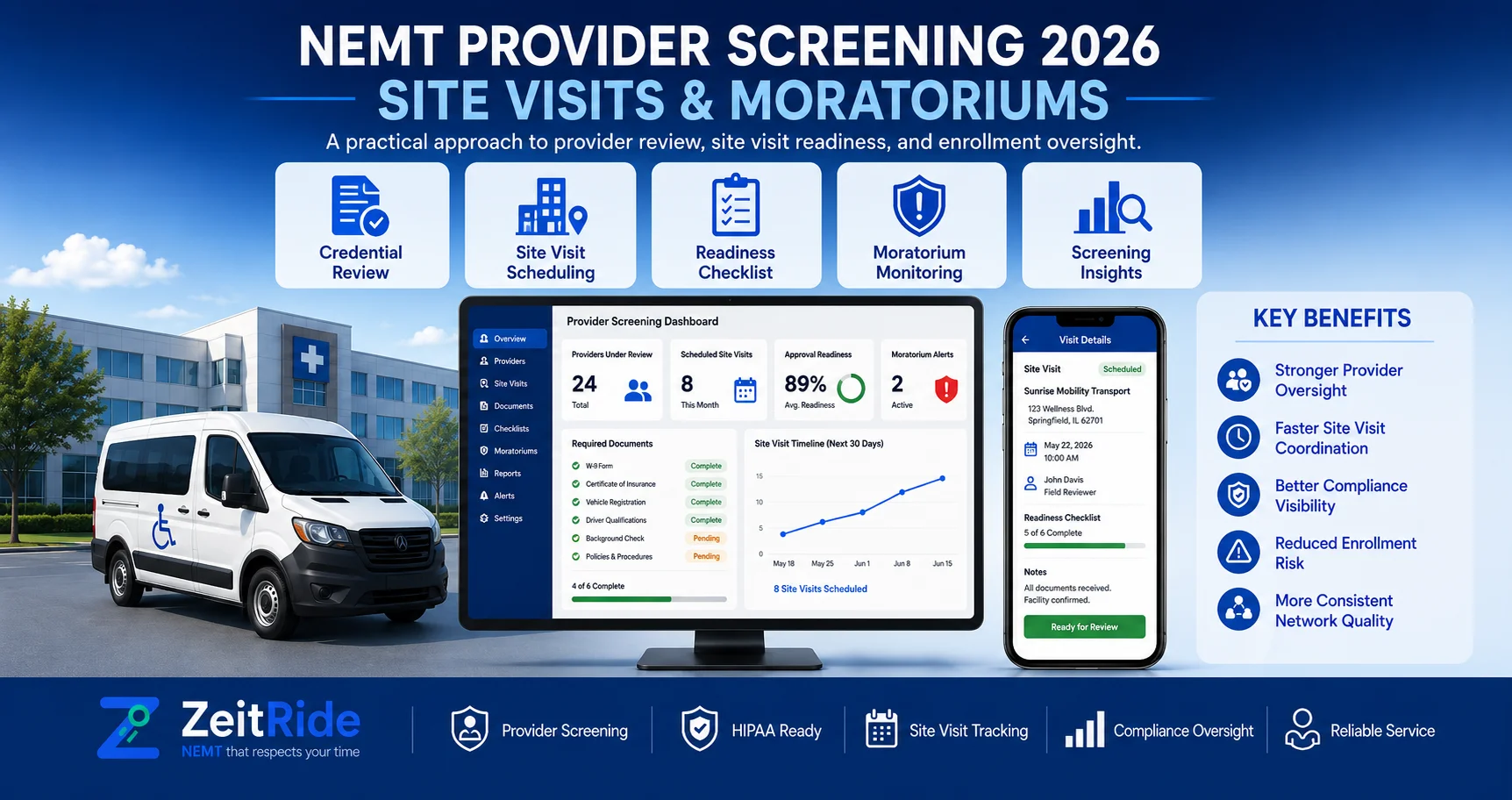
Learn how NEMT provider screening works in 2026, including site visits, enrollment moratoriums, risk levels, and off-cycle revalidation.
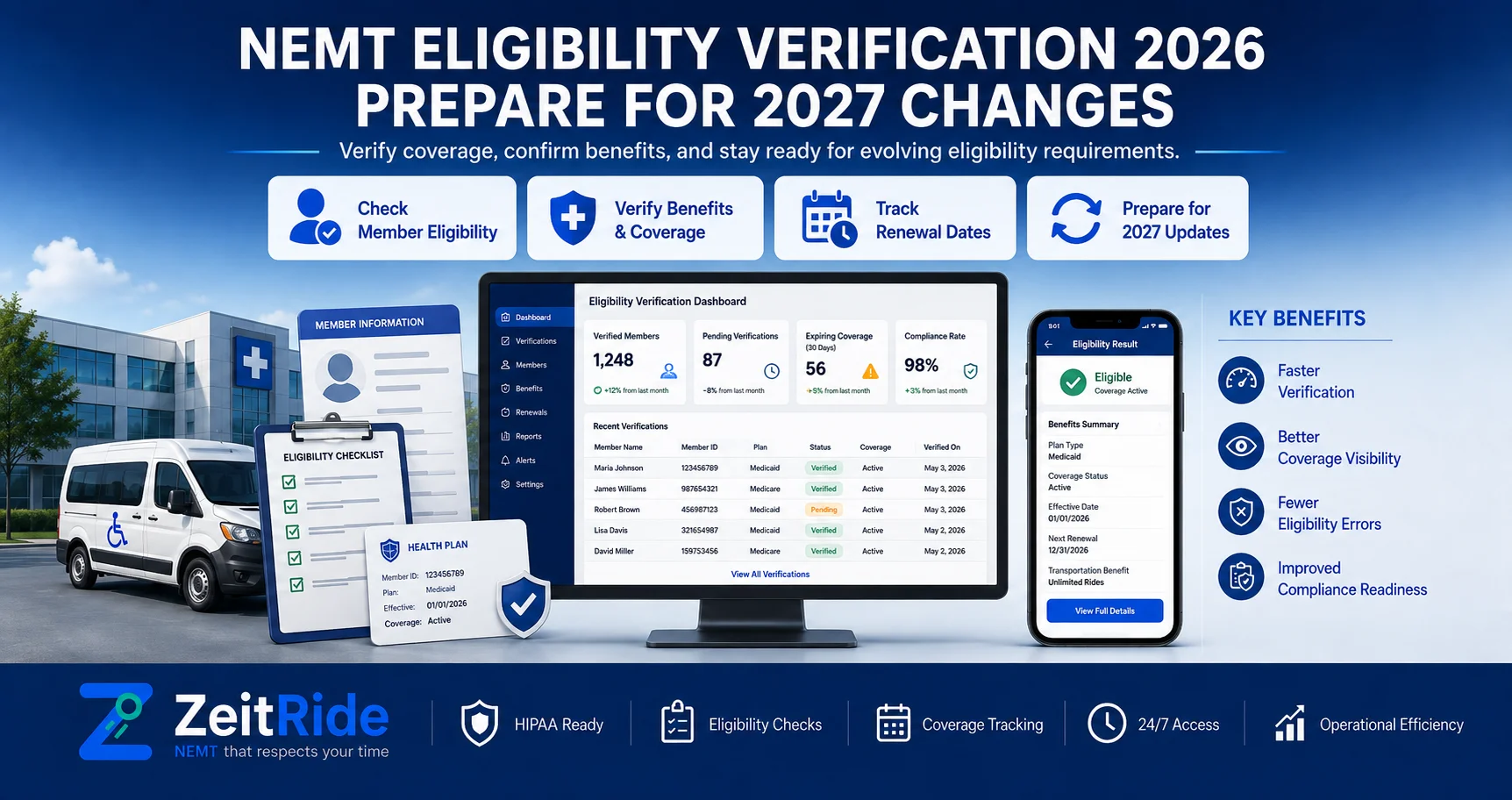
Learn how NEMT providers can verify Medicaid eligibility, separate coverage from authorization, manage recurring trips, and prepare for 2027 changes.
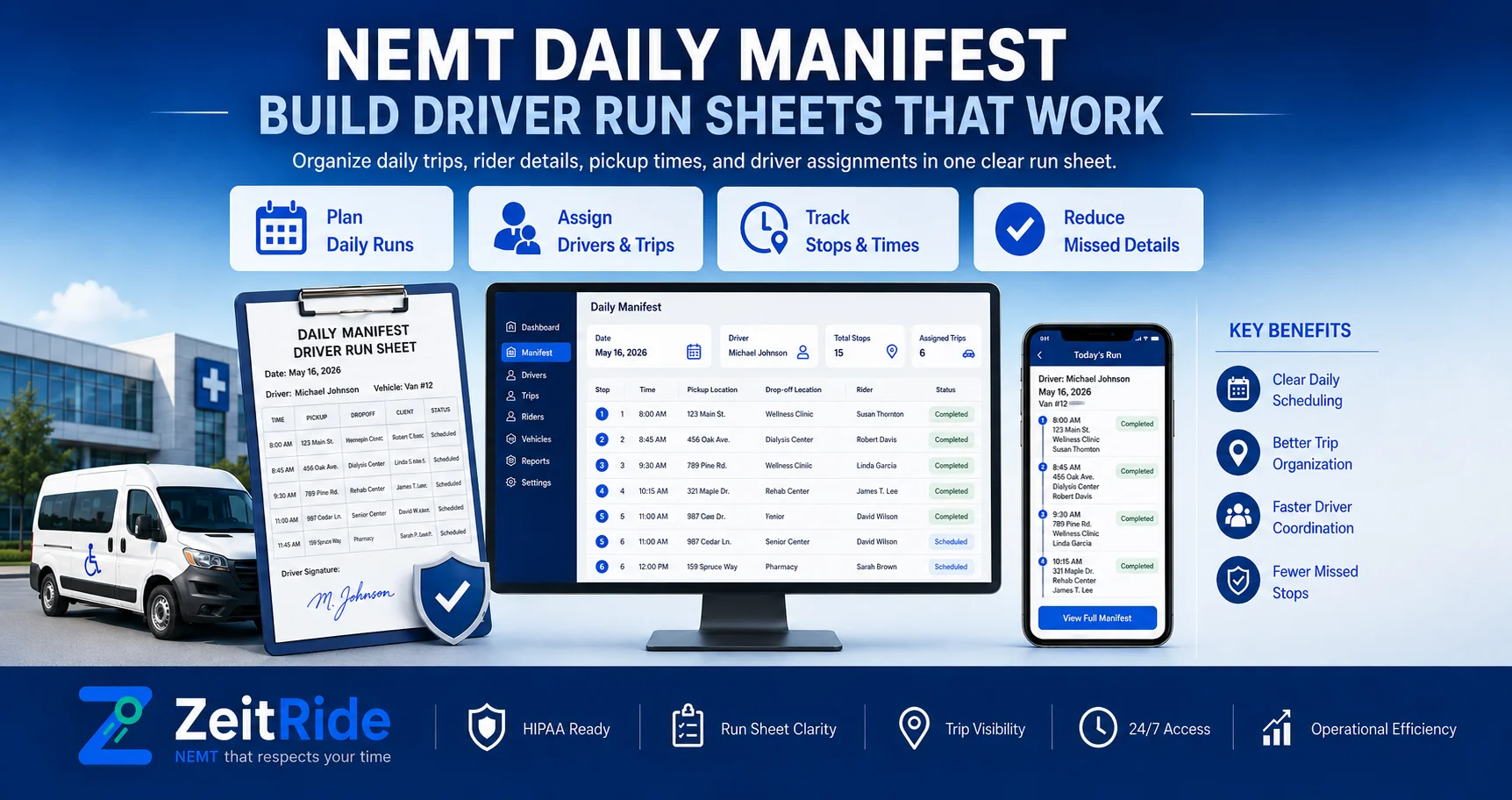
Learn how to build an NEMT daily manifest, assign drivers and vehicles, check trip coverage, manage will-calls, and keep run sheets current.
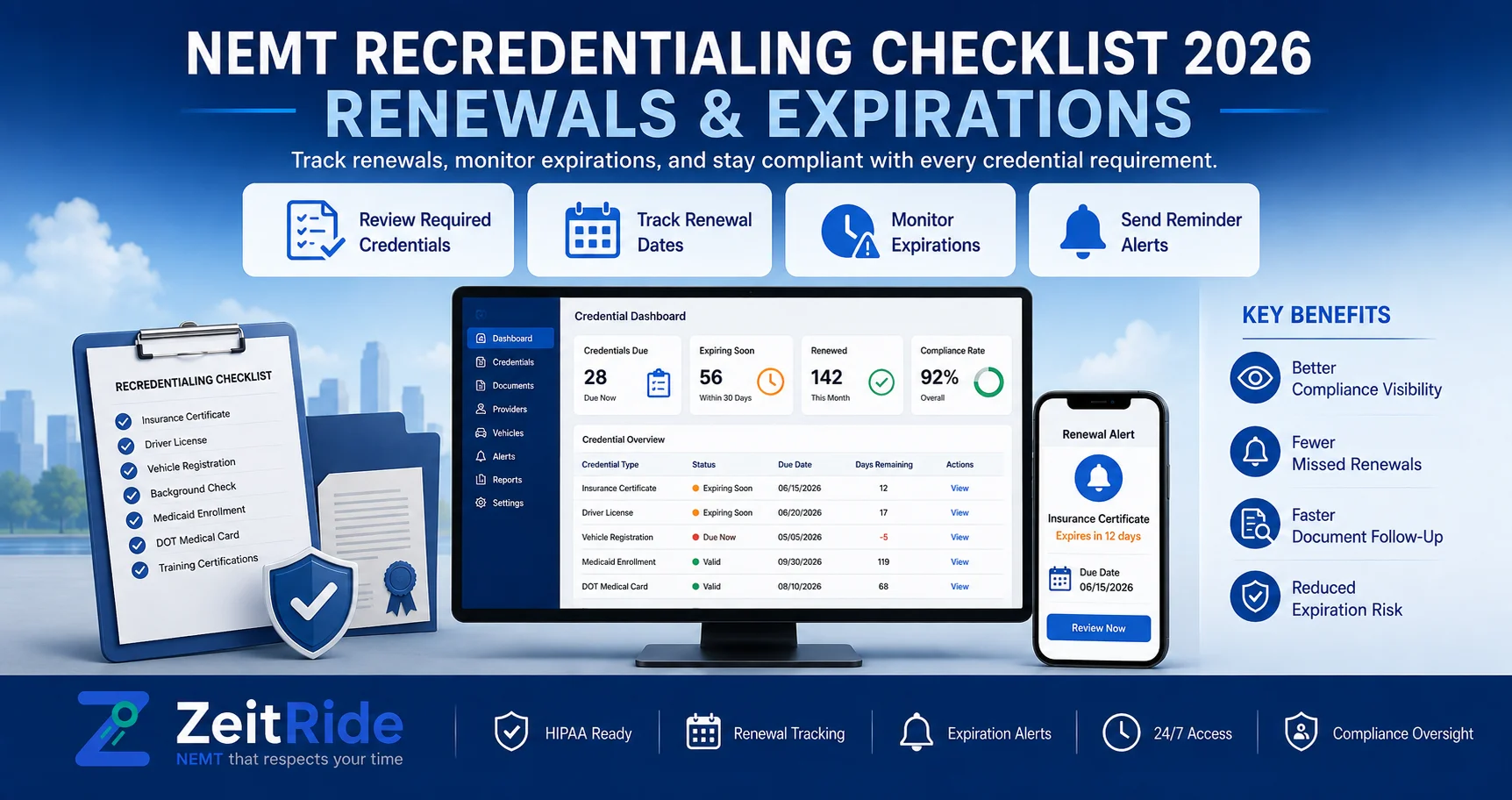
Use this 2026 NEMT recredentialing checklist to track driver, vehicle, insurance, and broker renewals before expirations disrupt operations.
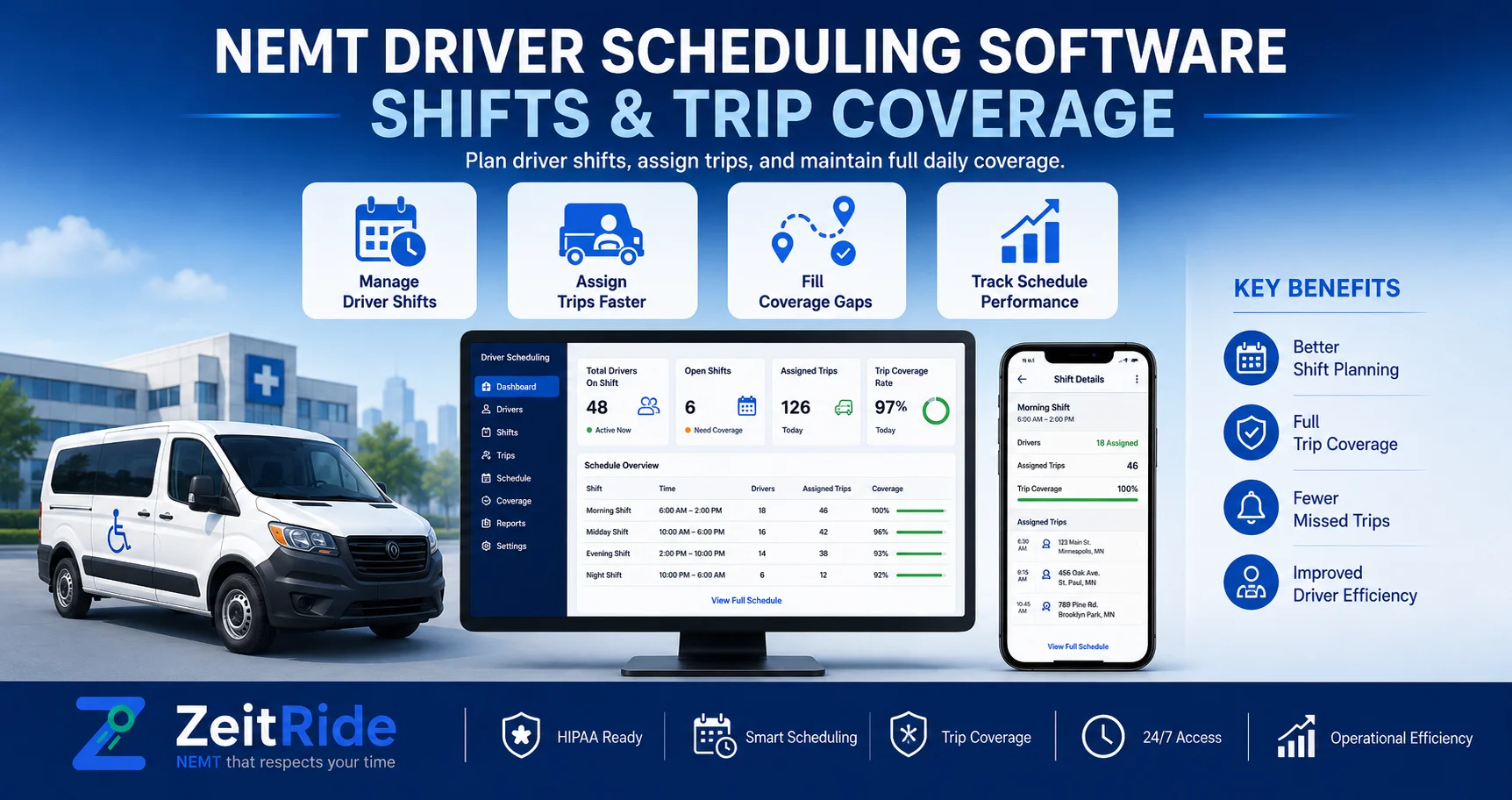
Learn how NEMT fleets manage driver shifts, availability, vehicle assignments, call-outs, and daily trip coverage with connected scheduling software.
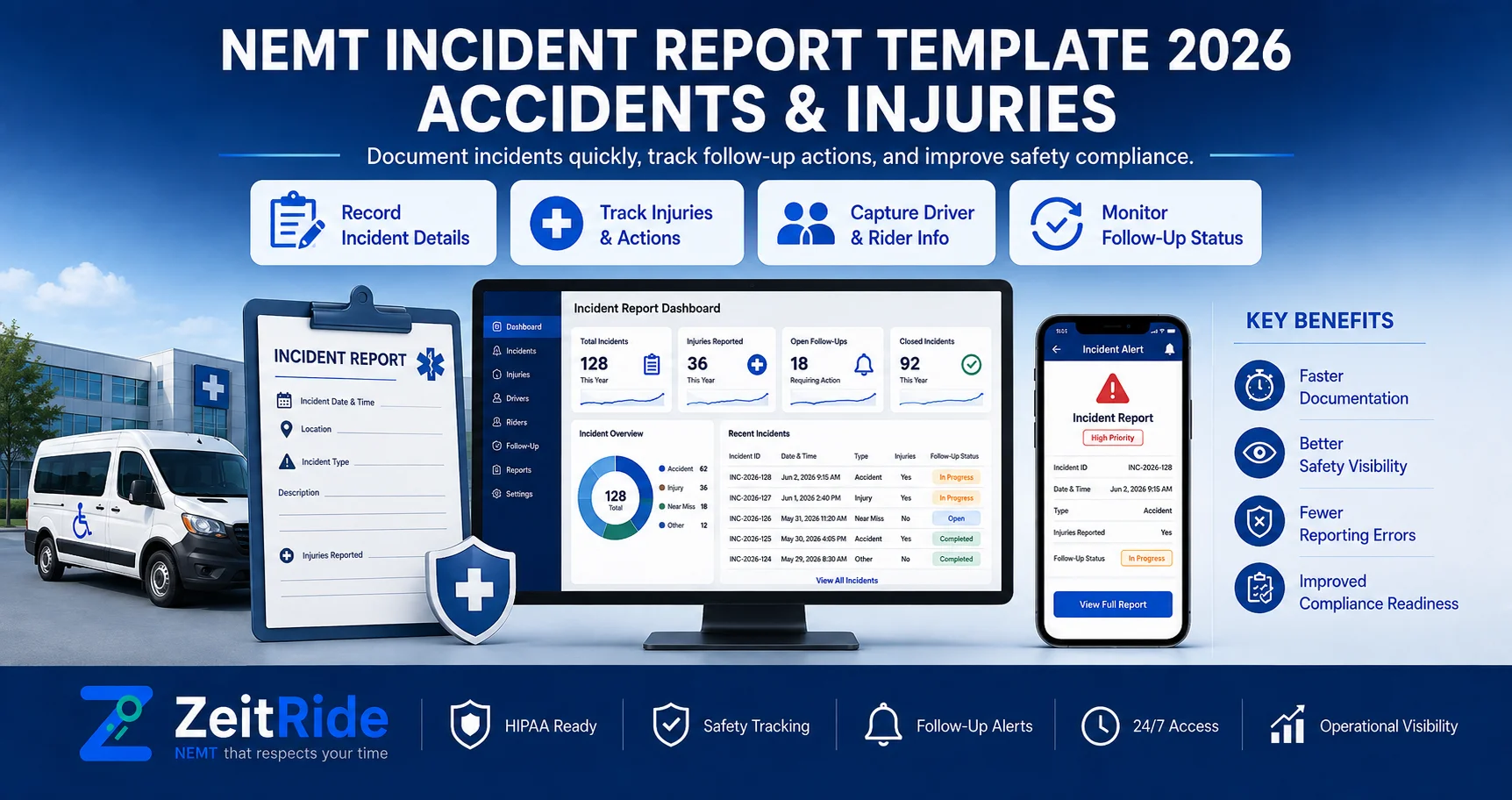
Use this NEMT incident report template to document accidents, passenger injuries, evidence, notifications, and follow-up with a clear driver workflow.
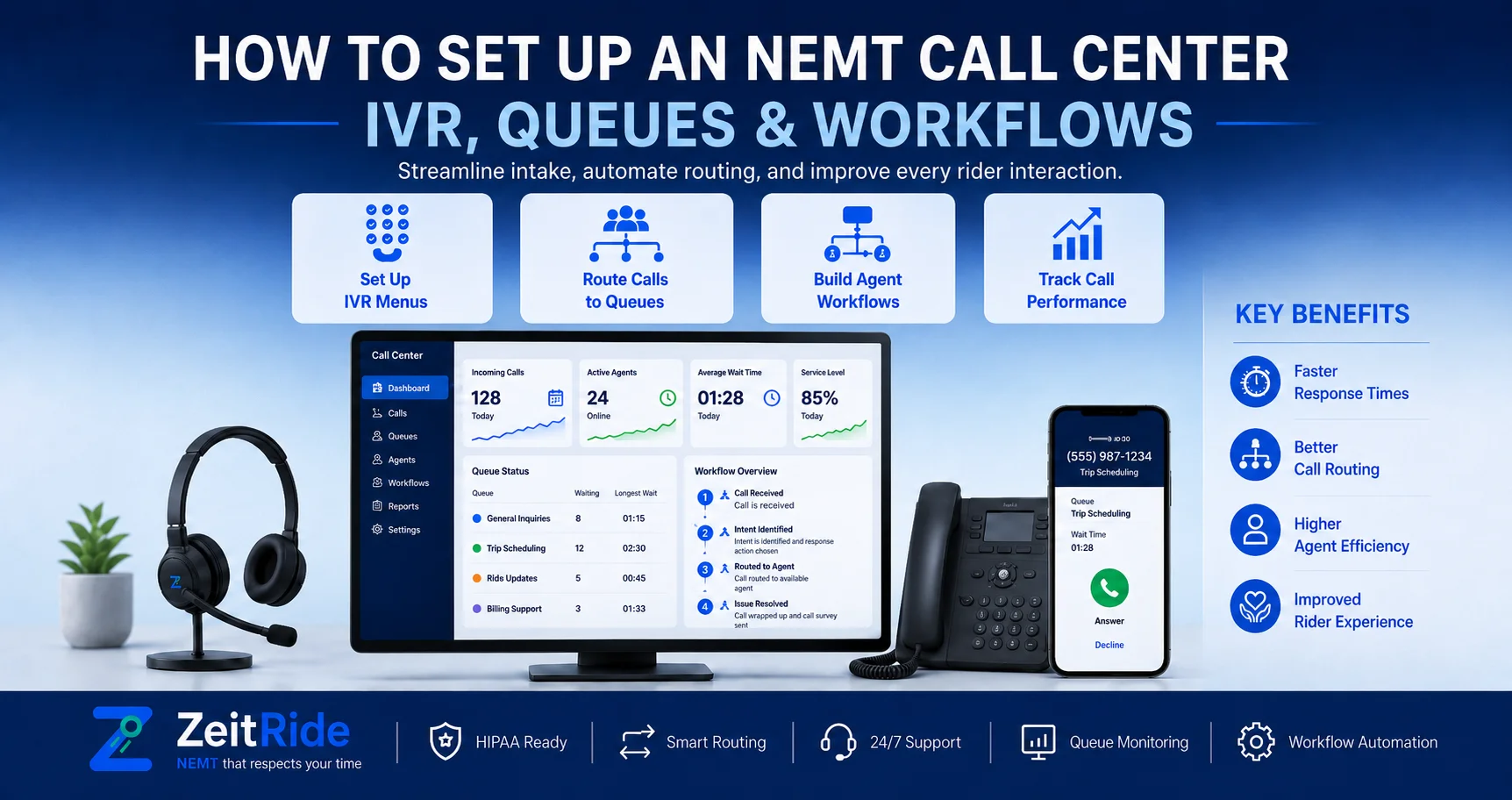
Learn how to set up an NEMT call center with IVR, call queues, booking, dispatch routing, after-hours coverage, and performance metrics.
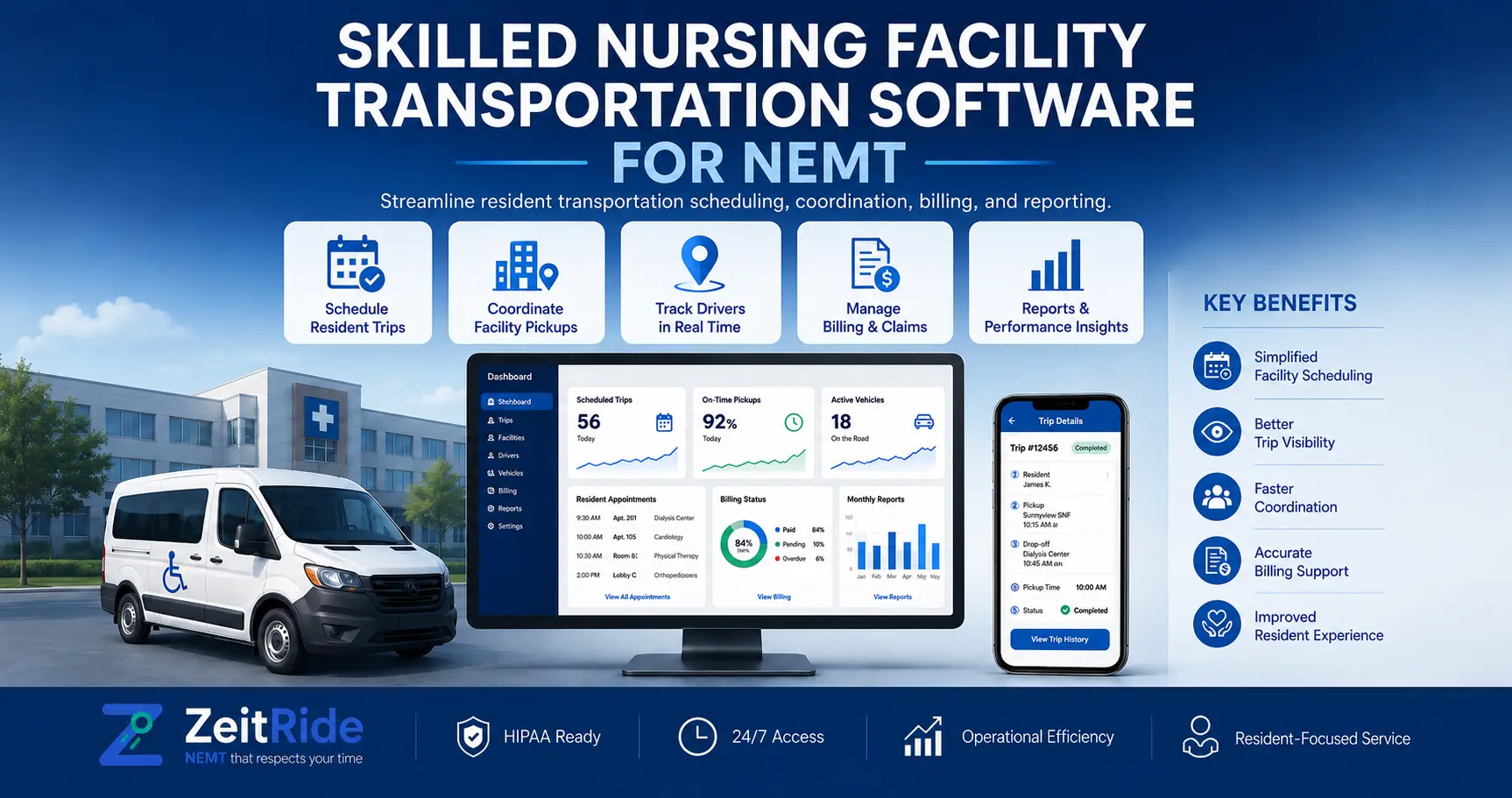
Learn how NEMT providers use skilled nursing facility transportation software to manage scheduling, dispatch, mobility needs, tracking, and billing.
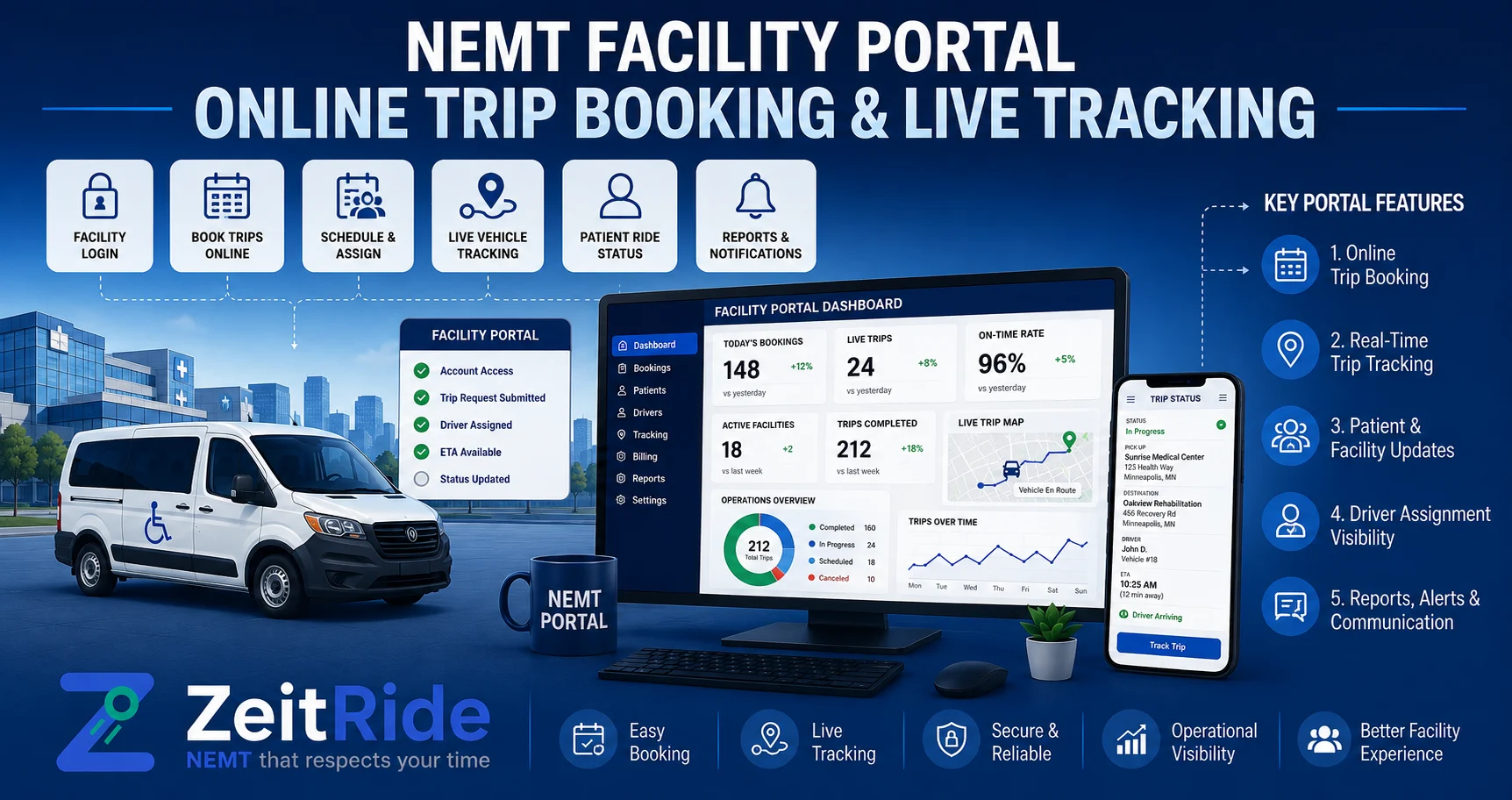
Learn how an NEMT facility portal lets hospitals, dialysis centers, and care teams request trips, manage recurring rides, and track transportation live.
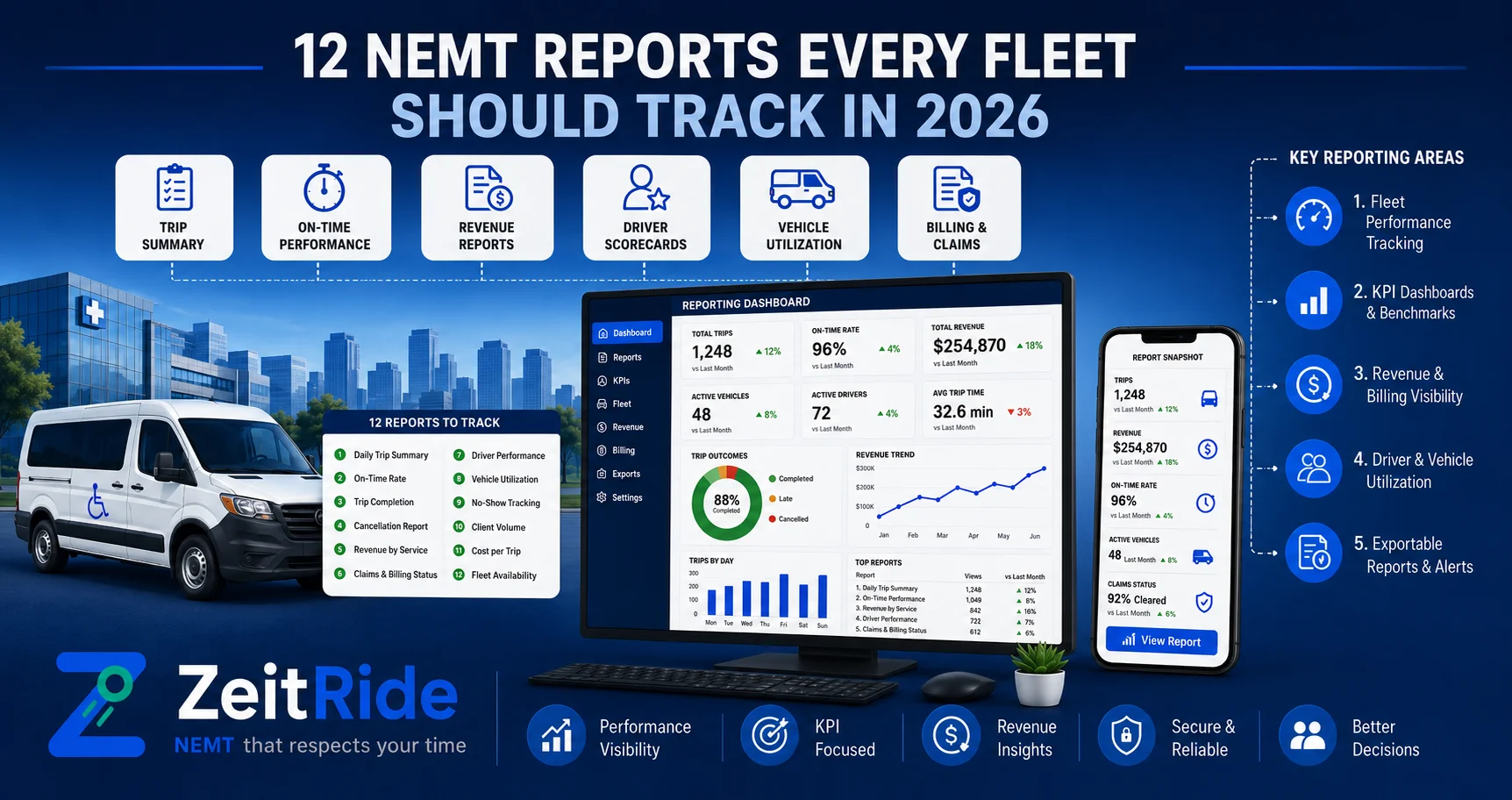
Learn the NEMT reports every fleet should track, from on-time performance and utilization to no-shows, billing, revenue, and compliance.
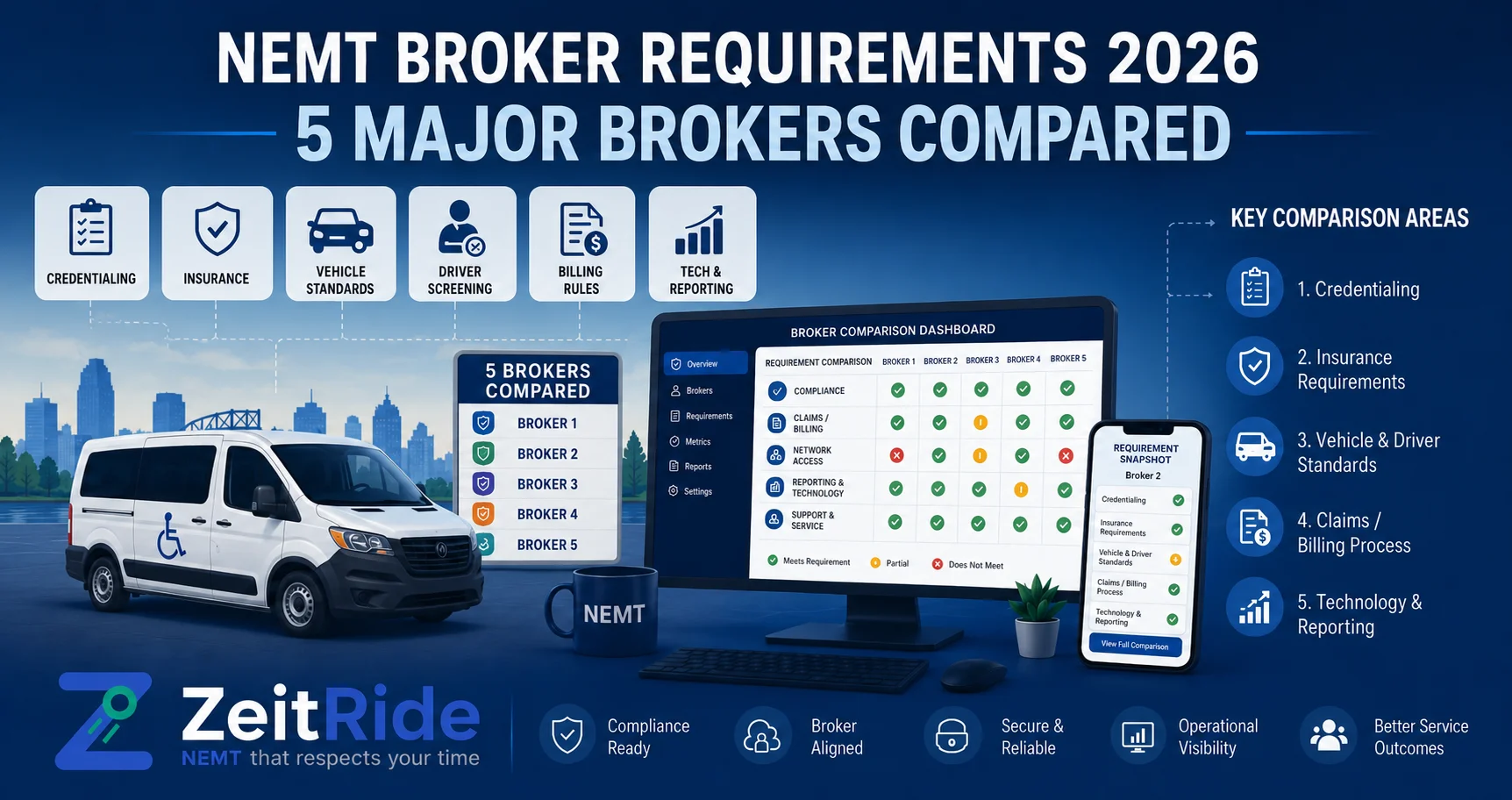
Compare 2026 requirements for ModivCare, MTM, SafeRide, Verida and MAS, including credentialing, GPS, trip verification, performance and billing.
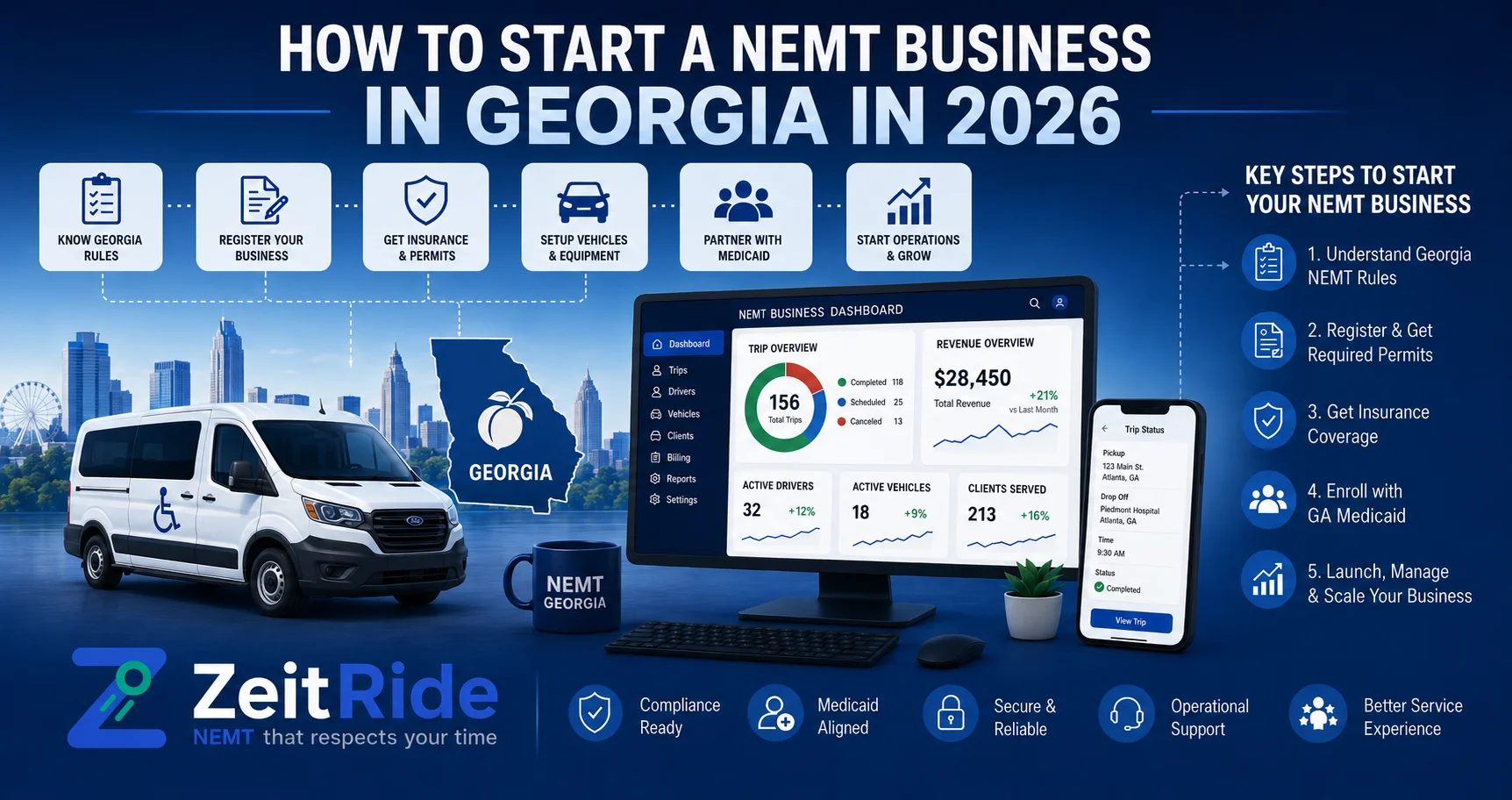
Start a Georgia NEMT business in 2026 with current guidance on DCH, Verida, licensing, provider requirements, costs, and dispatch setup.
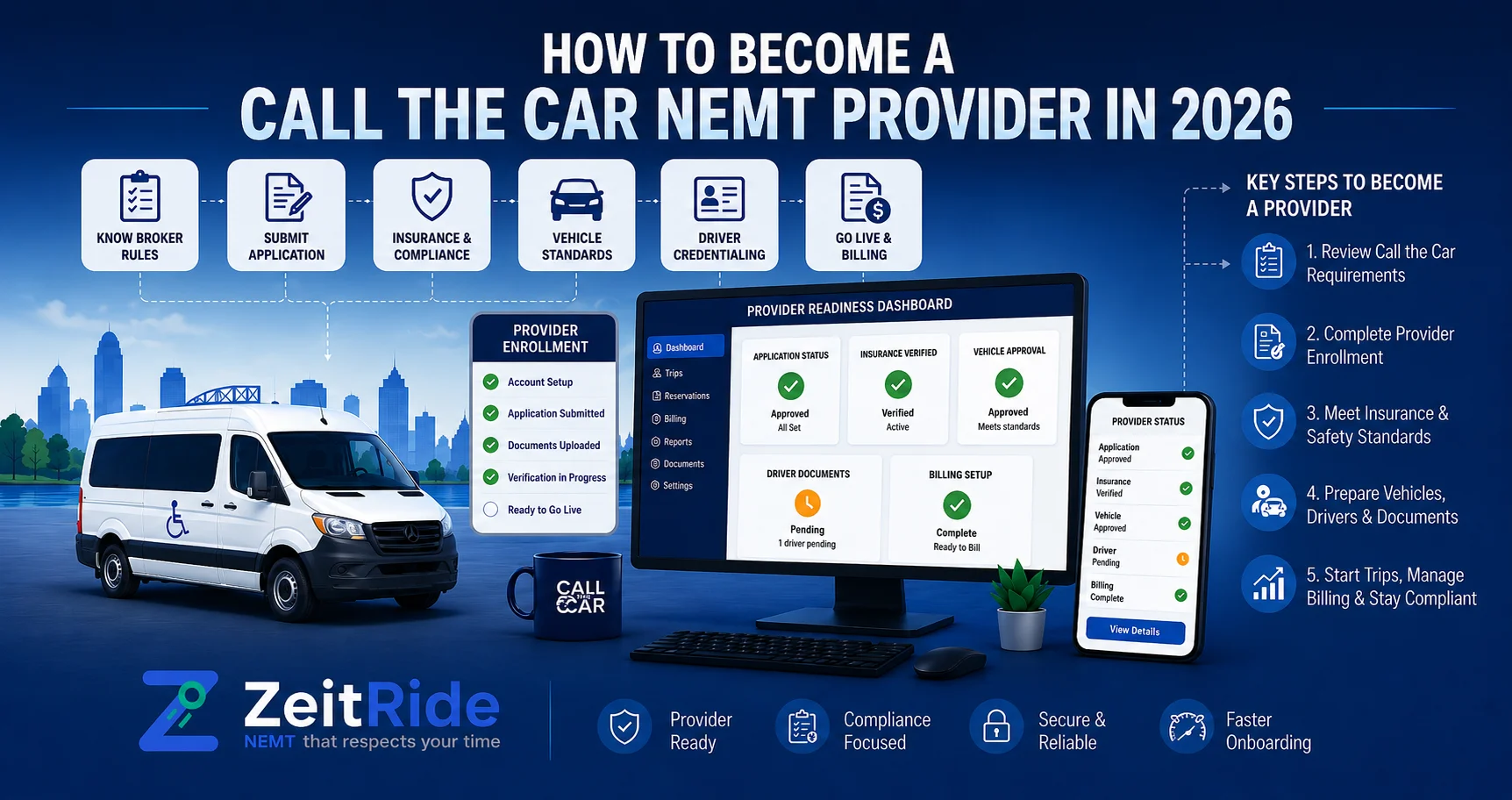
Learn how to become a Call the Car NEMT provider in 2026, including application fields, provider requirements, credentialing, and dispatch setup.
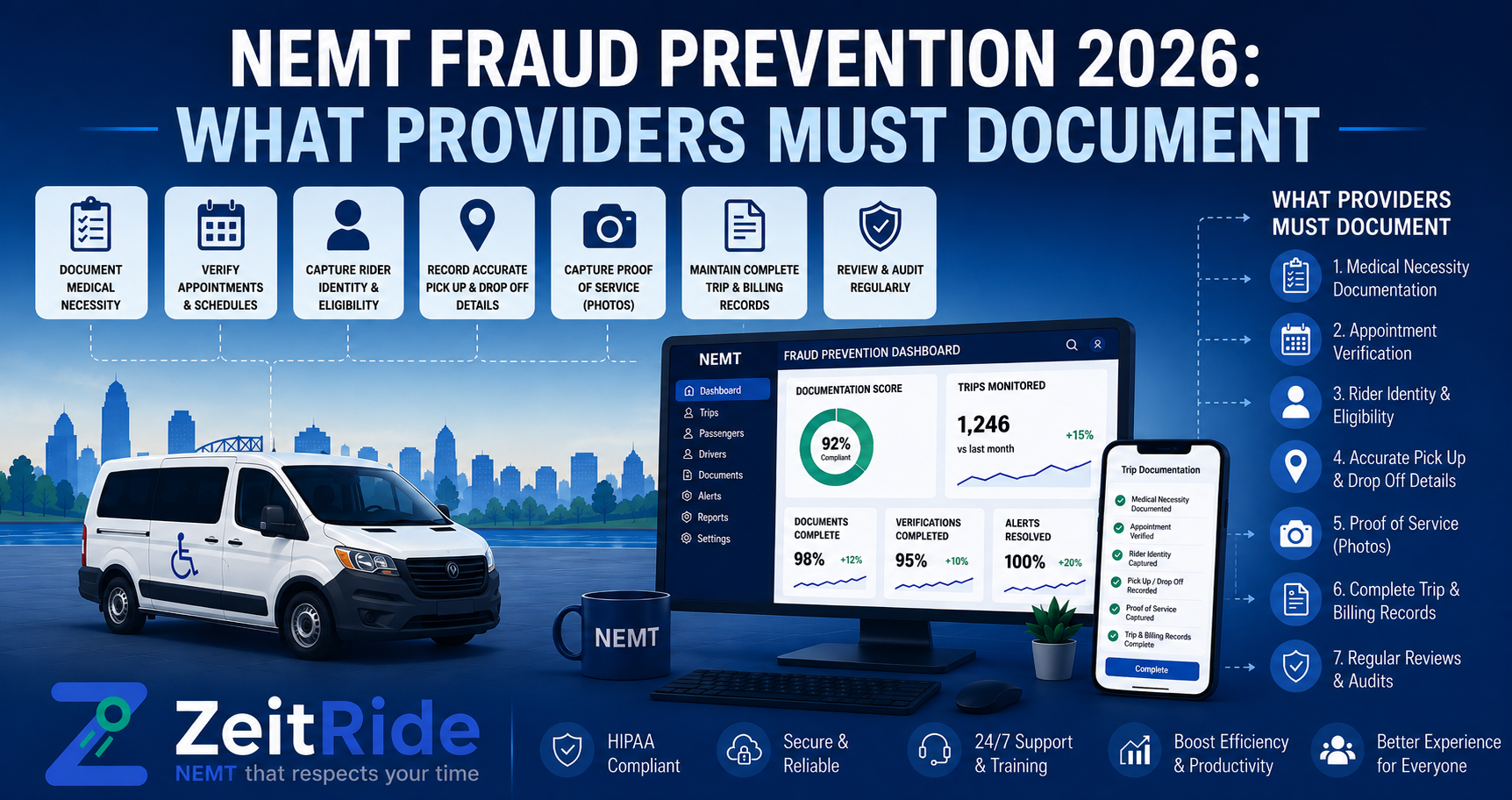
Recent NEMT fraud cases and audits show why trip records matter. Learn the red flags, controls, and documentation providers should review in 2026.
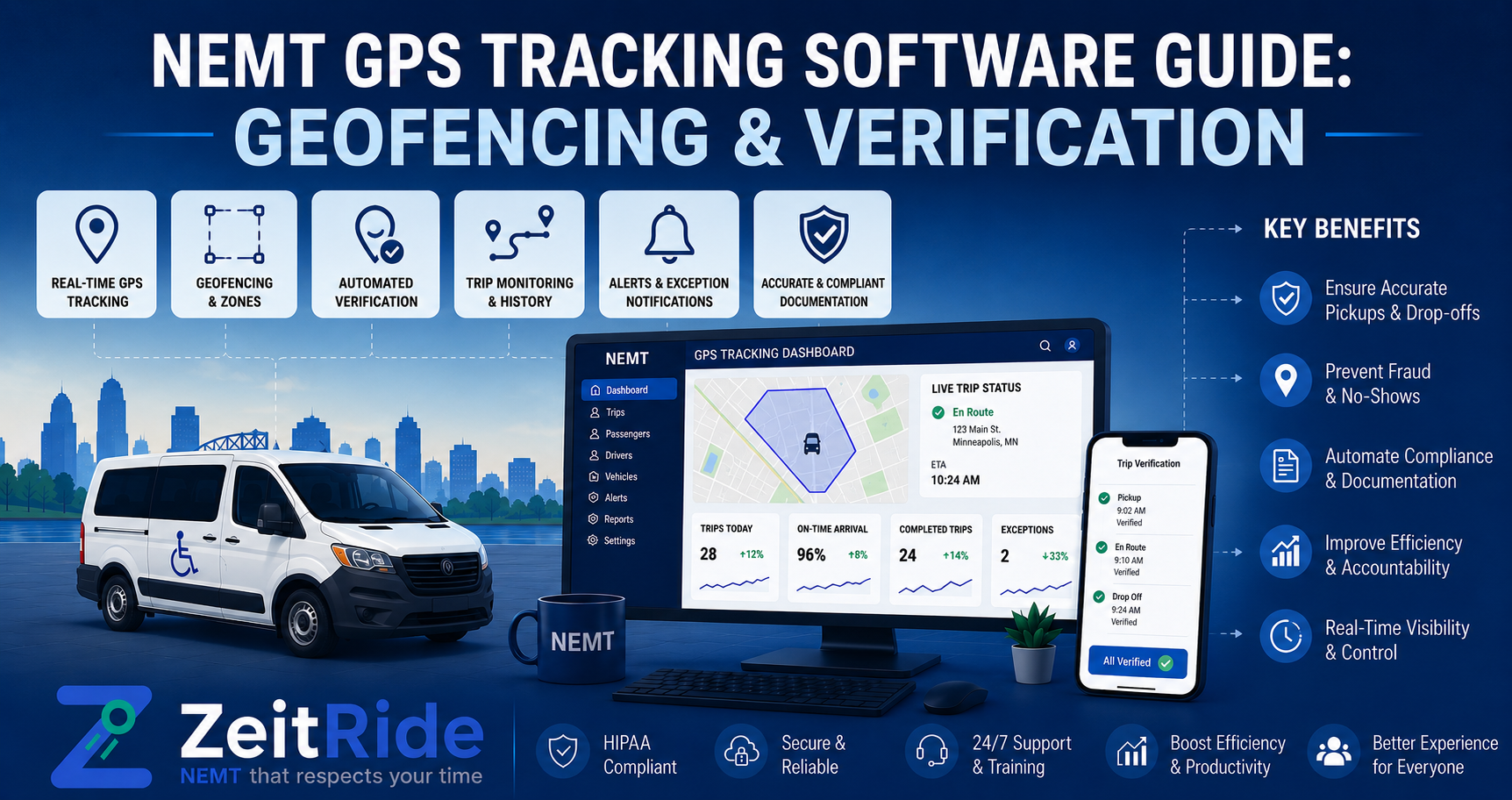
Learn how NEMT GPS tracking software connects live vehicle visibility, geofencing, timestamps, and trip verification for cleaner NEMT operations.
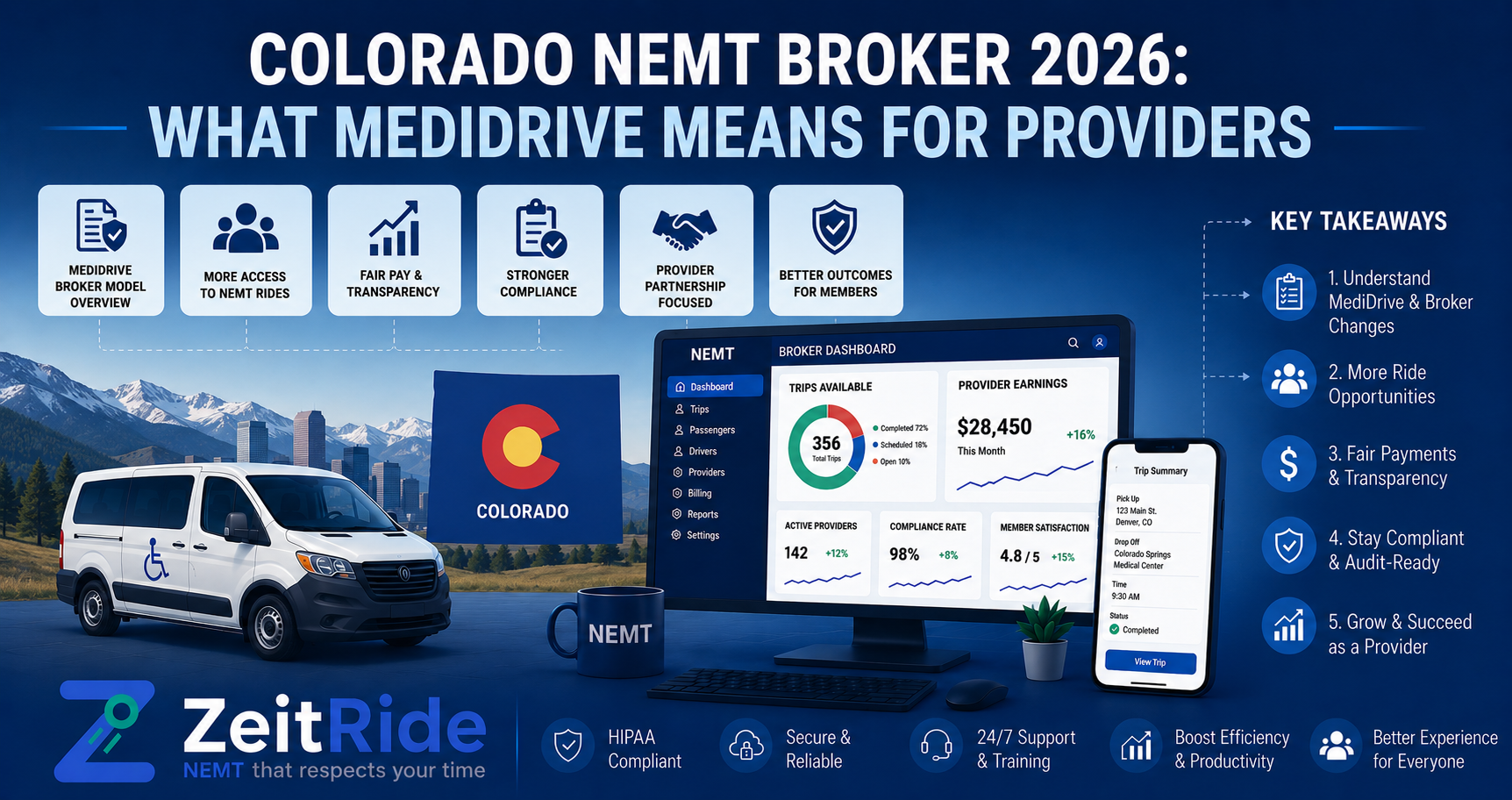
Colorado’s NEMT broker changed in 2026. See MediDrive rollout dates, provider requirements, billing changes, and what fleets should do next.
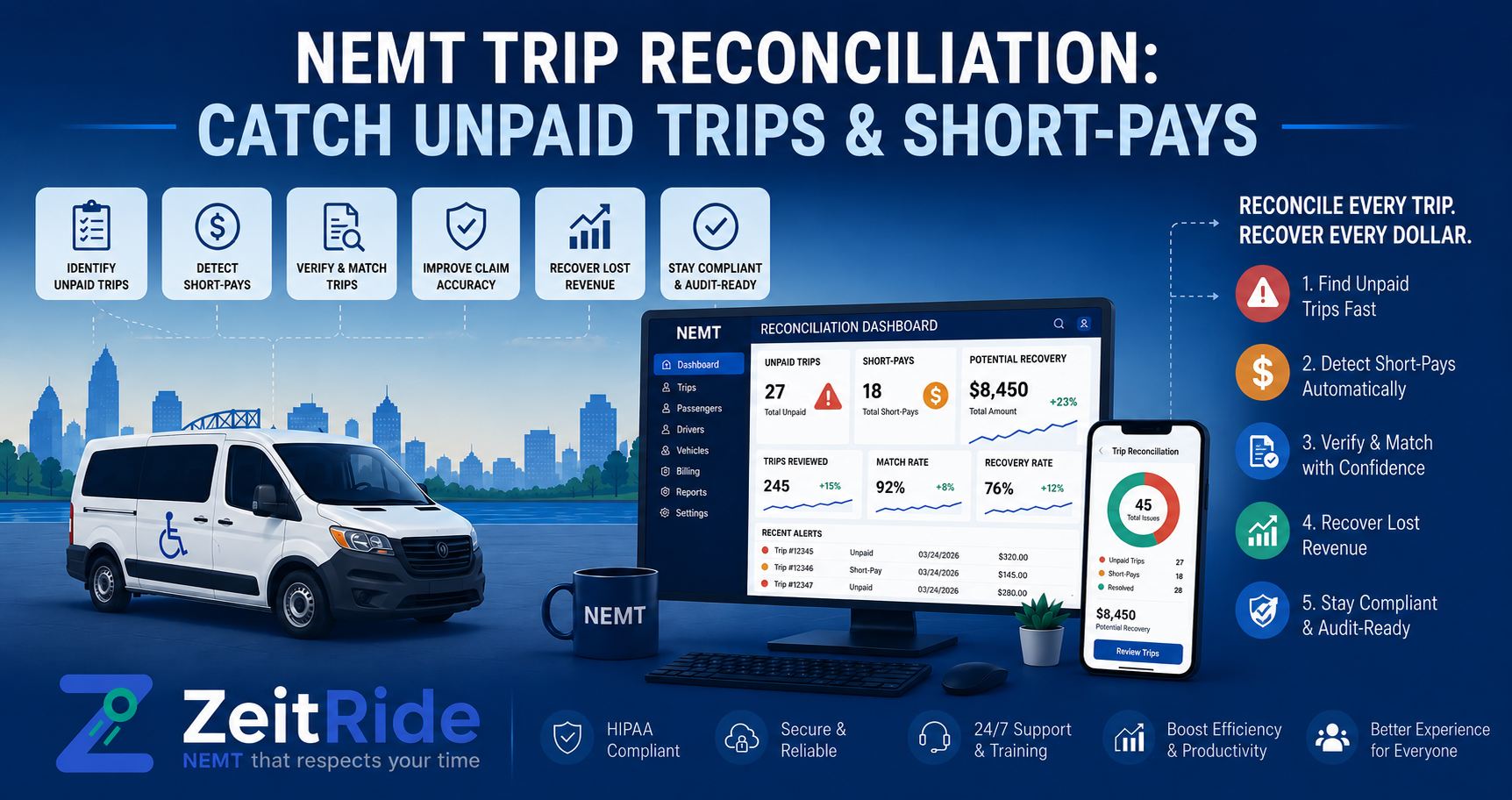
Learn how to reconcile NEMT trips against broker payments to catch unpaid trips, short-pays, missing return legs, and other revenue gaps.
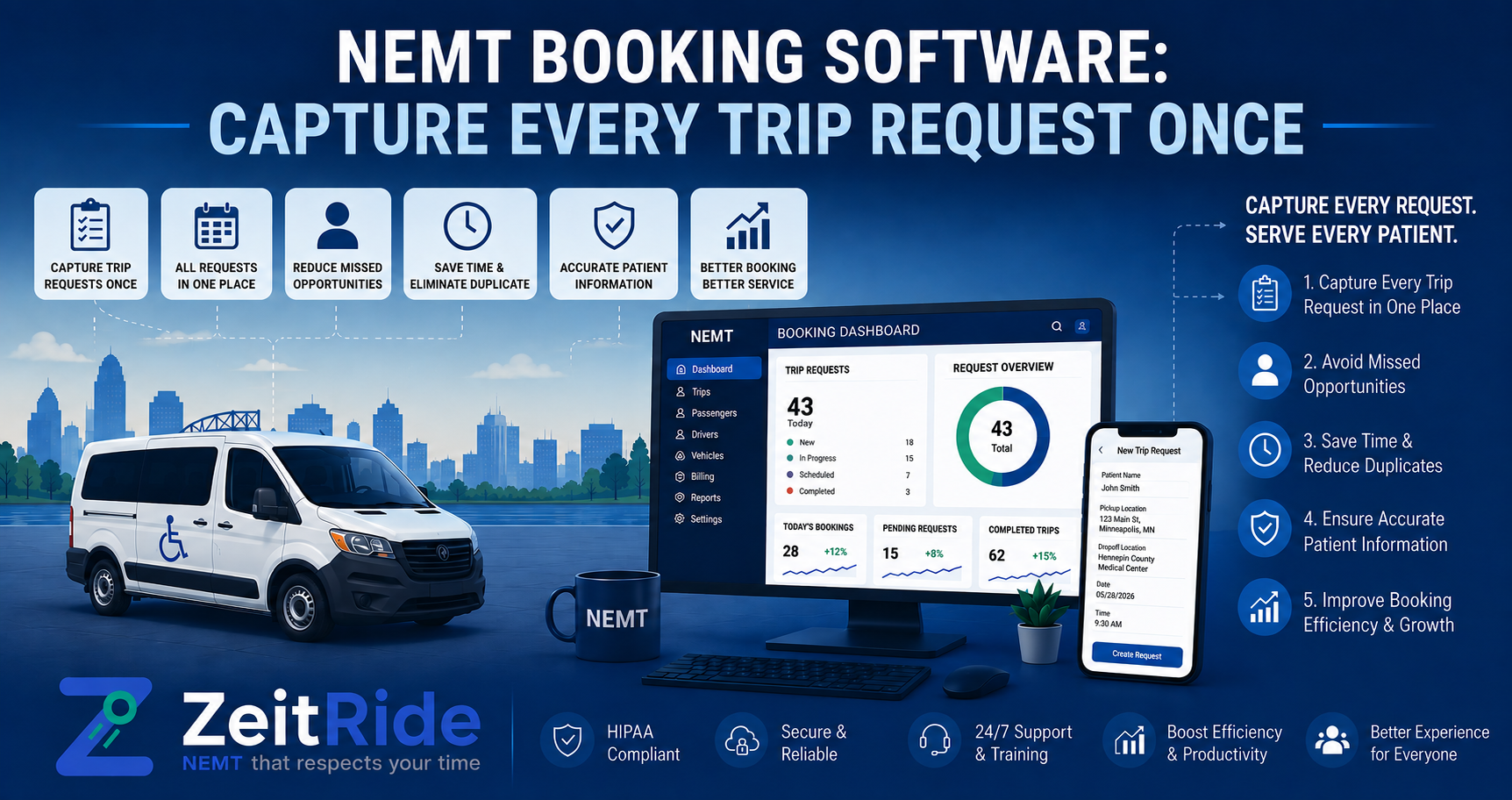
Learn how NEMT providers can capture online, facility, phone, and broker trip requests in one workflow without repetitive manual re-entry.
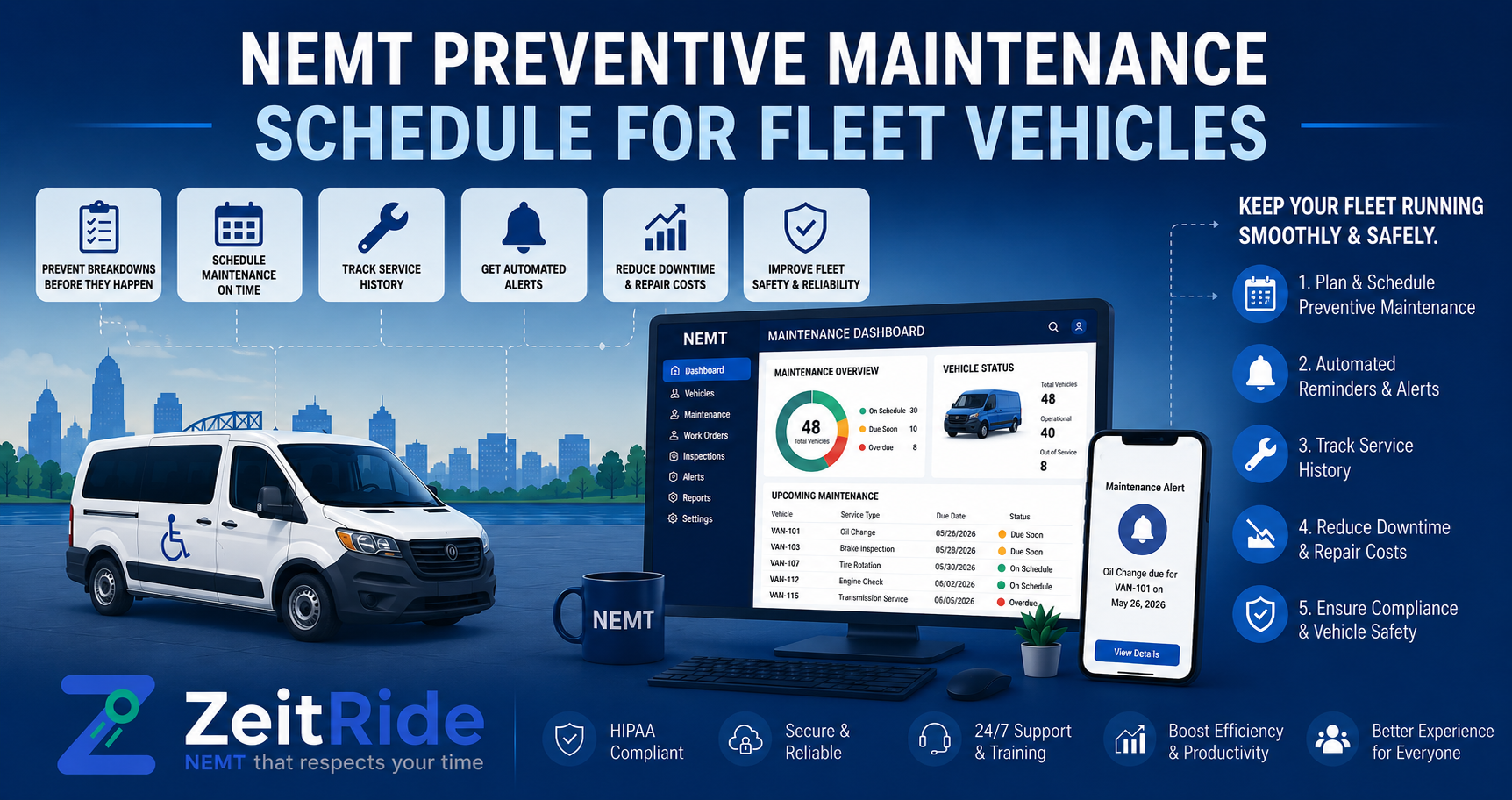
Build a practical NEMT preventive maintenance schedule for fleet vehicles, wheelchair lifts, inspections, service records, and vehicle readiness.
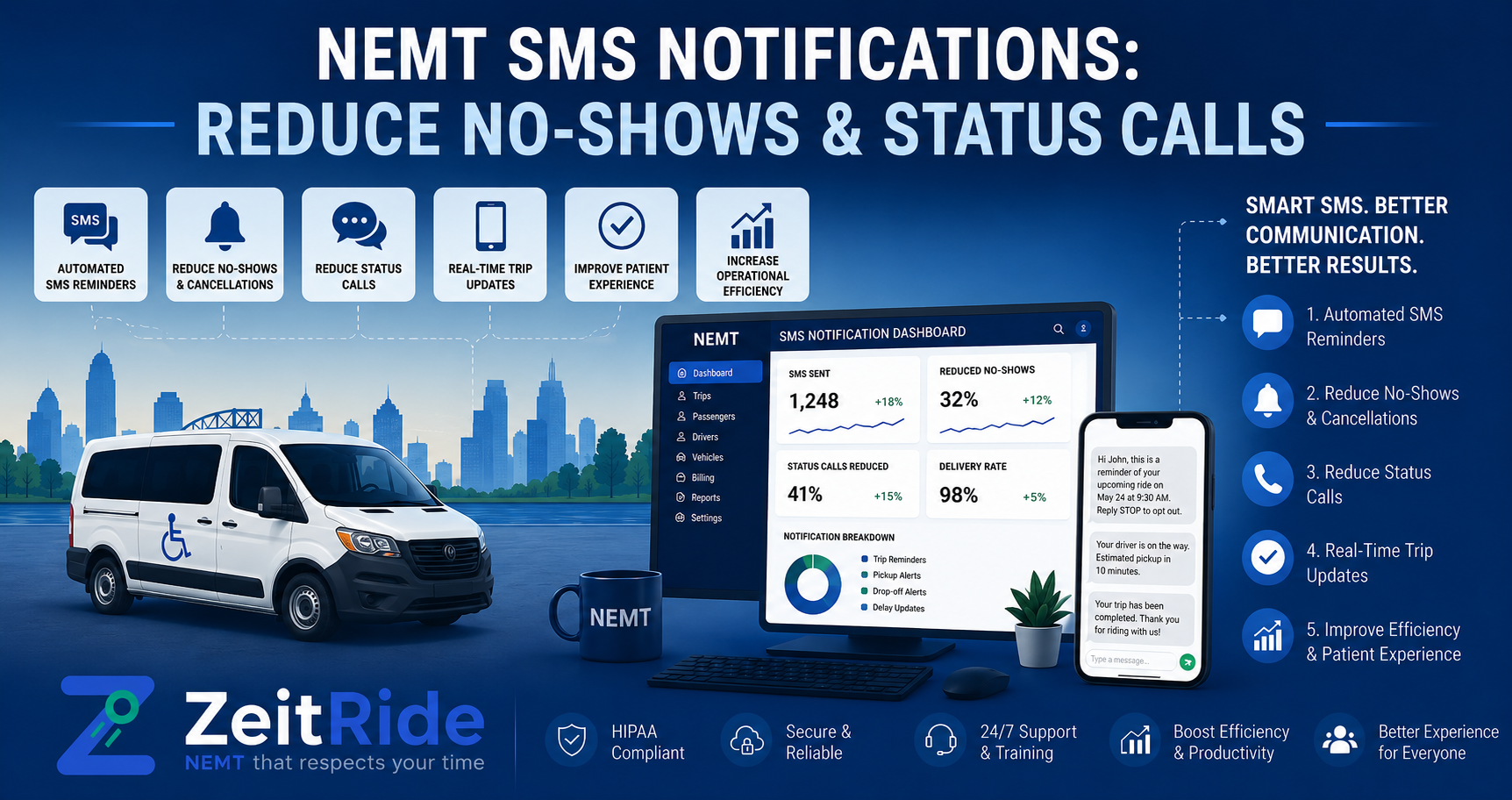
Learn how NEMT SMS notifications, trip reminders, ETA alerts, and voice updates can reduce no-shows, status calls, and dispatcher workload.
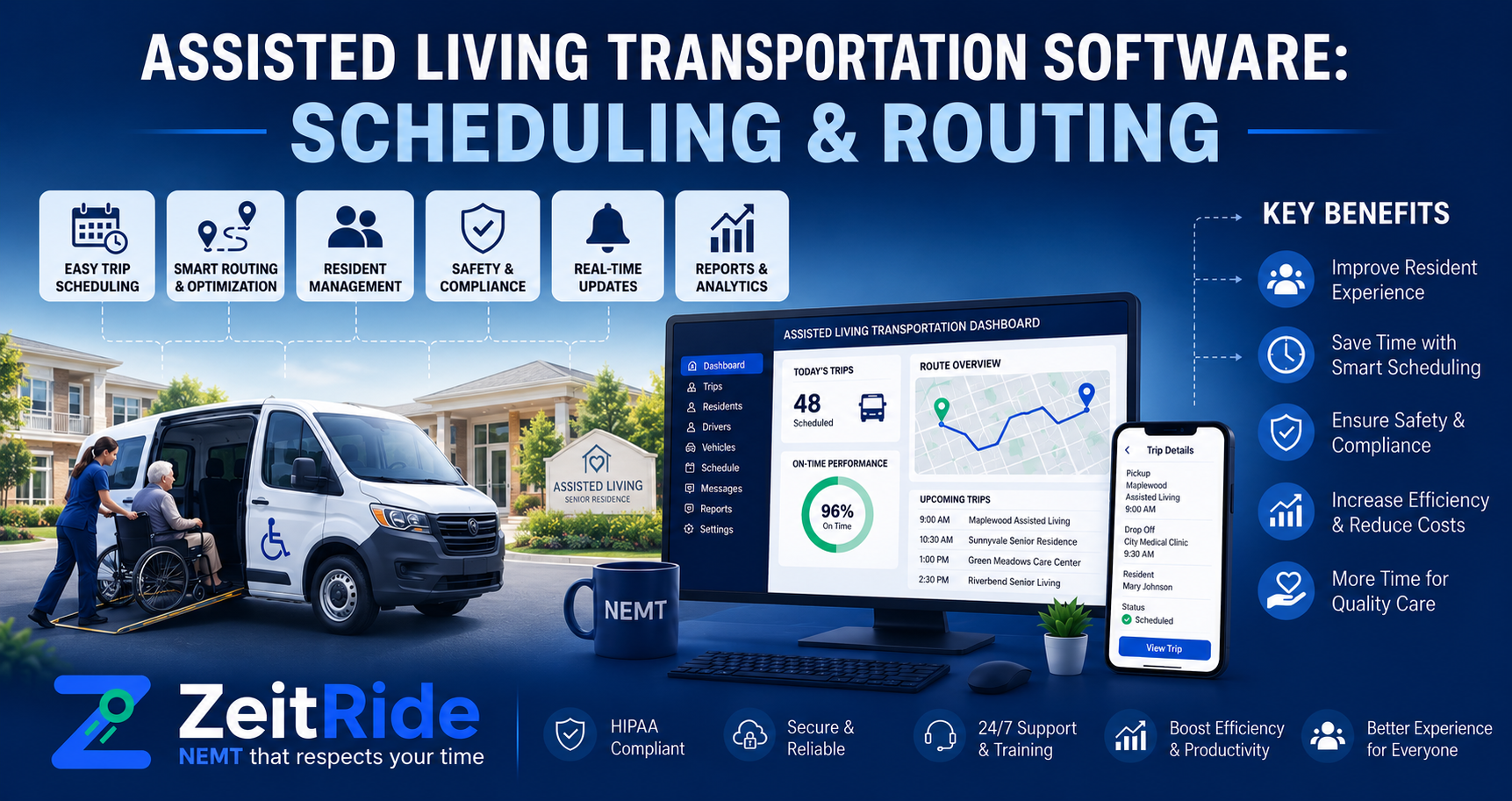
Learn how assisted living transportation software manages resident rides, recurring schedules, routes, drivers, vehicles, live changes, and trip records.
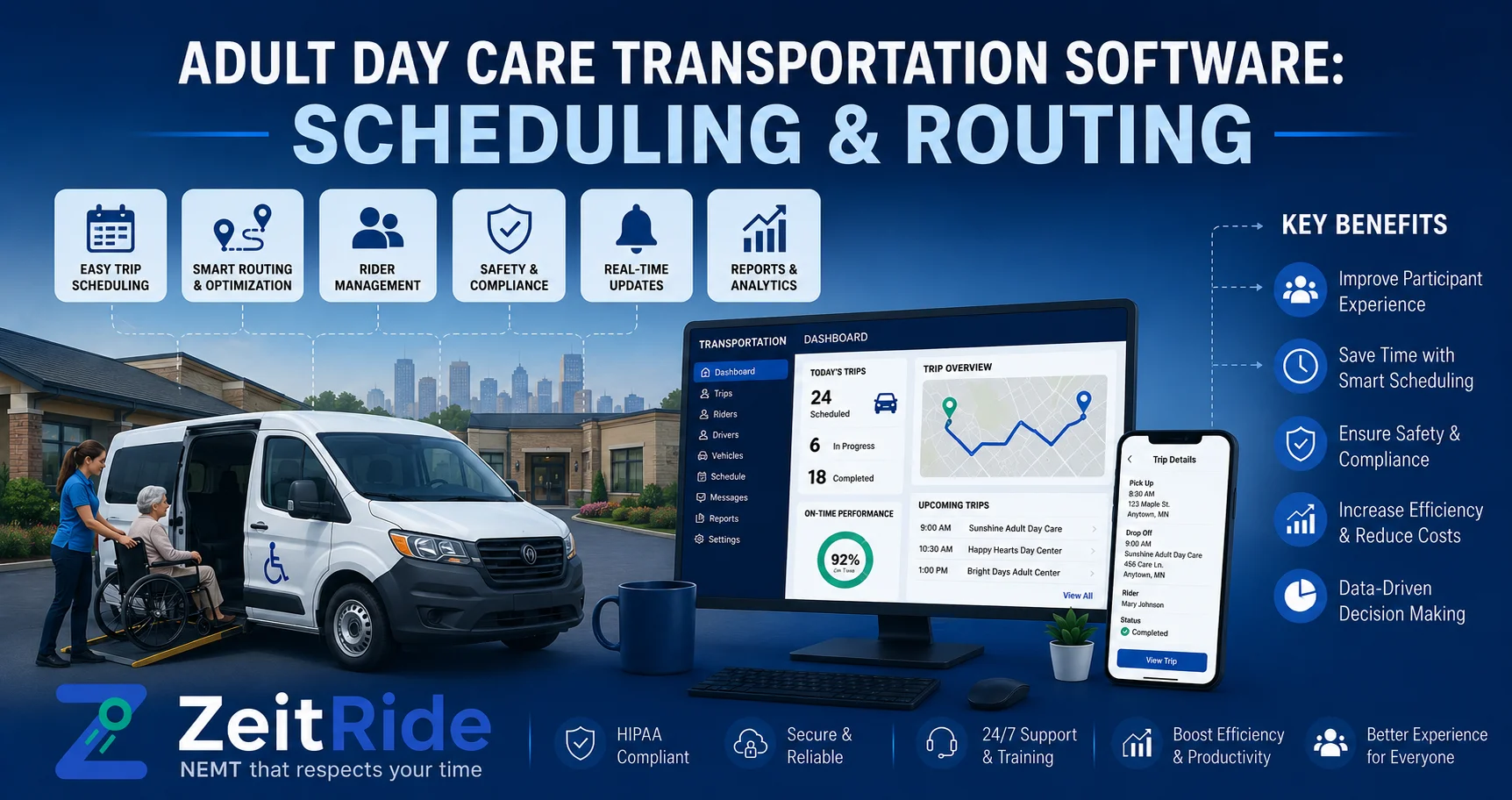
Learn how adult day care transportation software manages recurring schedules, routes, drivers, vehicles, live changes, trip records, and billing.
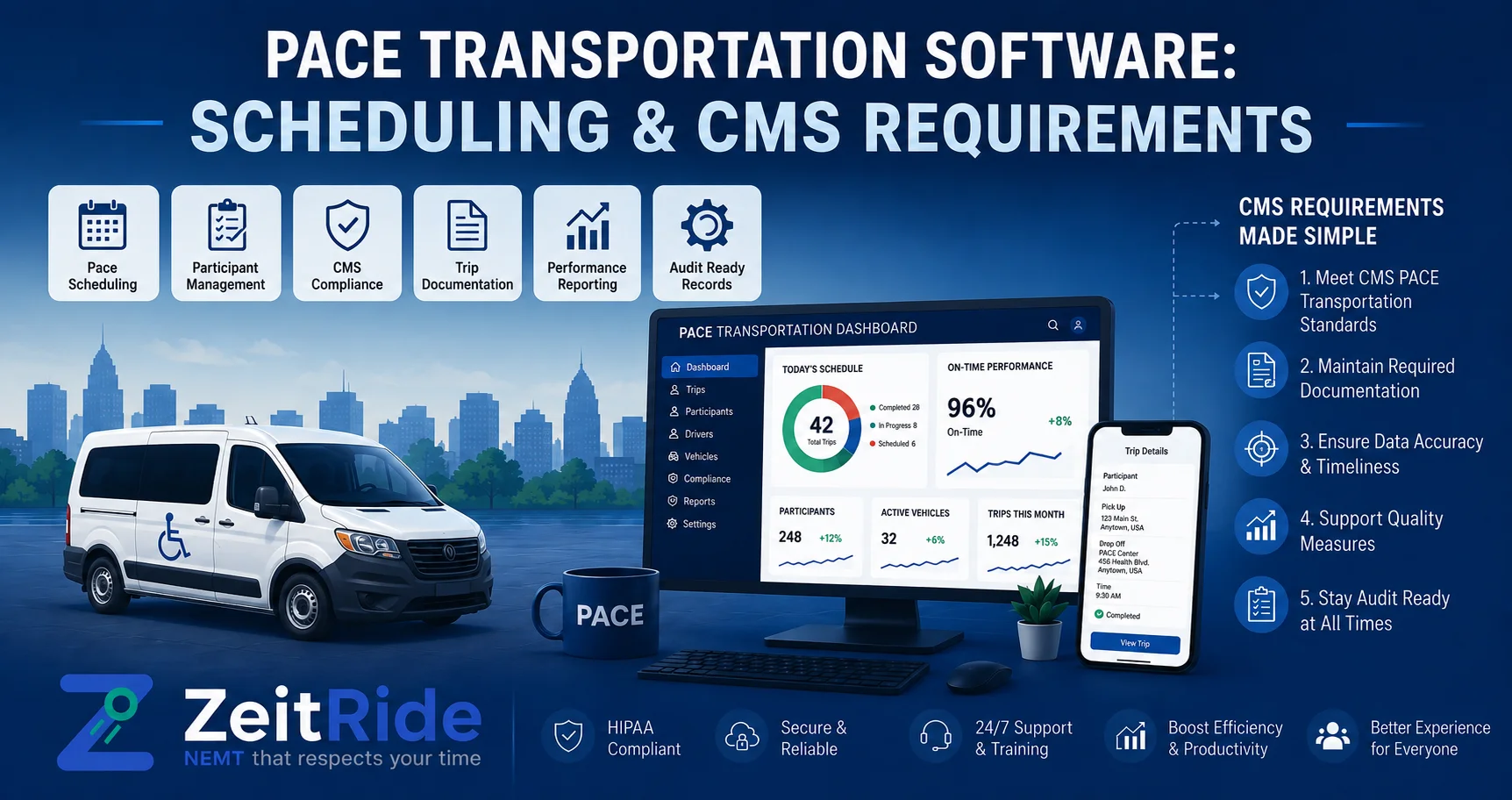
Learn how PACE transportation software helps manage recurring routes, live dispatch, participant needs, and CMS transportation requirements.
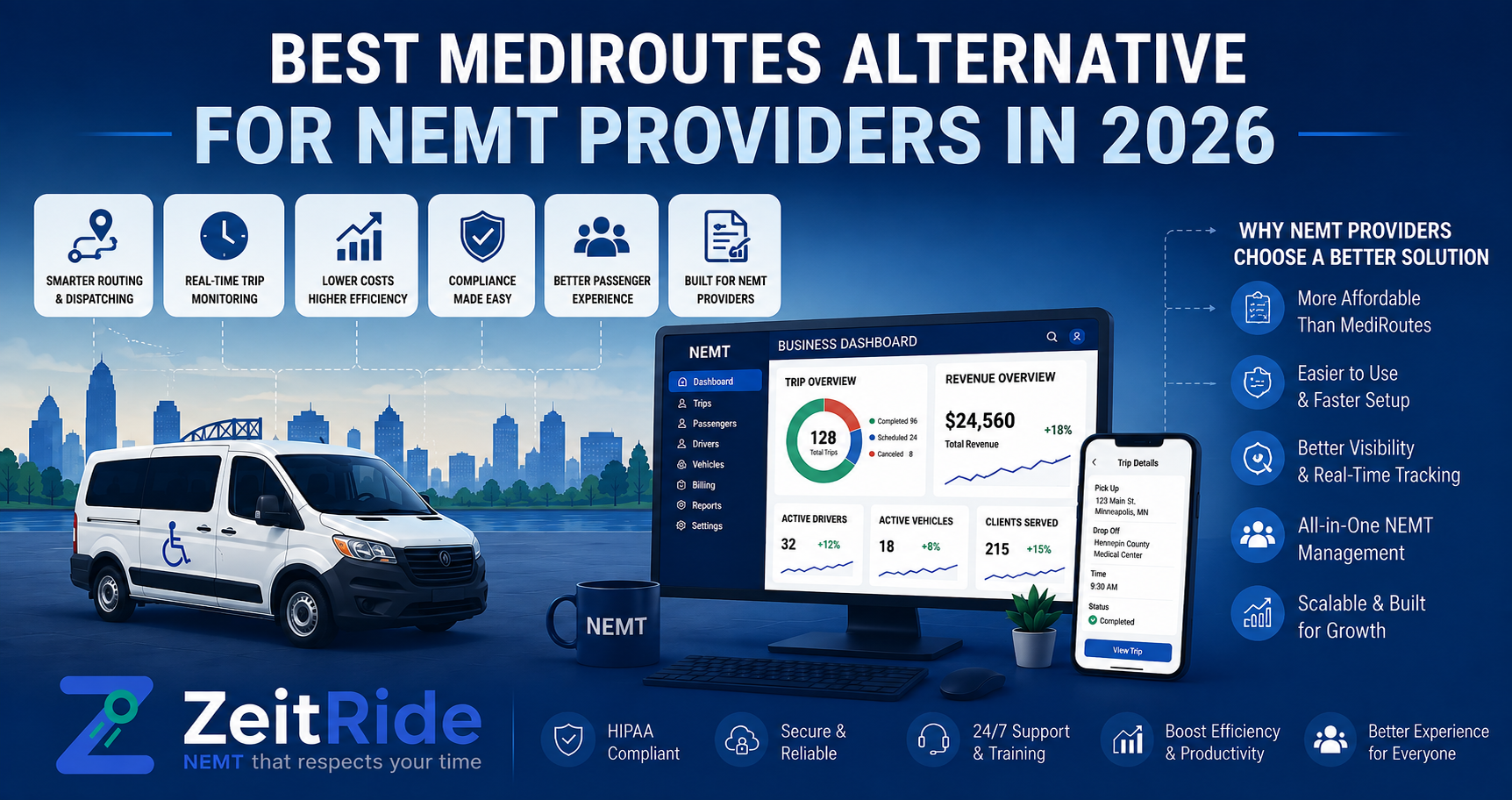
Compare ZeitRide vs MediRoutes on pricing, trip fees, scheduling, dispatch, broker integrations, driver apps, billing, and fleet fit in 2026.
Build a practical NEMT business plan with a free editable framework, financial model, sample assumptions, and U.S. provider guidance.
Compare hourly, per-trip, commission, and hybrid NEMT driver pay structures with practical examples for U.S. fleet operators.
See how hospitals and healthcare facilities can coordinate NEMT scheduling, live ride tracking, discharges, recurring trips, and billing.
Learn what Medicaid NEMT software should handle — from broker trip intake and dispatch to documentation, billing, compliance, and reconciliation.
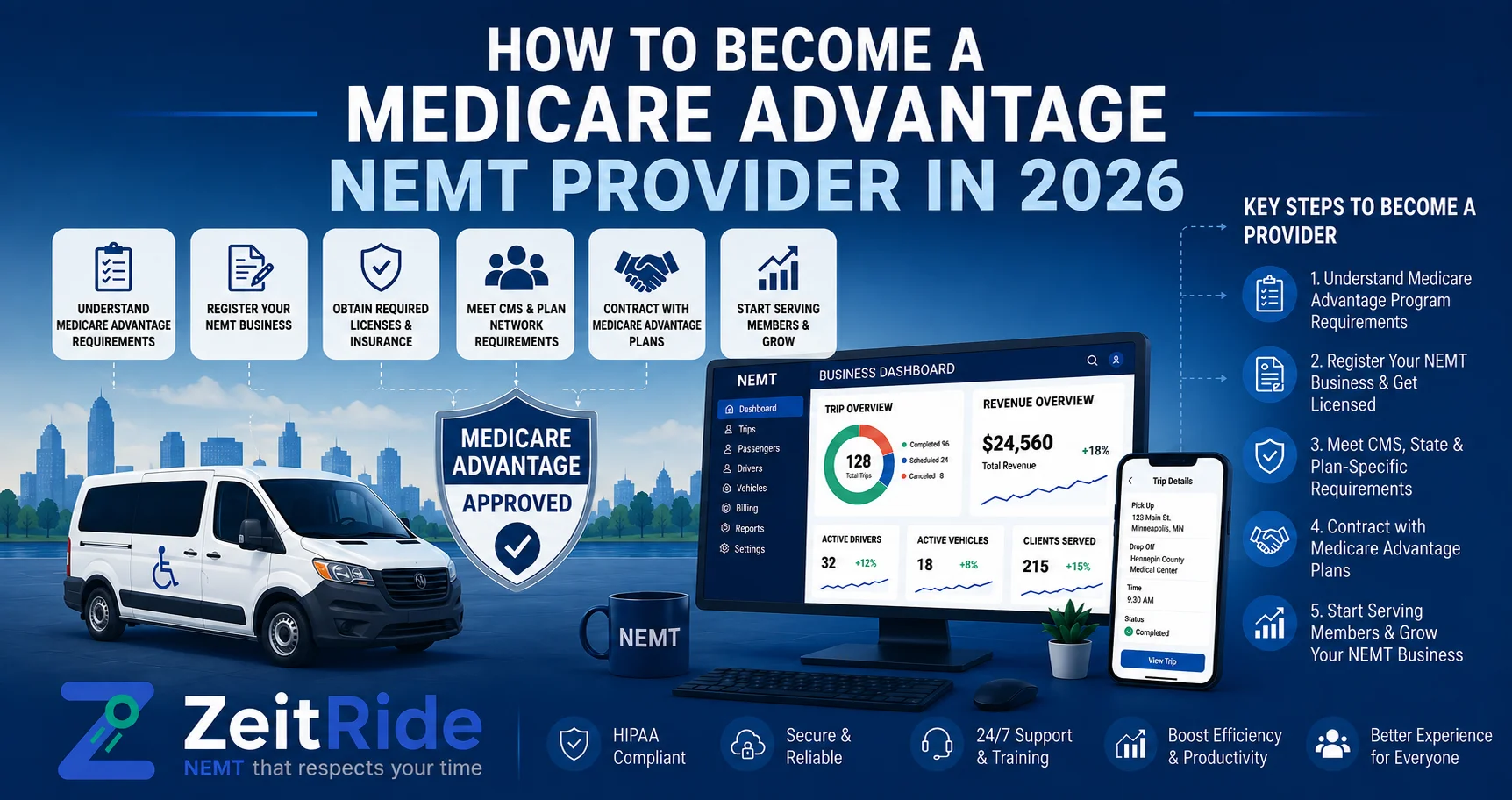
Learn how to become a Medicare Advantage NEMT provider in 2026 — networks, credentialing, contracts, trip documentation, and billing.
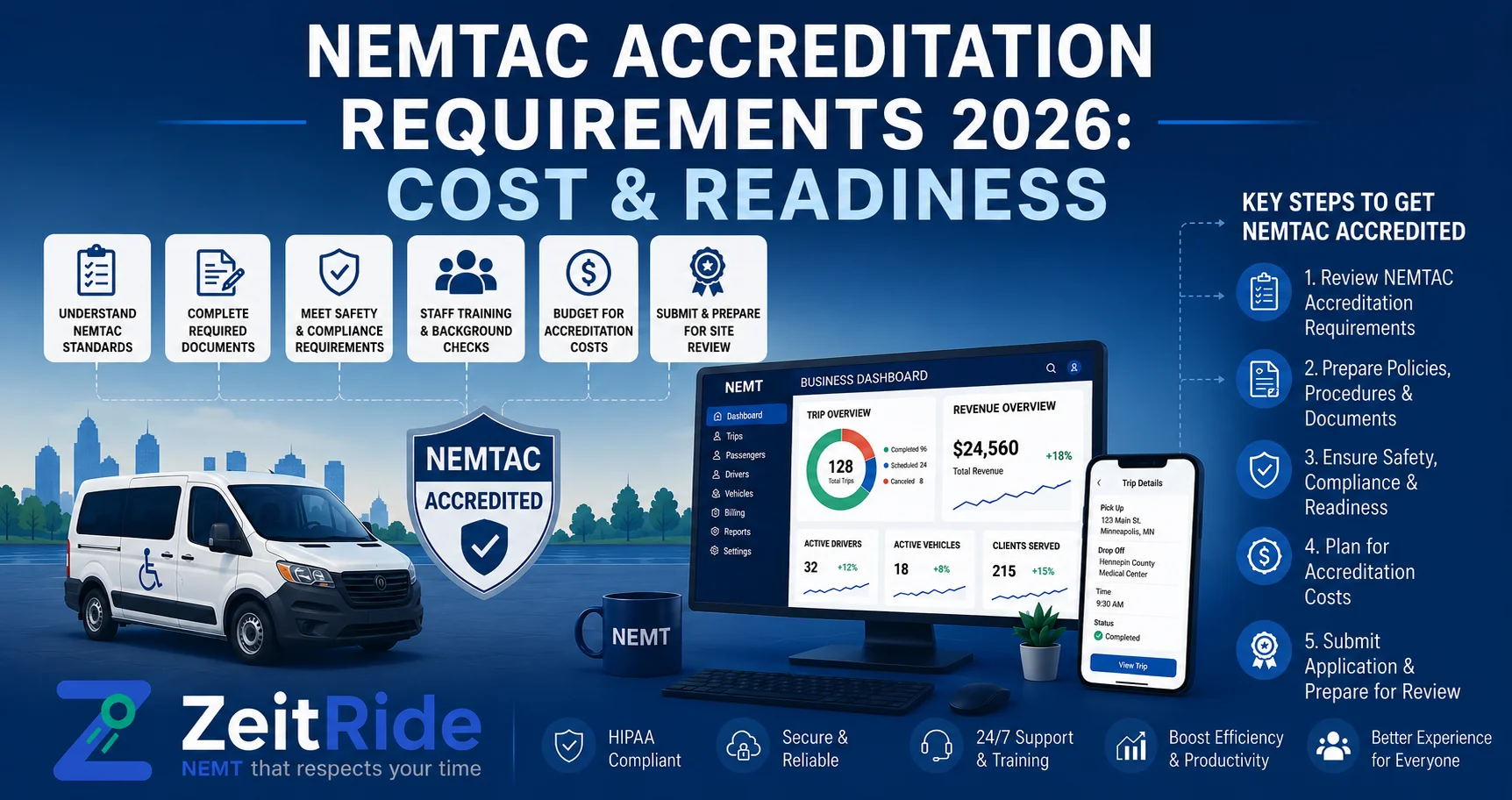
Learn NEMTAC accreditation requirements for 2026, including eligibility, cost, process, review areas, and a practical readiness checklist for NEMT providers.
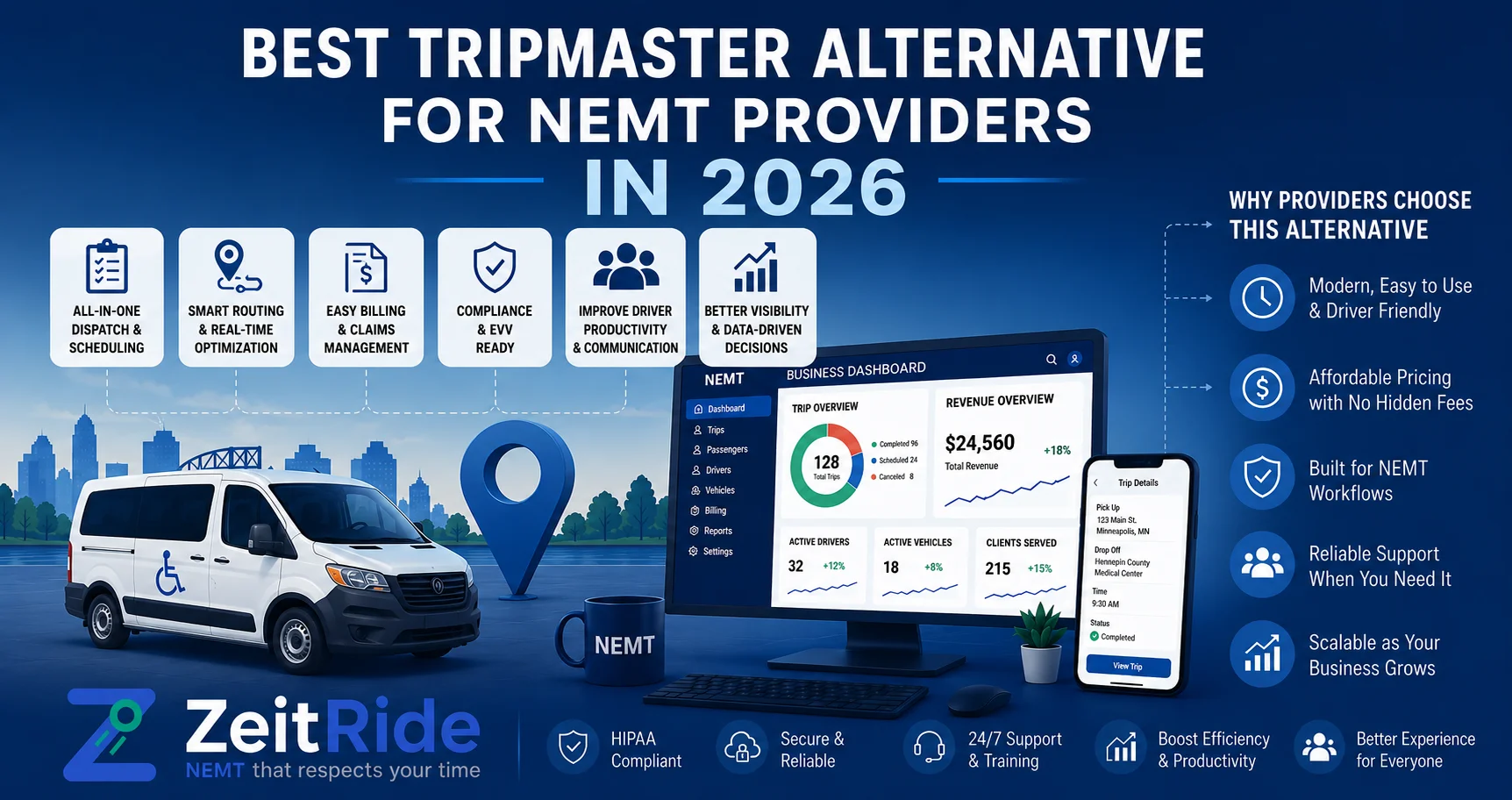
Compare TripMaster vs. ZeitRide for NEMT pricing, scheduling, dispatch, routing, broker workflows, driver tools, billing, and software migration.
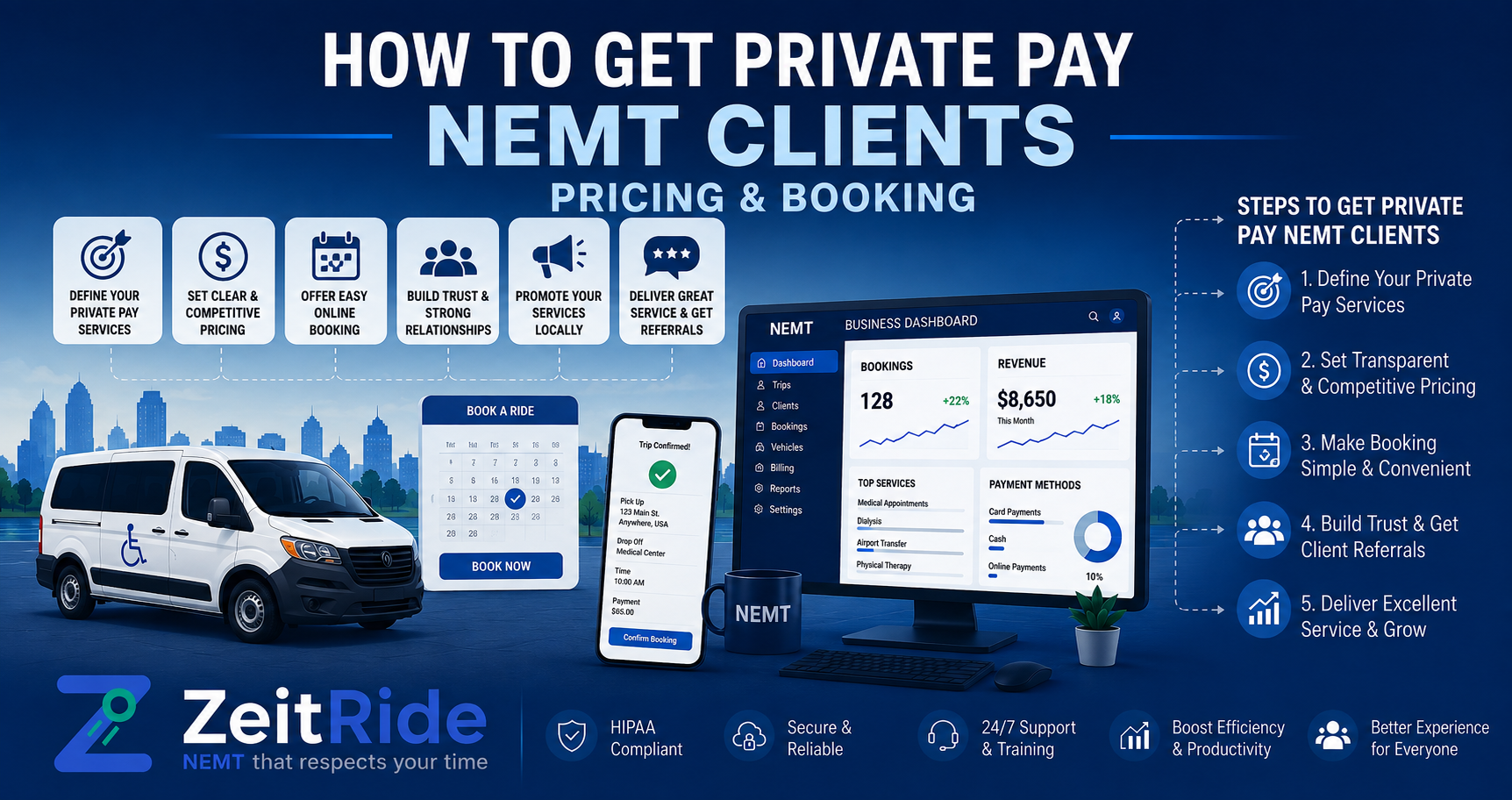
Learn how to attract private-pay NEMT clients, set profitable rates, streamline bookings, collect payments, and build repeat business.
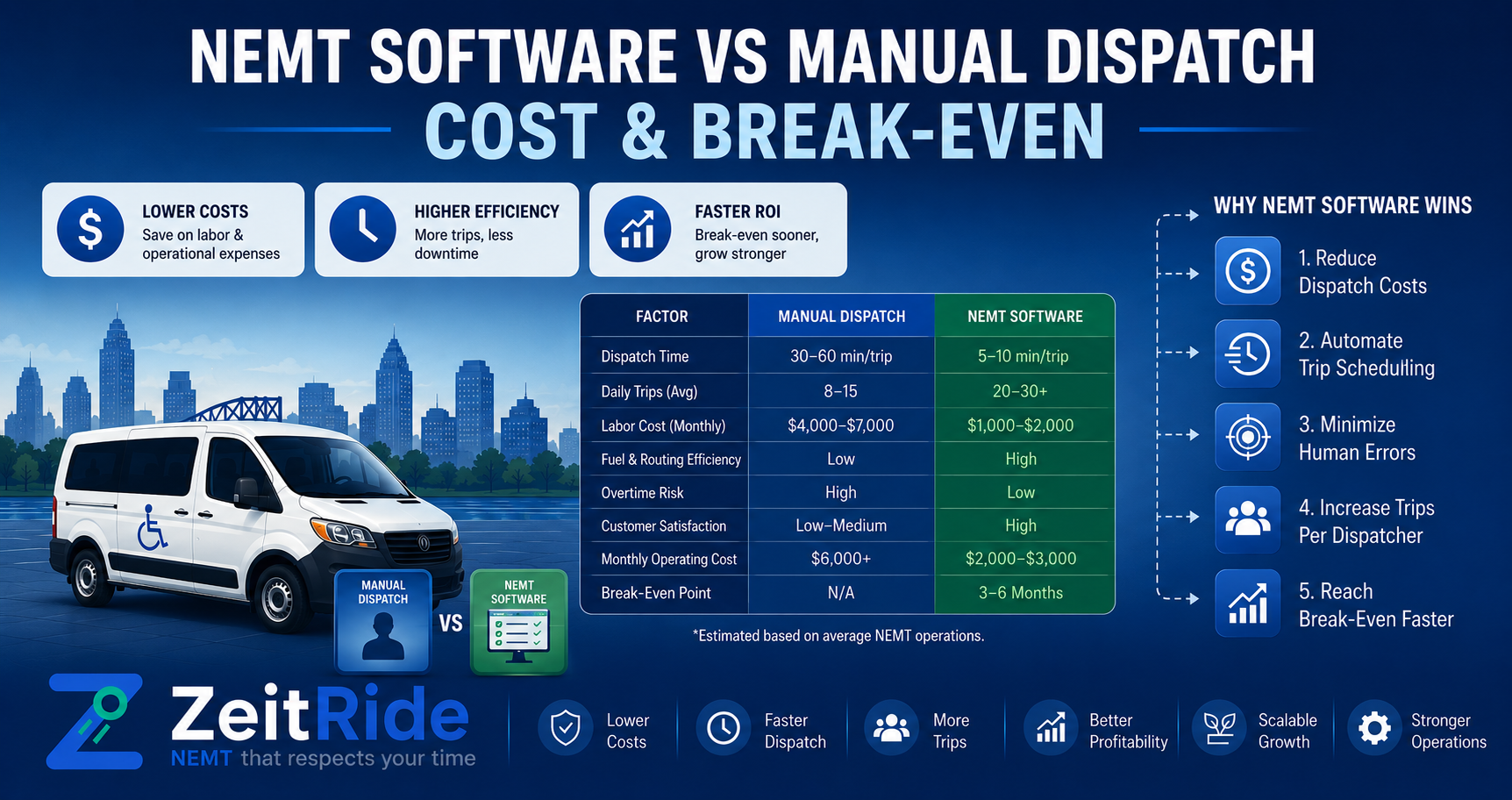
Compare manual NEMT dispatch with dedicated software, calculate break-even by fleet size, and determine when automation may justify its cost.
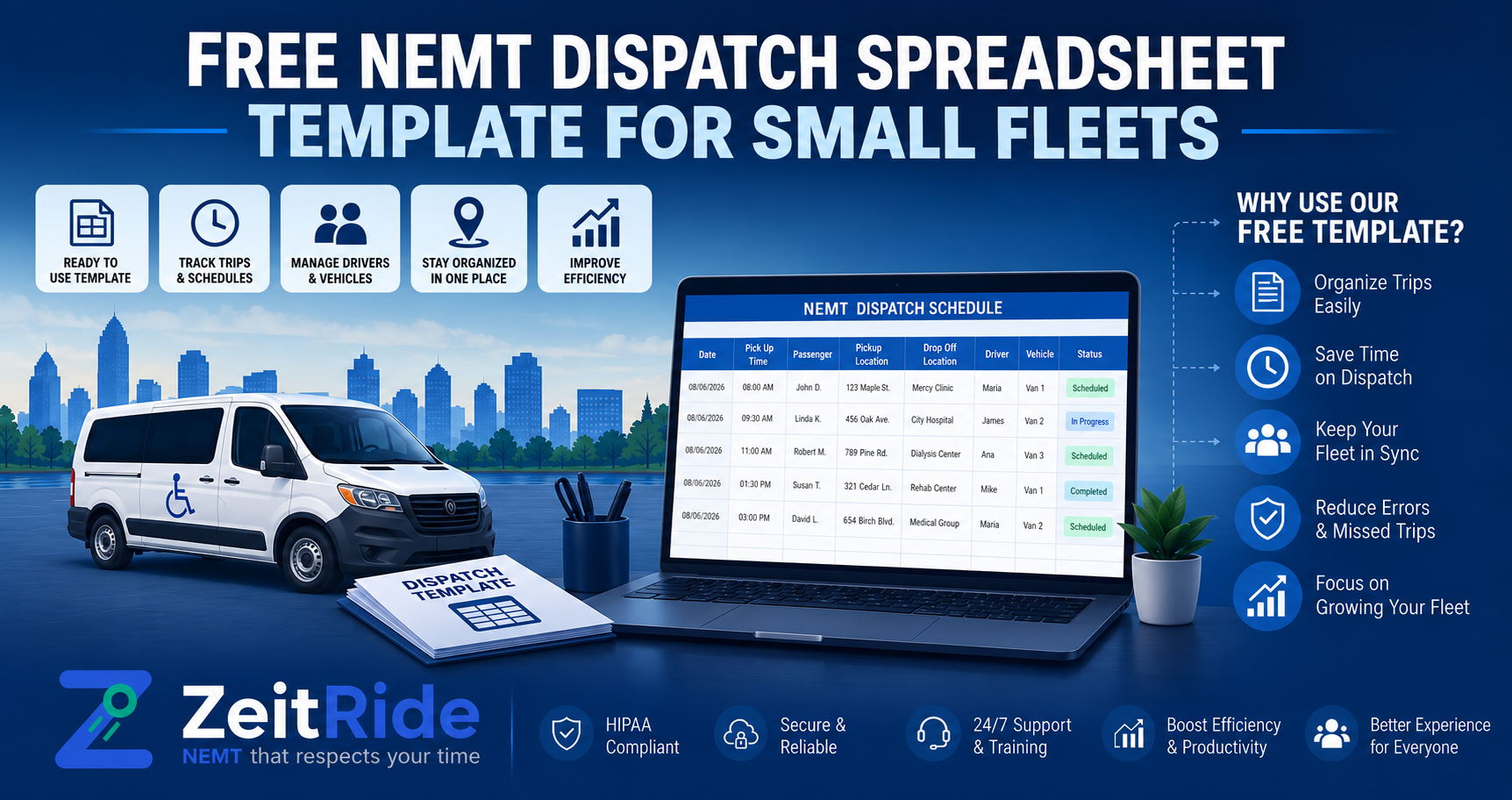
Copy a free NEMT dispatch spreadsheet template for Excel or Google Sheets to schedule trips, assign drivers, and manage daily fleet changes.
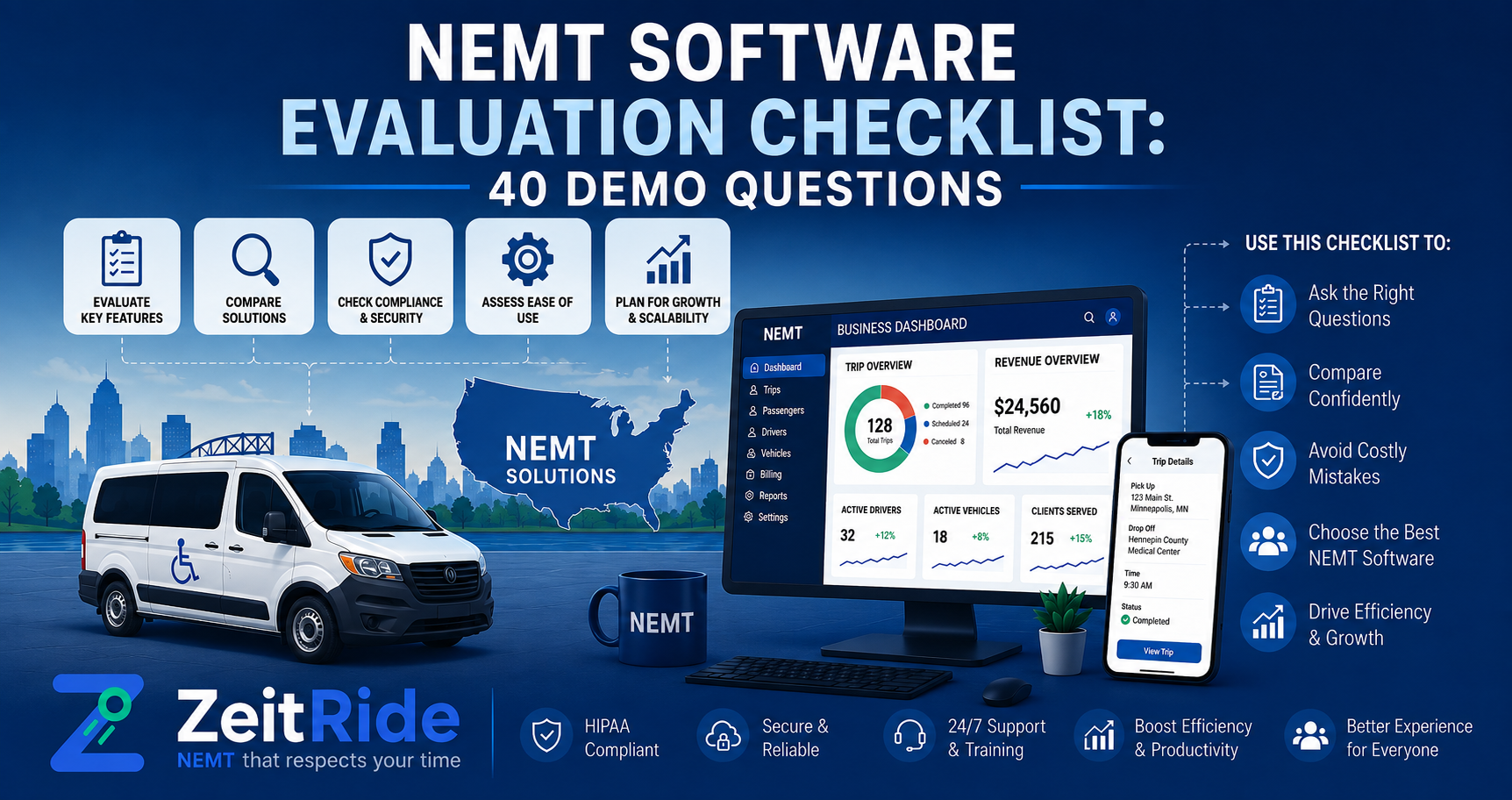
Compare NEMT software using 40 practical demo questions, a 100-point framework, key red flags, and a free vendor scorecard.
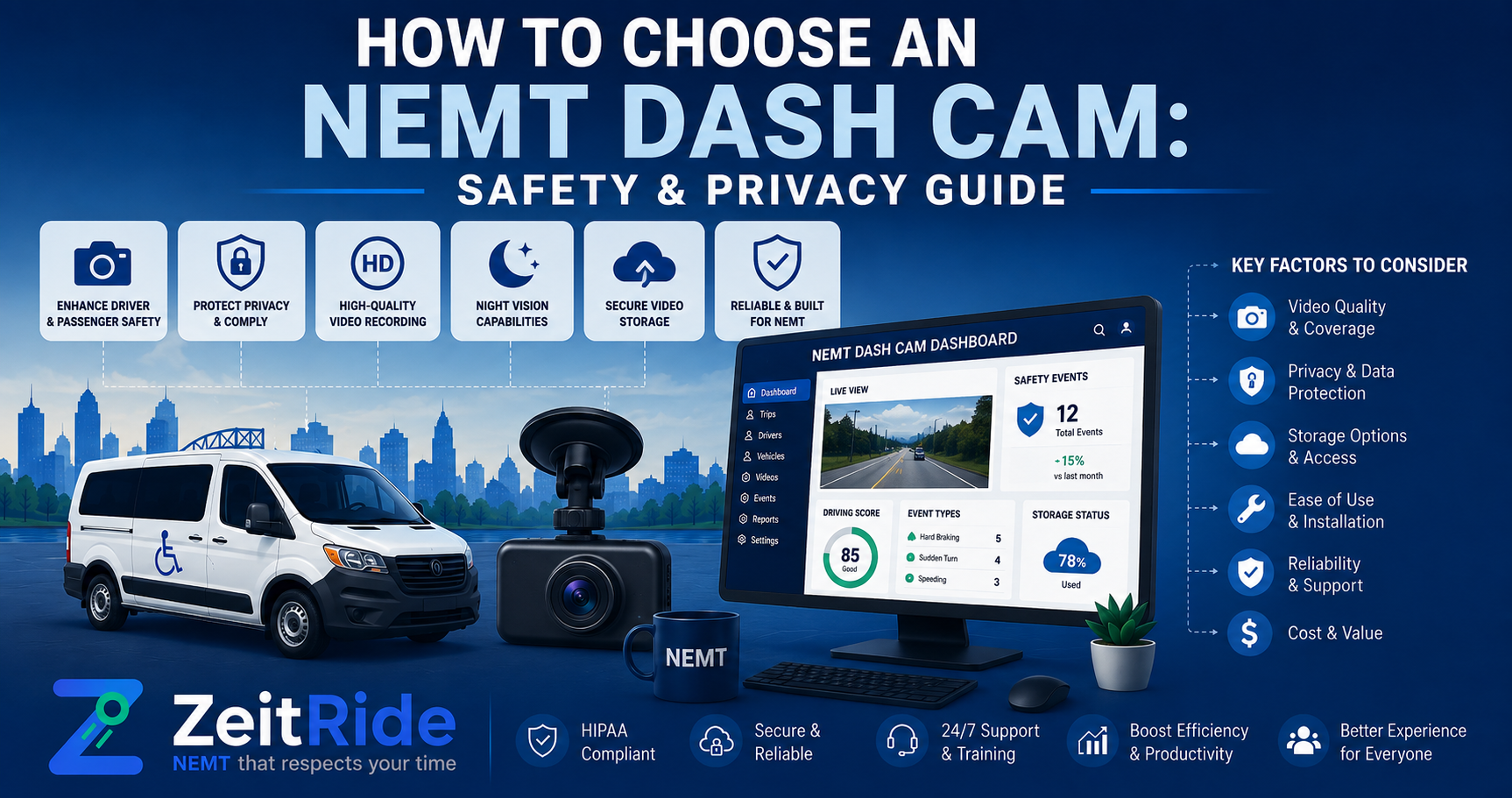
Learn how to choose an NEMT dash cam for passenger safety, privacy, incident evidence, driver accountability, and GPS-linked trip records.
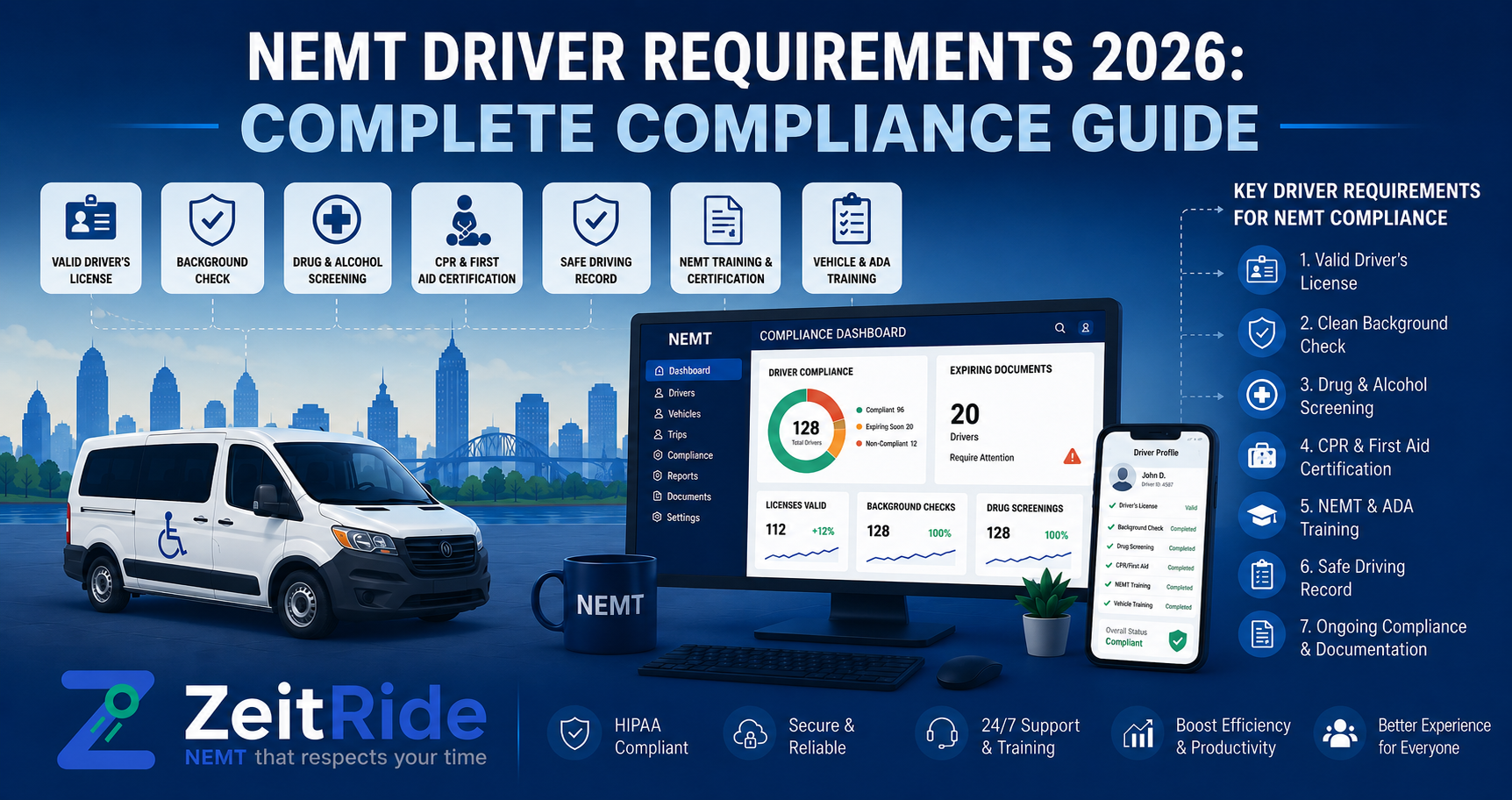
Learn the licensing, training, screening, and broker requirements NEMT operators should verify before assigning a driver to trips.
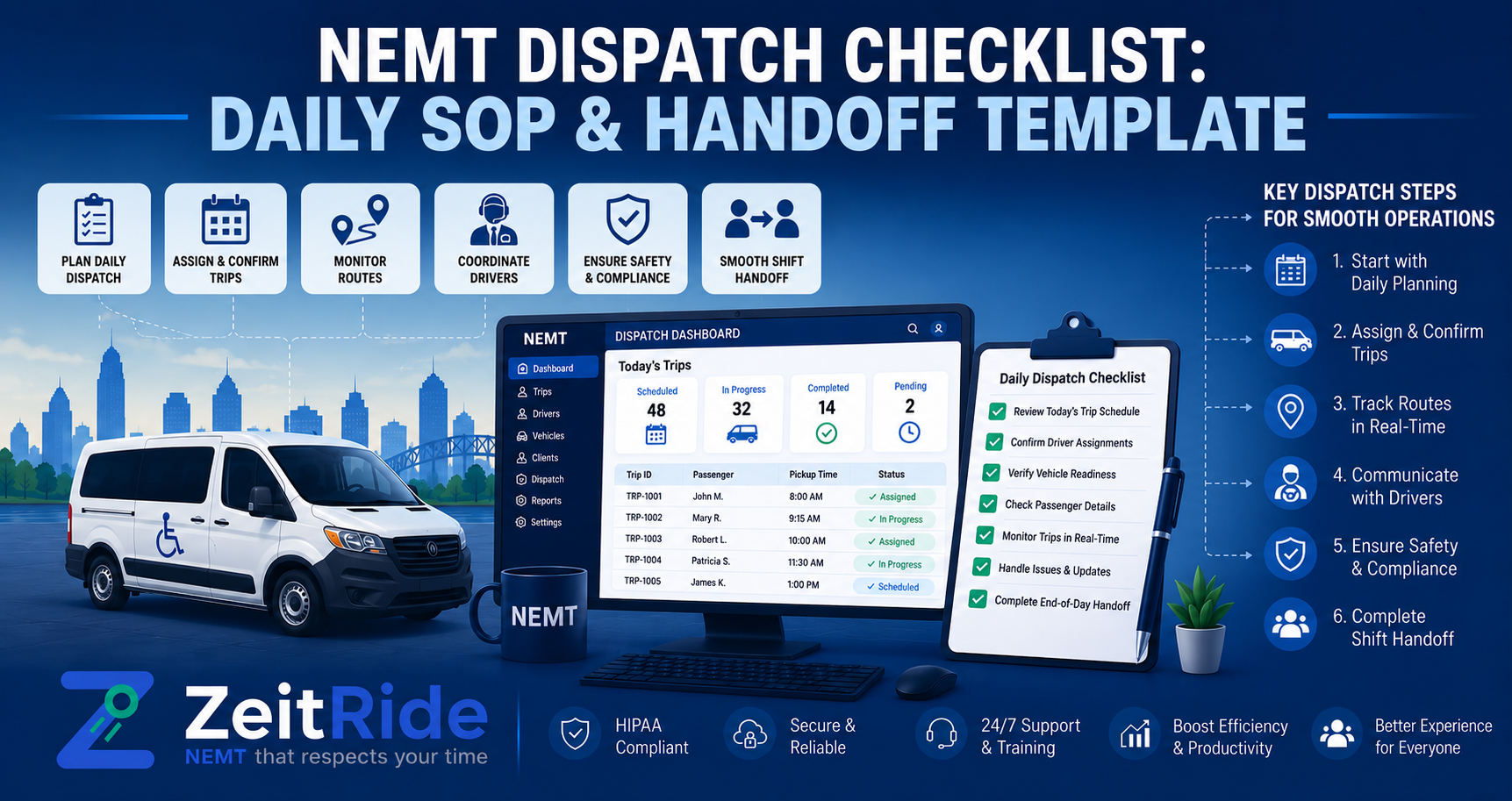
Use this NEMT dispatch checklist to standardize trip validation, live exception handling, shift handoffs, and billing-ready closeout.
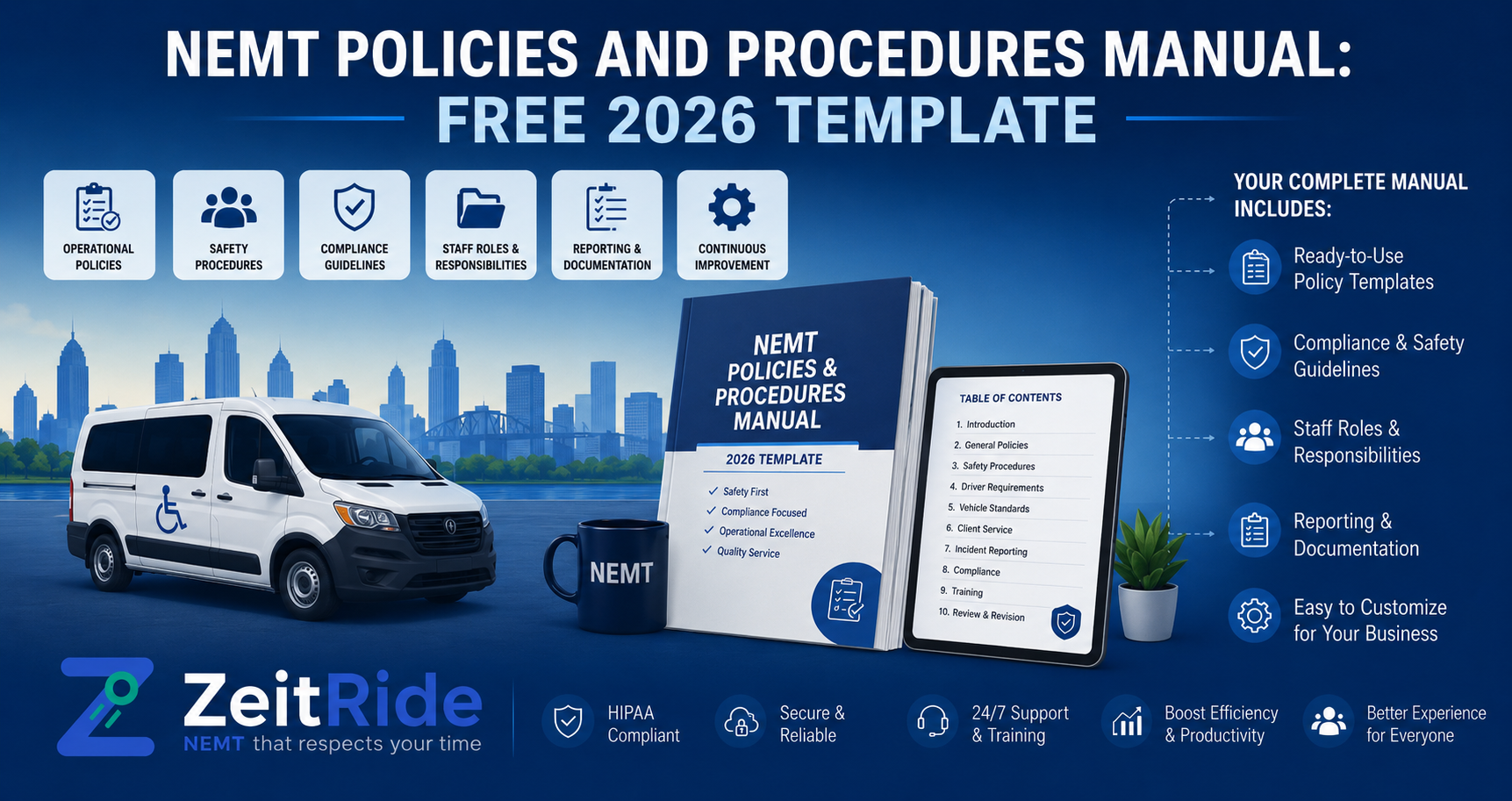
Create an effective NEMT policies and procedures manual with a free editable framework, compliance checklist, sample policy, and practical guidance.
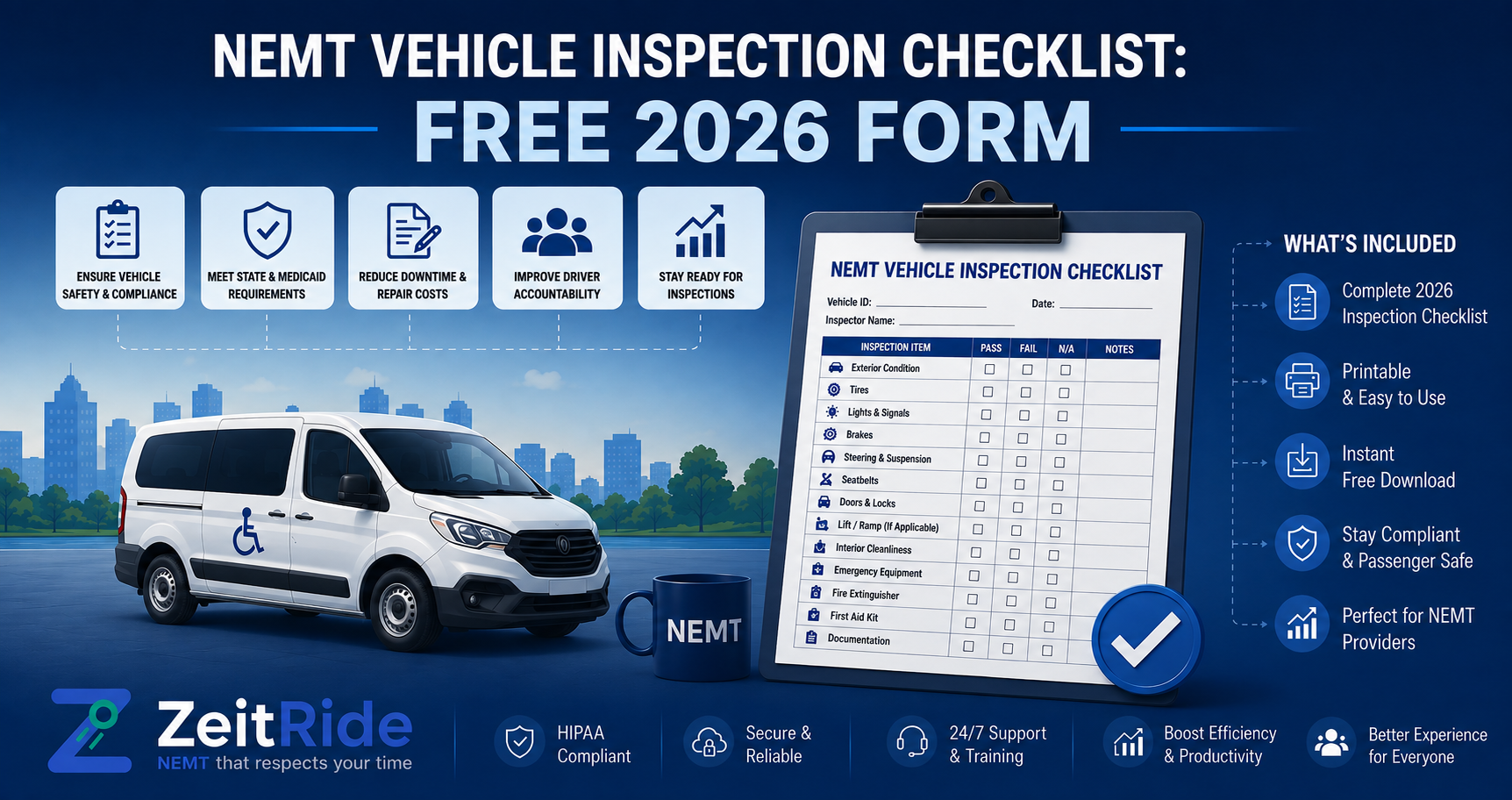
Use this free NEMT vehicle inspection checklist to complete daily pre-trip checks, document defects, and keep unsafe vehicles out of service.
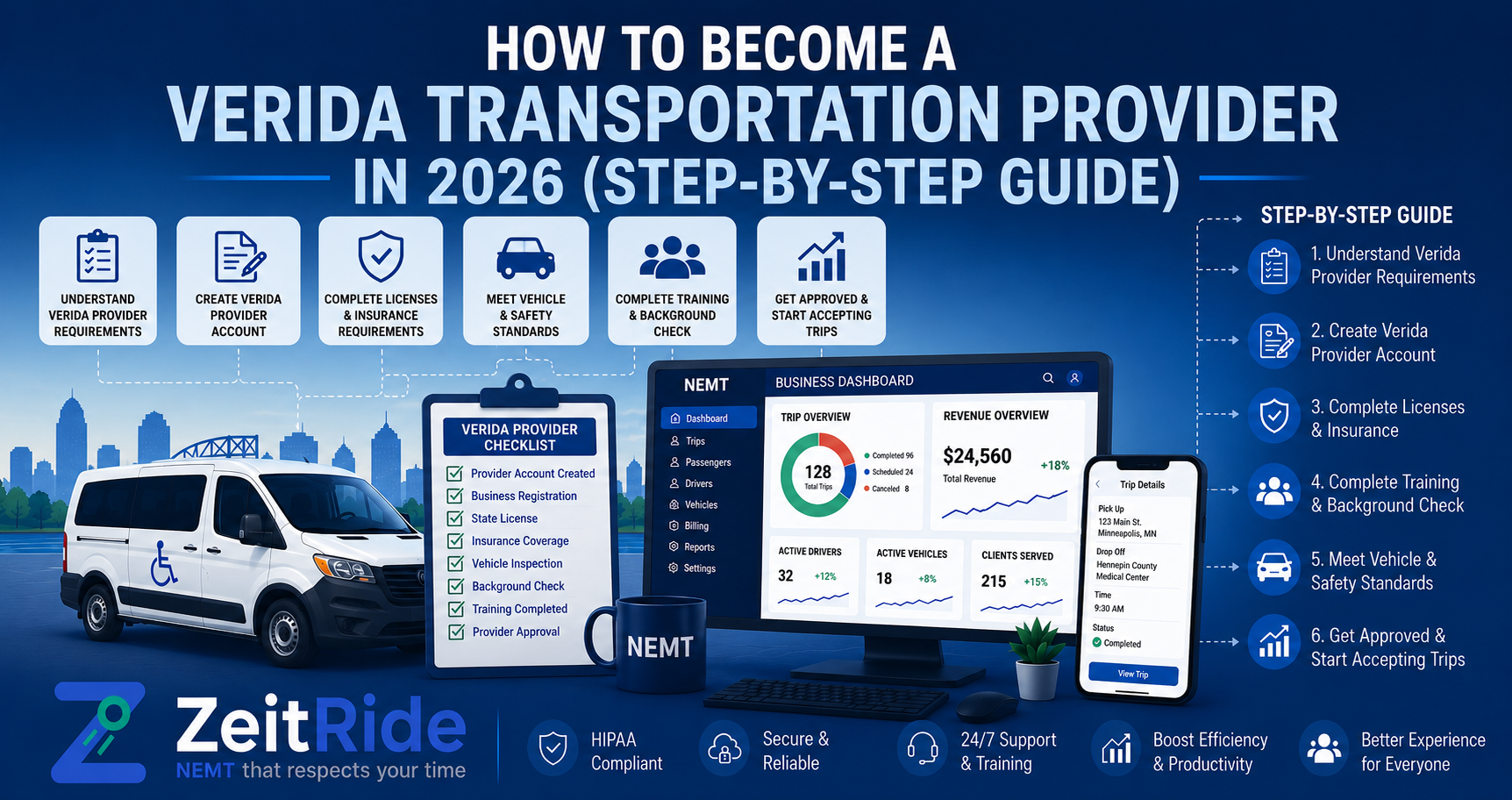
Everything NEMT operators need to become a Verida transportation provider in 2026 — requirements, the 4-step credentialing process, trainings, and timelines.
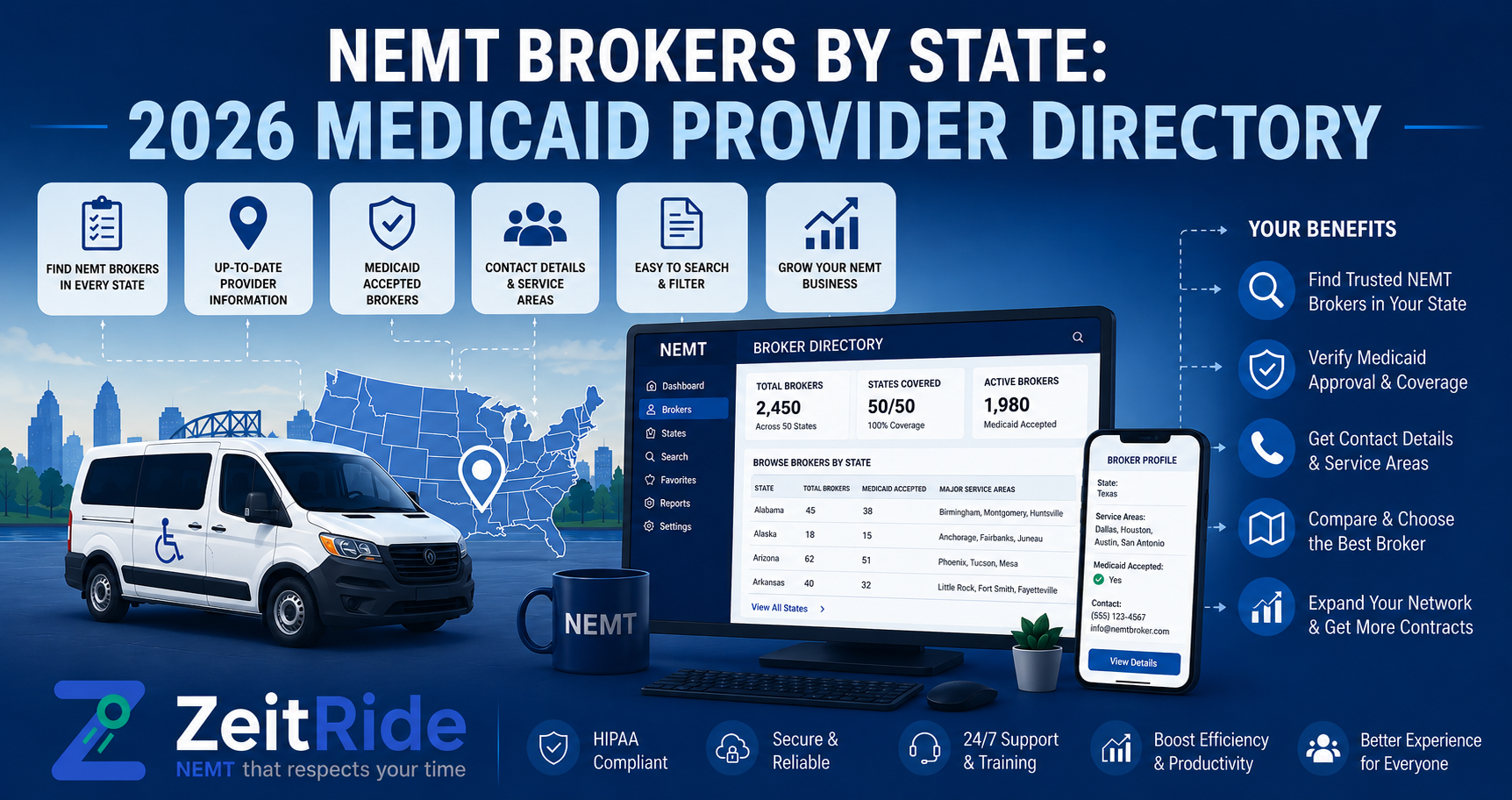
Find the NEMT broker or Medicaid transportation administrator in every state, plus provider enrollment paths and major 2026 broker changes.
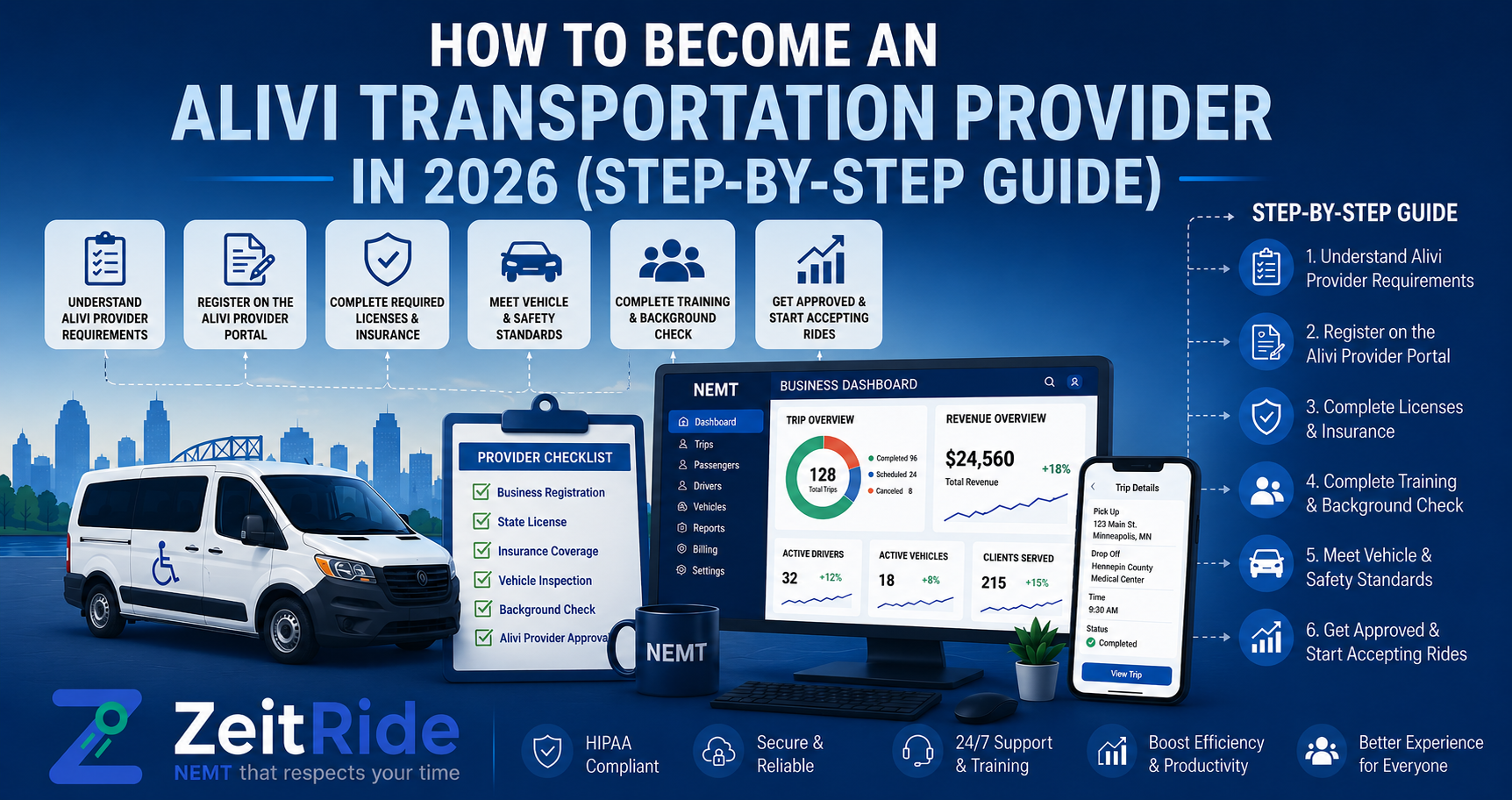
Everything NEMT operators need to become an Alivi transportation provider in 2026 — requirements, insurance minimums, the application process, and EpicRide onboarding.
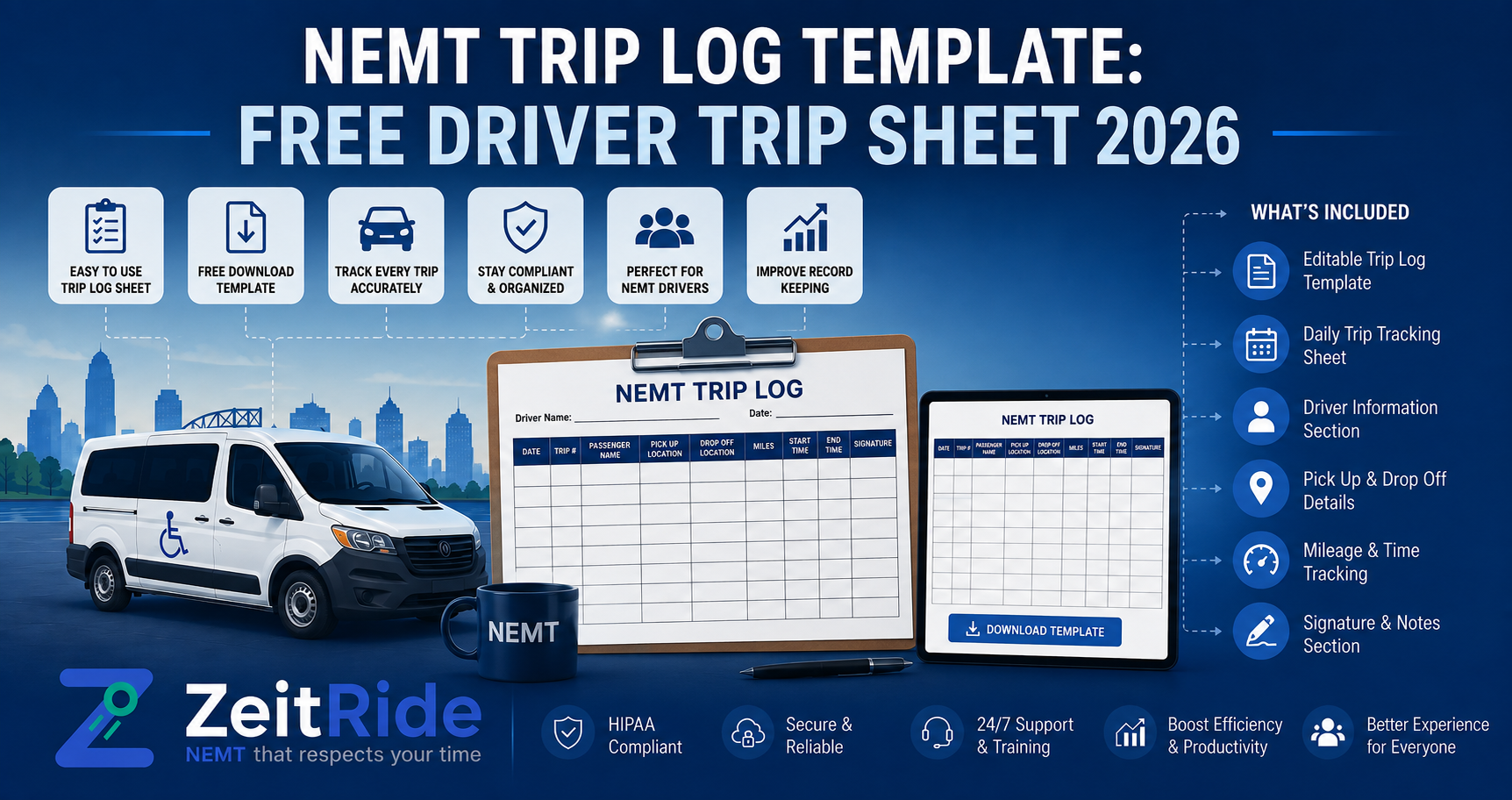
Copy a free NEMT trip log template for driver times, mileage, signatures, exceptions, billing review, and payer-ready documentation.
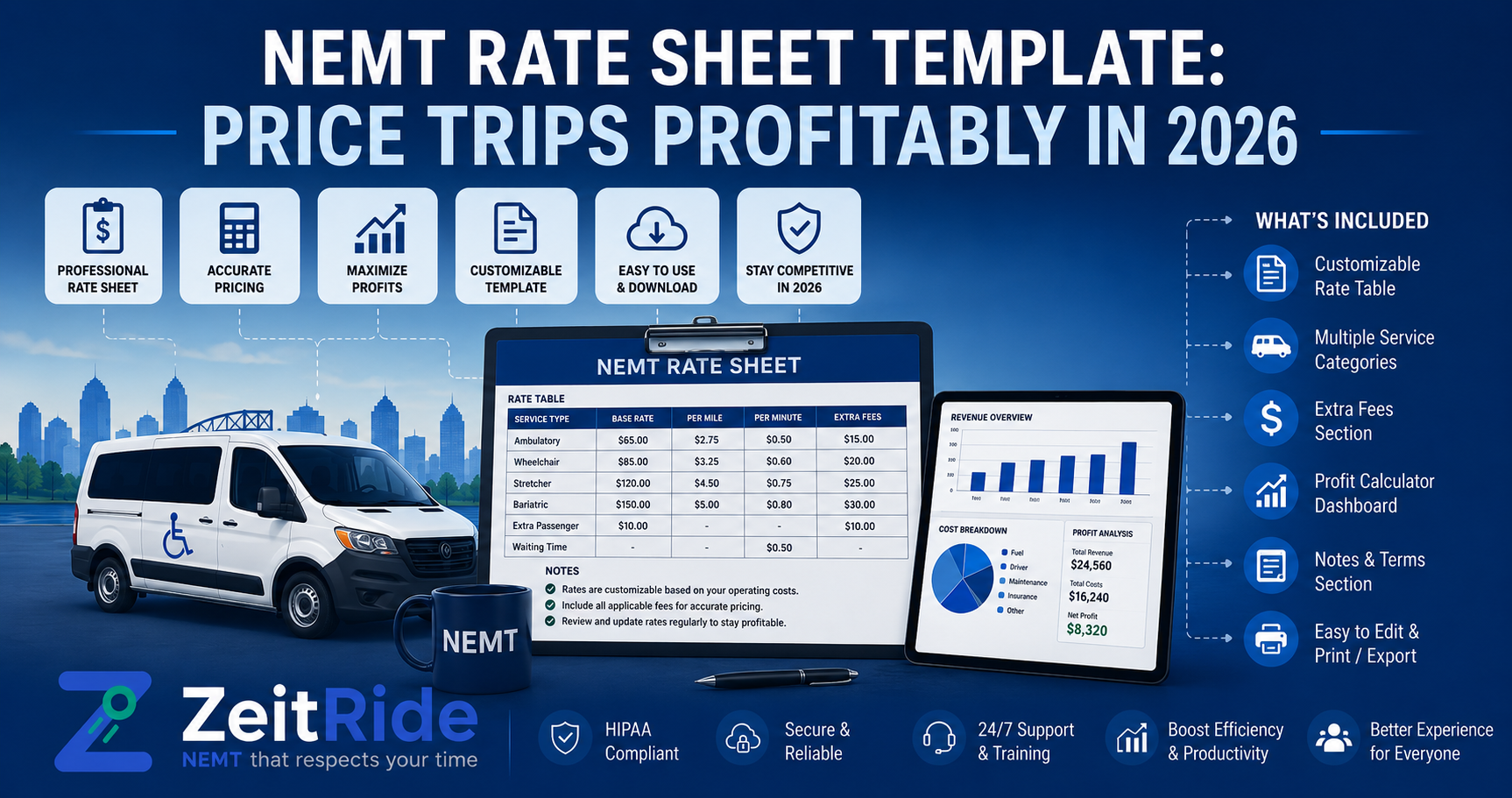
Use this NEMT rate sheet template to price private-pay and facility trips using real operating costs, service fees, and profit targets.
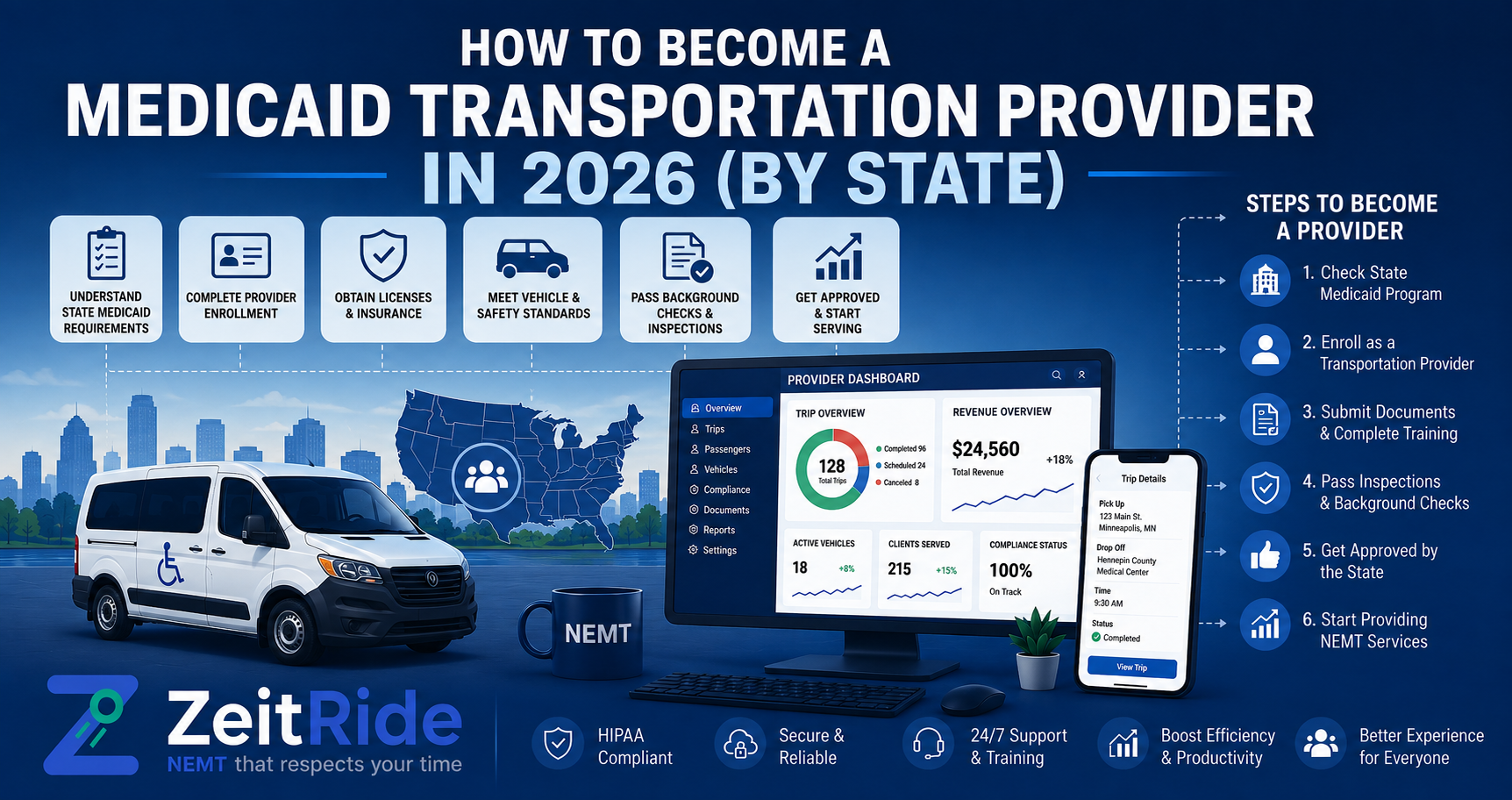
The complete 2026 guide to becoming a Medicaid transportation provider — enrollment steps by state, NPI and insurance requirements, and how enrollment differs from broker credentialing.
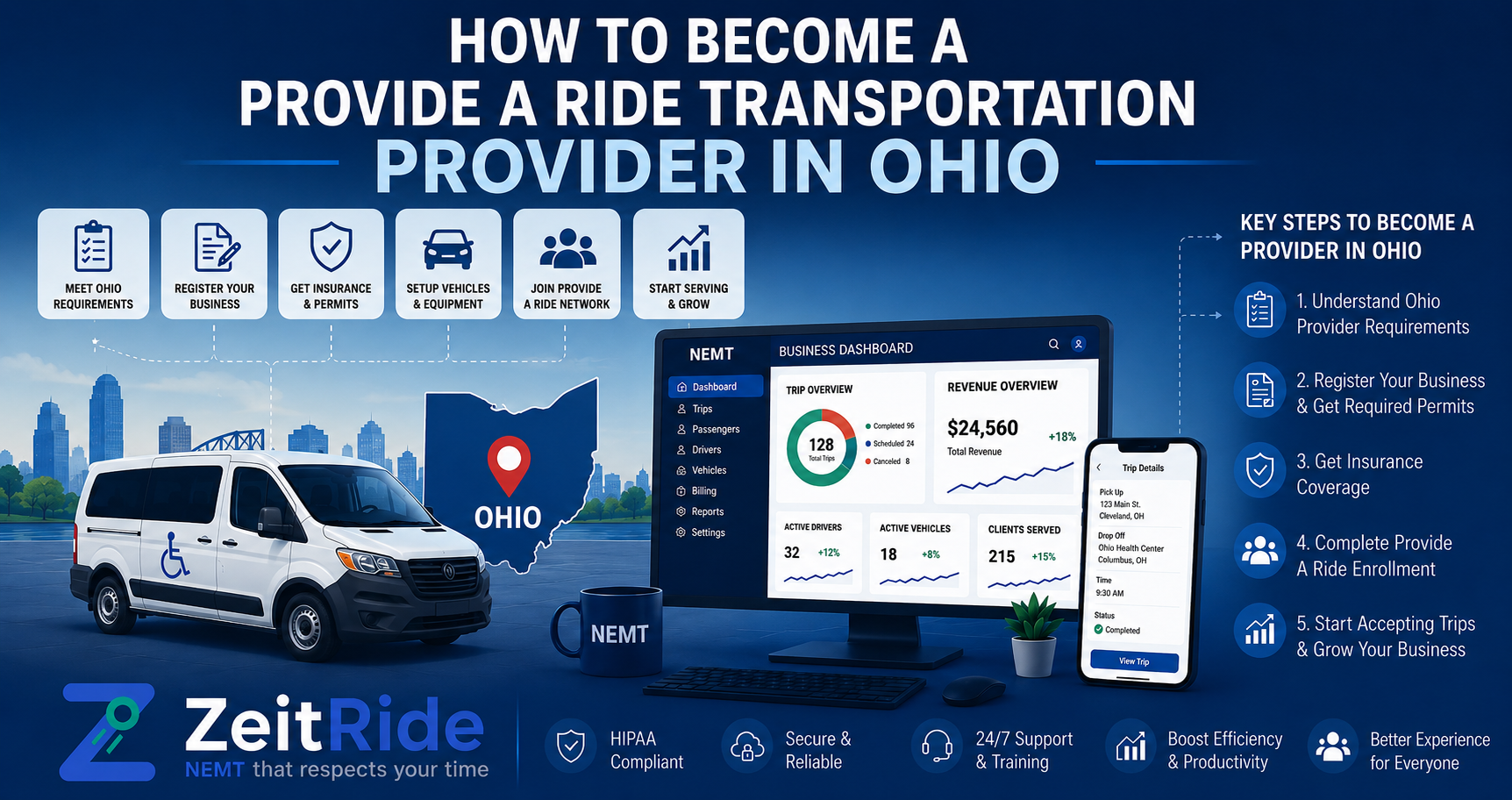
Learn how to become a Provide A Ride transportation provider in Ohio, including requirements, application steps, approval factors, and software setup.
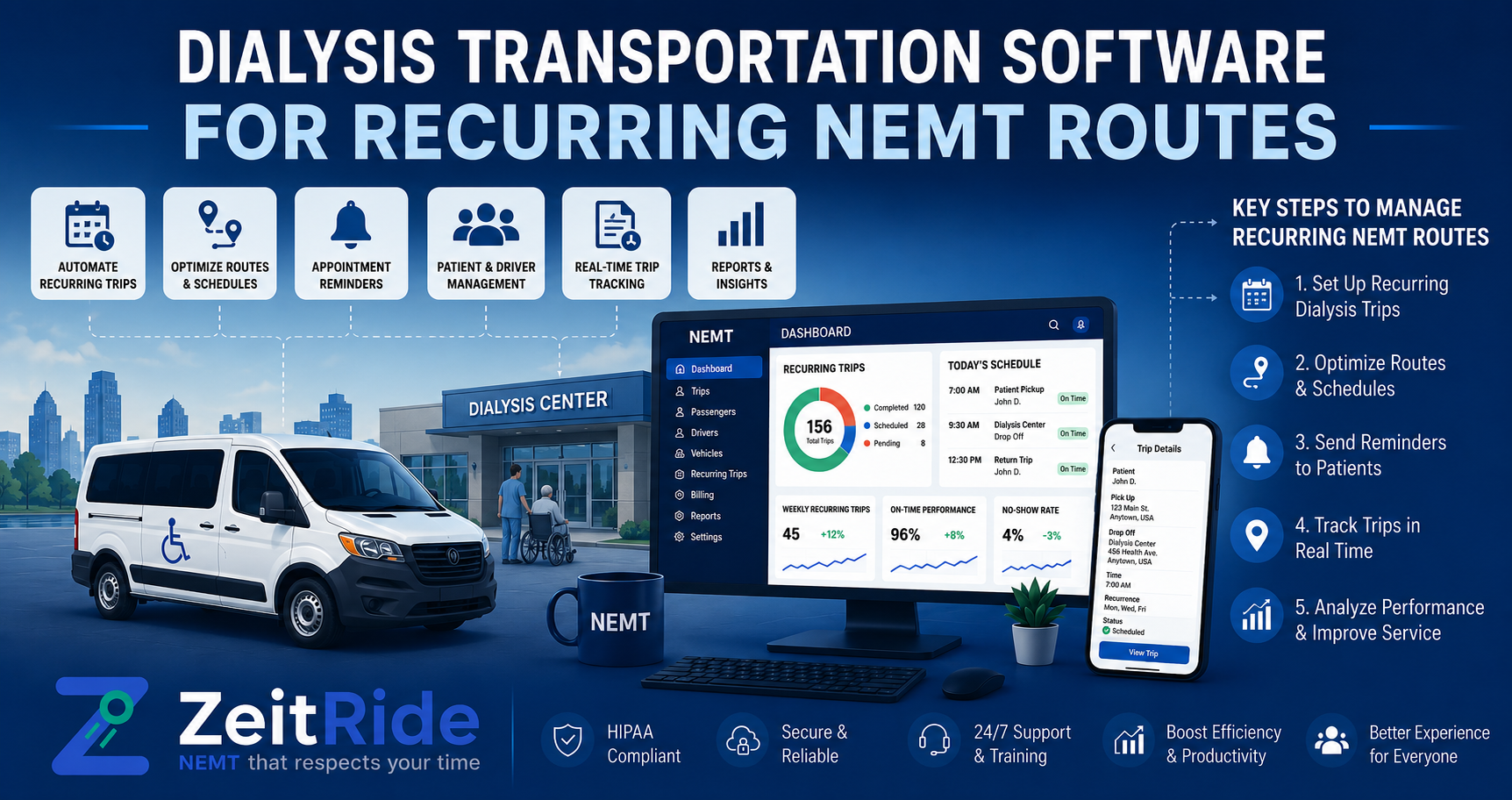
Learn how dialysis transportation software simplifies recurring scheduling, dispatch, route optimization, trip documentation, and billing.
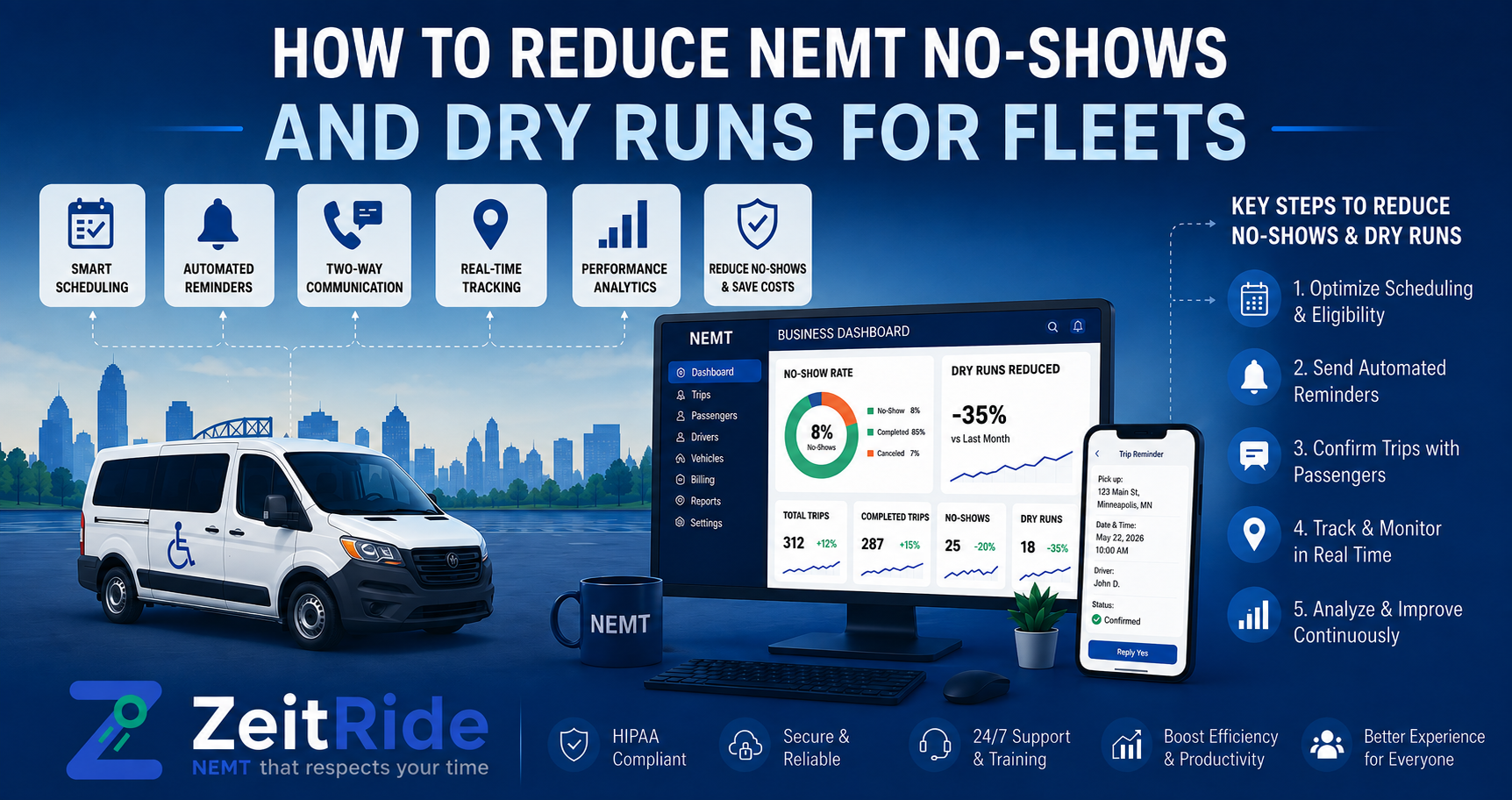
Reduce NEMT no-shows and dry runs with better confirmations, live dispatch, GPS documentation, and a consistent recovery workflow.
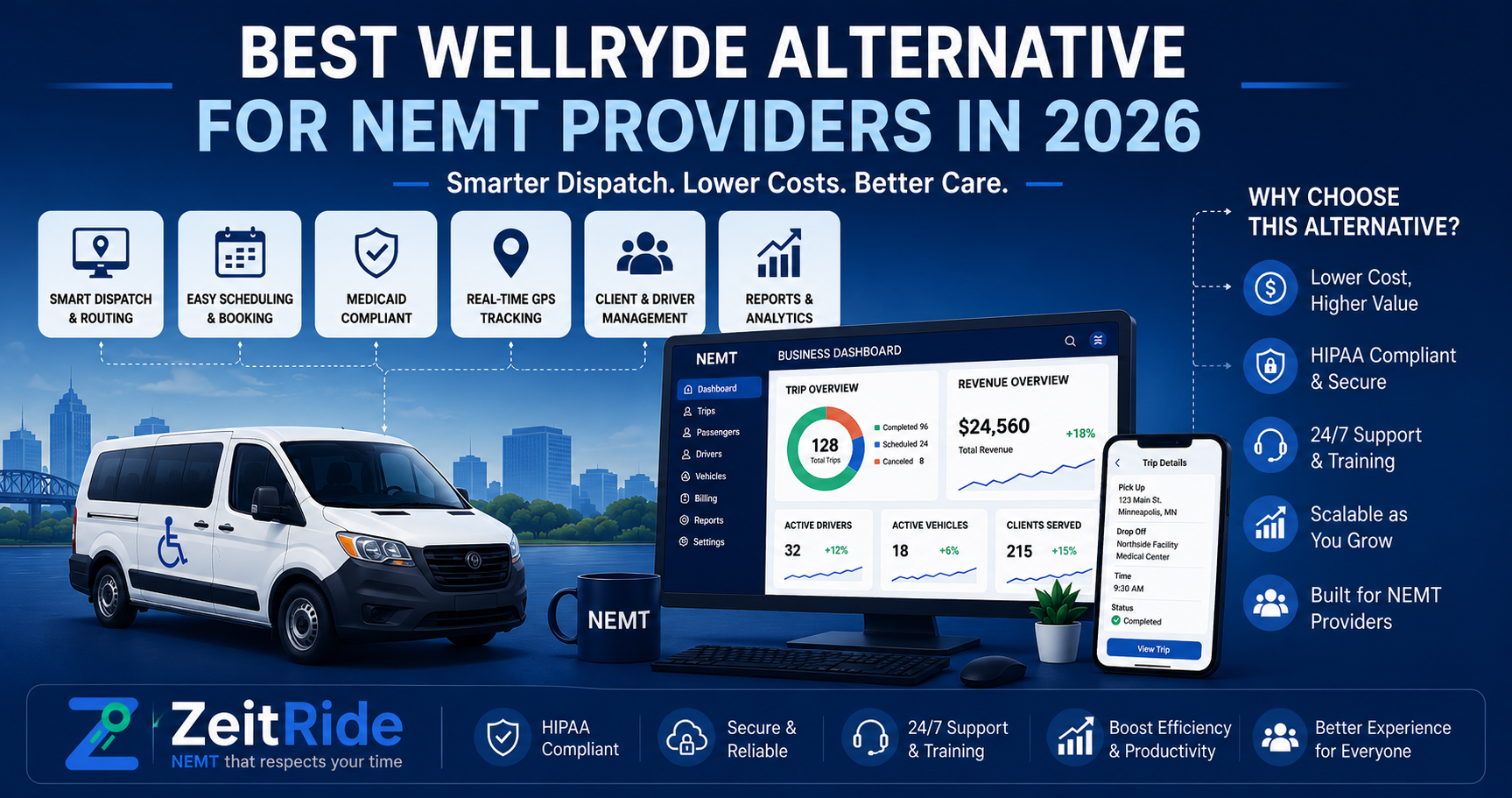
Compare ZeitRide and WellRyde for ModivCare workflows, pricing, dispatch, billing, and migration to choose the right NEMT platform.
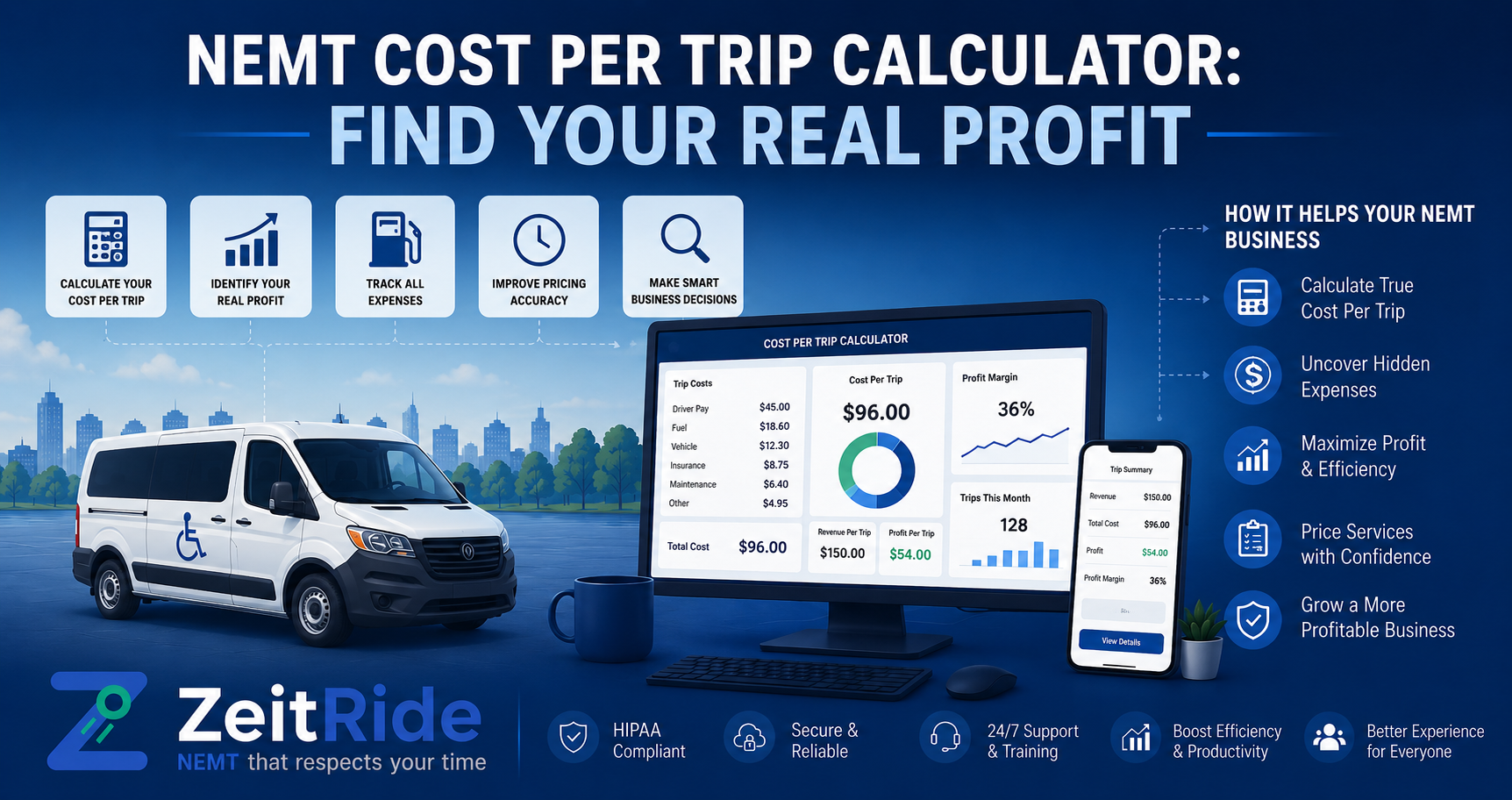
Calculate your true NEMT cost and profit per trip using driver pay, deadhead miles, vehicle expenses, overhead, and payment leakage.
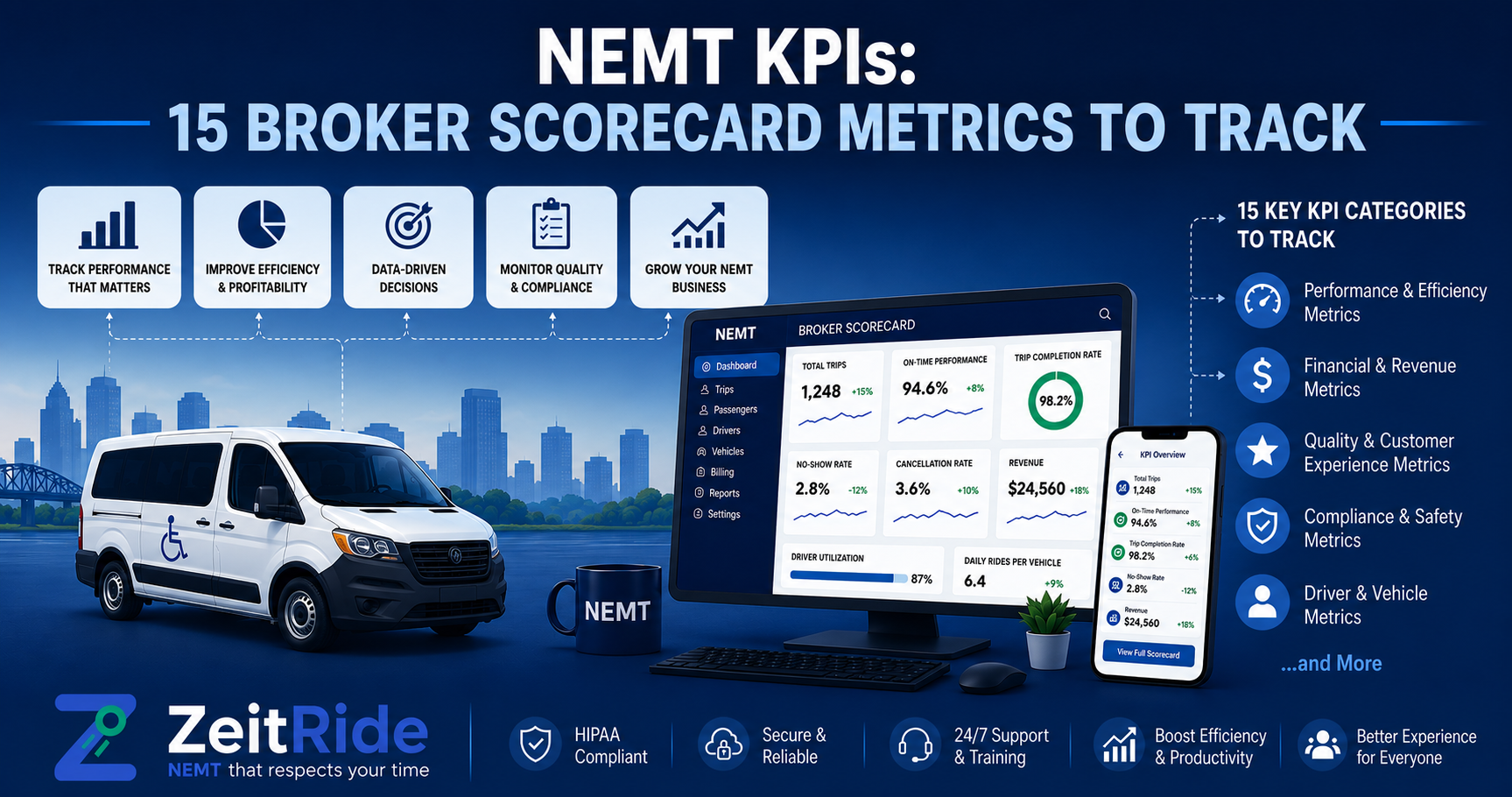
Learn the NEMT KPIs brokers use to assess providers, including formulas, benchmark guidance, and practical ways to improve fleet performance.
Compare seven NEMT platforms by driver app quality, offline GPS, EVV, signatures, inspections, live updates, and pricing.
Compare seven NEMT platforms by broker coverage, trip syncing, billing, pricing, and fit for ModivCare, MTM, MAS, SafeRide, and Verida.
Compare seven NEMT dispatch platforms by live tracking, driver apps, broker integrations, billing, fleet fit, and pricing.
Learn which trip records, authorizations, signatures, driver files, and vehicle documents NEMT providers need for Medicaid audits.
Learn how NEMT fleet management software connects vehicle readiness, GPS tracking, inspections, maintenance, dispatch, and fleet utilization.
Compare NEMT software costs, essential features, and buying criteria for small fleets with 1–10 vehicles.
Prevent NEMT billing errors by eliminating manual data entry, automating broker-specific claims, and using GPS-verified trip records.
Learn how NEMT dispatch and billing software improves HIPAA, EVV, and Medicaid compliance with automated trip records and secure billing.
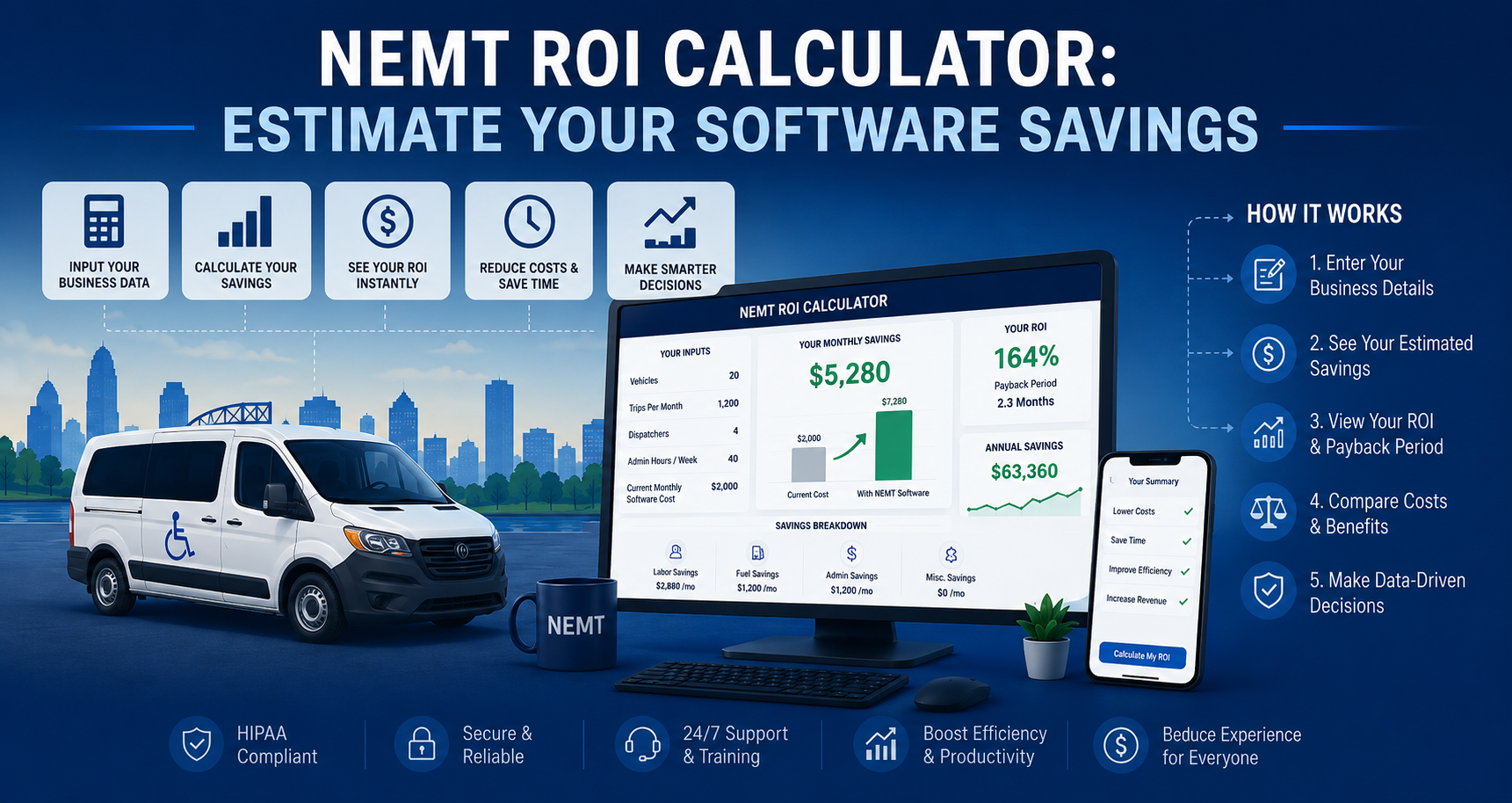
Calculate the potential ROI of NEMT software using your fleet’s labor, mileage, trip, billing, and software costs.
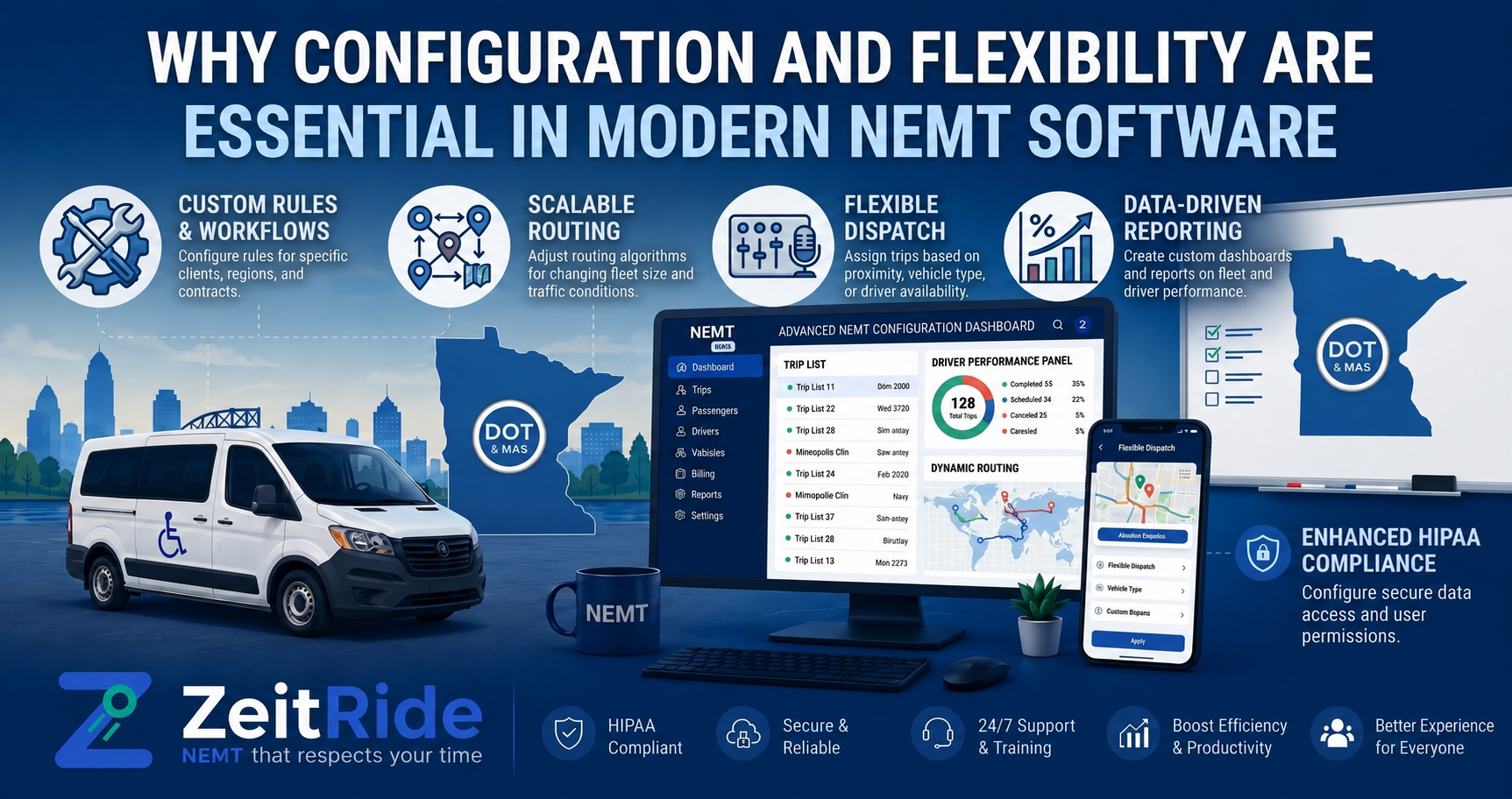
Configuration and flexibility separate NEMT software that adapts to your fleet from software you have to adapt to. Here's how ZeitRide bends instead.
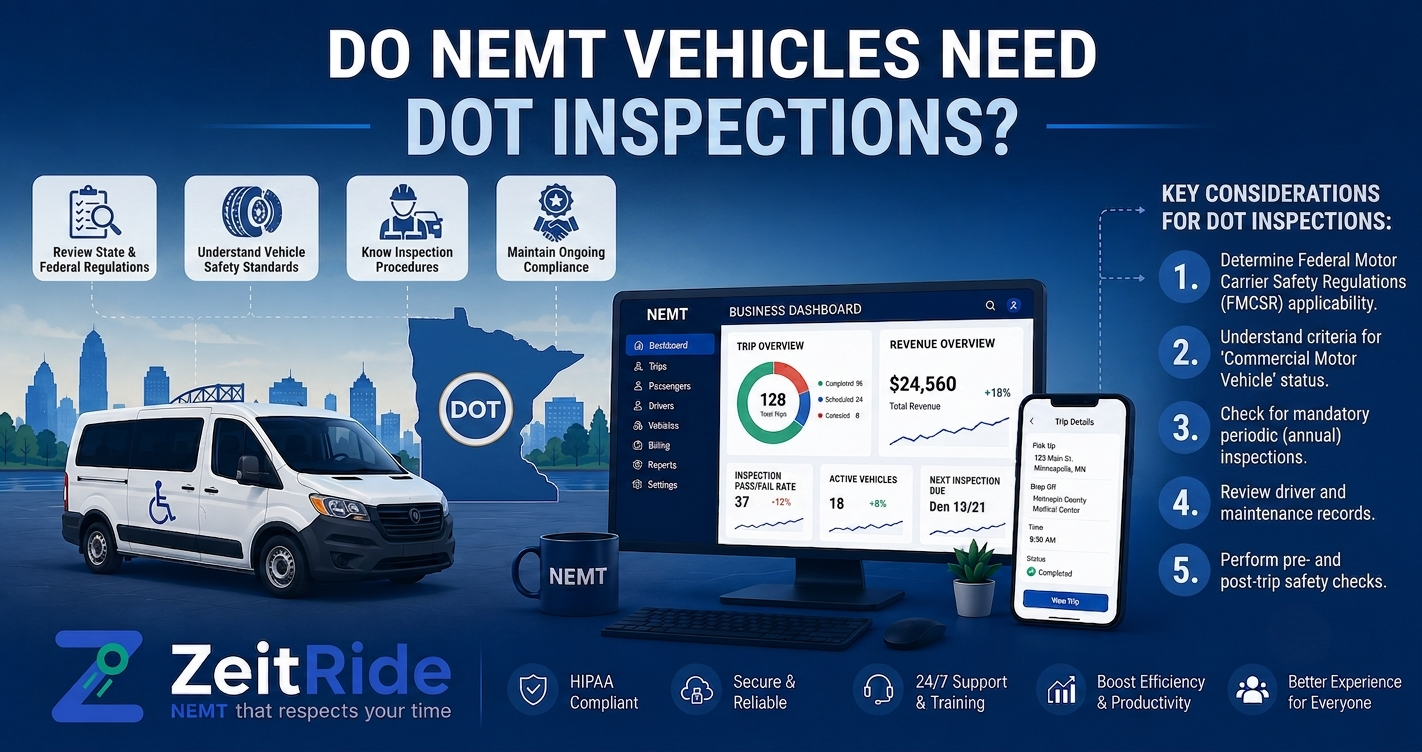
Most NEMT vehicles are federally exempt from DOT inspections but state DOT rules and broker contracts can still apply. Here's exactly where the exemption ends.
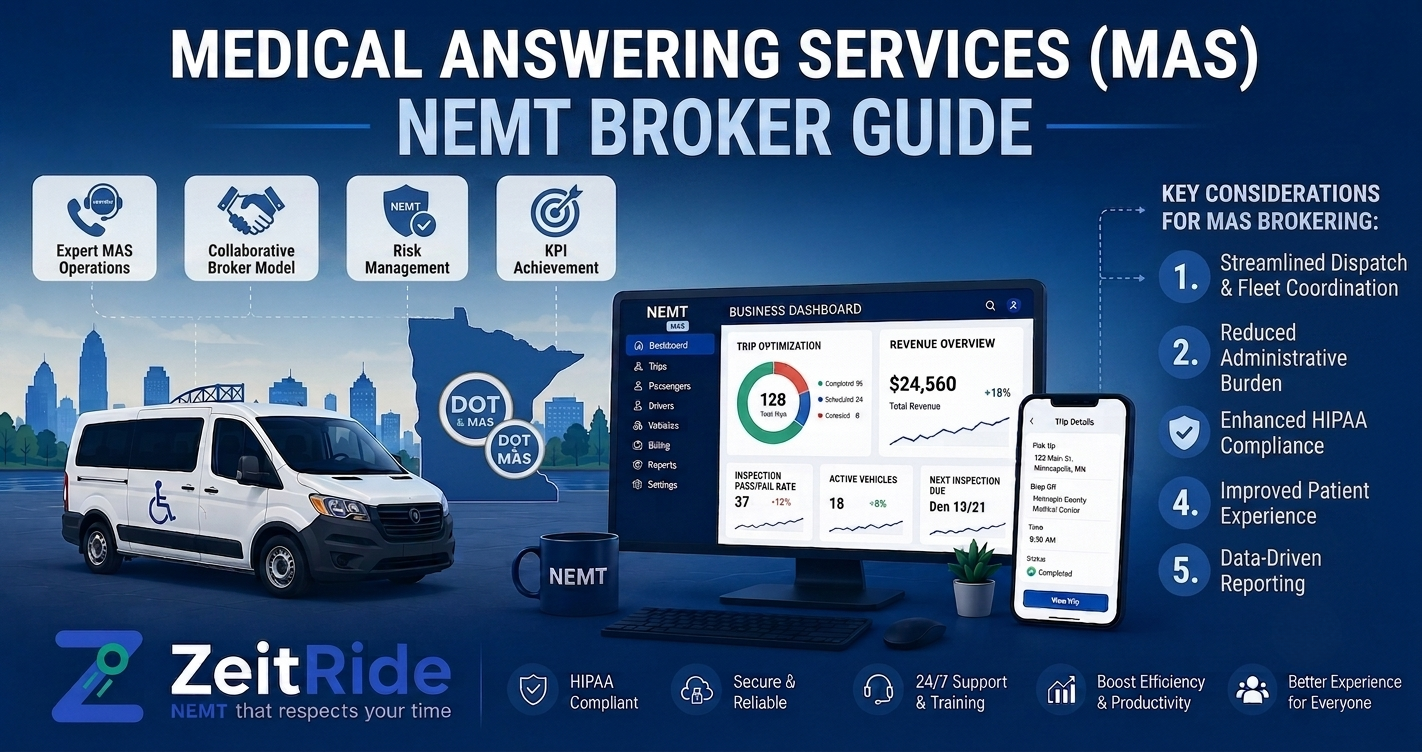
MAS is New York's only Medicaid NEMT broker, coordinating 15M trips a year. Here's how to become a provider, what's required, and what changes after approval.
Broker networks, facility agreements, Medicaid RFPs, private pay — the four ways NEMT providers win contracts, what each pays, and how to qualify.
Late pickups, missed billing, and broker complaints usually trace back to one thing: how you're scheduling trips. Here's how to fix it.
Pennsylvania runs NEMT county by county through MATP — not one statewide broker. Here's the licensing, enrollment, and cost path to launch a PA fleet in 2026.
Manual routing eats hours every morning. Here's how the right NEMT scheduling software gets trips booked in minutes and cuts miles driven fleet-wide.
Dispatchers and drivers stay in sync when they're working off the same system instead of catching up over the phone.
Medical Answering Services (MAS) is New York's Medicaid NEMT broker. Learn how MAS trip imports, compliance, and billing work with modern NEMT software.
Everything NEMT operators need to become an MTM Health transportation provider in 2026 — insurance minimums, application steps, and credentialing timeline.
Top 7 NEMT scheduling tools that reduce miles, automate billing, improve broker compliance, and streamline dispatch in one platform.
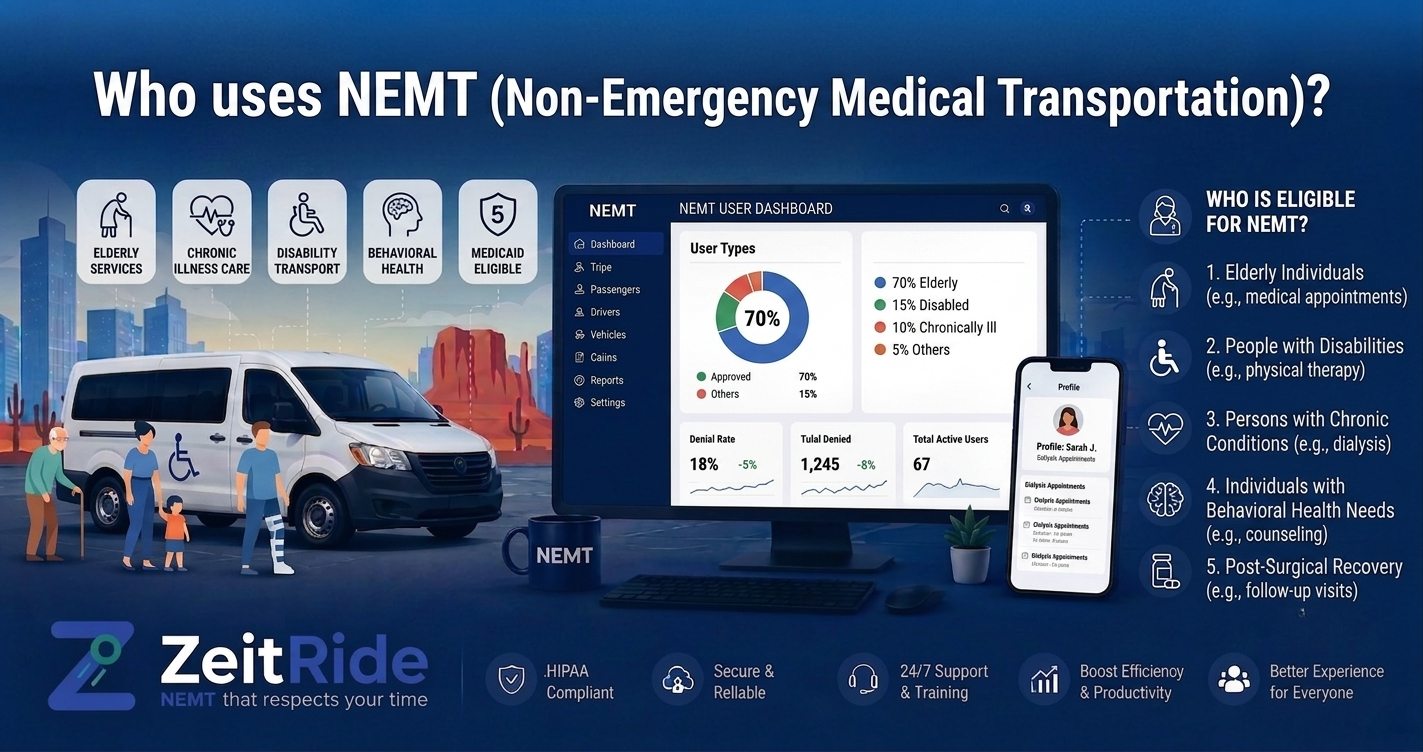
Who uses NEMT? Dialysis patients, wheelchair users, seniors & Medicaid riders — see what each means for your fleet, and how ZeitRide dispatches it all.
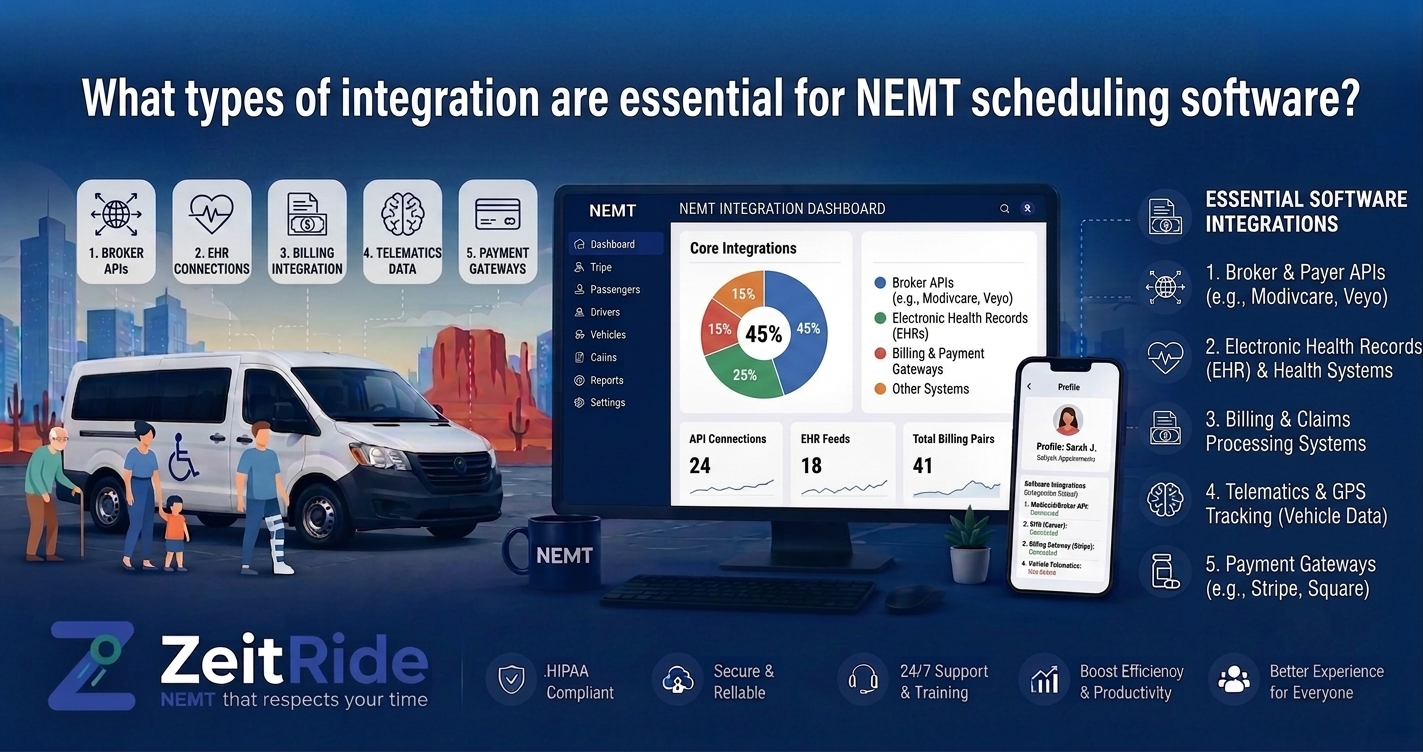
Broker connections, integrated GPS and EVV are the four essential NEMT scheduling software integrations. ZeitRide includes all four for $49/vehicle/month.
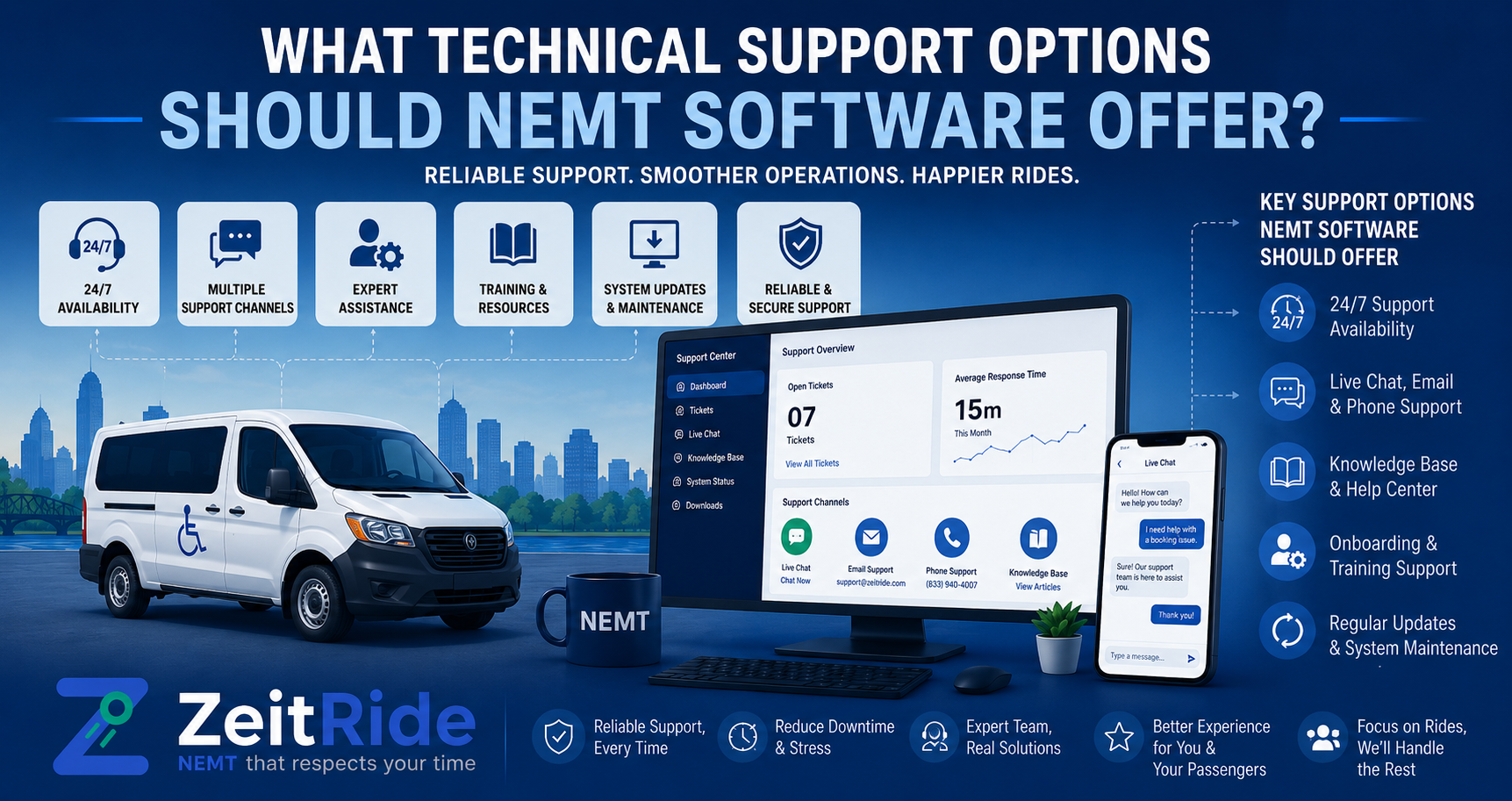
NEMT software should provide fast support for dispatch, broker integrations, EVV, billing, and driver apps to keep fleets running and compliant.
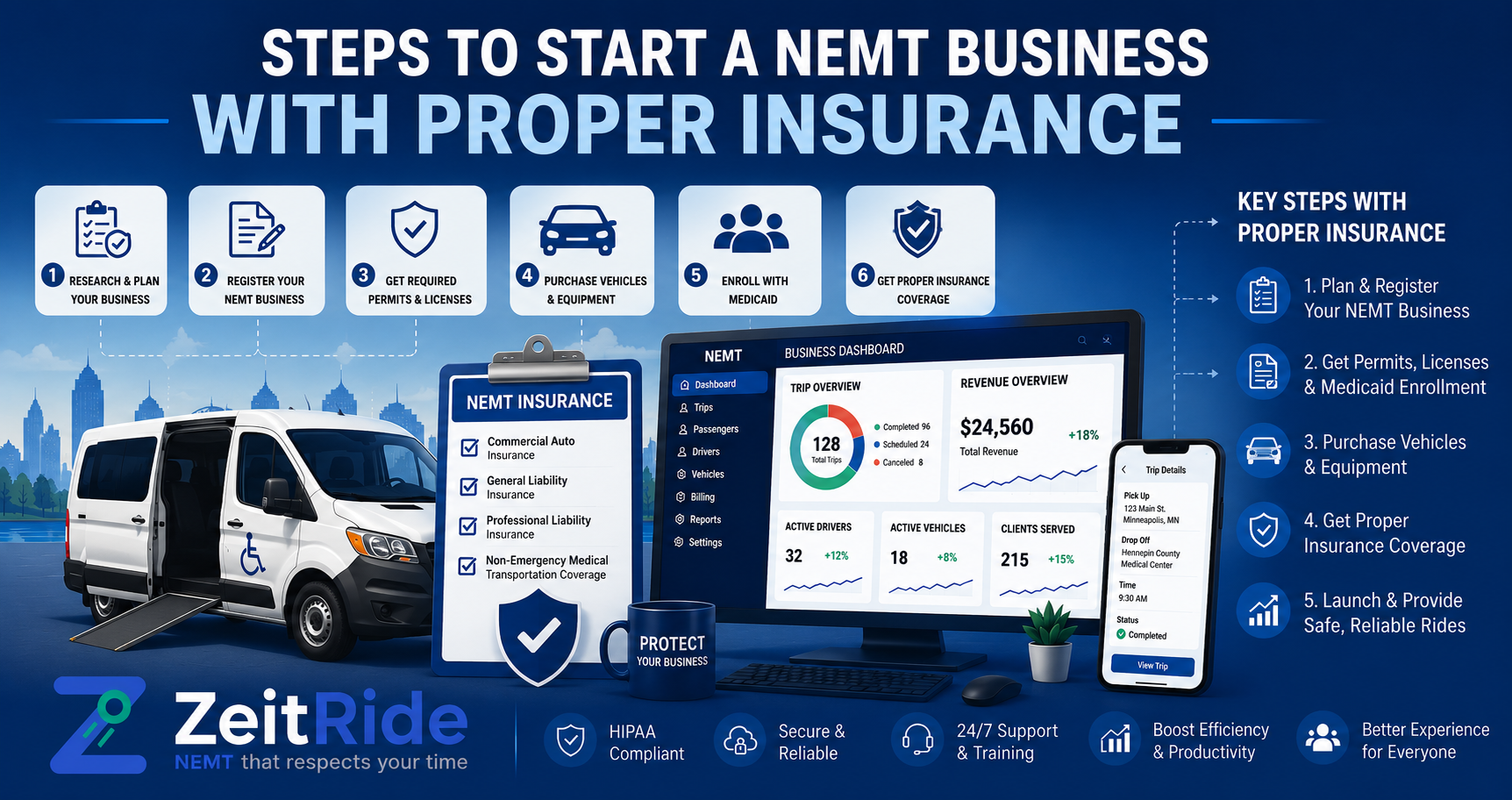
Start a NEMT business with proper insurance by securing commercial coverage, permits, and broker-ready documentation before launching.
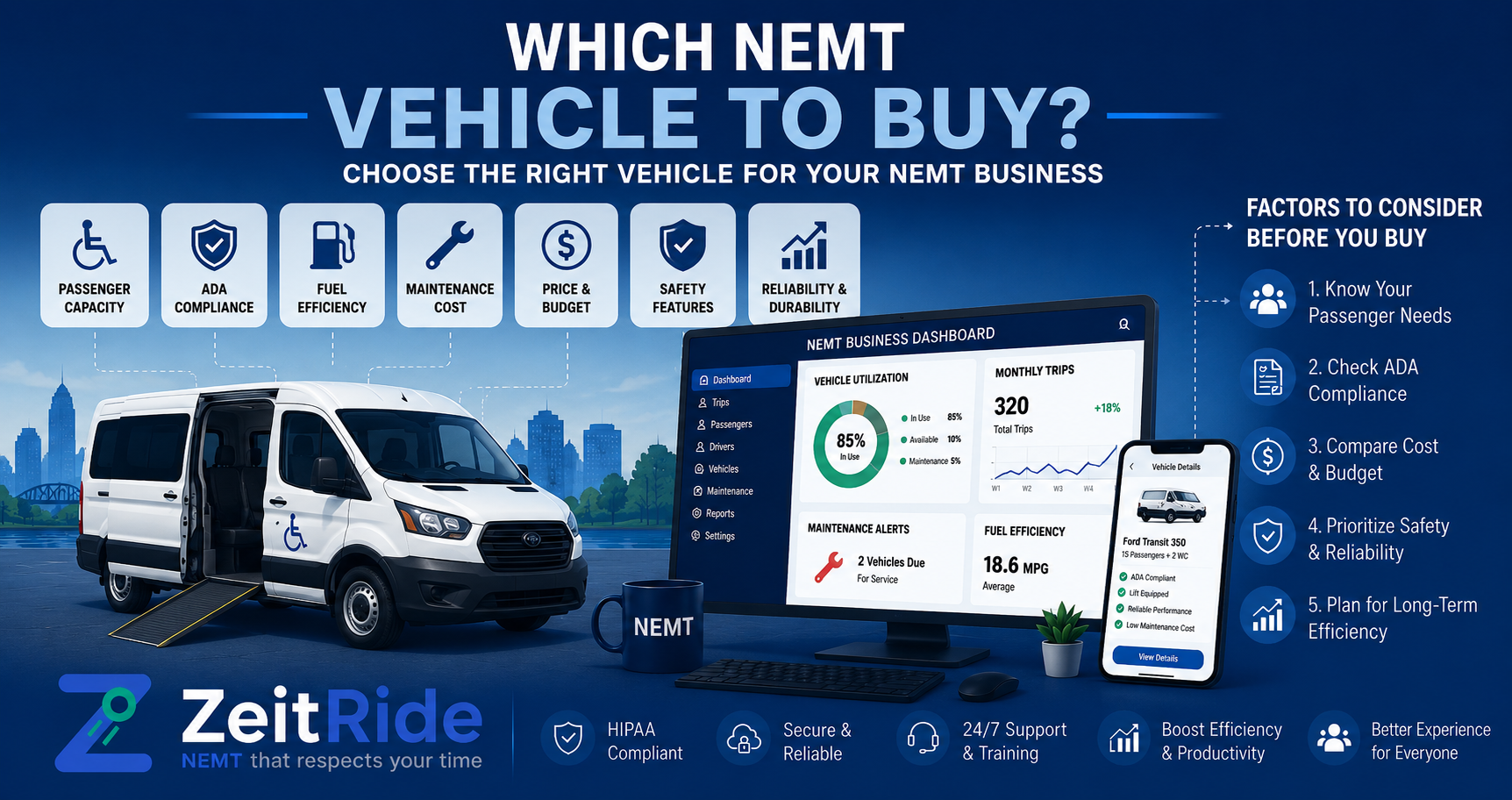
Compare rear-entry vs. side-entry NEMT vehicles, ADA requirements, insurance costs, and key factors to choose the right vehicle for your fleet.
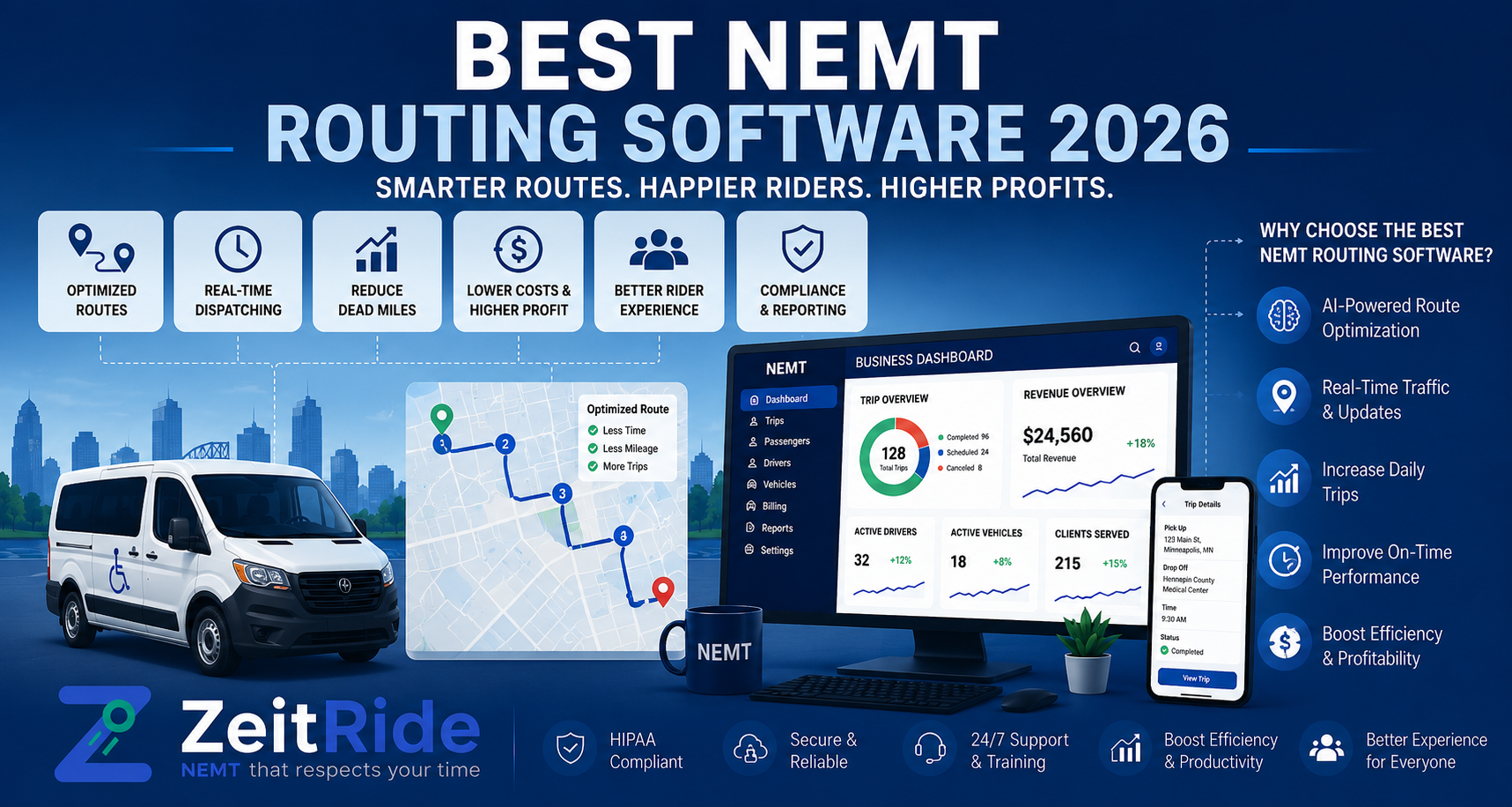
Compare seven NEMT routing platforms by route optimization, multi-loading, real-time rerouting, broker integrations, driver apps, pricing, and dead-mile reduction.
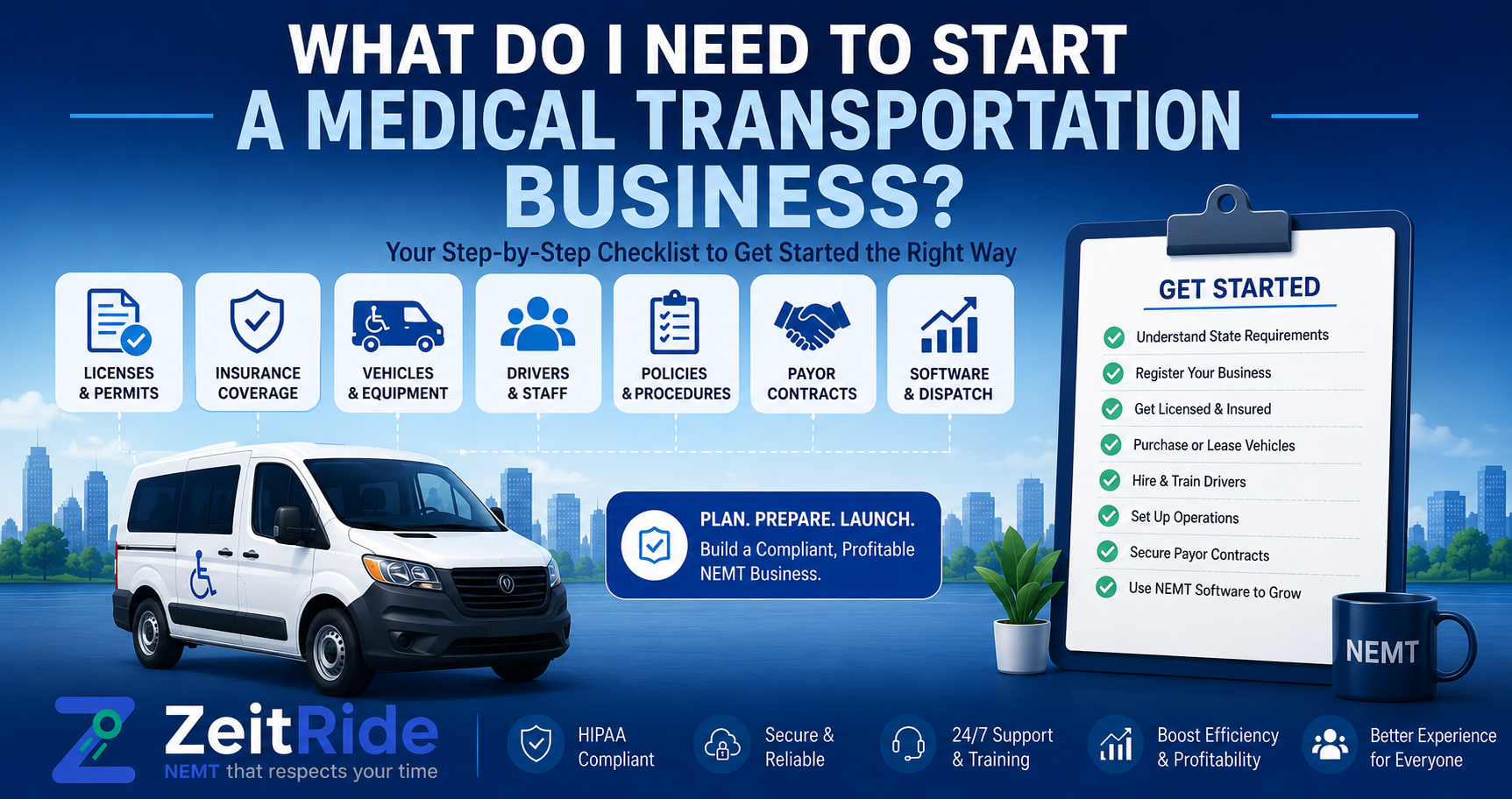
Learn what you need to start a medical transportation business, including licensing, insurance, ADA vehicles, drivers, and NEMT software.
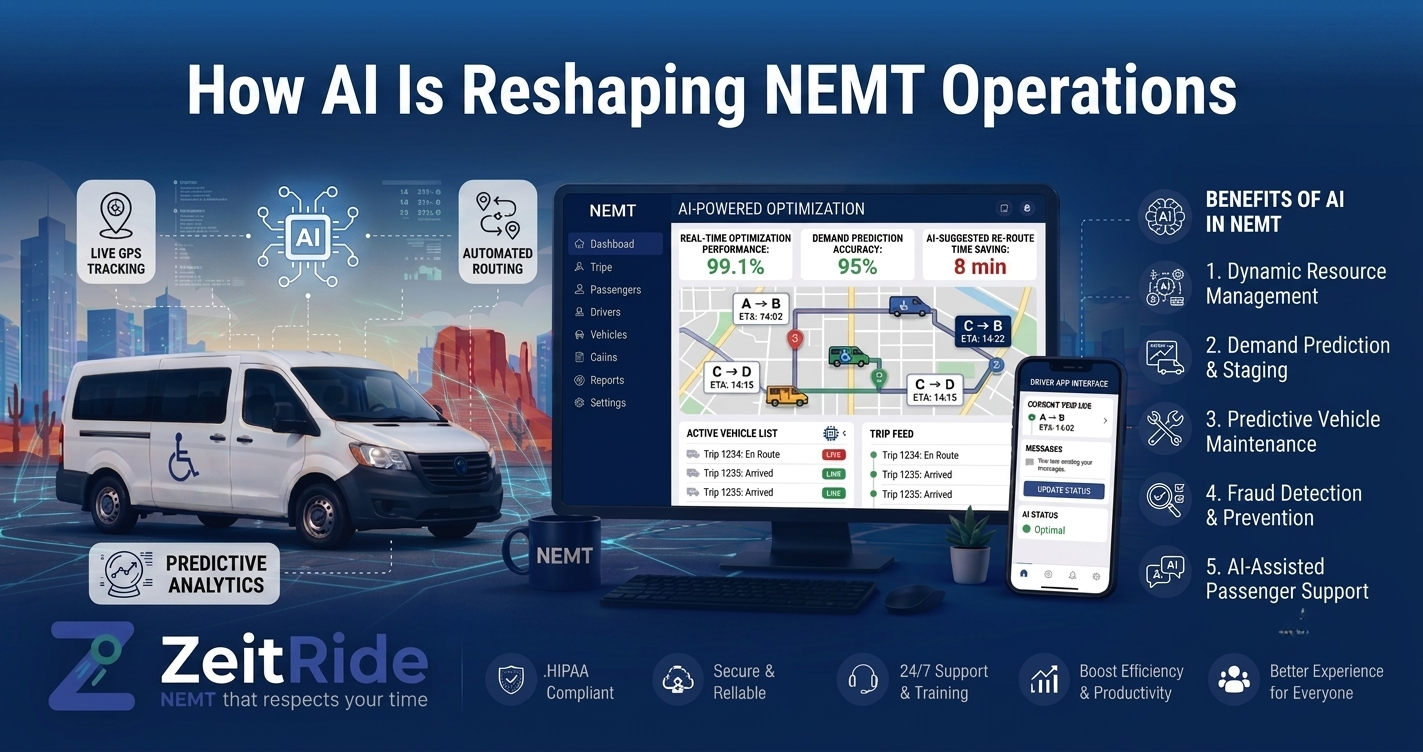
AI in NEMT dispatch cuts miles driven by 20%, automates route changes, and reduces manual scheduling work. ZeitRide starts at $49/vehicle with no setup fees.
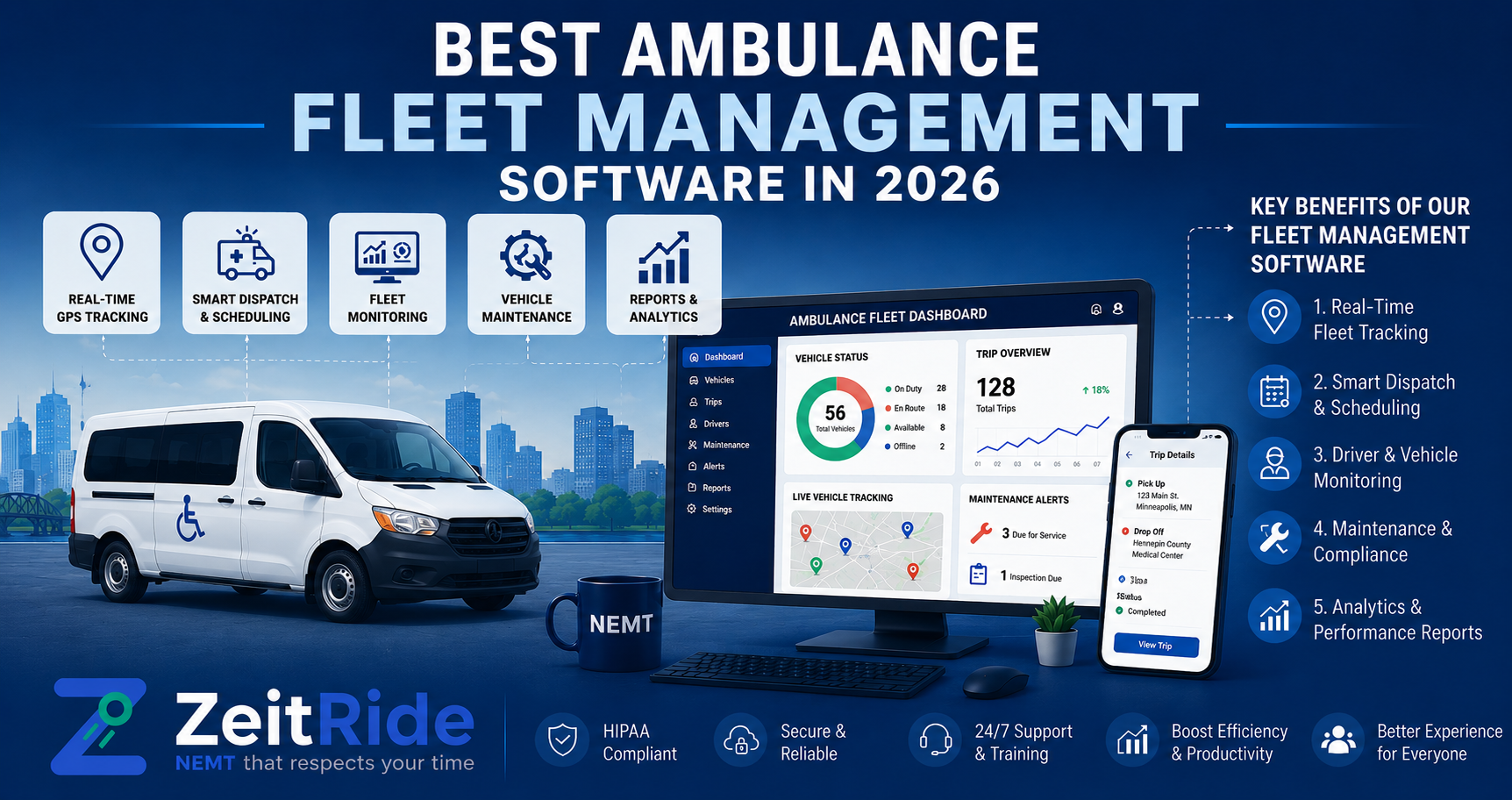
Compare the best ambulance fleet management software in 2026 for NEMT providers. Discover dispatch, routing, billing, compliance, and AI optimization.
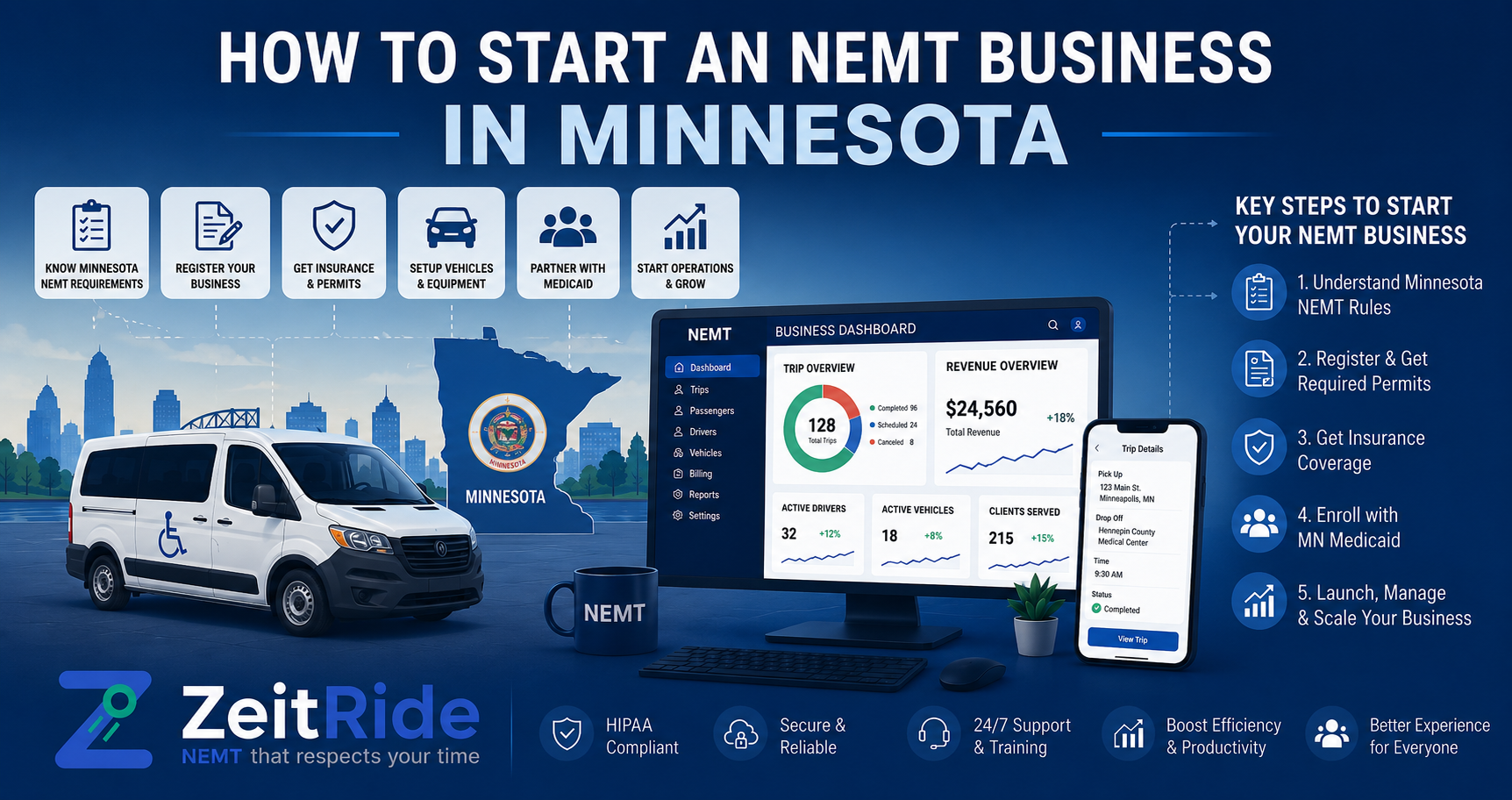
Learn how to start an NEMT business in Minnesota, including licensing, Medicaid brokers, startup costs, compliance, and dispatch software.
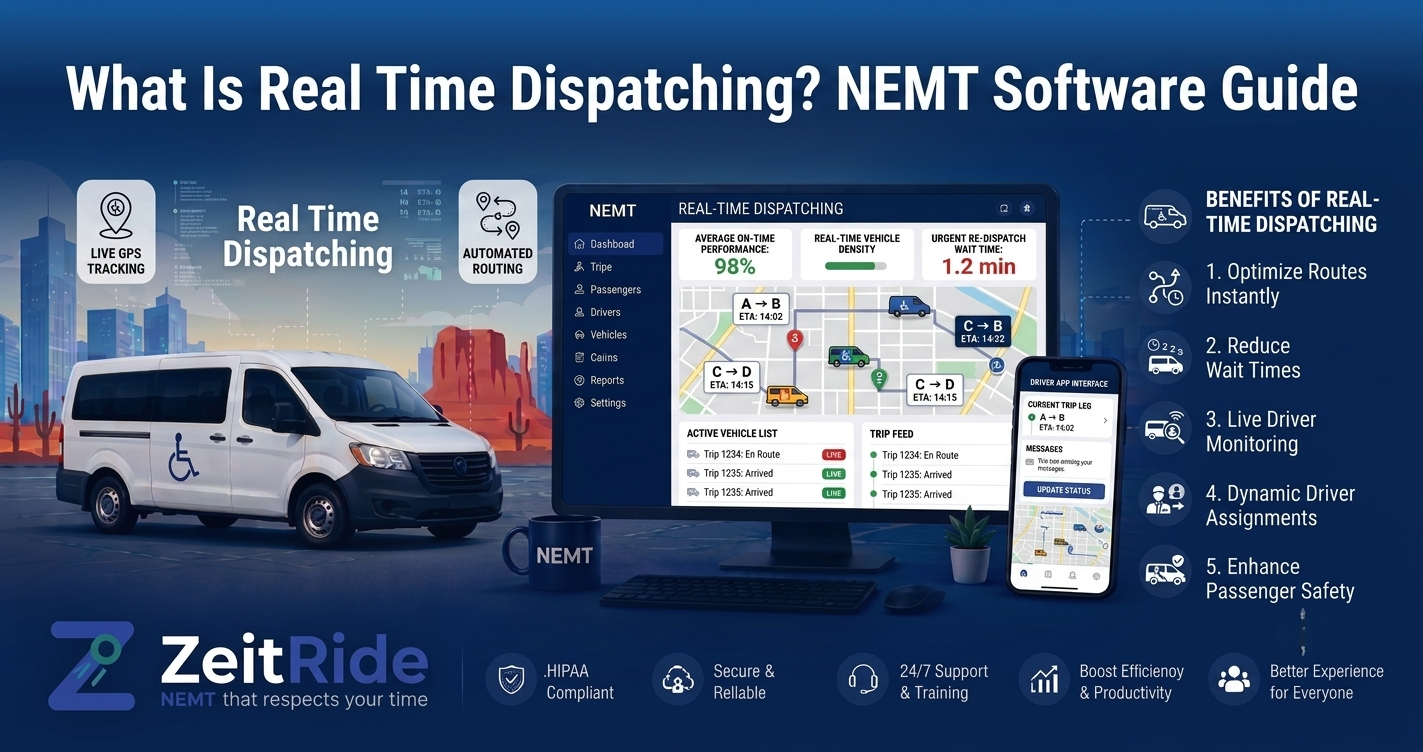
Learn what real-time dispatching is, how it improves NEMT operations with live GPS, instant trip updates, and smarter driver assignments.
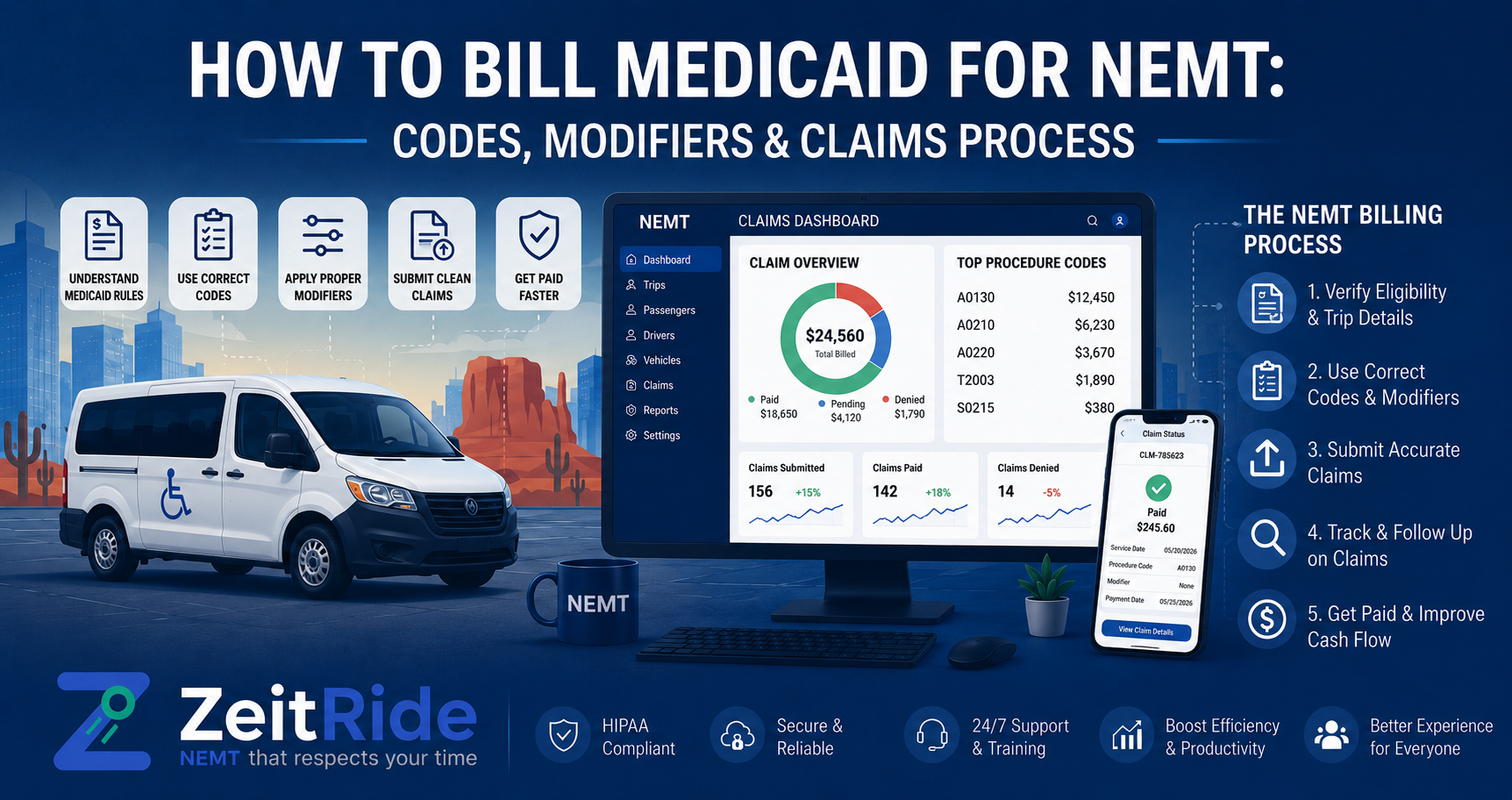
A step-by-step provider guide to Medicaid NEMT billing: HCPCS codes, origin/destination modifiers, documentation, claims, and broker vs. direct billing.
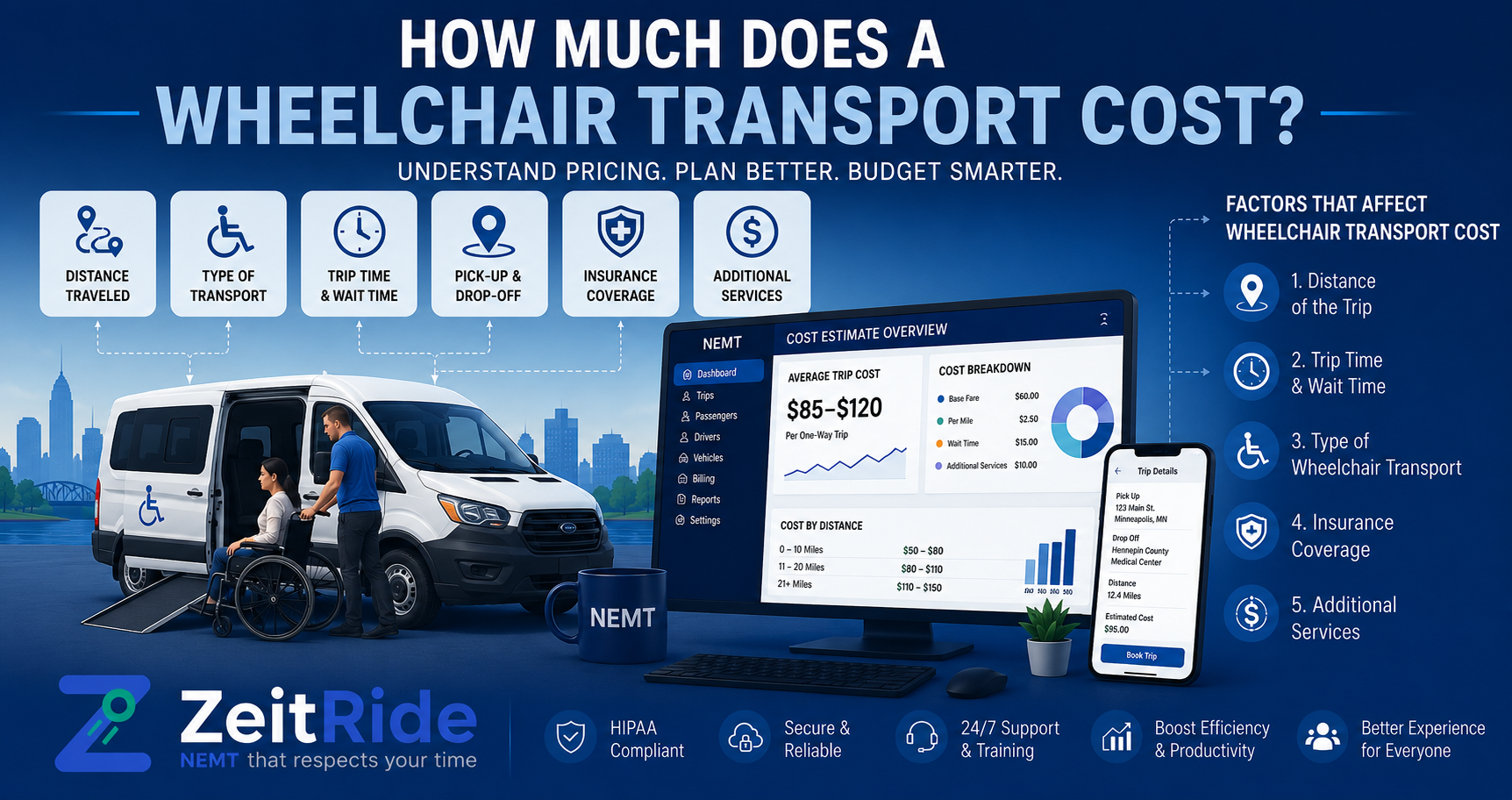
Wheelchair transport typically costs $45–$115 per trip. Learn what affects pricing, Medicaid coverage, mileage fees, and NEMT billing.
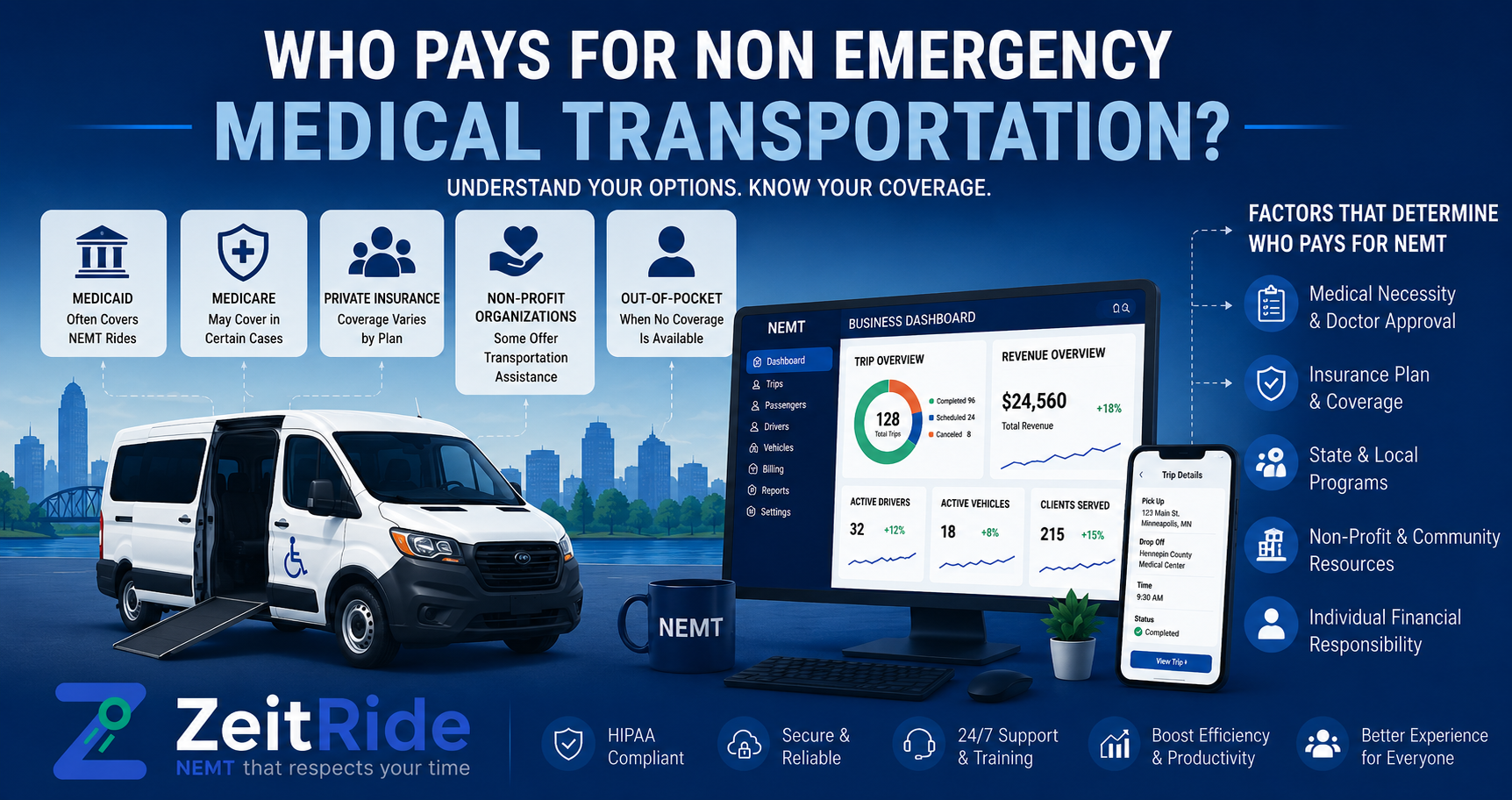
Medicaid and private pay all cover non-emergency medical transportation differently. Here's who pays for what and what it means for your fleet's billing.
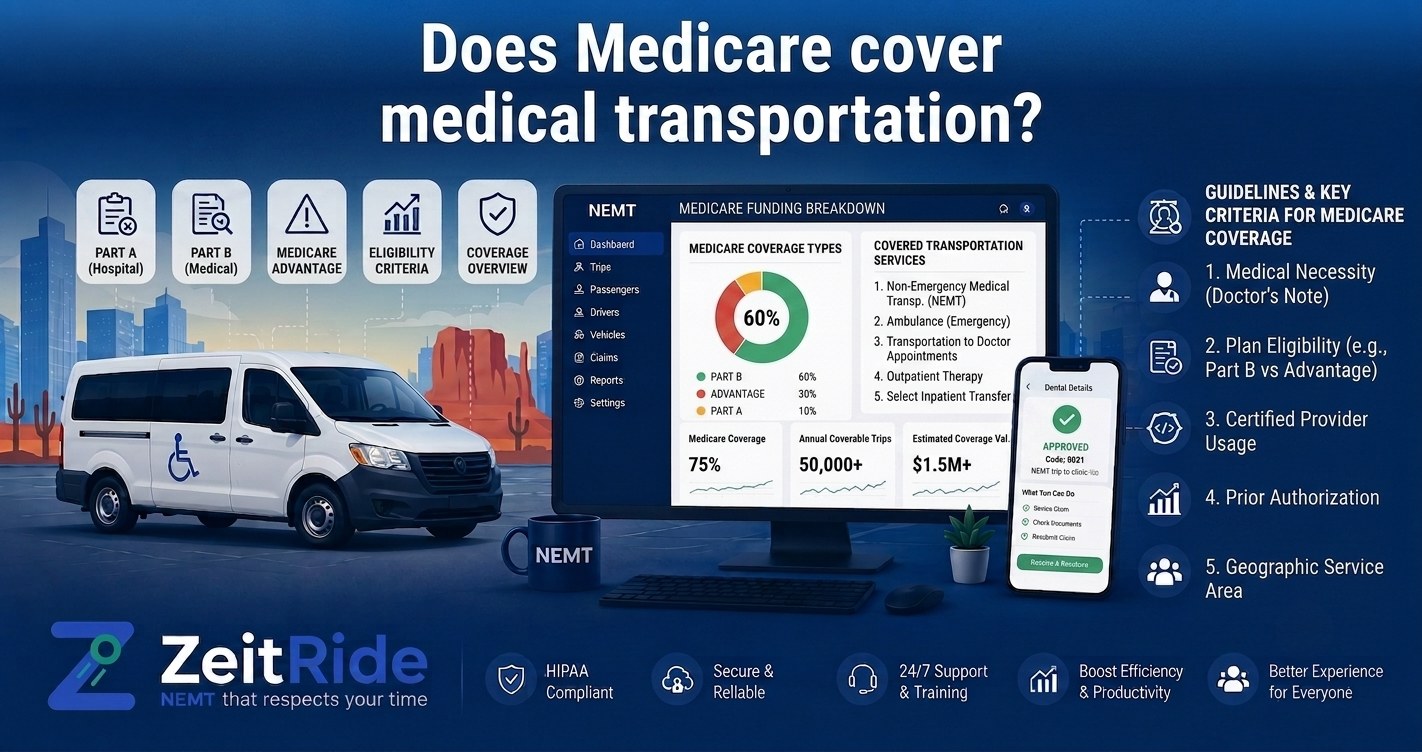
Original Medicare rarely covers routine medical transportation. Some Medicare Advantage plans add limited rides as a benefit. Here's what's actually covered.
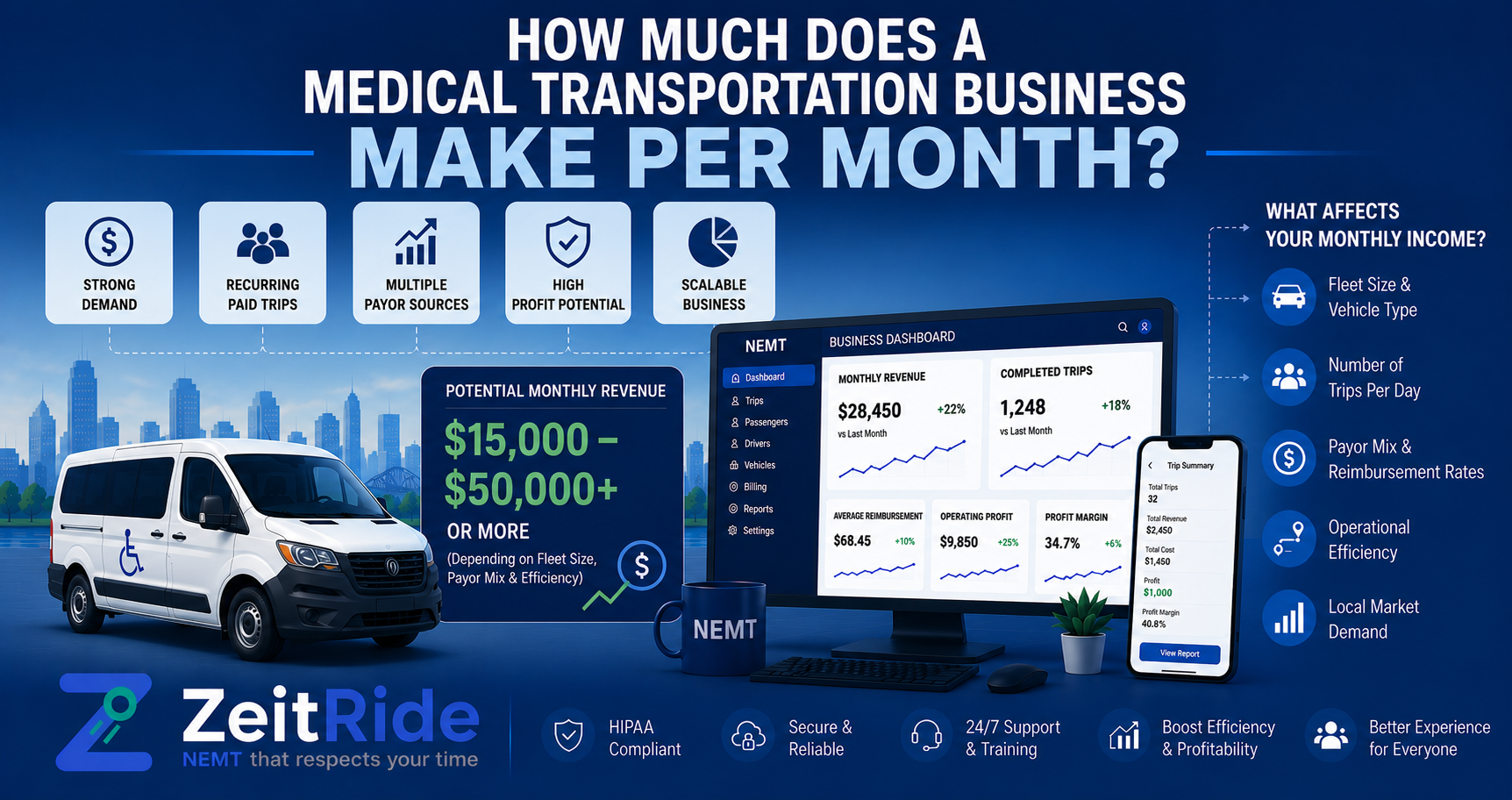
Learn how much a medical transportation business makes per month, average NEMT revenue per vehicle, key profit drivers, and ways to increase monthly income.
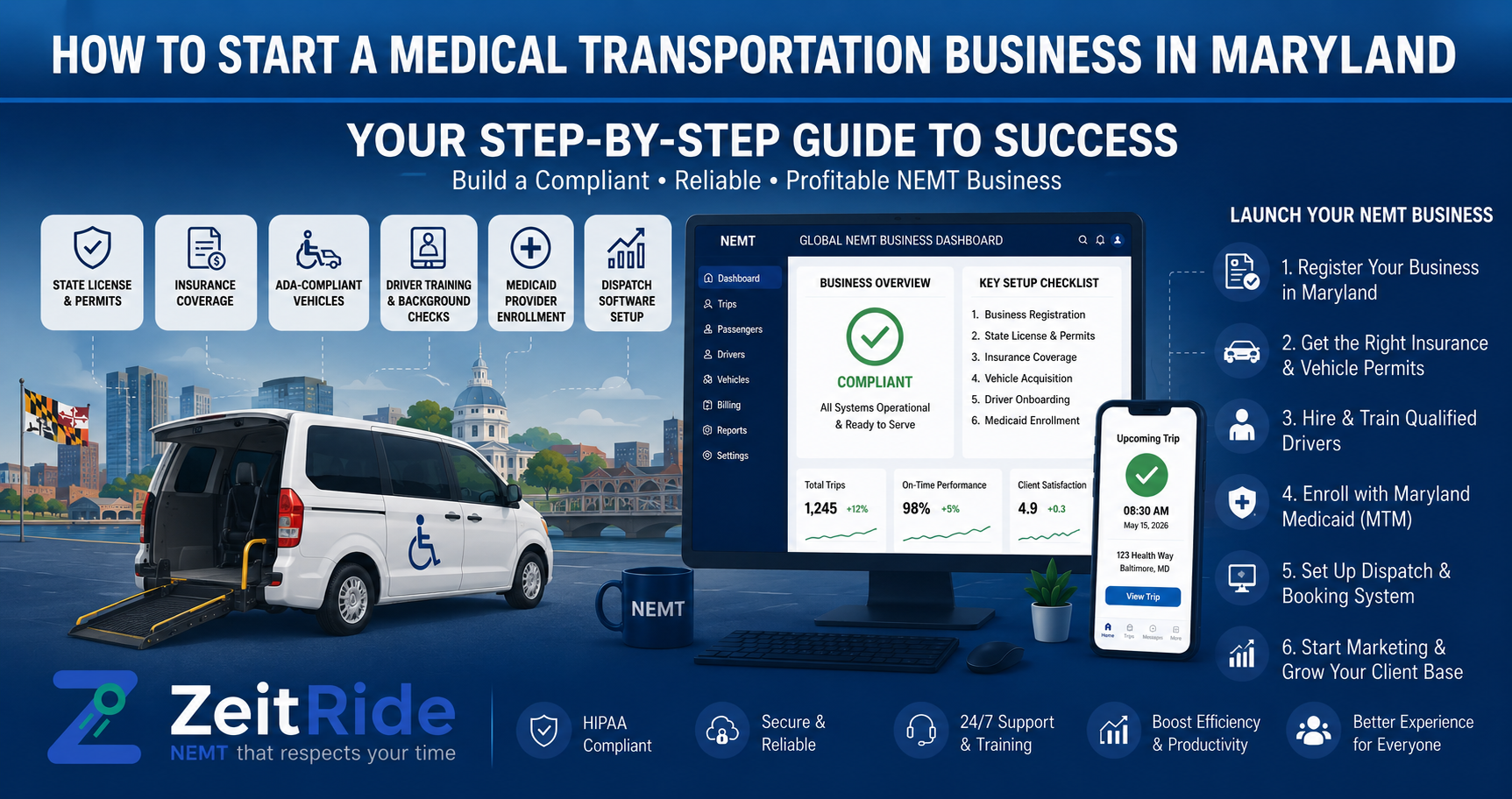
Maryland runs NEMT county by county, not through one statewide broker. Here's how to start a medical transportation business there — licensing, and software.
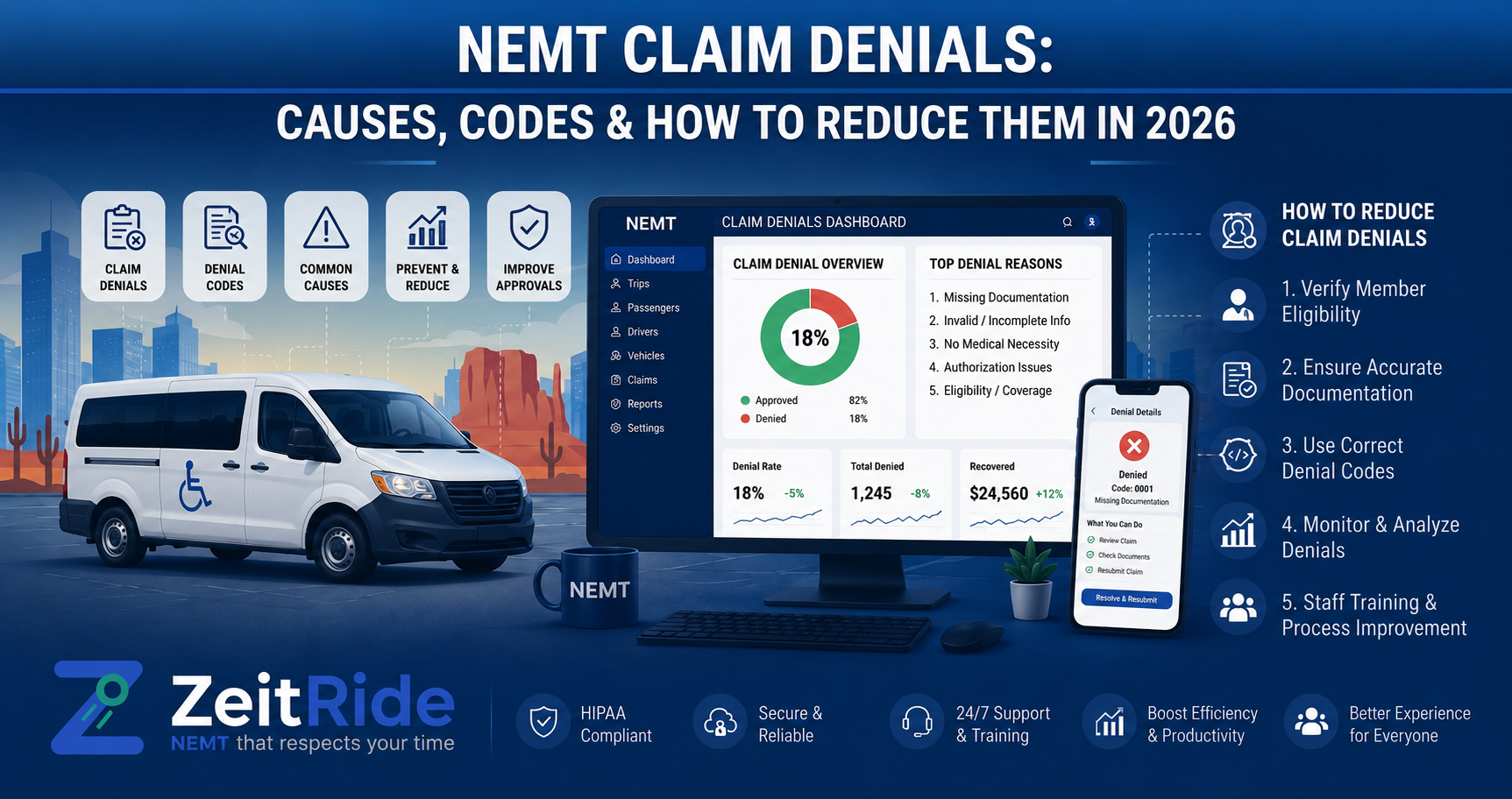
NEMT claim denials quietly eat into provider revenue every month. Here's what causes them, how to read the denial codes, and how to bring your denial rate down in 2026.
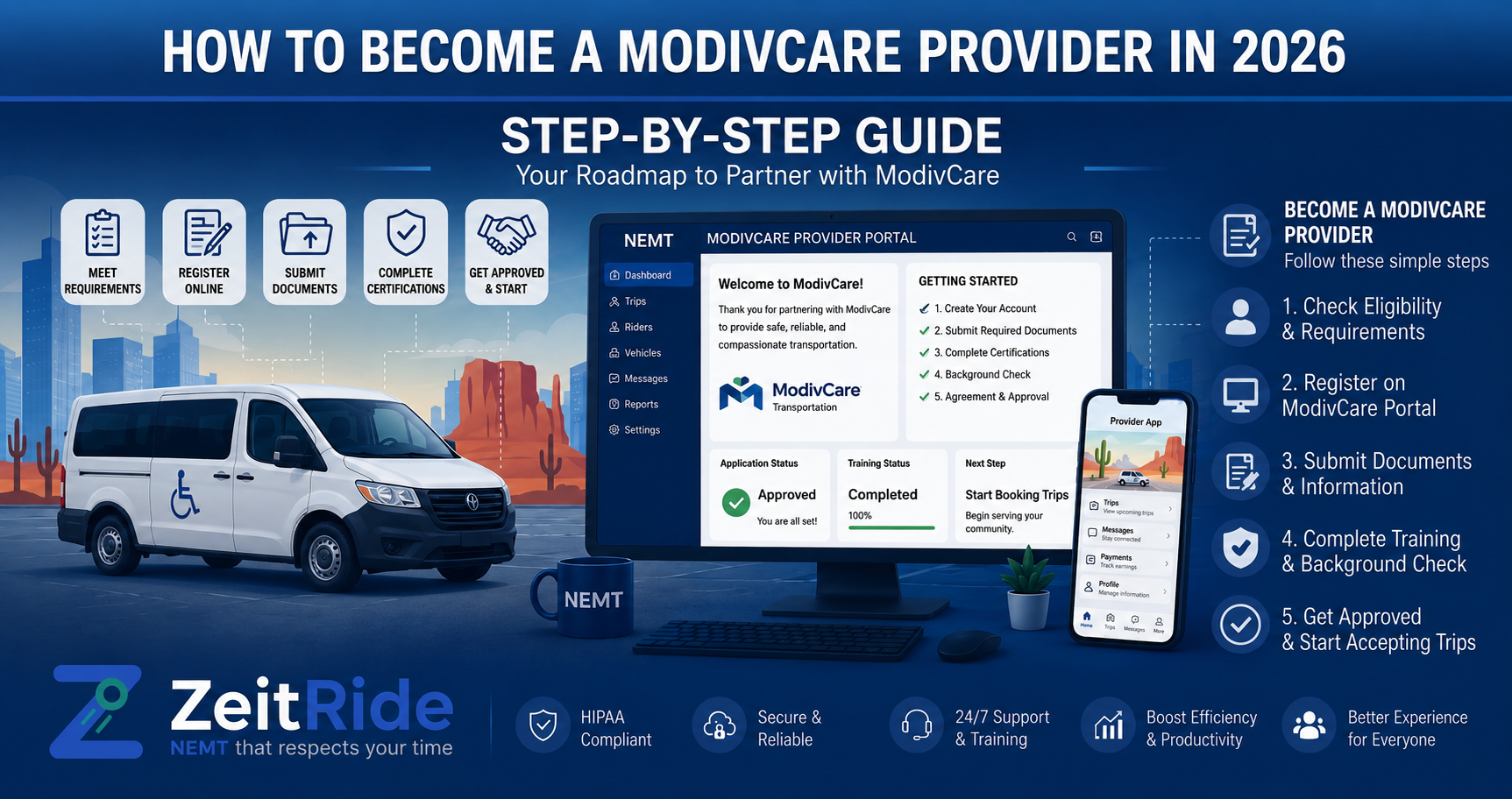
A step-by-step 2026 guide to becoming a ModivCare transportation provider — requirements, enrollment, credentialing timeline, pay, and the WellRyde question.
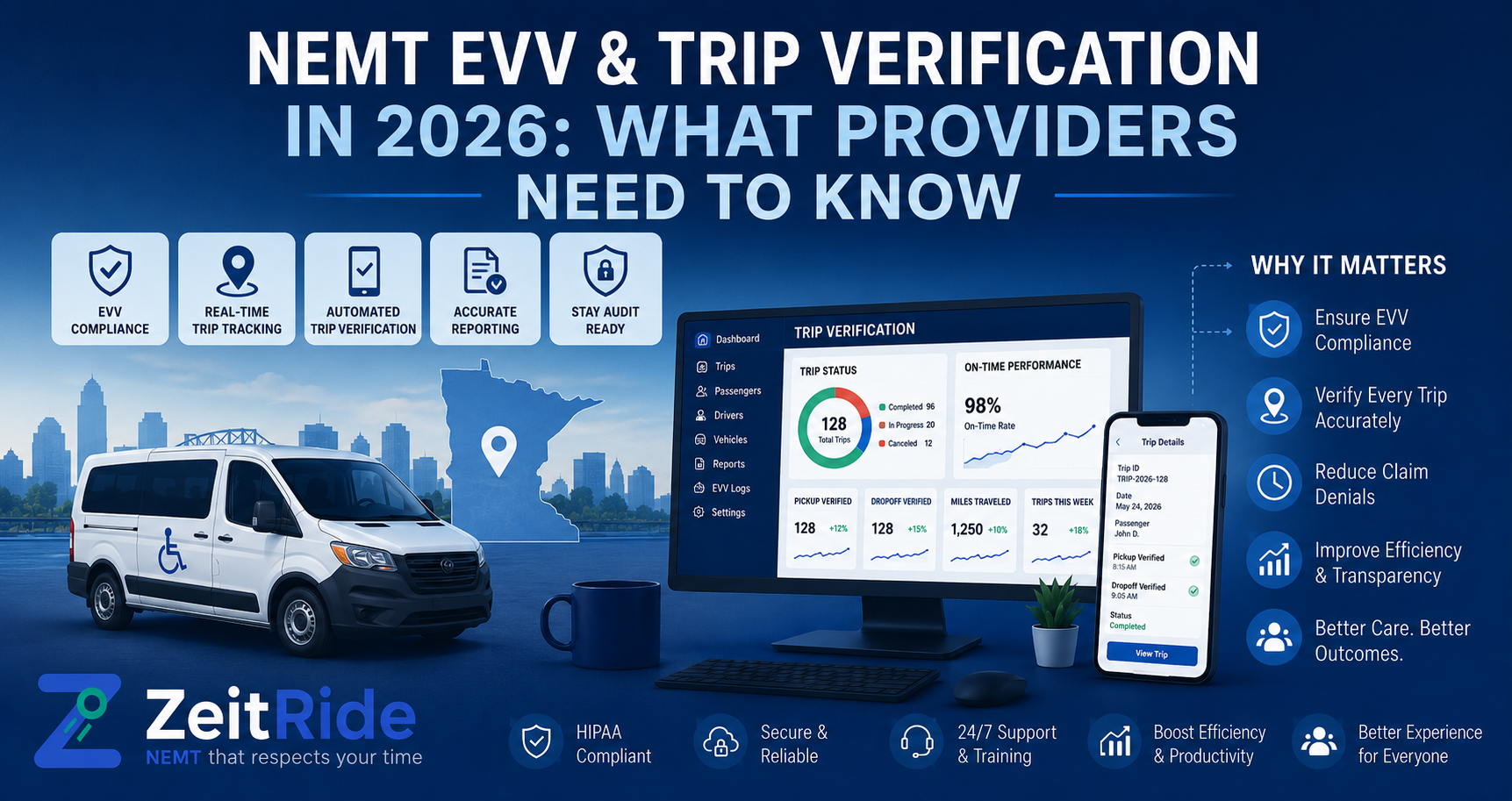
Learn when federal EVV applies, how NEMT trip verification differs, and what GPS, timestamps, signatures, and trip records providers may need.
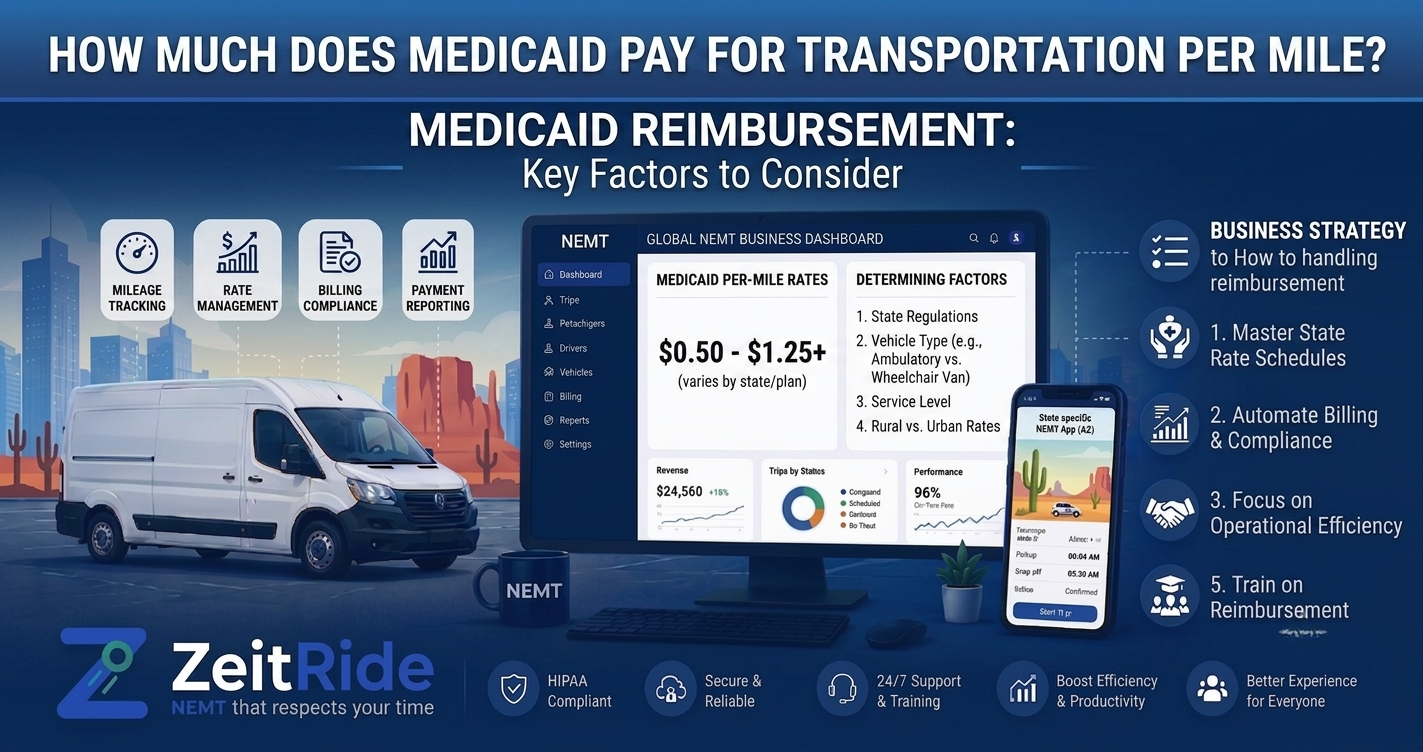
Learn how much Medicaid pays for transportation per mile in 2026, typical NEMT reimbursement rates by state, and ways to improve fleet profitability.
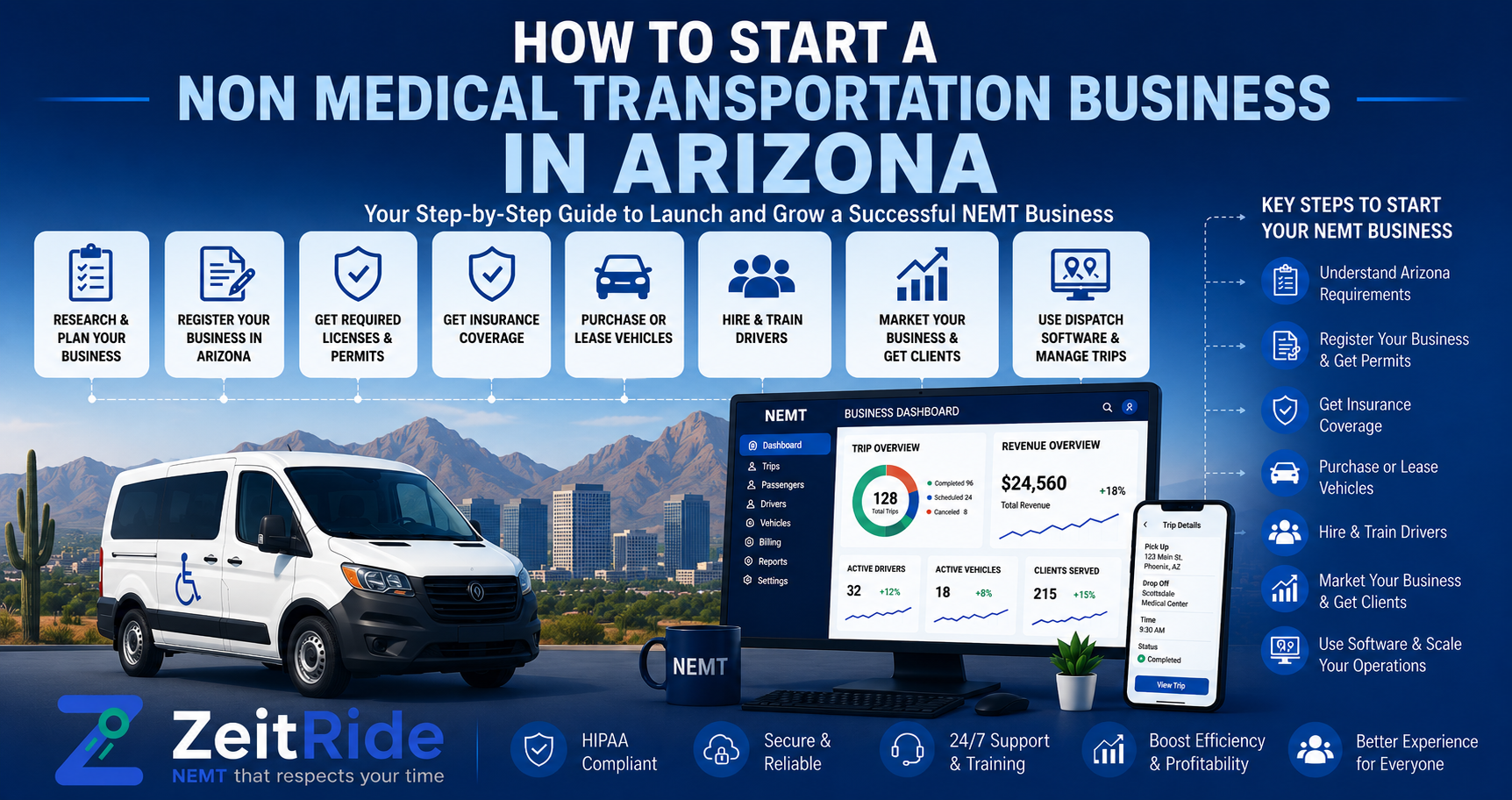
Learn how to start a non medical transportation business in Arizona with this step-by-step guide covering AHCCCS enrollment, licensing, insurance, vehicles, software, and startup costs.
Discover how non emergency medical transportation dispatch software streamlines scheduling, routing, driver management, and billing for NEMT providers.
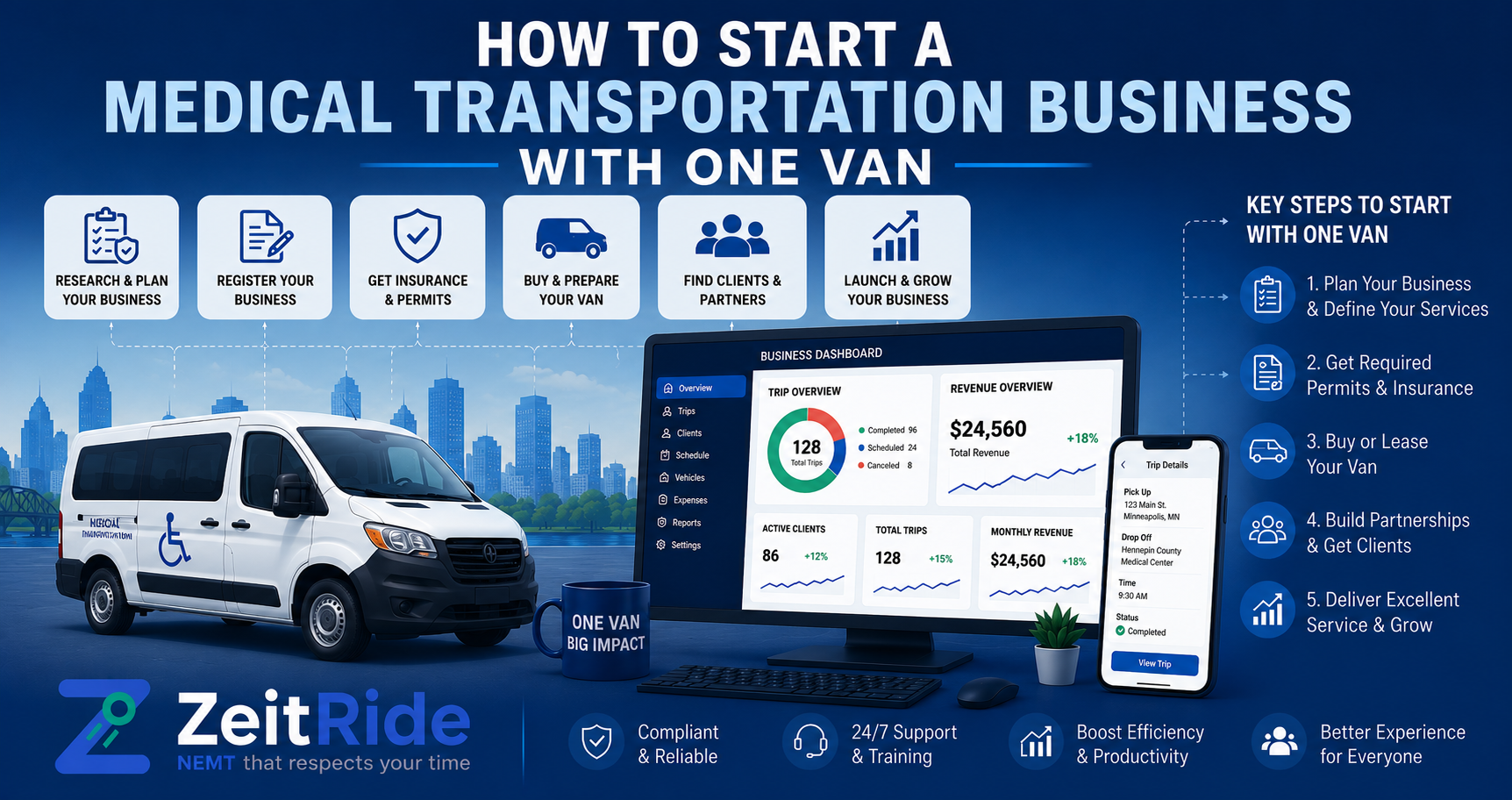
Launch a NEMT business with one van in 2026. Learn licensing, insurance, broker enrollment, costs, and software needed to start fast.
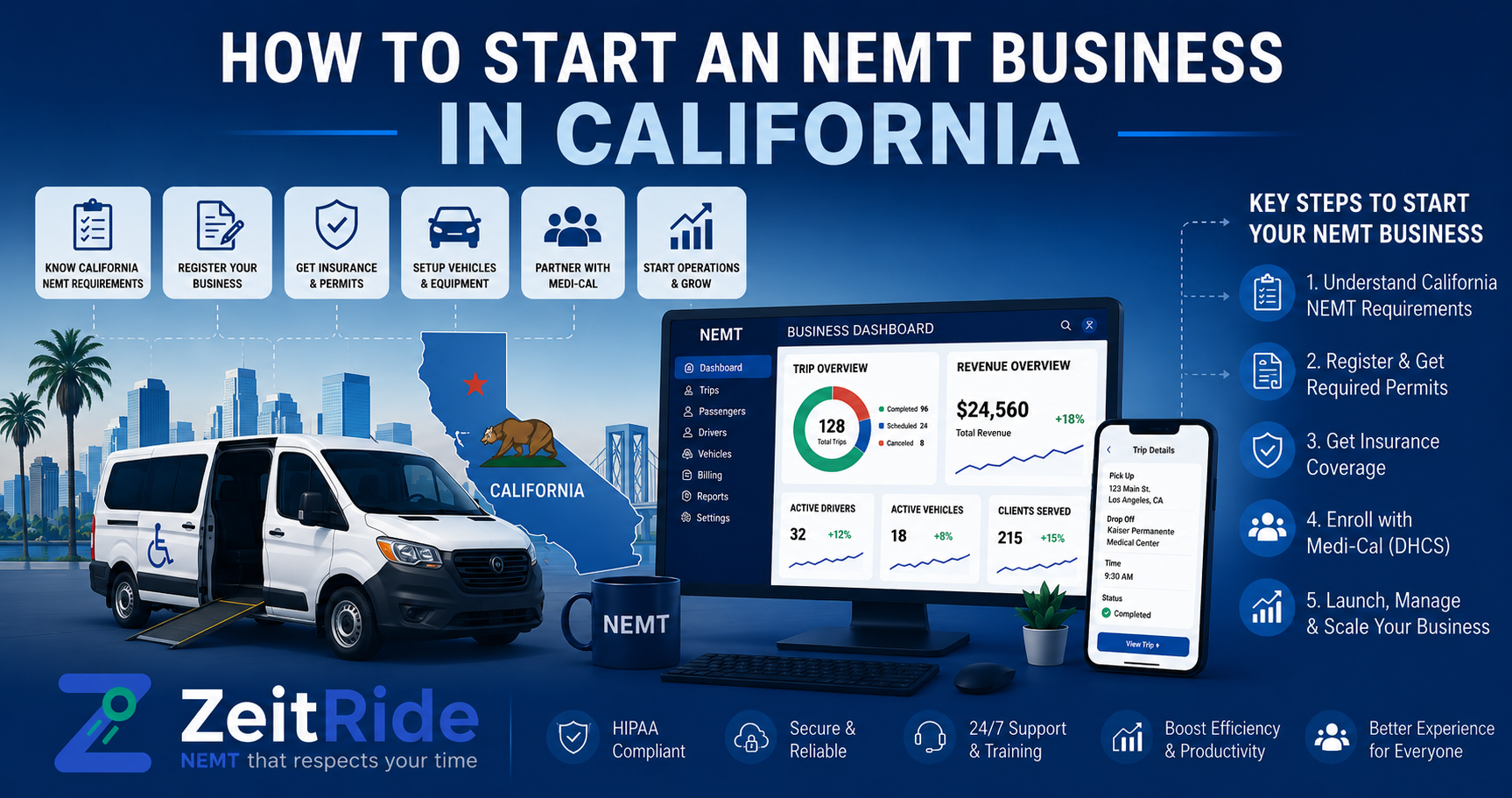
Learn the exact steps to start a NEMT business with proper insurance, licensing, vehicles, broker enrollment, and compliance requirements.
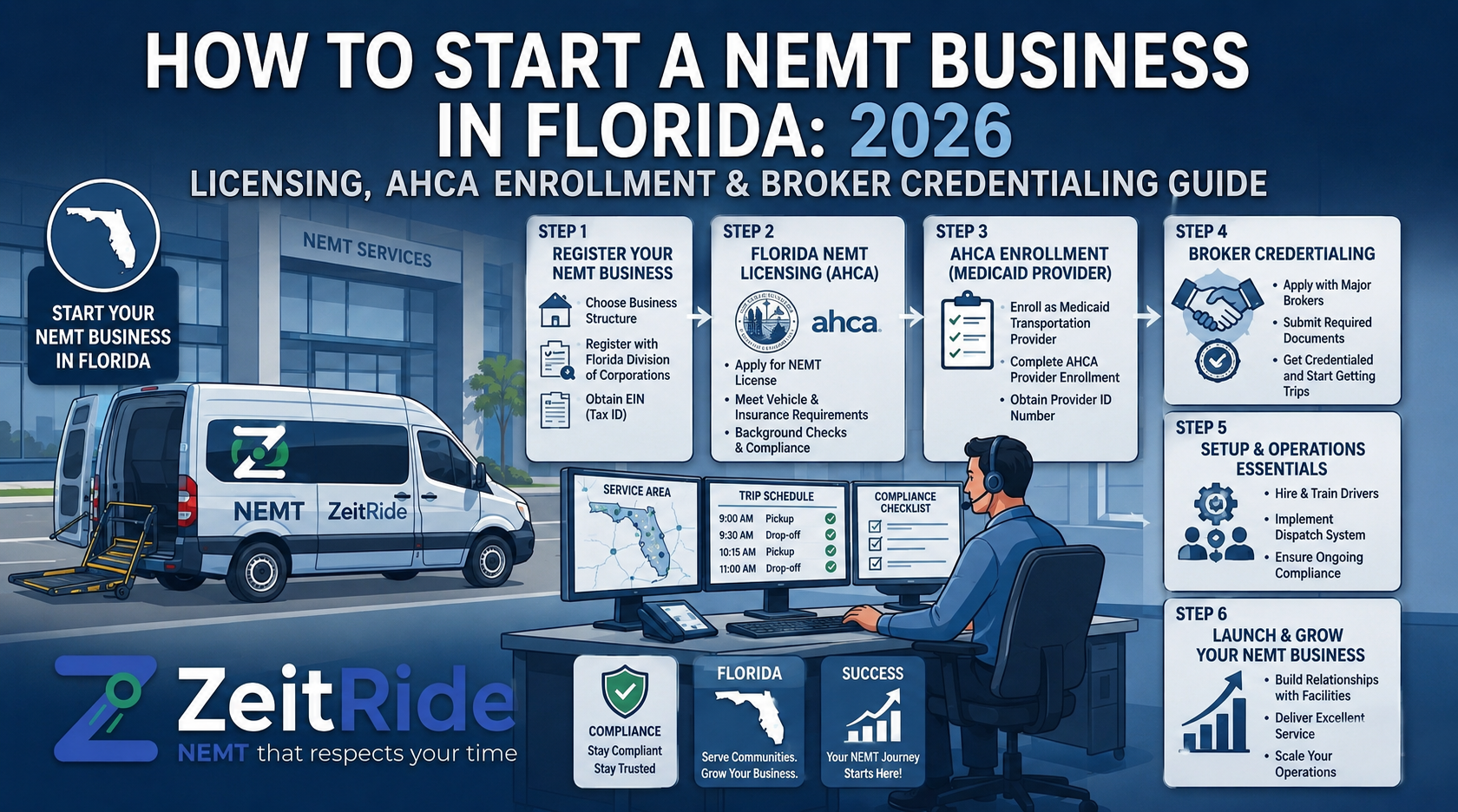
Florida's AHCA enrollment, county licensing, and broker credentialing — what it actually takes to launch an NEMT business in Florida in 2026.
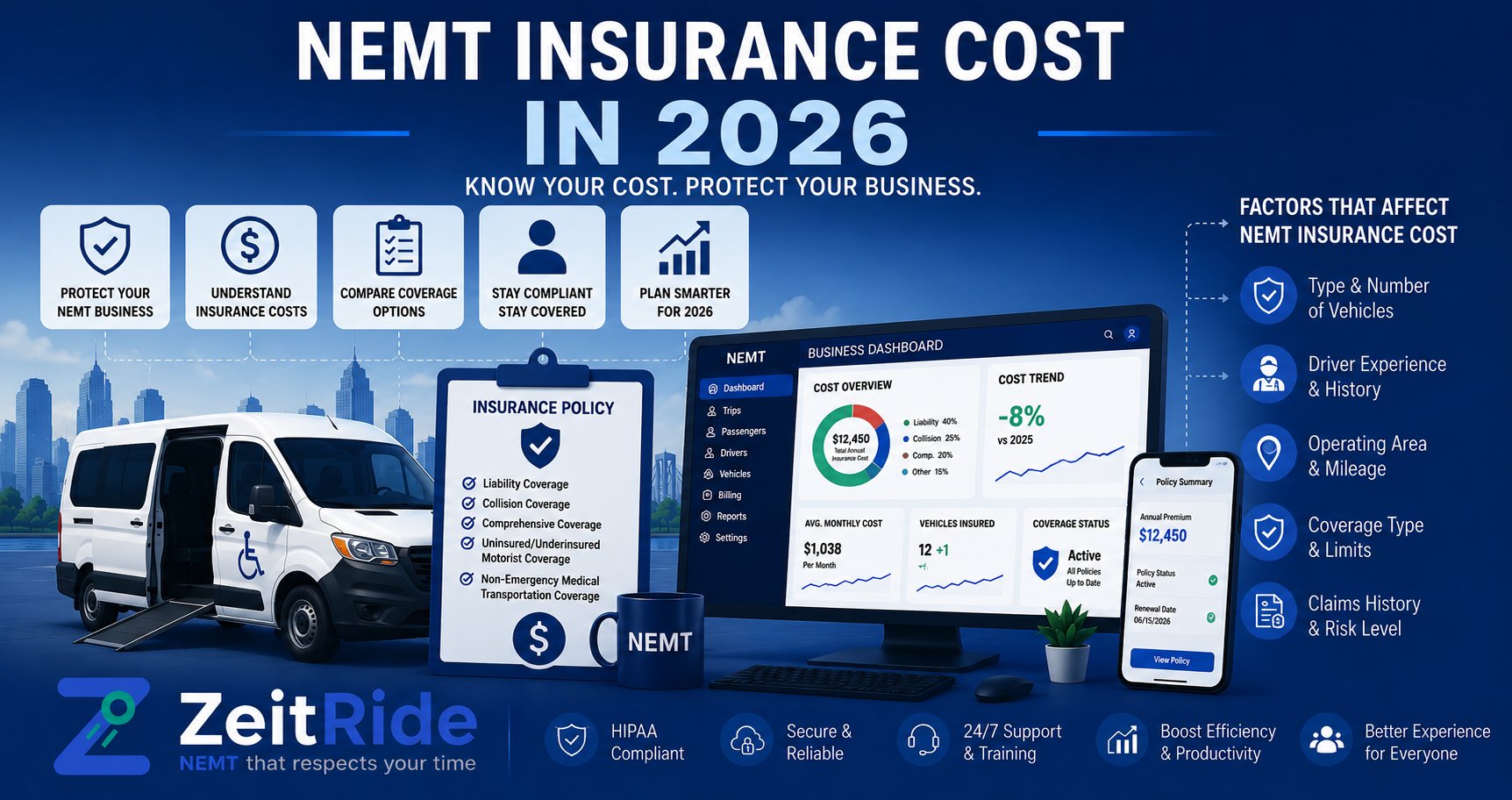
NEMT insurance costs $4,500–$18,000+ per vehicle annually in 2026. Learn what affects premiums, required coverage, and ways to reduce costs.
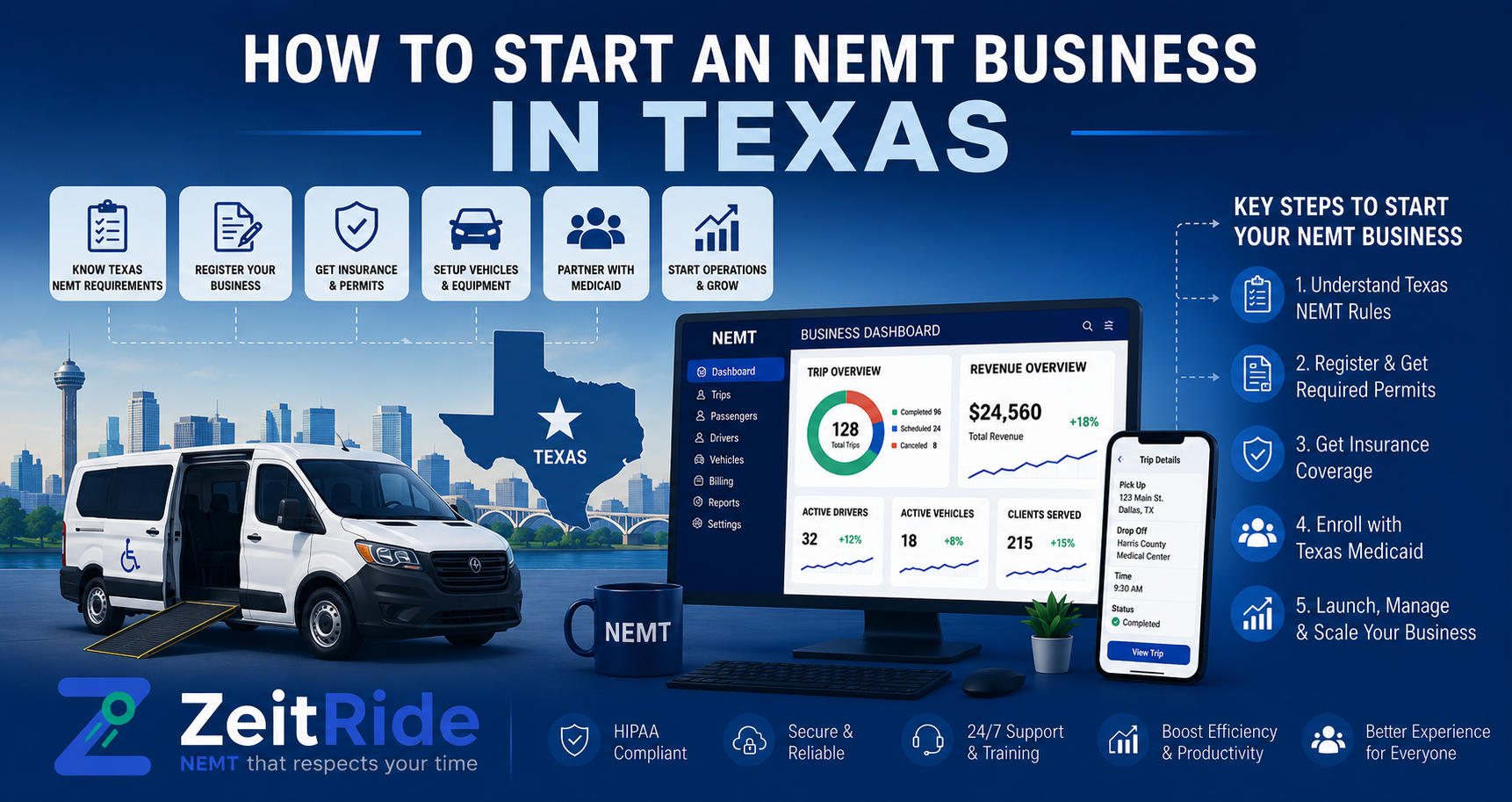
Learn how to start a NEMT business in Texas, including licensing, insurance, vehicle requirements, Medicaid enrollment, and startup costs.
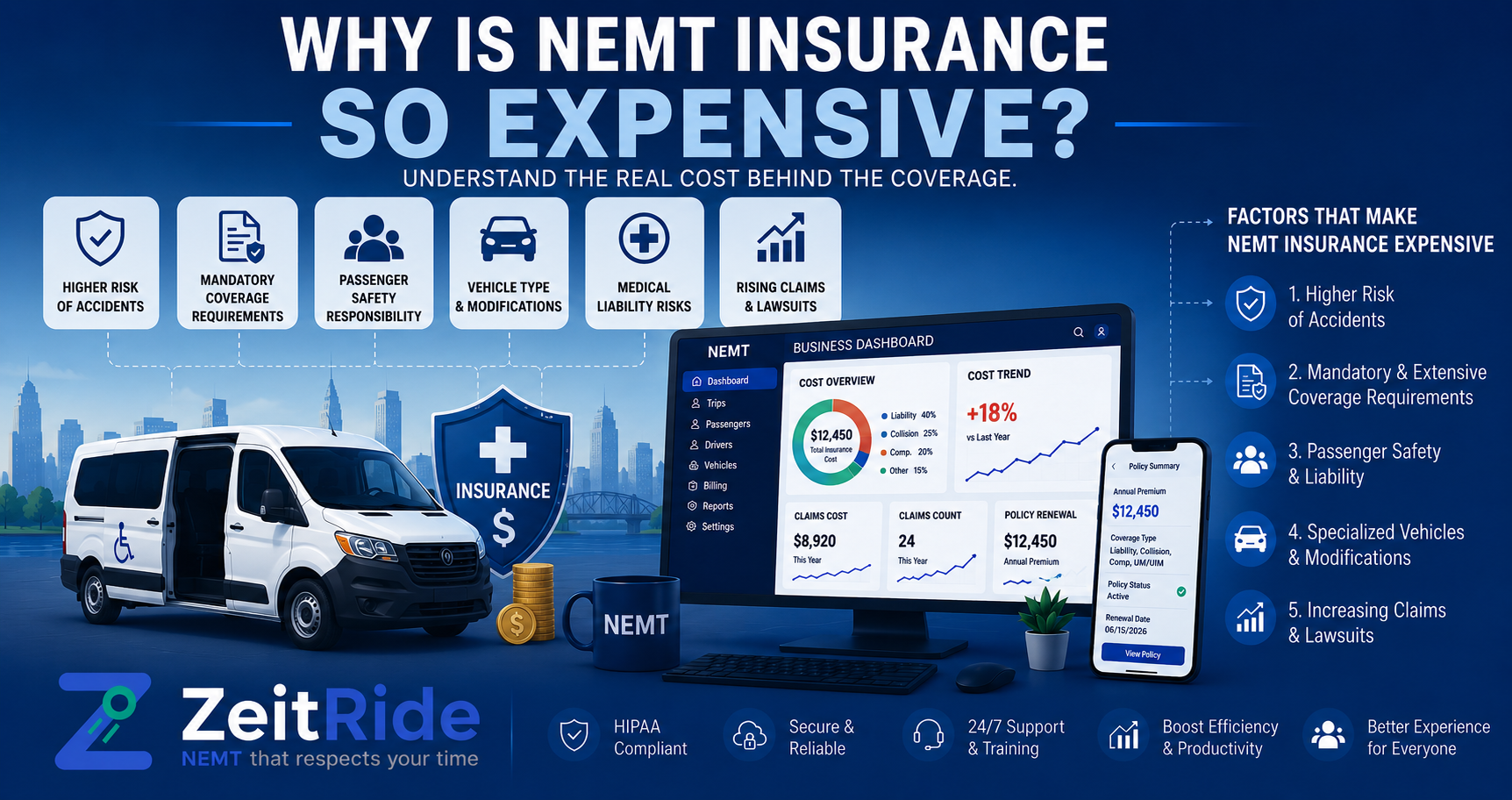
NEMT insurance is expensive due to high liability risk, medical transport requirements, strict regulations, and specialized vehicle coverage.
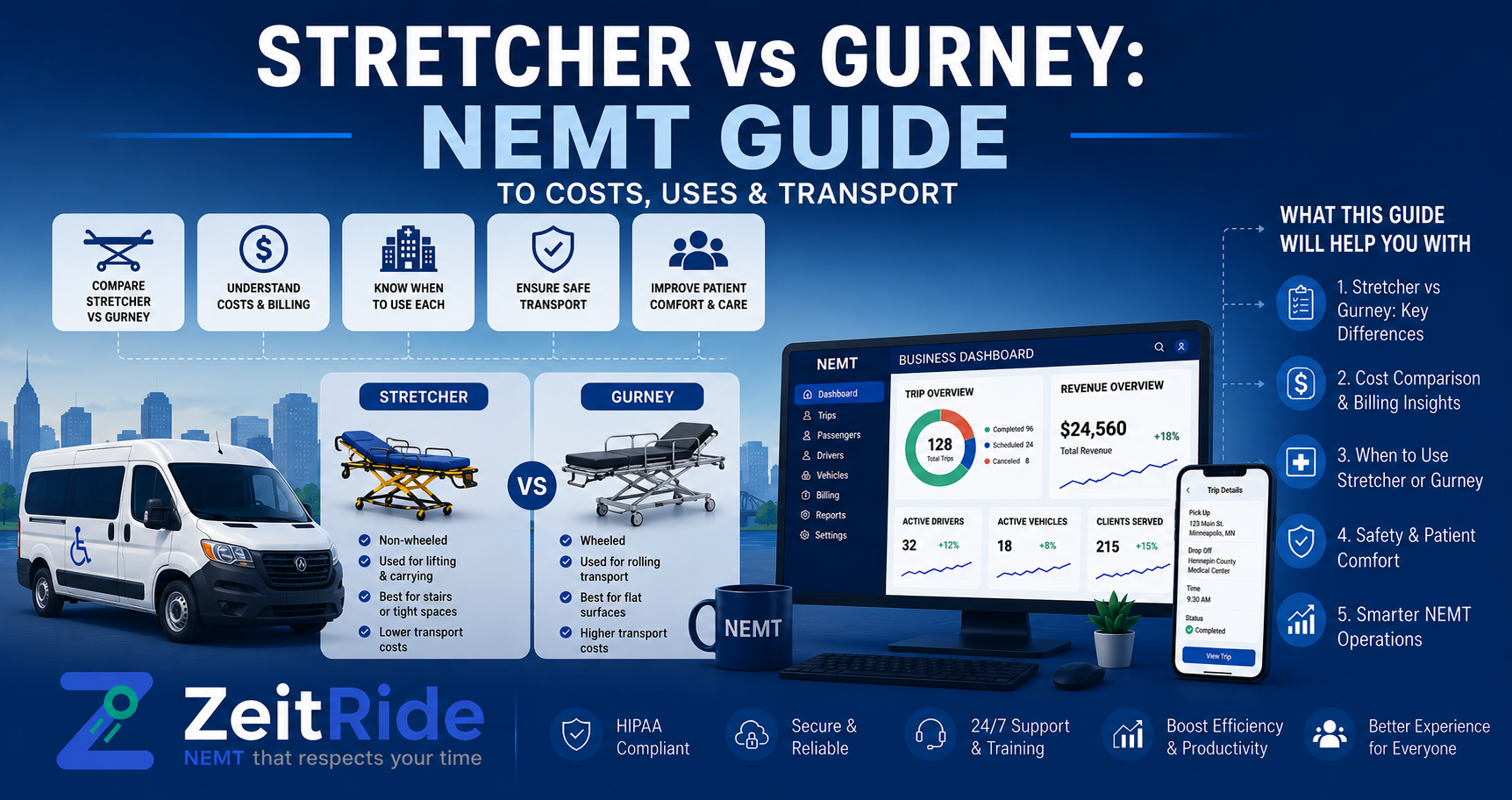
Learn the key differences between stretcher and gurney transport in NEMT, including uses, costs, billing impact, and scheduling considerations.
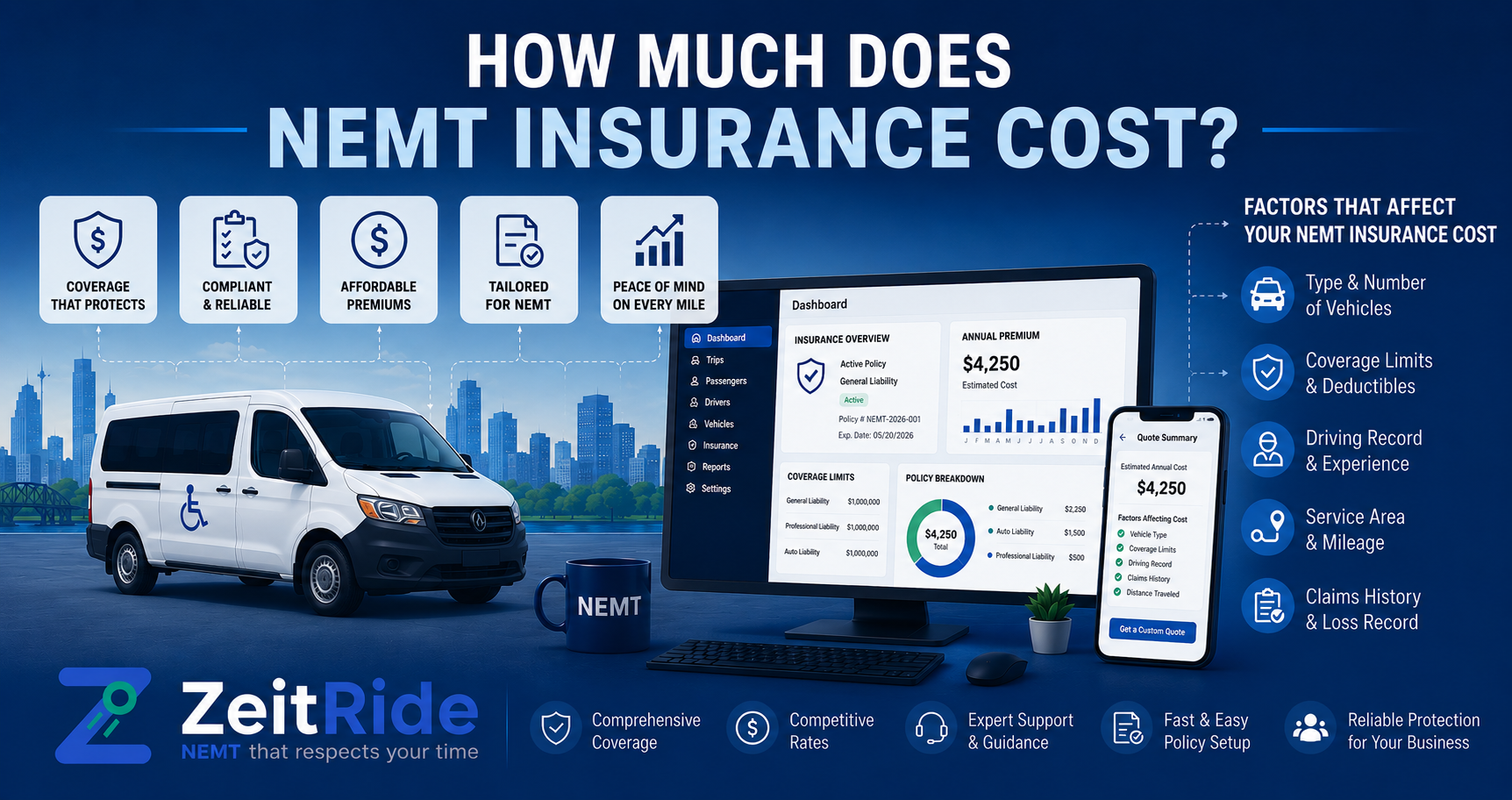
Virginia NEMT insurance costs $5,500–$16,000/vehicle/year. Learn what drives your premium and how to reduce it as a Virginia operator in 2026.
Brokers don't assign trips randomly — they score you. Learn exactly how ModivCare and MTM rate providers and what operators do to consistently get more NEMT trips.
Thinking about switching NEMT software? This step-by-step migration guide covers timelines, data transfer, broker reconnection, and go-live day.
Starting a NEMT business in Virginia? Learn DMAS enrollment, ModivCare credentialing, vehicle requirements, insurance, and billing.
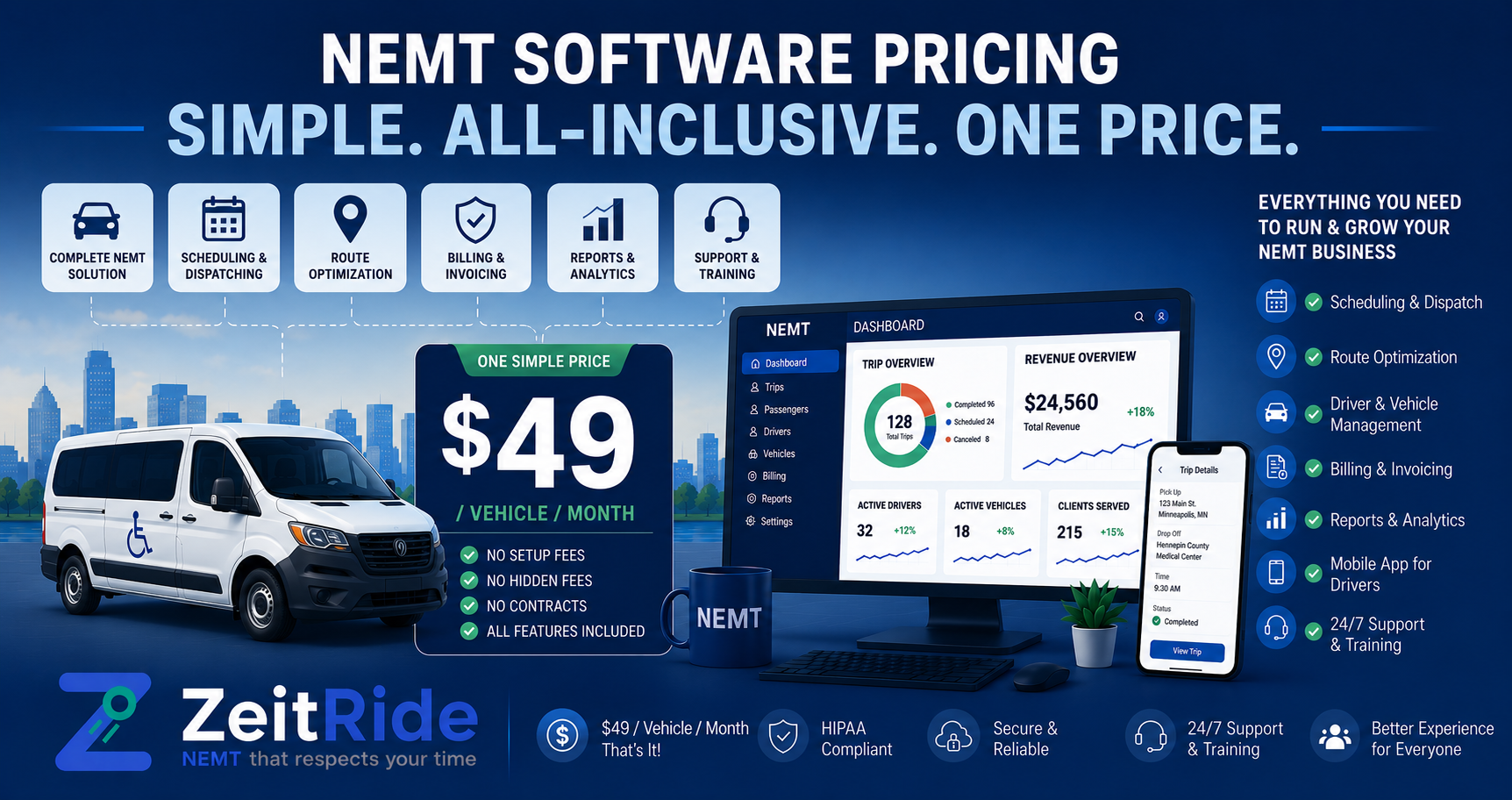
NEMT software pricing starts at $49 per vehicle per month in 2026. This guide compares every pricing model per-vehicle, per-trip, flat-rate tiered, and enterprise.
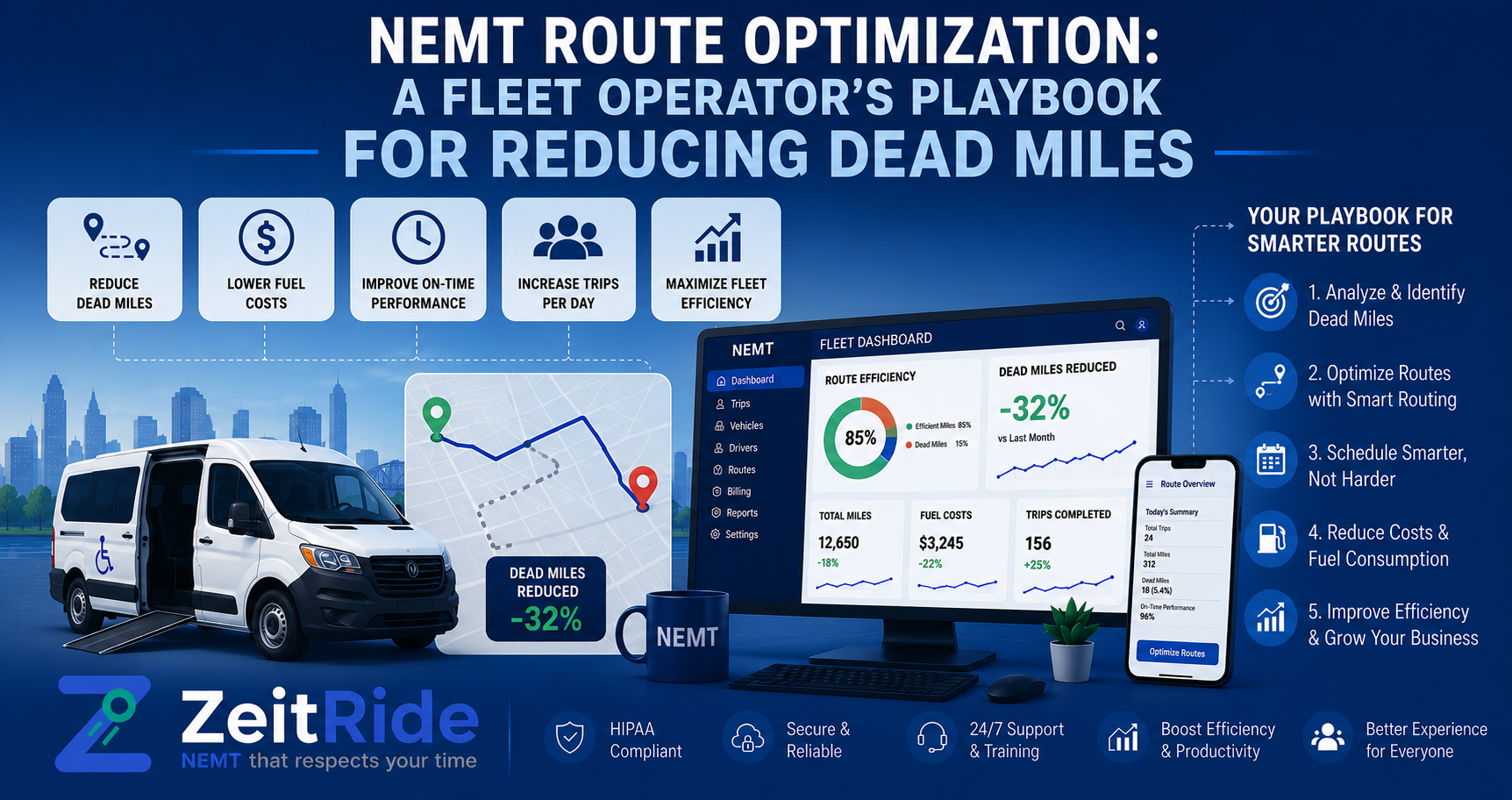
Dead miles drain NEMT margins silently. This playbook covers route optimization strategies, AI sequencing, and seven tips fleet operators use to cut deadhead miles and run more trips per day.
Most NEMT software quotes leave out billing, per-trip fees, and setup costs. Here's what operators actually pay in 2026 — and what $49/vehicle really includes.
Most guides skip the part that matters: what it actually costs to run a NEMT brokerage and what software you need from day one. Here's the real breakdown.
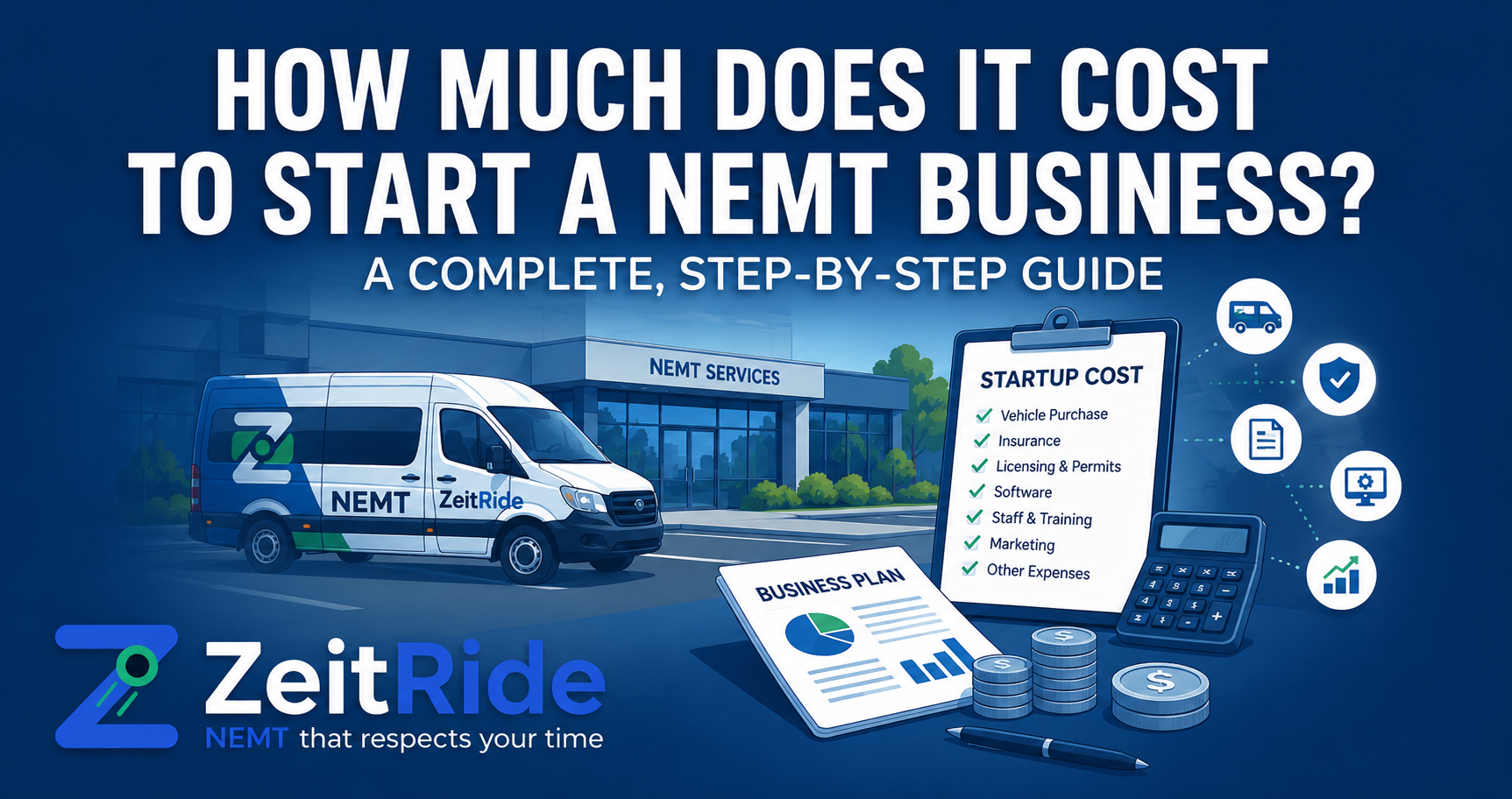
A complete breakdown of NEMT insurance costs for a one-vehicle fleet: commercial auto, general liability, workers' comp, and yearly budget range.
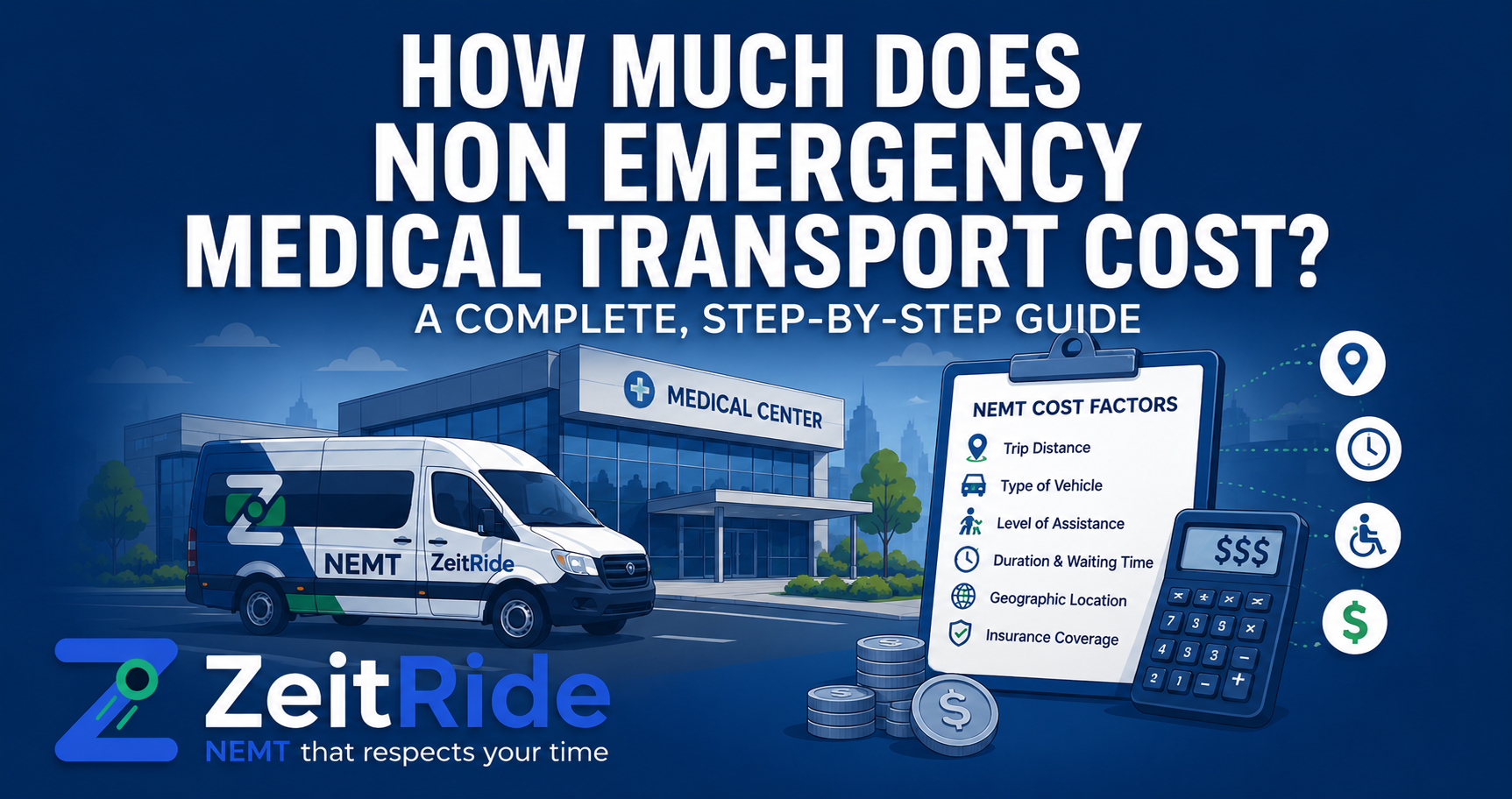
Ambulatory trips run $25–$50. Wheelchair starts at $45. Stretcher hits $200+. Here's what NEMT actually costs — per trip, per mile, and per month.
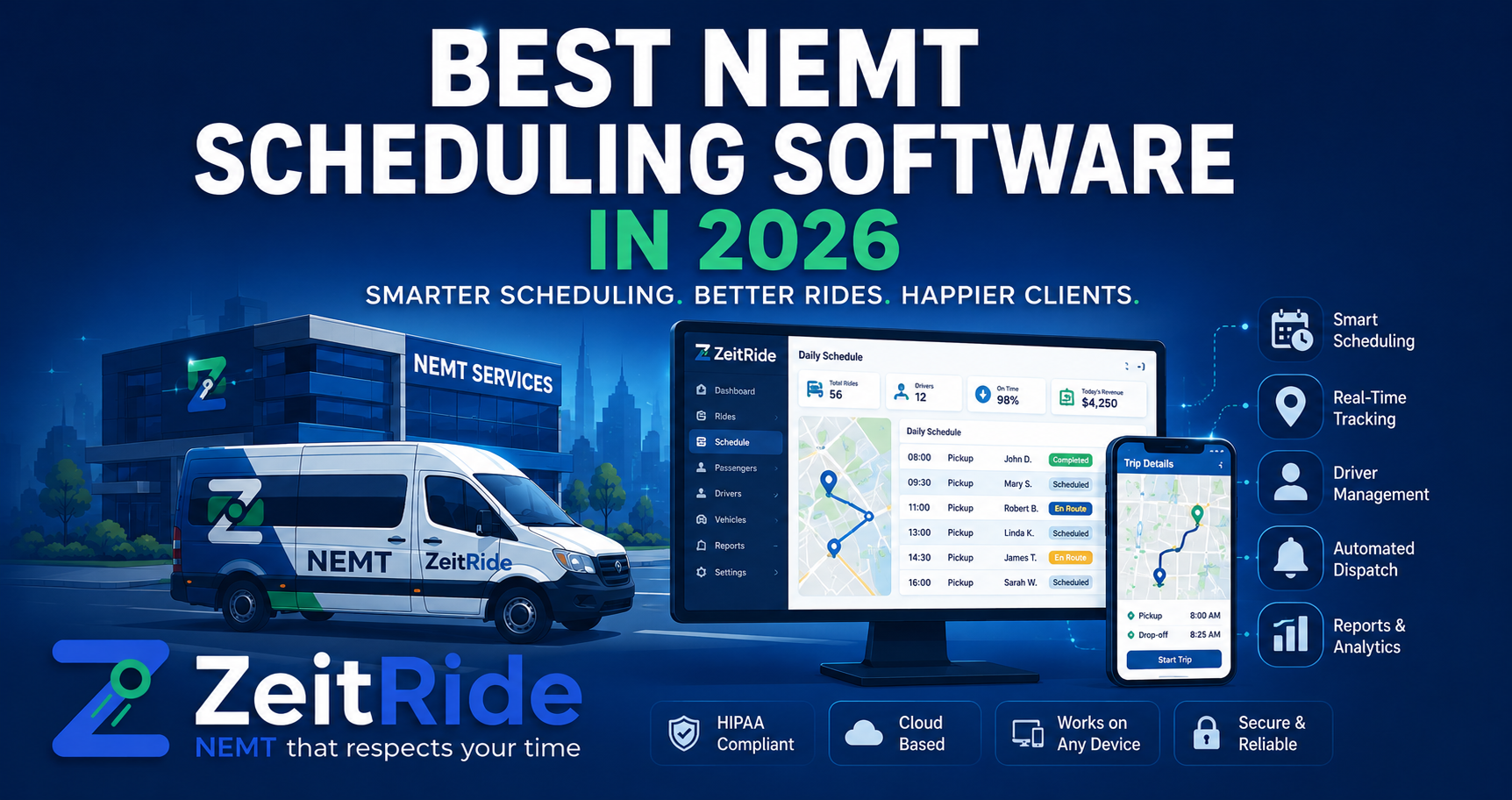
Compare seven NEMT scheduling platforms by automation, broker integrations, driver apps, fleet fit, and pricing for growing fleets.
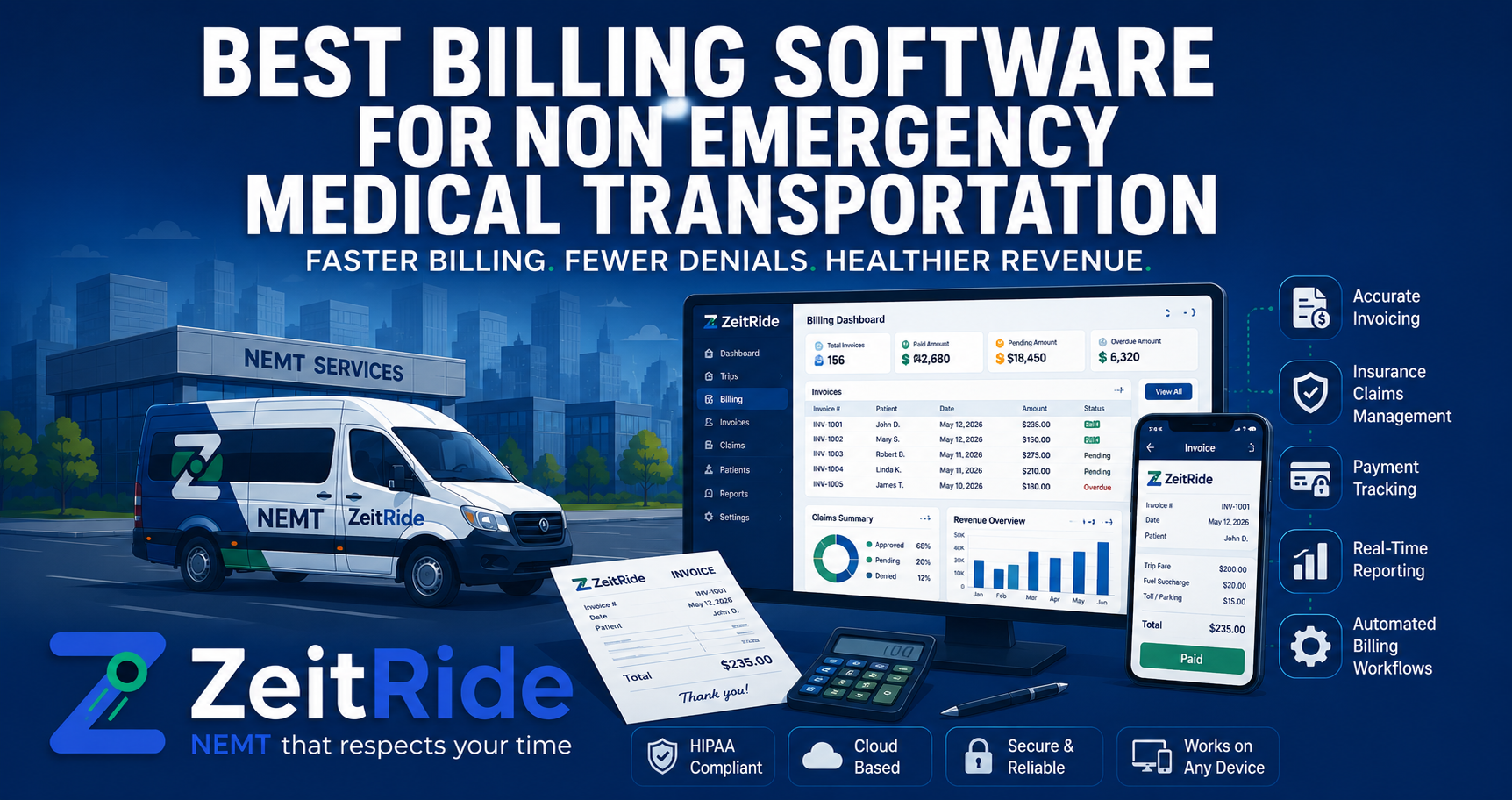
Compare seven NEMT billing platforms by Medicaid claims, EDI, broker integrations, denial management, pricing, and operational fit.
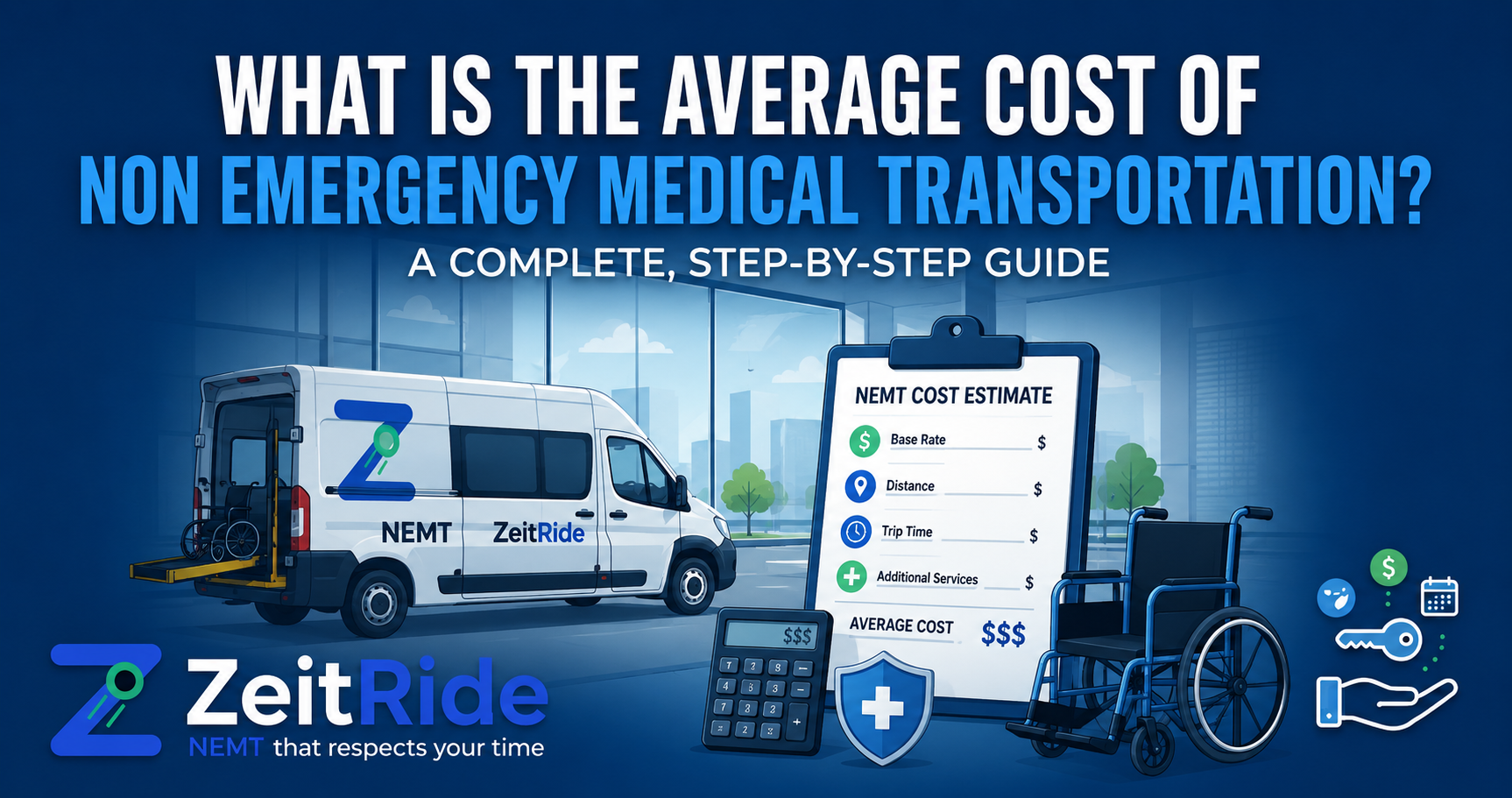
Discover the real cost breakdown, key factors that affect your fare, and smart ways to save — powered by ZeitRide NEMT expertise.
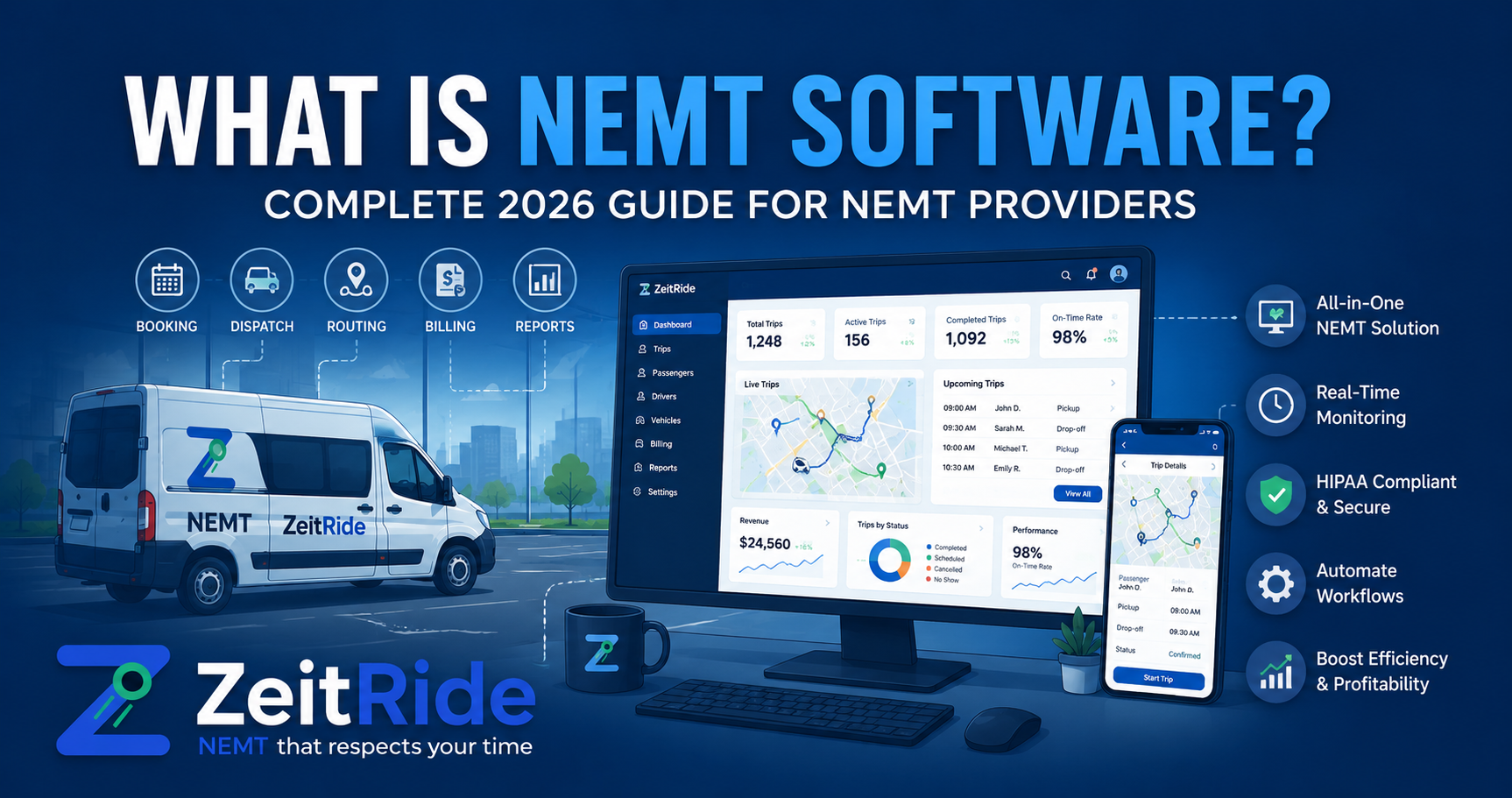
Discover what NEMT software is, how it works, and why it is essential for modern non-emergency medical transportation providers in 2026.
Compare seven NEMT platforms by scheduling, dispatch, routing, driver apps, broker integrations, billing, pricing, implementation, and fleet fit.
A practical framework for evaluating NEMT software: dispatch, scheduling, routing, billing, driver apps, broker fit, pricing models, and implementation risk.
Momentm offers enterprise-grade NEMT and health transportation software under NovusMED and Simpli. ZeitRide focuses on providers who want one plan, modern UX, and straightforward pricing discussed on a demo.
Both offer simple per-vehicle pricing and strong NEMT scheduling and dispatch. Here's how ZeitRide and Bambi compare on pricing, features, and who they're best for.
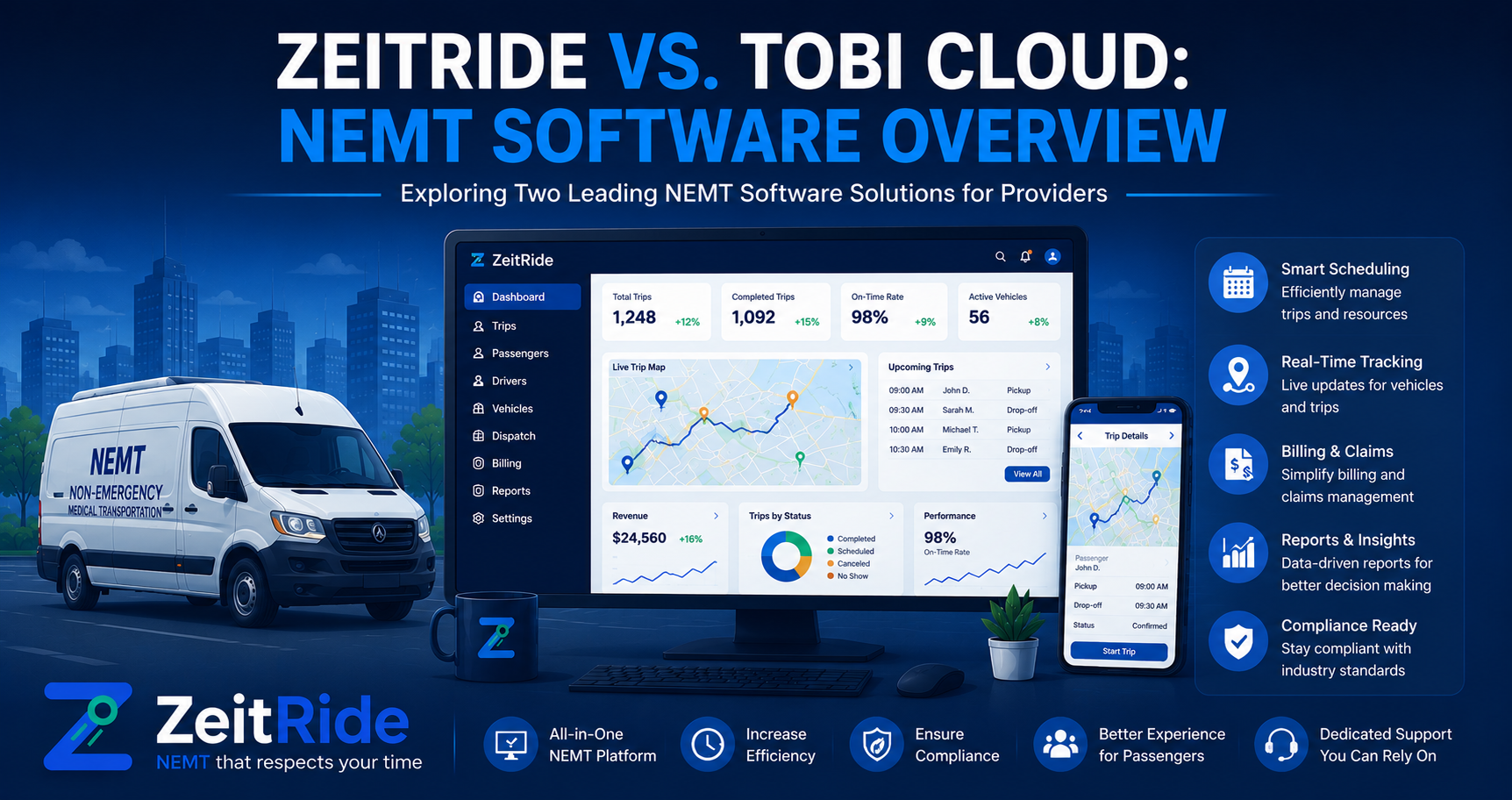
Tobi offers tiered plans from $60 to $200 per vehicle. ZeitRide offers one plan with everything included—pricing on a demo. We break down the differences so you can choose the right fit.
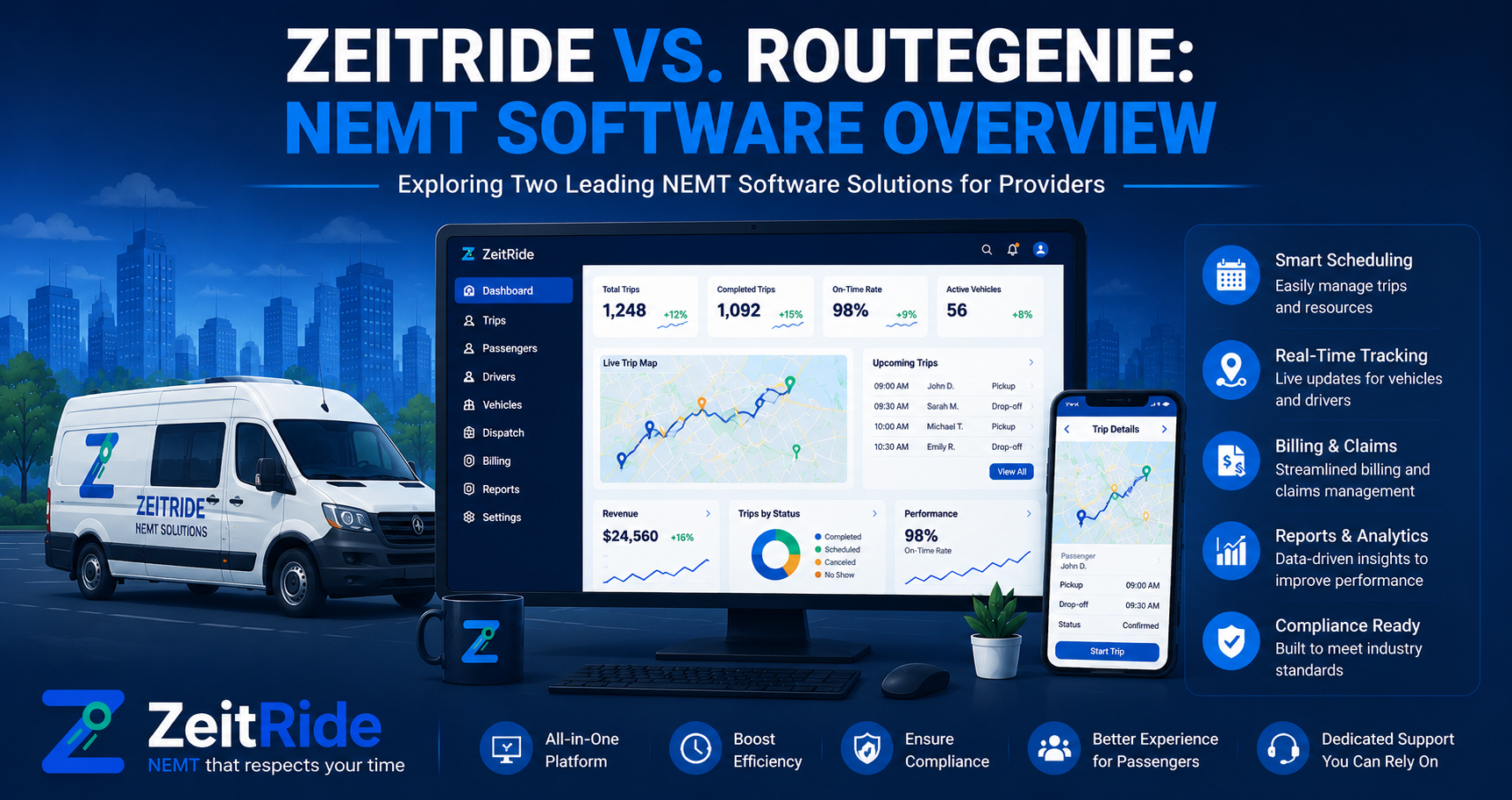
RouteGenie is a comprehensive NEMT suite with dedicated modules for dispatch, billing, and fleet. ZeitRide is an all-in-one platform with one plan—pricing on a demo. Here's how they compare.
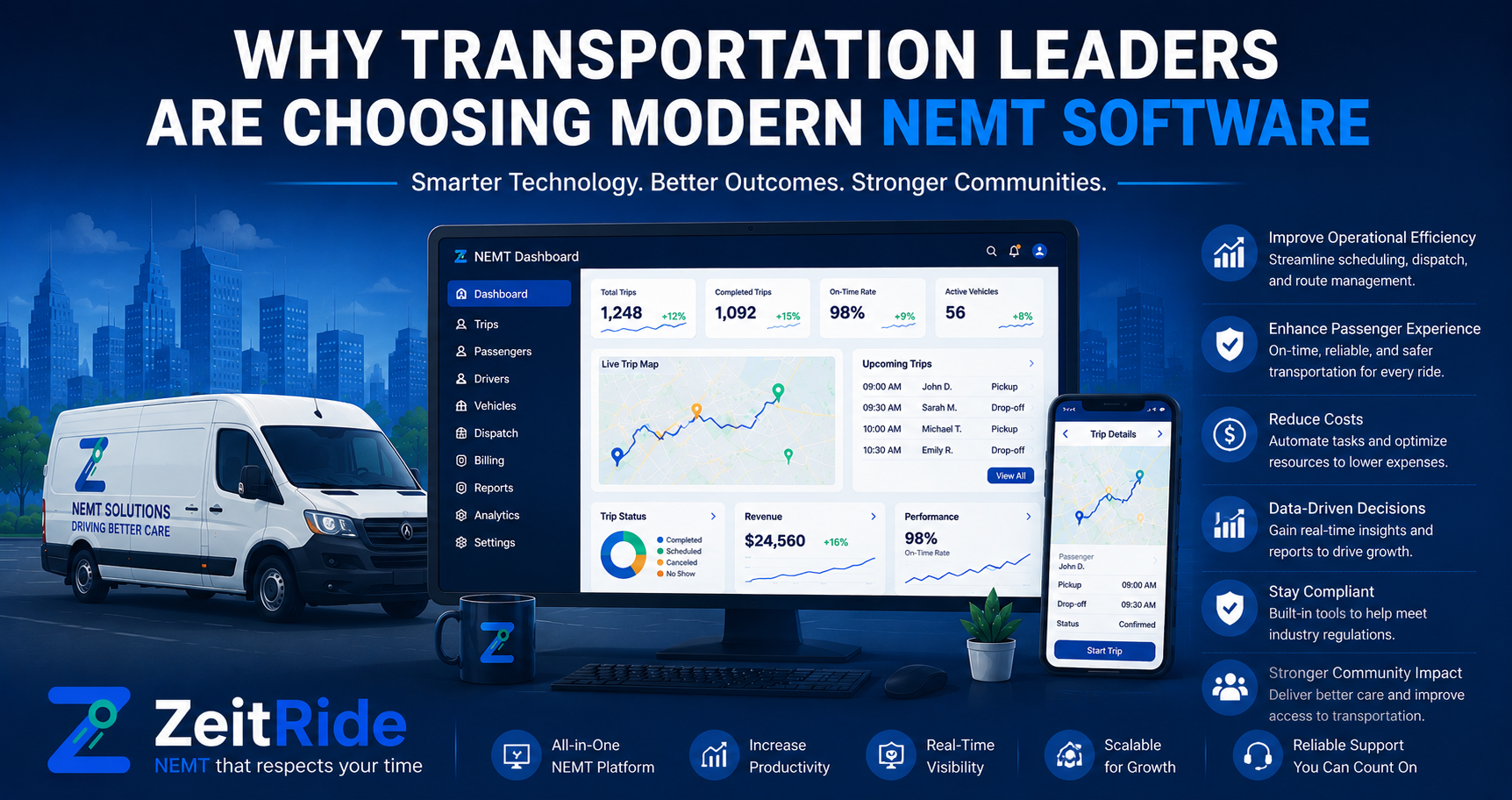
Every missed trip, manual workaround, billing error, or safety incident impacts real people and puts pressure on your margins and reputation. See how modern NEMT software helps fleets run reliably and scale.
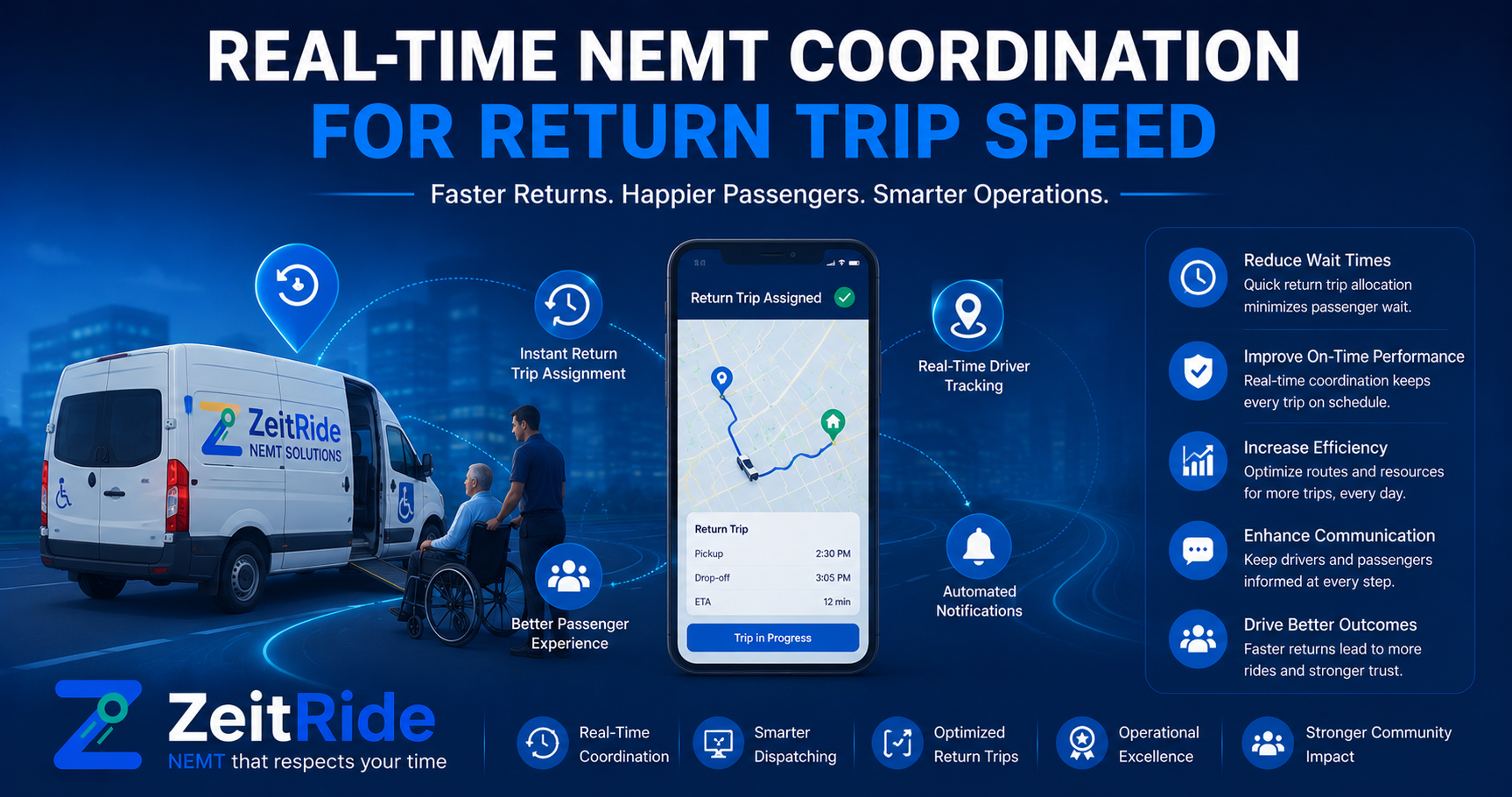
Key takeaways for enterprise NEMT fleets: return-trip coordination, reducing wait times, and how real-time dispatch improves on-time performance and passenger experience.
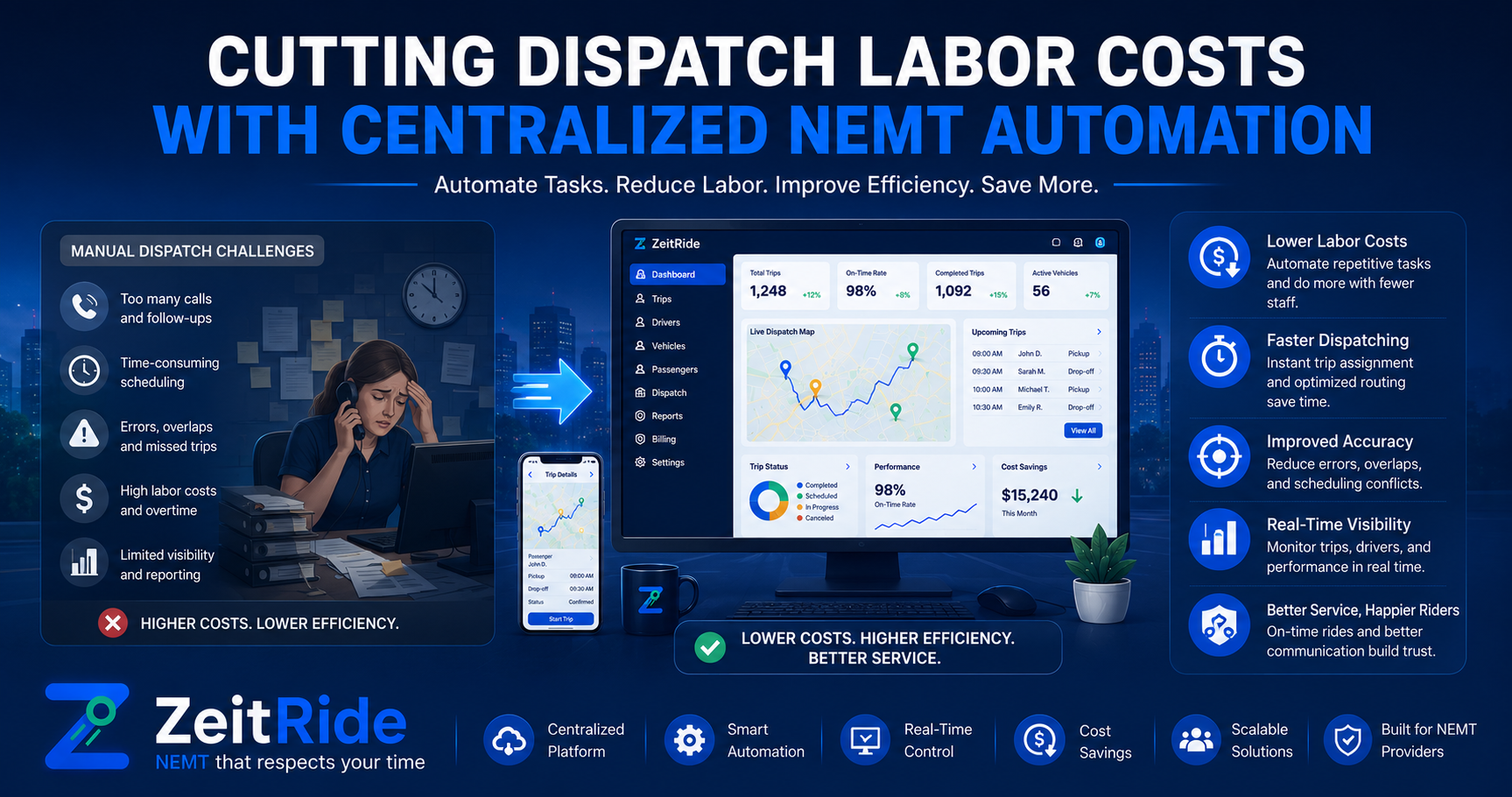
In the NEMT industry, large fleets can reduce labor costs and errors by centralizing scheduling, routing, and billing in one platform. Learn how automation frees dispatchers for higher-value work.
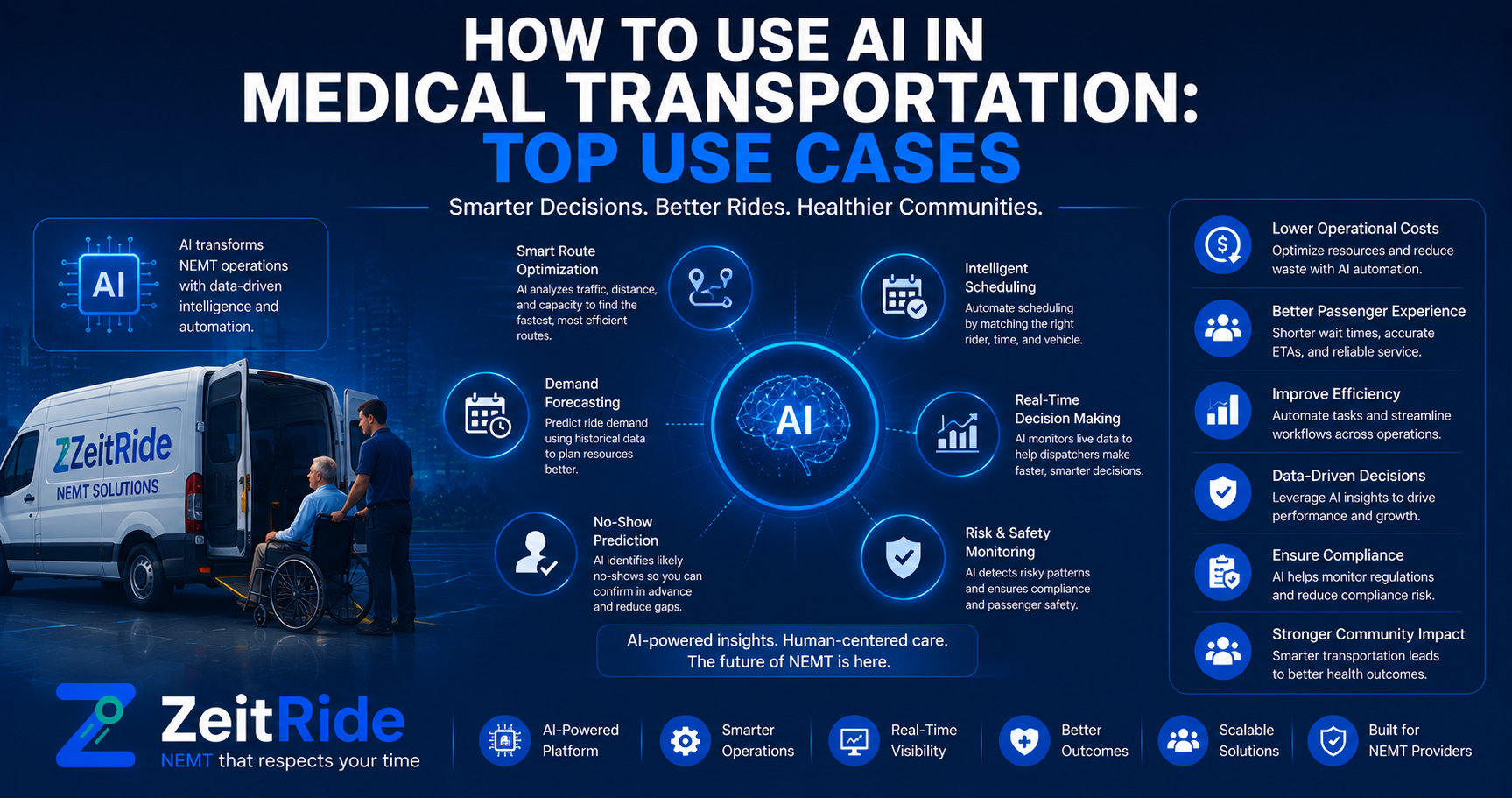
AI is becoming a standard tool in medical transportation. Explore practical use cases for NEMT providers: route optimization, ETA prediction, and smarter trip assignment.
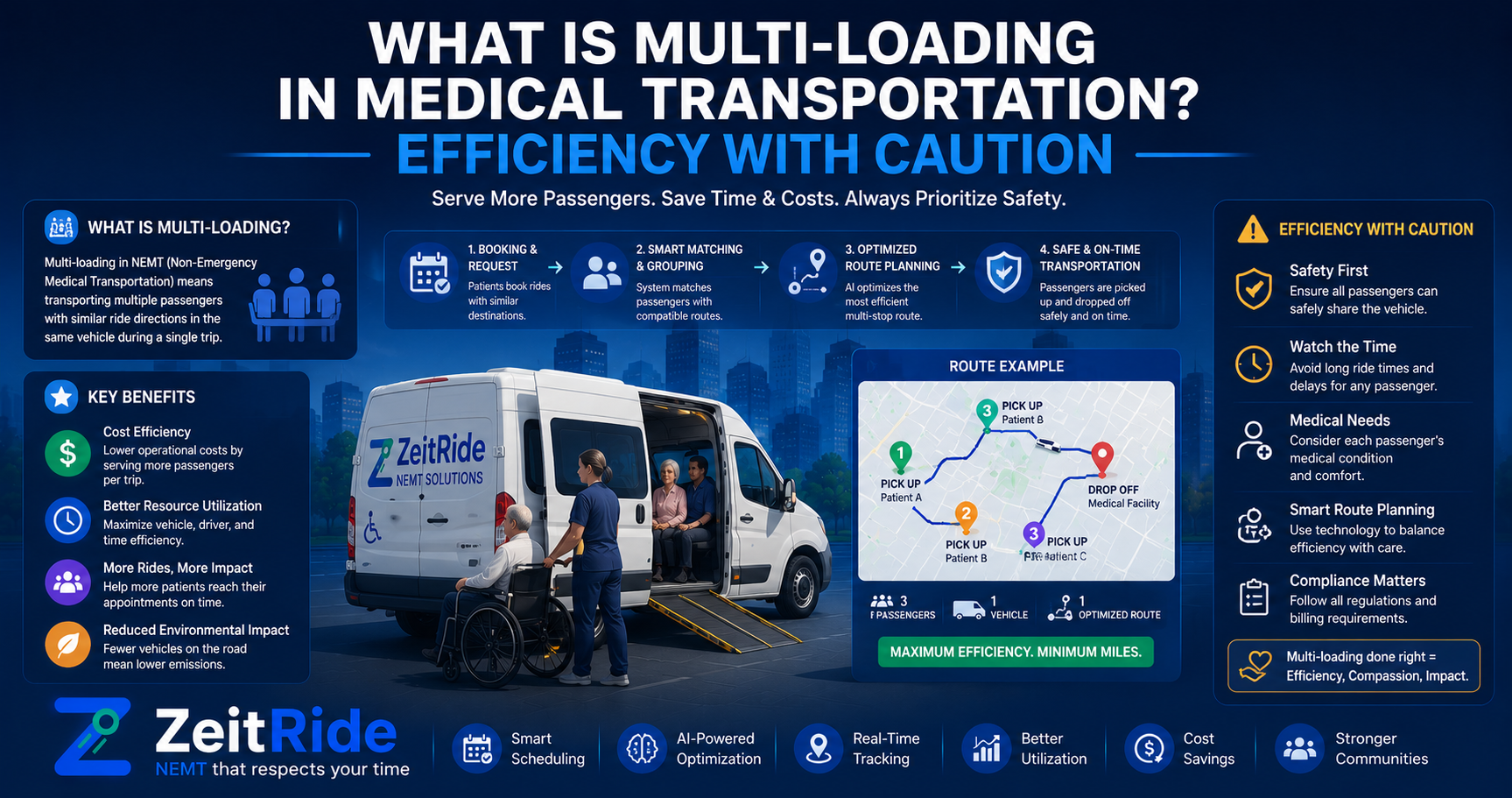
Multi-loading can improve vehicle utilization and margins when used selectively. Learn when it helps—and when it creates delays and complaints—so you can use it wisely.
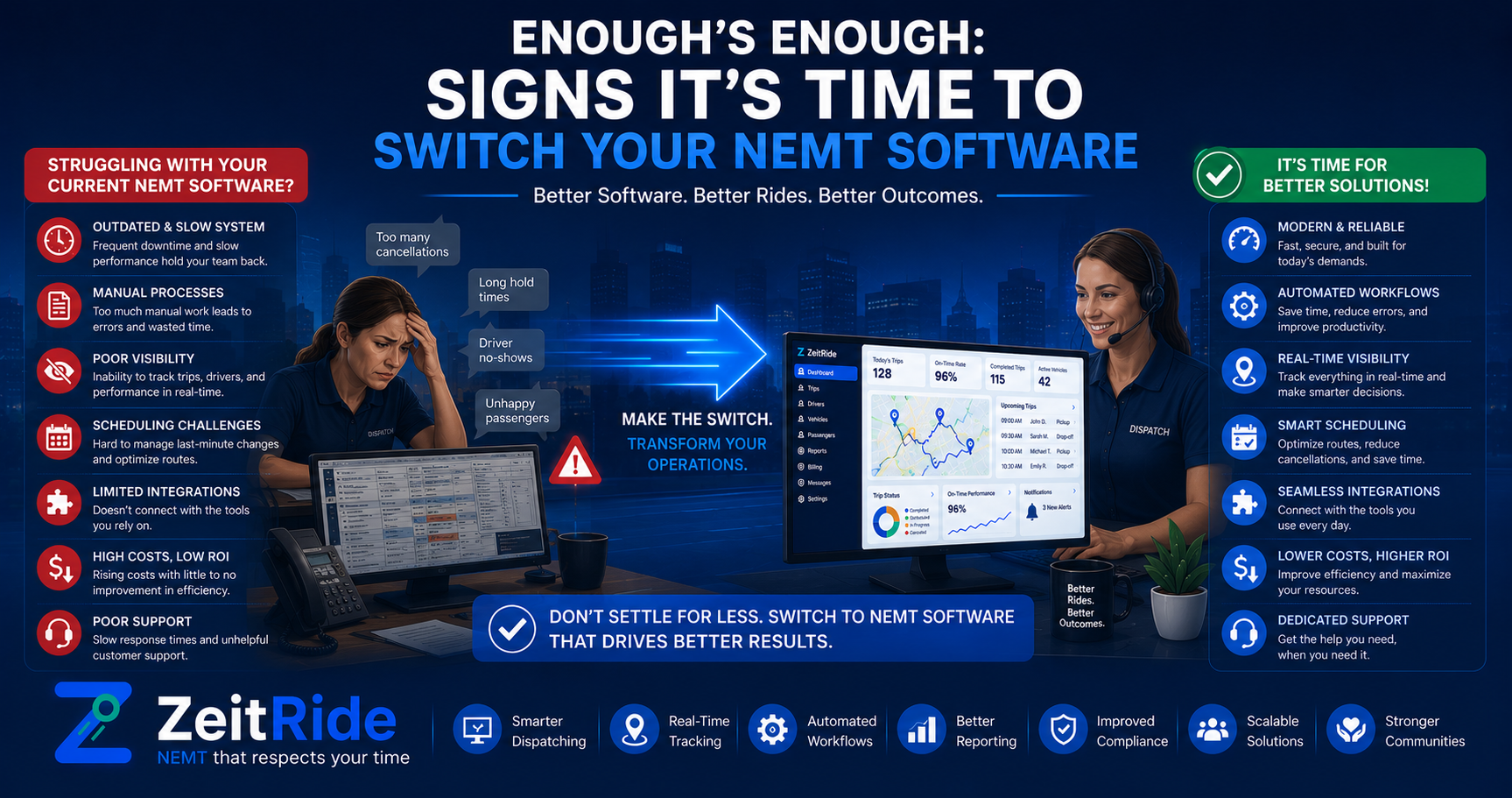
Is your NEMT software still working for you—or quietly working against you? For many providers, outdated software is the difference between profit and inefficiency. Here are the signs to watch for.
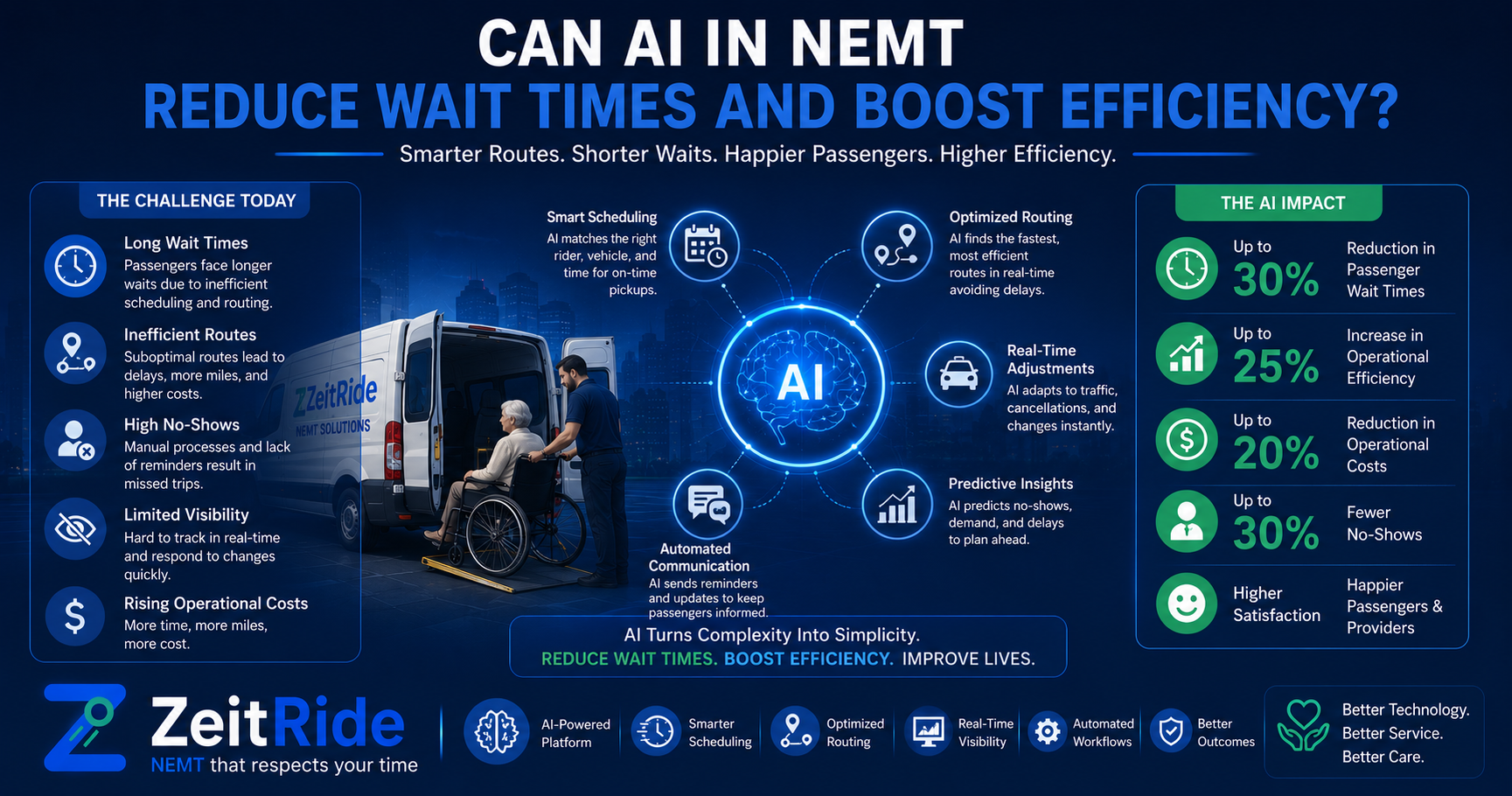
AI-driven service-time predictions and dynamic routing can eliminate avoidable wait times and missed return trips, increasing trip throughput without increasing dispatcher workload.
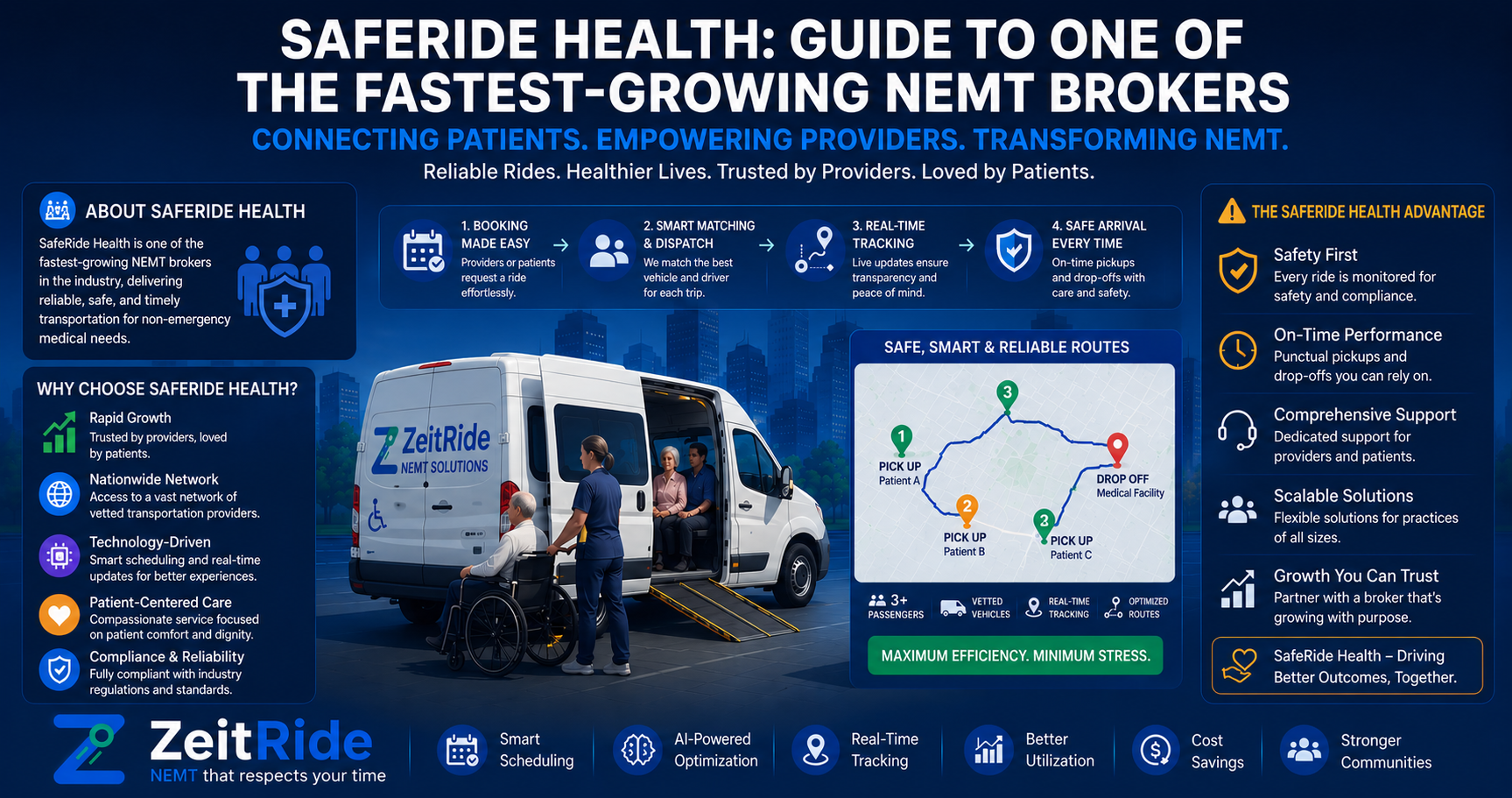
How leading NEMT brokers scale to millions of monthly rides, what they look for in providers, and what you should know about joining their network and integrating with their systems.
Bring a route, a couple of drivers, and your current workflow. 15 minutes, zero pitch.