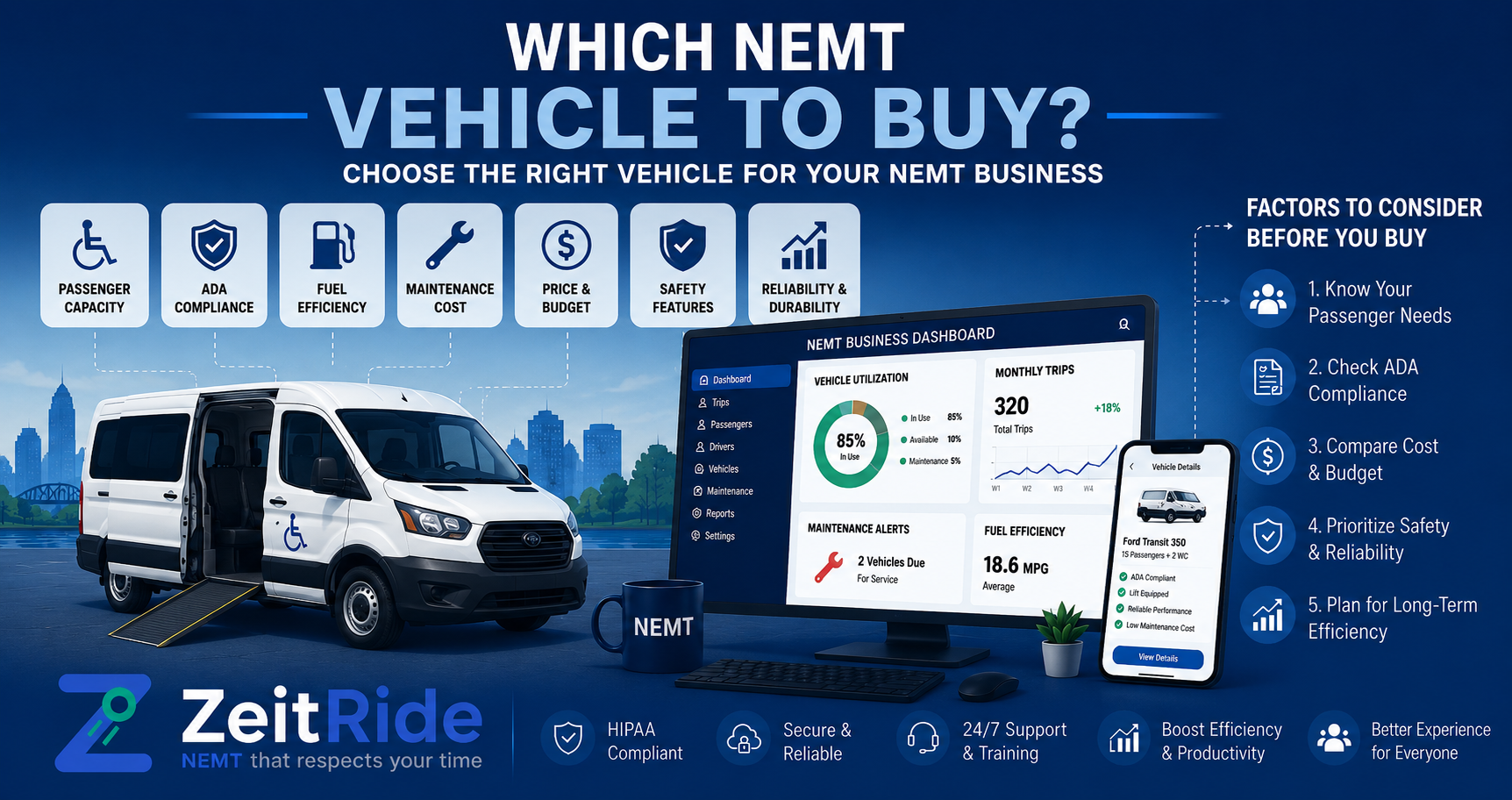
Which NEMT vehicle to buy?
Compare rear-entry vs. side-entry NEMT vehicles, ADA requirements, insurance costs, and key factors to choose the right vehicle for your fleet.
ZeitRide Team
NEMT Operations Expert
Which NEMT vehicle to buy is one of the first big-dollar decisions a fleet owner makes, and it's also one of the easiest to get wrong. Buy the wrong van and you're stuck with a lift that can't handle your heaviest wheelchairs, a resale value that tanks in two years, or a vehicle brokers won't credential for their networks. ZeitRide runs dispatch, scheduling, and billing for NEMT fleets across 10+ states, and the fleets that scale fastest treat the vehicle decision as an operations question first, not a shopping question.
What Actually Goes Into Choosing a NEMT Vehicle
Choosing a NEMT vehicle starts with the service you run, not the van on the lot. A fleet doing one-on-one dialysis transport needs a different vehicle than one running multi-passenger contract routes for a managed care organization, and the wrong match shows up in your operating costs within the first month.
The core variables that decide which NEMT vehicle to buy:
- Passenger capacity and mobility mix. Ambulatory-only, wheelchair, stretcher, or a blend — your trip mix should set your vehicle mix, not the other way around.
- Rear-entry vs. side-entry loading. Rear-entry vans dominate NEMT fleets because they load and unload faster and fit a wider range of wheelchair and scooter sizes without extra maneuvering.
- New vs. used. Used vans cost less upfront but carry risk on lift condition, mileage, and how they present to riders and brokers evaluating your service.
- Fuel type. Gas remains the default for most NEMT vehicles today, though a growing number of fleets are testing electric for lower per-mile operating costs on shorter urban routes.
NEMT Vehicle Requirements Every Fleet Owner Should Check
NEMT vehicle requirements aren't optional line items — they're what determines whether a broker will credential your vehicle at all. Before you buy, confirm the vehicle meets:
- ADA-compliant lift or ramp specifications, rated for the weight and dimensions of the mobility devices your riders use.
- State-specific vehicle inspection standards, which vary by county and sometimes by broker contract.
- Securement systems for wheelchairs and stretchers that meet current safety standards, not older equipment carried over from a used purchase.
- Interior configuration that supports your actual passenger mix — a stretcher van serving dialysis routes needs different tie-downs than an ambulatory sedan.
- Signage and livery requirements, which some states and broker contracts mandate for NEMT-specific vehicle identification.
Operators who skip this checklist and buy first tend to find out about a requirements gap during broker credentialing, which stalls trip volume right when a new vehicle is supposed to be generating revenue.
How ZeitRide Supports Your NEMT Vehicle Decisions
ZeitRide doesn't sell vehicles, but the platform is where the real cost and performance data about your NEMT vehicles lives once they're on the road. Here's what fleet owners get across the full feature:
- AI route optimization that averages a 20% reduction in miles driven, which changes the math on whether a fuel-efficient vehicle or a higher-capacity one makes more sense for a given route.
- Vehicle-level reporting tied to your $49-per-vehicle-per-month plan on the pricing, so you can see cost per mile and trip volume by vehicle before deciding what to add to the fleet next.
- A driver app for iOS and Android with offline GPS and under a 15-minute learning curve, so a new vehicle and a new driver can both be productive on day one. See the driver app in detail.
- Broker integrations with MTM Health, CTS Transit, Provide A Ride, ProCare, DD Med Trans, and Tennessee Carriers, so a newly credentialed vehicle starts receiving trips without manual setup.
- HIPAA-aware, Medicaid-ready, EVV-supported infrastructure, which matters when a broker asks for documentation on how a specific vehicle's trips were dispatched and completed.
One ZeitRide fleet manager put it simply: running the same member count with three fewer vehicles per day changed the entire vehicle purchasing conversation, because the software found capacity the fleet already owned instead of buying more.
New vs. Used, and What Operators Get Wrong About NEMT Vehicles
Most fleet owners frame the NEMT vehicle decision as new versus used and stop there. That's an incomplete comparison. The bigger mistake is buying NEMT vehicles based on sticker price alone and ignoring total cost of ownership, which includes lift maintenance, insurance rates, resale value, and how the vehicle affects broker perception during a facility visit.
Used NEMT vehicles can work well for a first vehicle or a cash-constrained startup, but the lift and ramp condition matters more than mileage. A worn lift on a used van creates liability exposure and slows down every pickup, which shows up as missed time windows in your dispatch data. New NEMT vehicles cost more upfront but typically come with current-generation securement systems and a stronger first impression during broker site visits — a real factor when a managed care organization is deciding which providers to route trips to.
Rear-entry vs. side-entry is the other comparison operators get wrong by treating it as a preference instead of an operations decision. Rear-entry vans are the default for good reason: faster loading, fewer curb-clearance issues, and broader wheelchair compatibility. Side-entry configurations still have a place for routes where curb-side loading on a busy street makes rear access impractical, but they're the exception, not the rule.
Non Emergency Medical Vehicle Insurance: What to Budget Before You Buy
Non emergency medical vehicle insurance is a cost that belongs in your vehicle purchase decision, not a separate conversation for later. Every additional vehicle changes your commercial auto premium, and the type of vehicle — ambulatory sedan versus wheelchair van versus stretcher vehicle — changes the rate more than most first-time buyers expect.
Non emergency medical vehicle insurance typically runs higher than standard commercial auto coverage because NEMT passengers are medically vulnerable and claims tend to be more severe when something goes wrong. Before buying, get a quote for the specific vehicle type and mobility equipment you're considering, not a generic commercial auto estimate. A used van with an aging lift can carry a different premium than a new one with current securement hardware, even if the sticker price makes the used option look cheaper.
Underwriters reviewing non emergency medical vehicle insurance applications increasingly ask how trips are documented, which is another place where dispatch software factors into a vehicle purchase. Clean GPS timestamps, driver records, and trip manifests from a system like ZeitRide's nemt dispatch software support a smoother underwriting and renewal process than paper logs or a spreadsheet.
Matching Vehicle Type to Your Broker Mix
Which NEMT vehicle to buy also depends heavily on who you're contracting with. A fleet running mostly Medicaid broker trips through MTM Health or Provide A Ride typically needs a higher share of wheelchair-accessible vans than a fleet focused on private-pay ambulatory transport, since broker contracts often specify minimum wheelchair-accessible vehicle ratios. Reviewing your current and target broker mix before buying prevents a purchase that looks right on paper but doesn't match the trips actually being offered. For providers comparing broader software and cost questions alongside vehicle decisions, ZeitRide's guide on what NEMT software costs covers the operating-cost side of the same budgeting conversation.
Conclusion
Deciding which NEMT vehicle to buy comes down to matching your actual trip mix, broker requirements, and budget to the right combination of capacity, entry type, and condition — new or used. Get the NEMT vehicle requirements and non emergency medical vehicle insurance costs right before you sign, and the purchase supports your growth instead of creating a credentialing delay. ZeitRide gets most providers live within 30 minutes so your next vehicle starts running trips fast.
Rather see it than read about it?
Bring a real route, a couple of drivers, and your current process. 15 minutes, zero pitch.