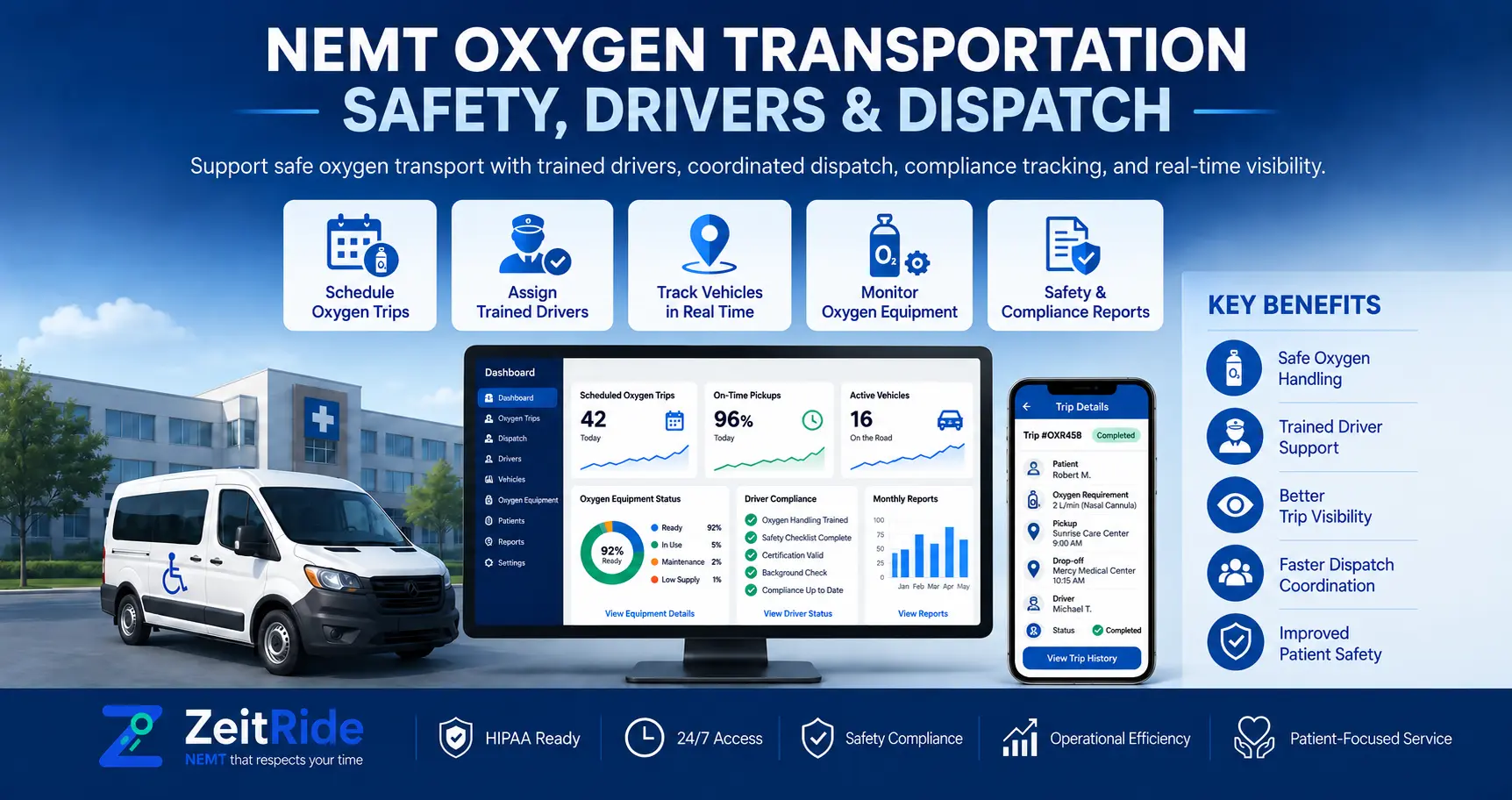
NEMT Oxygen Transportation: Safety, Drivers & Dispatch
A practical guide to oxygen-safe NEMT trips: verify passenger needs, secure portable equipment, define driver duties, and manage dispatch exceptions.
Quick answer
NEMT providers should confirm the oxygen device, who manages it, how it can travel safely, and whether the vehicle and crew match the rider's needs. Check applicable transport rules, return-trip arrangements, and document unresolved issues before assigning the trip.
ZeitRide Team
NEMT Operations Expert
An NEMT dispatcher accepts a routine medical appointment trip, then notices one detail: the passenger uses portable oxygen. The driver is available, but no one has confirmed which device is coming, who manages it, or how it will travel safely. Those unanswered questions can turn an ordinary pickup into a preventable dispatch problem.
NEMT oxygen transportation requires providers to confirm the rider's actual assistance needs, appropriate carriage of oxygen equipment, trained staff responsibilities, and a workable trip plan. The purpose is safe, accessible service, not unnecessary restrictions on riders who rely on oxygen.
This guide focuses on what a US NEMT operator should verify before assigning an oxygen-required trip. It complements, rather than repeats, ZeitRide's broader NEMT booking software guide.
NEMT Oxygen Transportation: Can Riders Bring Portable Oxygen?
Yes. Under 49 CFR 37.167(h), transportation entities covered by the rule must not prohibit a person with a disability from traveling with a respirator or portable oxygen supply, consistent with applicable DOT hazardous-materials rules. Oxygen use alone is not a valid blanket reason to deny the ride.
However, carrying a passenger's oxygen equipment is different from providing medical care. Dispatch must determine whether the requested trip falls within the provider's authorized service, whether the equipment can travel safely, and whether someone appropriately qualified will handle any clinical tasks. Accessibility, equipment, state rules, and payer contracts all matter.
What NEMT Oxygen Requirements Should Dispatch Verify?
A short intake process helps dispatchers separate a manageable equipment need from an unresolved service question. Record only the information necessary to plan transportation, rather than collecting a detailed diagnosis.
- Device type: Compressed-gas cylinder, portable oxygen concentrator (POC), or another prescribed system.
- Person responsible: Whether the rider, an approved companion, or a qualified caregiver manages the oxygen during the journey.
- Transport setup: Number of devices or spare cylinders, approximate size, protective case or approved holder, and any special handling needs.
- Mobility and assistance: Wheelchair or ambulatory requirements, authorized assistance level, and whether a trained attendant is needed.
- Trip logistics: Pickup access, appointment deadline, planned return, and a contact for clarification or escalation.
If the booking lacks critical information, contact the responsible broker, facility, rider, or authorized representative before assigning a vehicle. Keep the NEMT levels of service discussion on its existing page; this article concerns the oxygen-specific checks required for one trip.
Oxygen Tank Safety in NEMT Vehicles
A compressed oxygen cylinder is not ordinary loose luggage. Providers should identify the applicable DOT hazardous-materials provisions, their state's NEMT rules, the cylinder manufacturer's instructions, and any broker or facility requirements. A cylinder must be protected from damage and held in a suitable restraint arrangement rather than left free to roll or tip during braking.
For oxygen carried under the qualifying materials-of-trade exception, 49 CFR 173.6 sets requirements including secure packaging, protection against shifting and damage, and informing the vehicle operator. Whether that exception applies to a particular situation must be confirmed; do not assume one rule covers every shipment or oxygen setup.
- Confirm the cylinder and regulator appear undamaged and that the intended restraint fits the actual equipment.
- Prevent cylinders from rolling, striking another object, obstructing exits, or interfering with wheelchair securement.
- Follow equipment instructions regarding valves, oxygen use, storage, ventilation, and ignition-source precautions.
- Identify every additional cylinder or spare device that will travel; do not overlook equipment attached to a wheelchair.
- Do not have a driver repair a faulty regulator or improvise a restraint. Escalate the problem before travel.
A general NEMT vehicle inspection checklist helps identify routine defects. Oxygen carriage requires a separate, trip-specific equipment check. Avoid inventing a universal NEMT cylinder-count limit without first identifying the governing transport rule.
Portable Oxygen Concentrator NEMT Transport
A portable oxygen concentrator is electrically powered equipment that produces concentrated oxygen from surrounding air; it is not the same as a compressed-gas cylinder. For portable oxygen concentrator NEMT transport, confirm the device can be positioned securely, its air intake and exhaust are unobstructed, and the rider or authorized caregiver has a suitable power or battery plan for the entire trip, including delays and the return journey.
Do not assume a vehicle has compatible charging power or promise that drivers can troubleshoot the device. Confirm the equipment's operating instructions, applicable battery requirements, and the plan if the device alarms or loses power. Clinical decisions belong to the person authorized to make them.
Can NEMT Drivers Administer Oxygen?
The answer to 'can NEMT drivers administer oxygen' depends on state rules, licensing, provider scope, training, and the contracted service. A standard non-emergency transport assignment does not automatically authorize a driver to prescribe, change oxygen flow, replace clinical components, or monitor a rider's medical condition.
At intake, establish who is responsible for managing the device and whether the rider needs a trained attendant or a different level of transport. If a passenger requires medical interventions the assigned service cannot safely provide, coordinate with the appropriate healthcare or transportation professional. Do not make that decision solely from the fact that a rider uses oxygen.
Driver education should address recognizing and reporting equipment concerns, communicating with dispatch, avoiding ignition hazards, and following a documented emergency procedure. For general qualification and training topics, link to ZeitRide's NEMT driver requirements. In an immediate medical emergency, follow the company's emergency-response procedure and contact emergency services as appropriate.
NEMT Oxygen Dispatch Checklist: Ready, Hold, or Escalate
Use one readiness record rather than relying on a single 'oxygen required' checkbox to answer every safety question. This sample matrix is a practical coordination tool, not a universal compliance certification.
| Check | What to confirm | If unresolved |
|---|---|---|
| Rider and device | Oxygen equipment type; relevant setup and assistance needs | Clarify with the responsible contact |
| Vehicle | Safe equipment placement, appropriate restraint, clear exit paths | Find a suitable vehicle or correct the issue |
| Driver or attendant | Authorized responsibilities and applicable training | Arrange qualified support |
| Trip and return | Pickup window, power/battery planning, return coverage | Adjust or coordinate the plan |
| Authorization | Approved service and any payer/broker instructions | Contact the broker or facility |
| Release | Critical checks completed and recorded | Keep pending and escalate promptly |
'Hold' means pause the assignment while actively resolving the problem; it is not permission to abandon an approved trip or apply discriminatory exclusions. Record who reviewed the issue, who was contacted, and the agreed outcome. For broader audit trails and retention, use the NEMT trip documentation requirements resource.
Example: The Driver Is Available, but the Oxygen Plan Is Missing
A fictional five-vehicle provider receives a clinic pickup for a wheelchair user who travels with a portable oxygen concentrator. The dispatch schedule shows an accessible van and a free driver, so the trip initially looks straightforward. During confirmation, staff learn that the concentrator will also be needed for a will-call return, but the battery and caregiver arrangements are unclear.
Rather than cancelling the ride or expecting the driver to improvise, the dispatcher contacts the authorized coordinator, confirms who operates the device and its travel readiness, checks suitable vehicle placement, and establishes a return-contact plan. The assignment is released after the required details are confirmed; any unresolved issue is escalated to the appropriate responsible party.
The lesson is simple: vehicle availability is not the same as a verified oxygen-required trip. Consistent intake and clear handoffs prevent avoidable uncertainty at pickup.
How ZeitRide Supports Oxygen-Required Trip Dispatch
ZeitRide's member profile guide documents an Oxygen required service-detail toggle. Its trip creation guide confirms that the same detail can be reviewed and overridden for a specific ride, alongside mobility type, attendants, additional passengers, and other service information. The New Trip workflow also supports return legs and will-call trips.
Dispatchers can add trip notes for appropriate transport instructions; the documented driver app displays those notes on the driver's trip card. ZeitRide also provides assignment and reassignment workflows through its NEMT dispatch software. This connects booking context to operational coordination without forcing teams to reconstruct a trip from a separate message.
Important limitation: The 'Oxygen required' flag is a trip-information field, not automatic cylinder-restraint approval, battery certification, oxygen-flow monitoring, or clinical authorization. The transportation provider remains responsible for its safety and service decisions.
Keep Oxygen-Required Trips Clear From Booking to Pickup
Reliable NEMT oxygen transportation starts with the right questions: what equipment is coming, who can manage it, how will it travel safely, and is the assigned service appropriate? A brief intake checklist, documented exceptions, and accurate trip notes make those answers easier to share across dispatch and the field.
Want to review this workflow using an anonymized trip from your own fleet? Book a 15-minute ZeitRide demo to see how oxygen-required information, assignments, notes, and return trips work in the platform. Bring your equipment-safety procedure so the demonstration stays grounded in the checks your team must perform.
Frequently Asked Questions
Q: Can an NEMT provider transport a passenger using portable oxygen?
Yes. Under 49 CFR 37.167(h), covered transportation entities cannot prohibit a person with a disability from traveling with portable oxygen, subject to applicable DOT hazardous-materials rules. The vehicle and service arrangement must still meet relevant safety and operating requirements.
Q: How should an oxygen cylinder be secured in an NEMT vehicle?
Follow the applicable transport rules, manufacturer instructions, and approved restraint procedures. The cylinder should be protected from damage and restrained against shifting, without blocking exits or wheelchair securement. Verify that the specific carriage arrangement is suitable before dispatch.
Q: Can an NEMT driver adjust or administer a rider's oxygen?
Do not assume so. Driver responsibilities depend on state law, training, provider scope, and contract requirements. Dispatch should confirm who is authorized to manage oxygen and arrange qualified assistance or a different service when required.
Q: Can a passenger bring a portable oxygen concentrator on an NEMT trip?
A portable oxygen concentrator may be accommodated when the trip is appropriate and the equipment can travel safely. Confirm suitable placement, ventilation, battery or power arrangements, and who will operate it; review applicable rules and device instructions.
Q: How does ZeitRide record oxygen requirements for a trip?
ZeitRide documents an Oxygen required field in member service details and a trip-level override in Create Trip. Dispatchers can also record relevant driver instructions in trip notes, but these tools do not replace physical equipment checks or clinical decisions.
Rather see it than read about it?
Bring a real route, a couple of drivers, and your current process. 15 minutes, zero pitch.