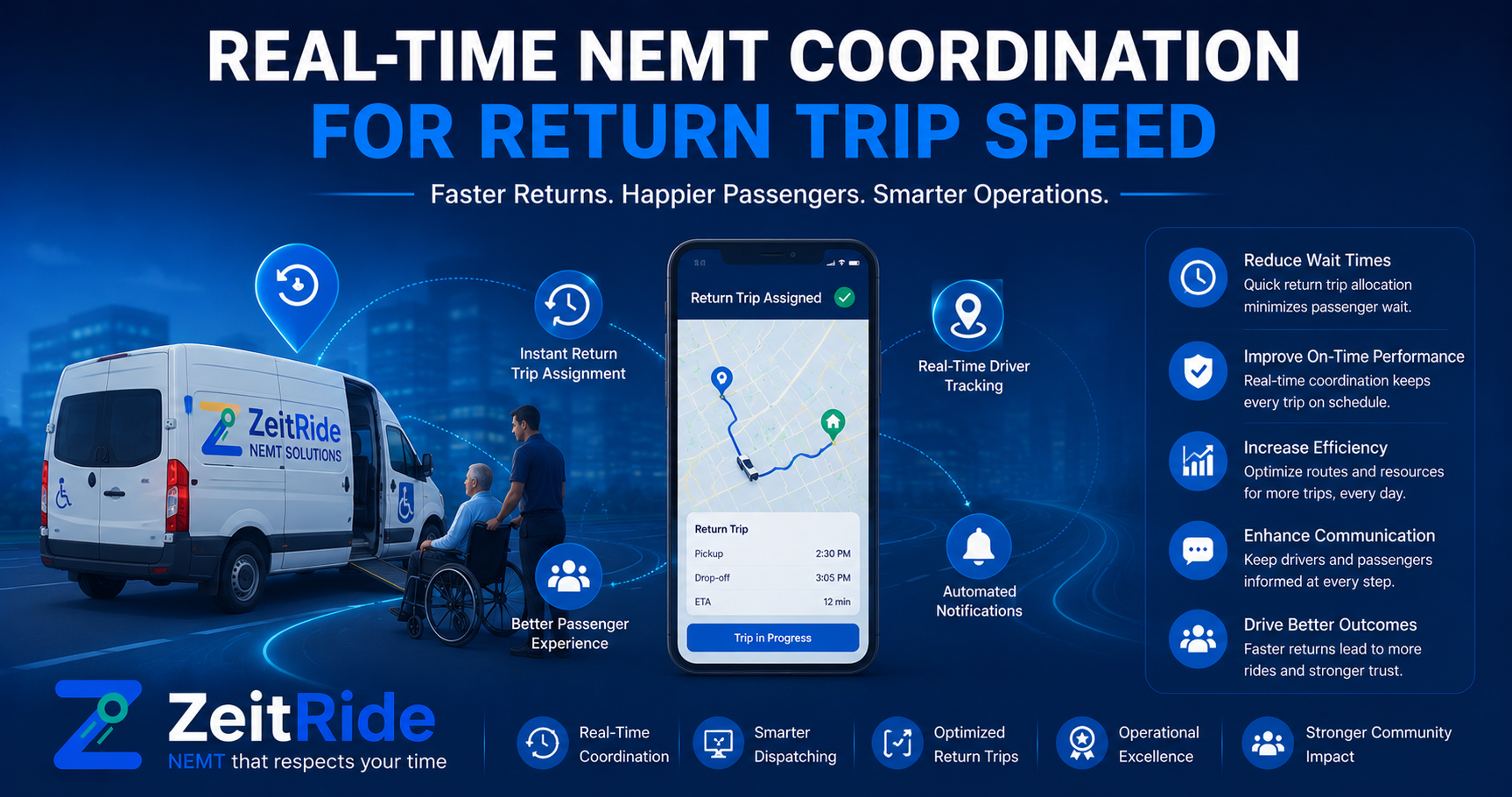
Real-Time NEMT Coordination for Return Trip Speed
Key takeaways for enterprise NEMT fleets: return-trip coordination, reducing wait times, and how real-time dispatch improves on-time performance and passenger experience.
Quick answer
Improving NEMT return trips requires real-time dispatch visibility, proactive ETA alerts to facilities, and driver apps that confirm pickup status instantly. Providers using real-time dispatch platforms cut return trip wait times by 20–35% by enabling dispatchers to reassign trips dynamically when appointments run over and by giving facility coordinators live ETAs.
ZeitRide Team
NEMT Operations Expert
Why Return Trips Are the Hardest Part of NEMT
Outbound trips are predictable. You know when the appointment starts. Return trips are not. A dialysis session scheduled for 90 minutes runs to 120. A specialist visit gets extended for additional tests. A discharge takes 45 minutes longer than expected. Every one of these variations creates a cascading scheduling problem for fleets managing multiple passengers across multiple facilities at the same time.
For NEMT providers, return trip failures are the most common source of complaints, cancellations, and lost broker relationships. A passenger waiting 90 minutes for their return ride after a medical appointment isn't just inconvenienced—they're in a potentially unsafe situation. Facilities track these incidents. Brokers track them too.
How Real-Time Dispatch Changes Return Trip Outcomes
Real-time dispatch gives coordinators the information they need to act before a return trip becomes a crisis. When a driver completes the outbound drop-off and checks in, the dispatch platform immediately shows their location, next assignment, and estimated availability. If a facility calls ahead to say a patient is ready early, a dispatcher can see which driver is closest and redirect them without a radio call chain.
The key mechanisms that real-time platforms enable for return trips:
Live driver location. Instead of guessing where a driver is, dispatchers see every vehicle on a map in real time. When a return trip comes available, the nearest available driver can be assigned in seconds rather than minutes.
Dynamic reassignment. When appointment times shift, dispatchers can drag-and-drop trip reassignments across the dispatch board, instantly notifying the driver via their app. No phone calls, no confusion, no delay.
ETA transparency for facilities. Modern NEMT platforms let coordinators share live ETAs with facility staff via automated notifications. Facilities that know a driver is 8 minutes away don't call the office in a panic—and passengers aren't left wondering.
Driver app confirmation. When the driver arrives, a single tap on their app confirms arrival. Dispatchers see it instantly. If a driver is stuck in traffic, the system flags it automatically rather than waiting for a missed pickup window to surface the problem.
Tactics for Improving Return Trip Speed
Build buffer time into return trip scheduling. Most appointment types have a variance range. Building a 15–20 minute buffer for medical visits and longer buffers for outpatient procedures gives dispatchers room to absorb delays without cascading failures.
Stage drivers near high-volume facilities. If three passengers are being discharged from the same dialysis center between 1:00 and 1:30 PM, staging a driver nearby—rather than dispatching from across town—eliminates the largest variable: transit time to the facility.
Set up automated return trip triggers. When a driver confirms outbound drop-off in the driver app, the dispatch platform can automatically create or activate the return trip assignment. This eliminates the manual step of creating return trips mid-shift when dispatchers are at peak workload.
Track return trip on-time rate as a KPI. Providers who measure return trip on-time performance separately from outbound trips consistently improve it. When dispatchers see the metric on their dashboard, they prioritize it differently.
The Business Case for Better Return Trip Coordination
Broker scorecards almost always include on-time performance. Providers who consistently hit return trip windows qualify for more trip volume and better rates. Those who struggle are deprioritized. The competitive advantage of real-time dispatch isn't just operational—it's a revenue driver. Providers using ZeitRide's real-time dispatch have reported material improvements in broker relationship scores within the first 60 days of implementation.
Final Thoughts
Return trip coordination is where NEMT operations are truly tested—small delays quickly escalate into missed pickups, unhappy passengers, and strained broker relationships. The difference between reactive dispatching and real-time coordination is not just efficiency, but reliability and trust.
When fleets gain live visibility, dynamic reassignment capability, and automated return-trip triggers, they transform return trips from a bottleneck into a controlled, predictable workflow. This directly improves on-time performance, reduces wait times, and strengthens overall service quality.
With platforms like ZeitRide, NEMT providers can move from manual guesswork to intelligent, real-time coordination—ensuring every return trip is handled faster, smarter, and with greater consistency across the entire fleet.
Rather see it than read about it?
Bring a real route, a couple of drivers, and your current process. 15 minutes, zero pitch.