NEMT Software5 min read
How Much Does Non Emergency Medical Transport Cost?
Ambulatory trips run $25–$50. Wheelchair starts at $45. Stretcher hits $200+. Here's what NEMT actually costs — per trip, per mile, and per month.
May 28, 2026Read
Read 172 articles from ZeitRide on NEMT Software: practical guides for NEMT operators, dispatchers and billers.
Ambulatory trips run $25–$50. Wheelchair starts at $45. Stretcher hits $200+. Here's what NEMT actually costs — per trip, per mile, and per month.
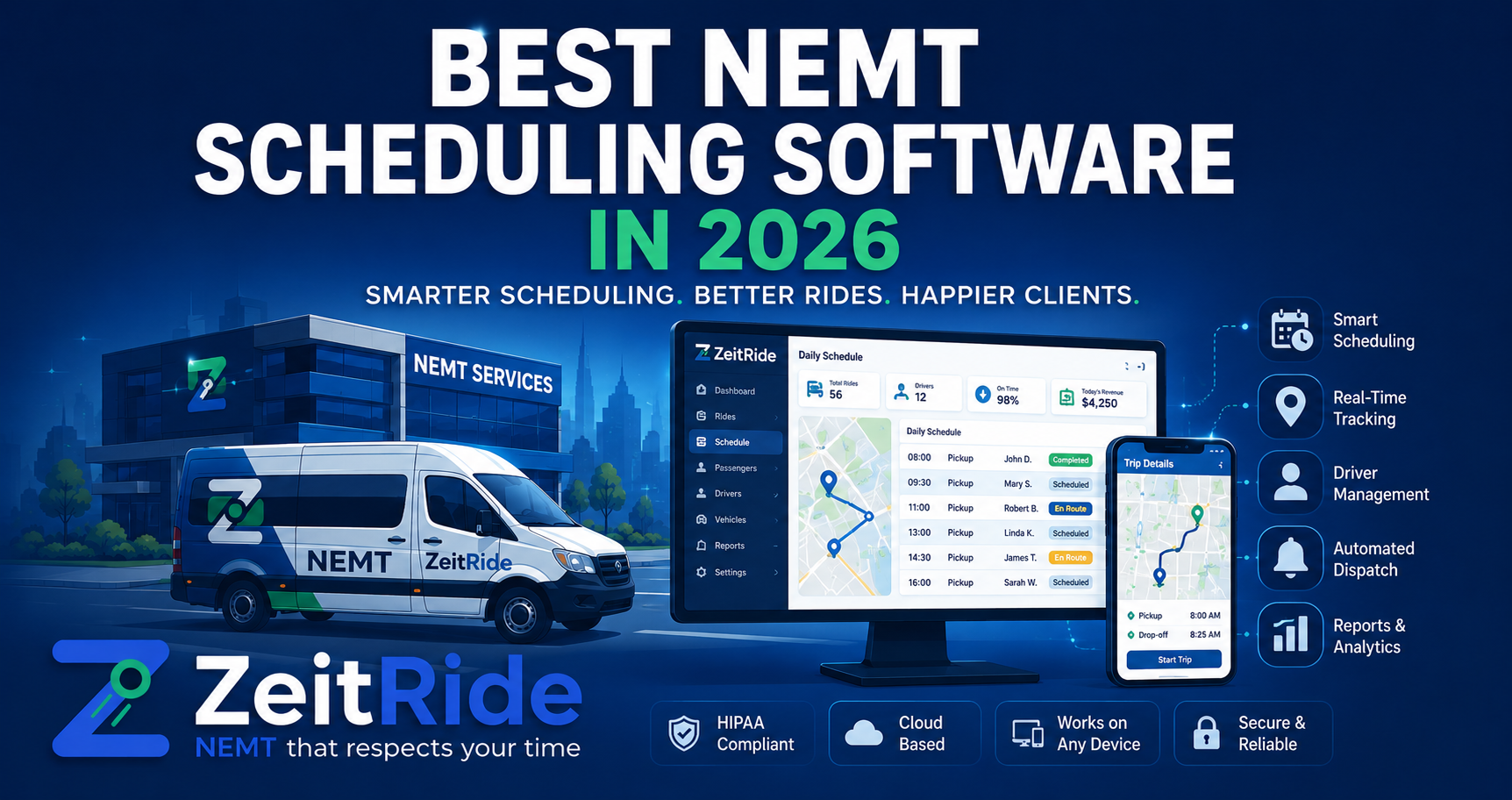
Compare seven NEMT scheduling platforms by automation, broker integrations, driver apps, fleet fit, and pricing for growing fleets.
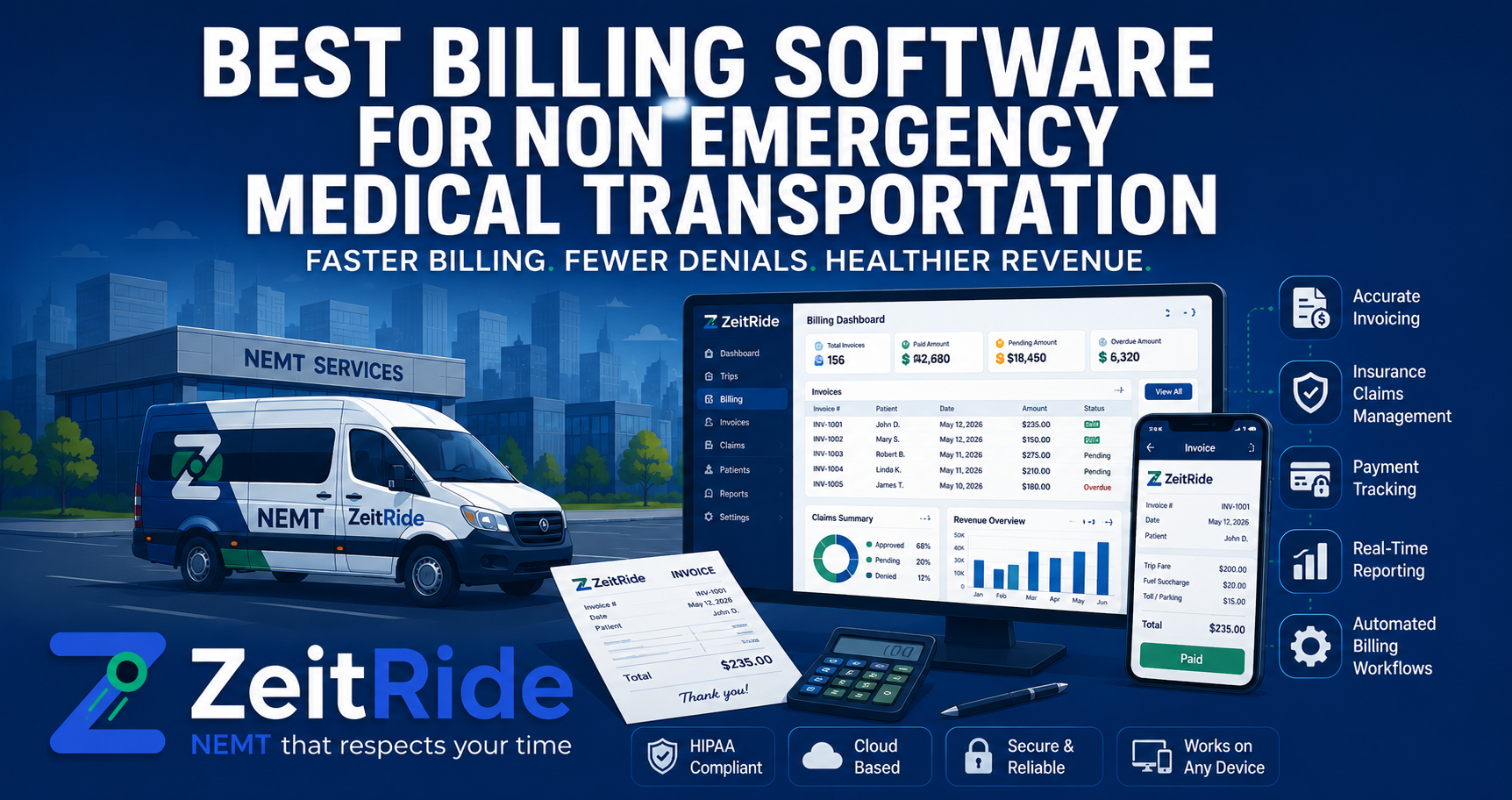
Compare seven NEMT billing platforms by Medicaid claims, EDI, broker integrations, denial management, pricing, and operational fit.
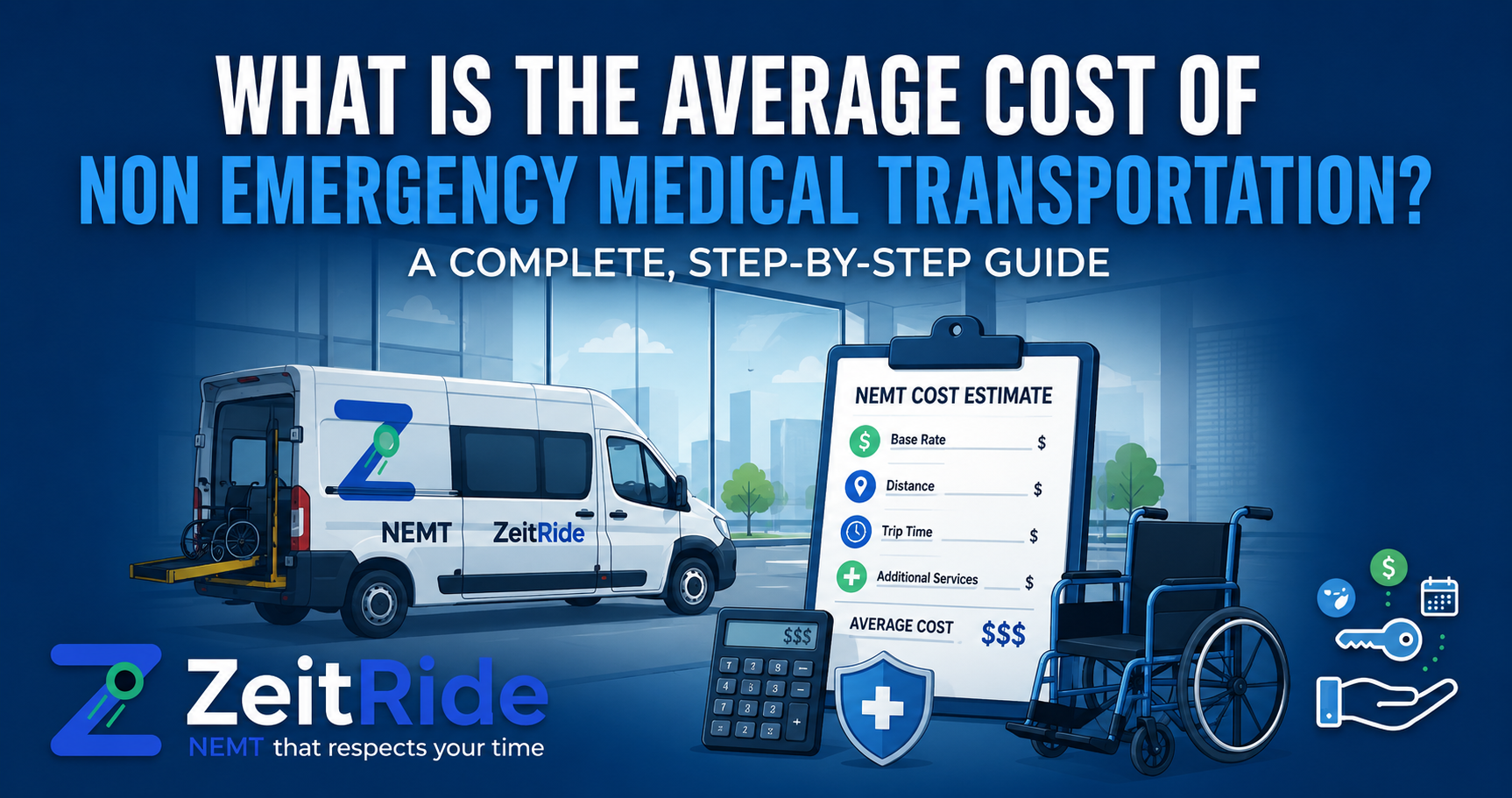
Discover the real cost breakdown, key factors that affect your fare, and smart ways to save — powered by ZeitRide NEMT expertise.
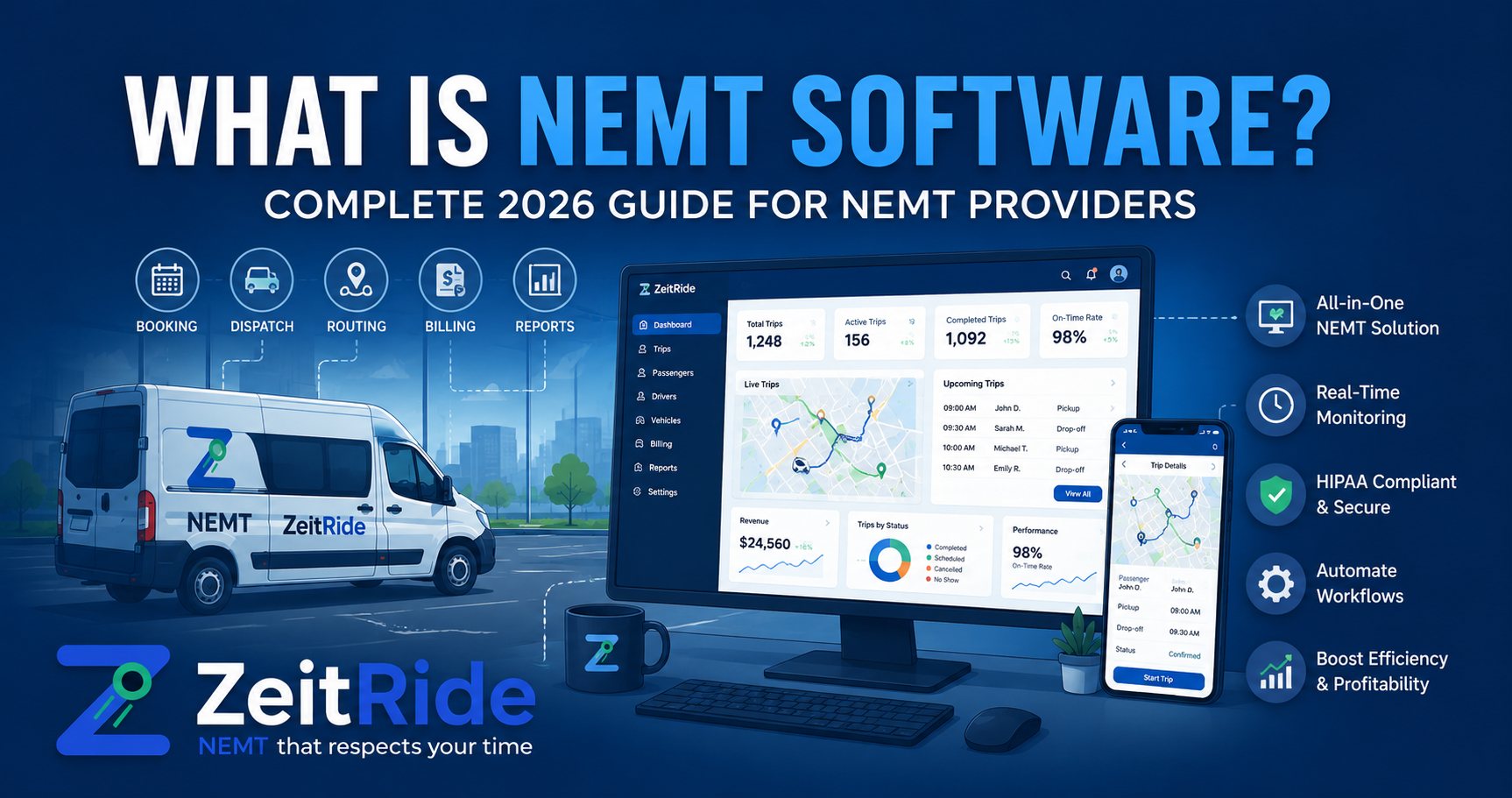
Discover what NEMT software is, how it works, and why it is essential for modern non-emergency medical transportation providers in 2026.
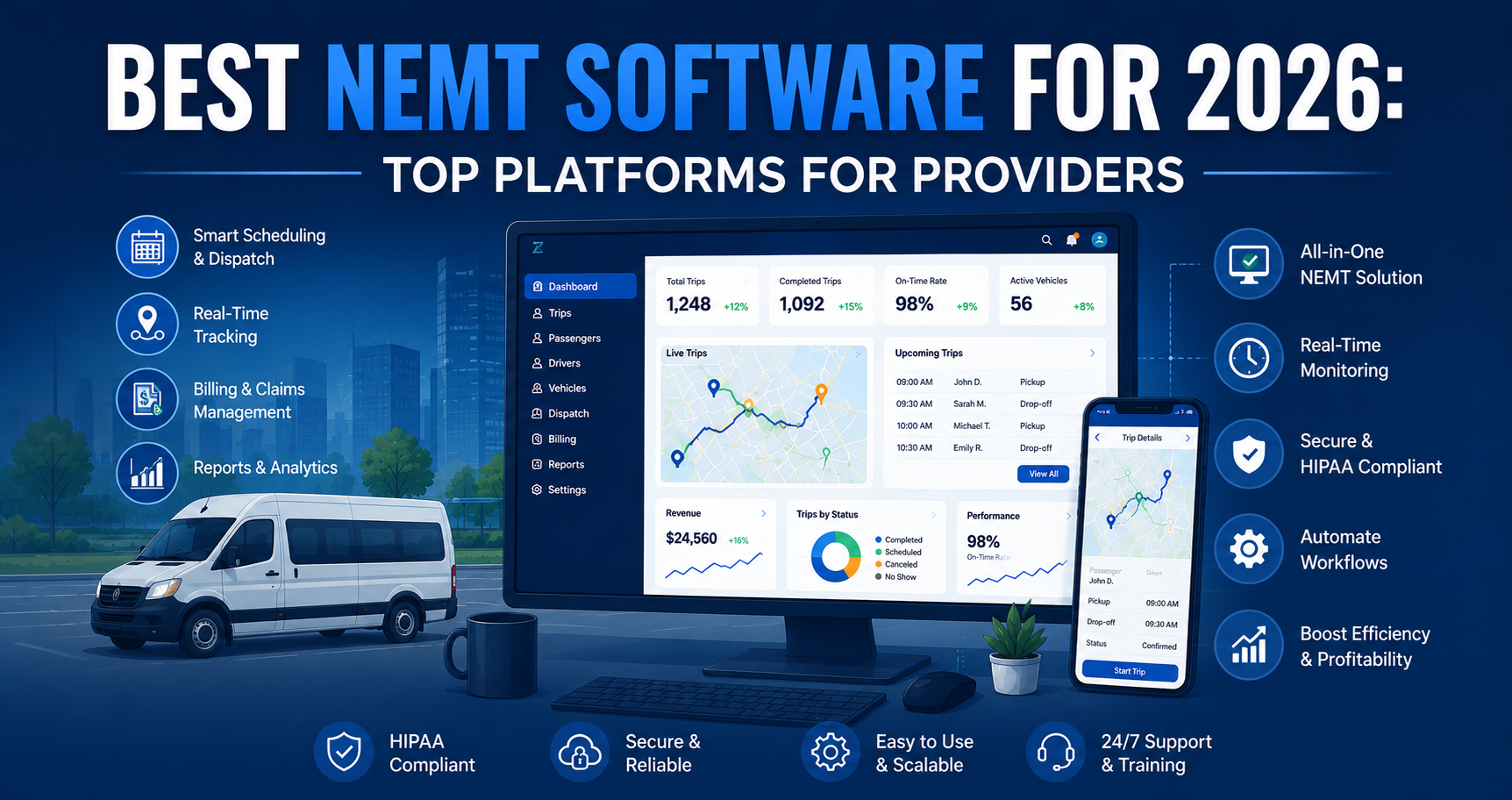
Compare seven NEMT platforms by scheduling, dispatch, routing, driver apps, broker integrations, billing, pricing, implementation, and fleet fit.
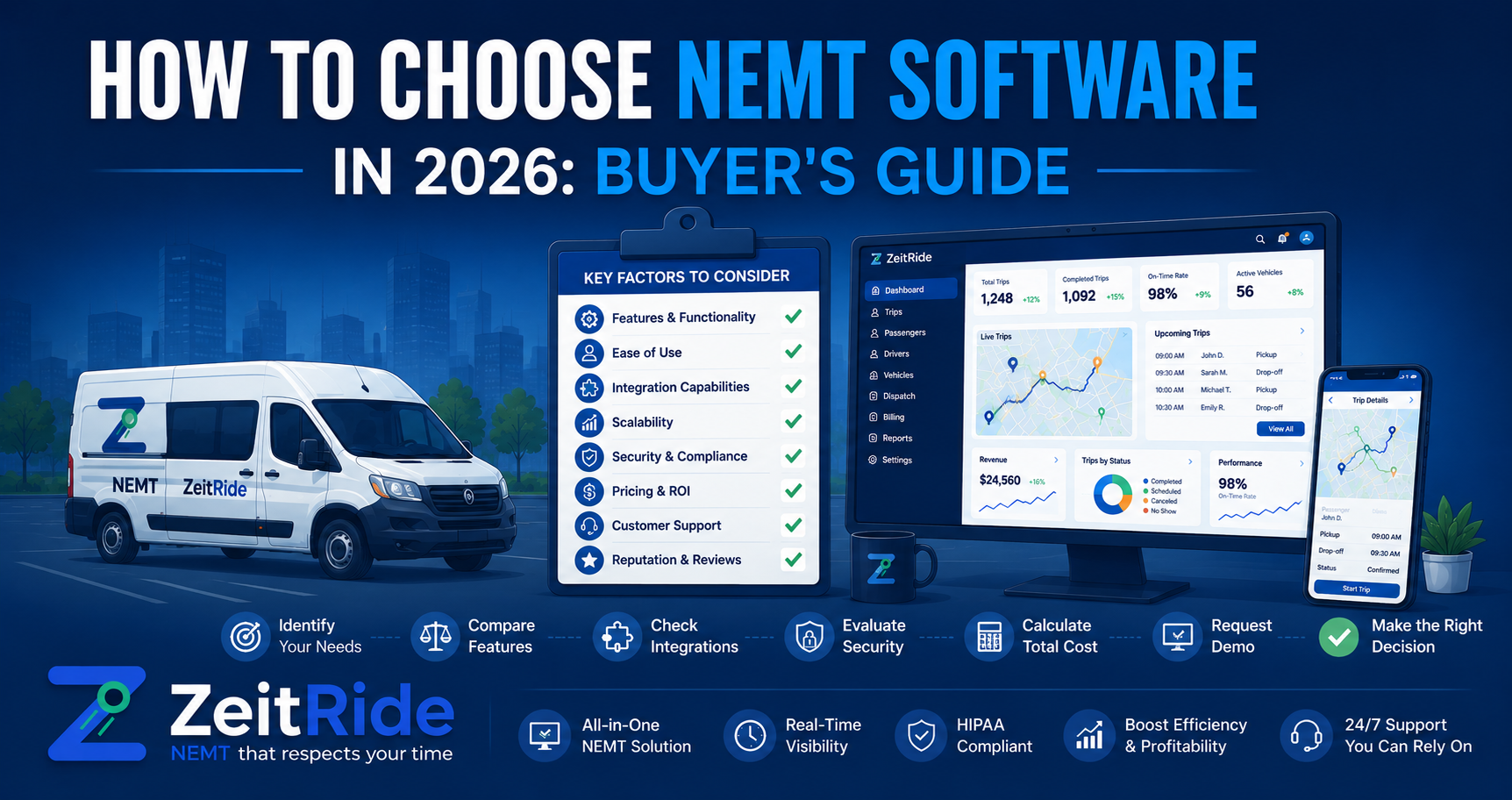
A practical framework for evaluating NEMT software: dispatch, scheduling, routing, billing, driver apps, broker fit, pricing models, and implementation risk.
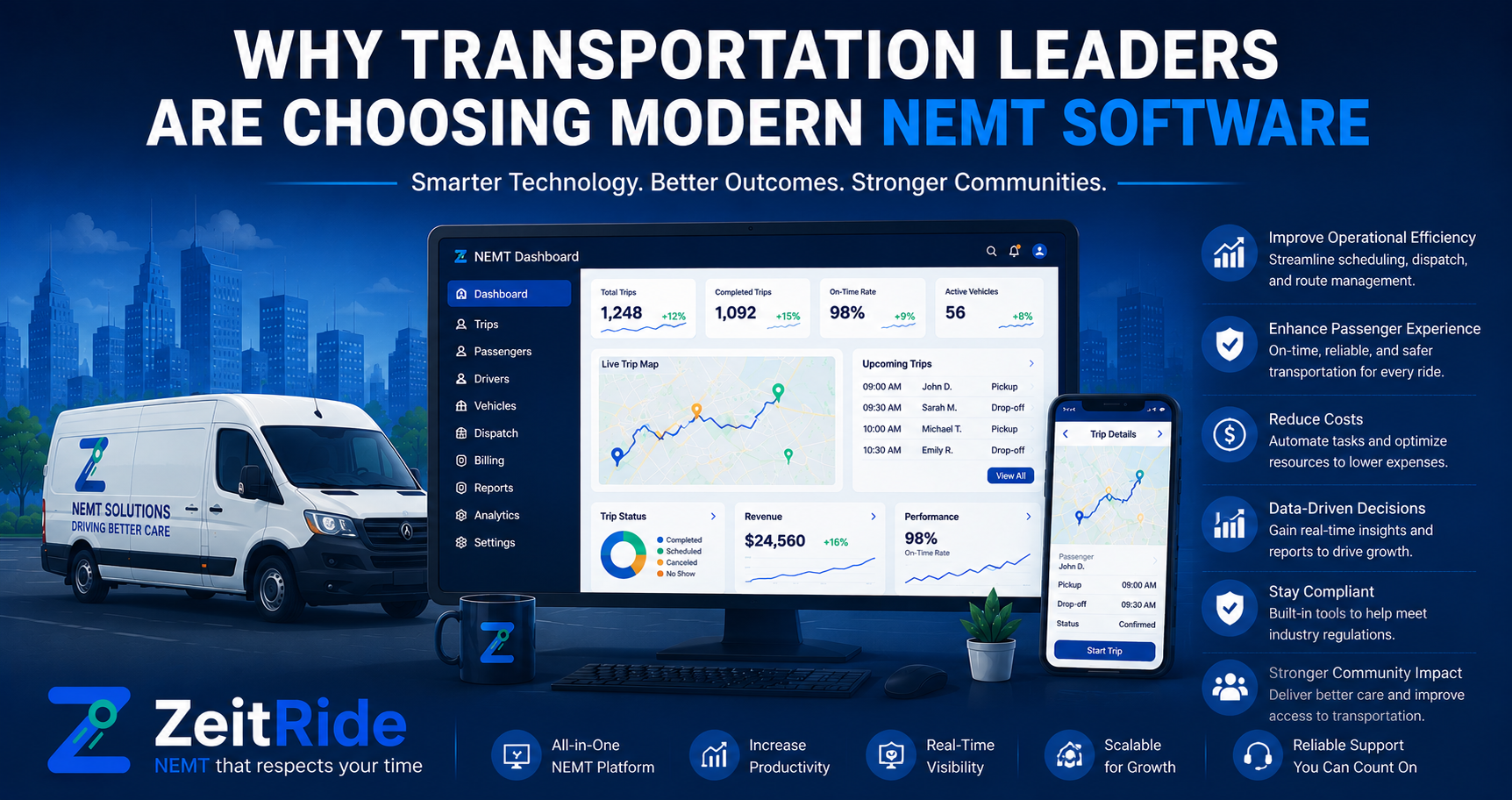
Every missed trip, manual workaround, billing error, or safety incident impacts real people and puts pressure on your margins and reputation. See how modern NEMT software helps fleets run reliably and scale.
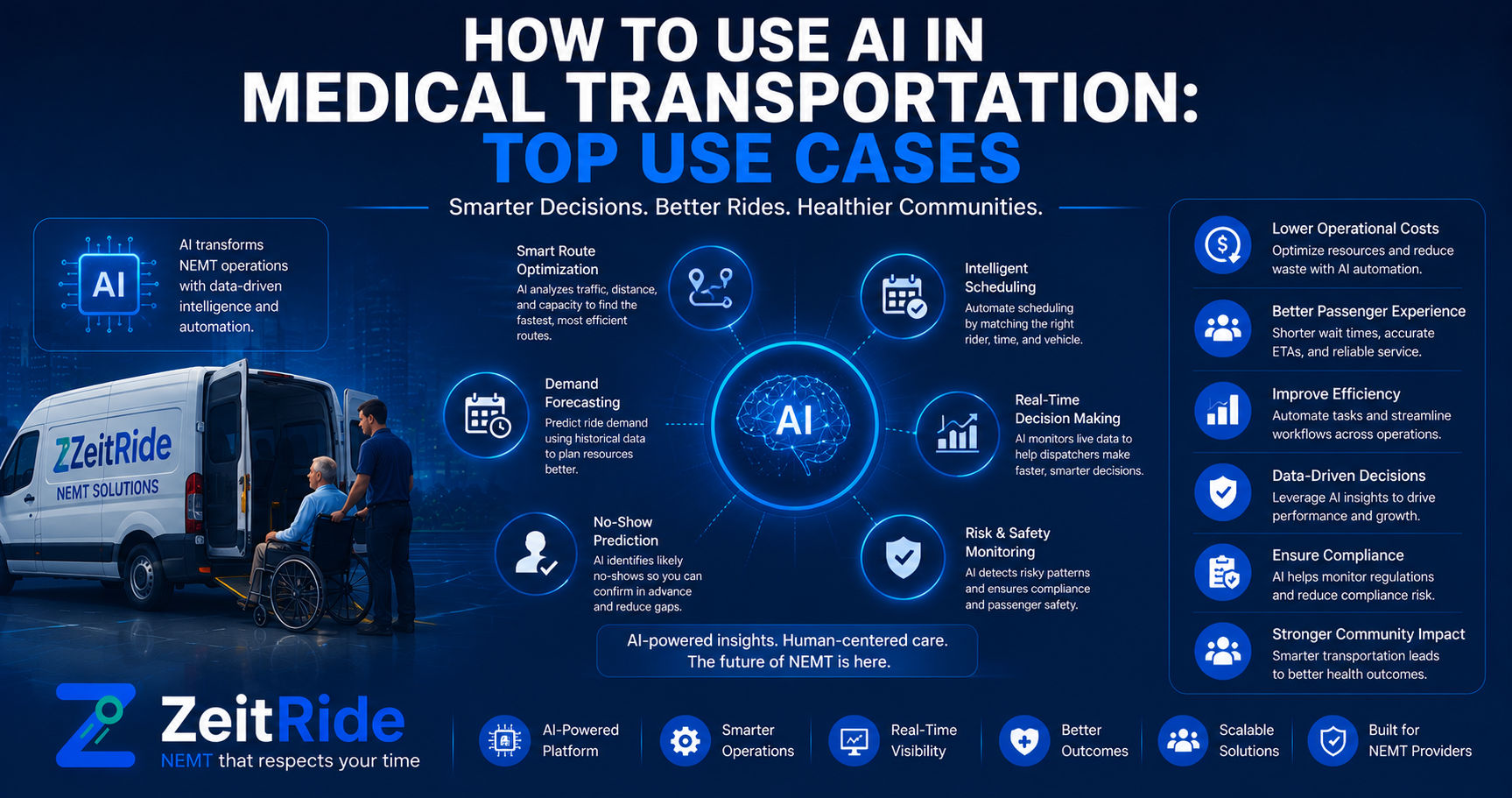
AI is becoming a standard tool in medical transportation. Explore practical use cases for NEMT providers: route optimization, ETA prediction, and smarter trip assignment.
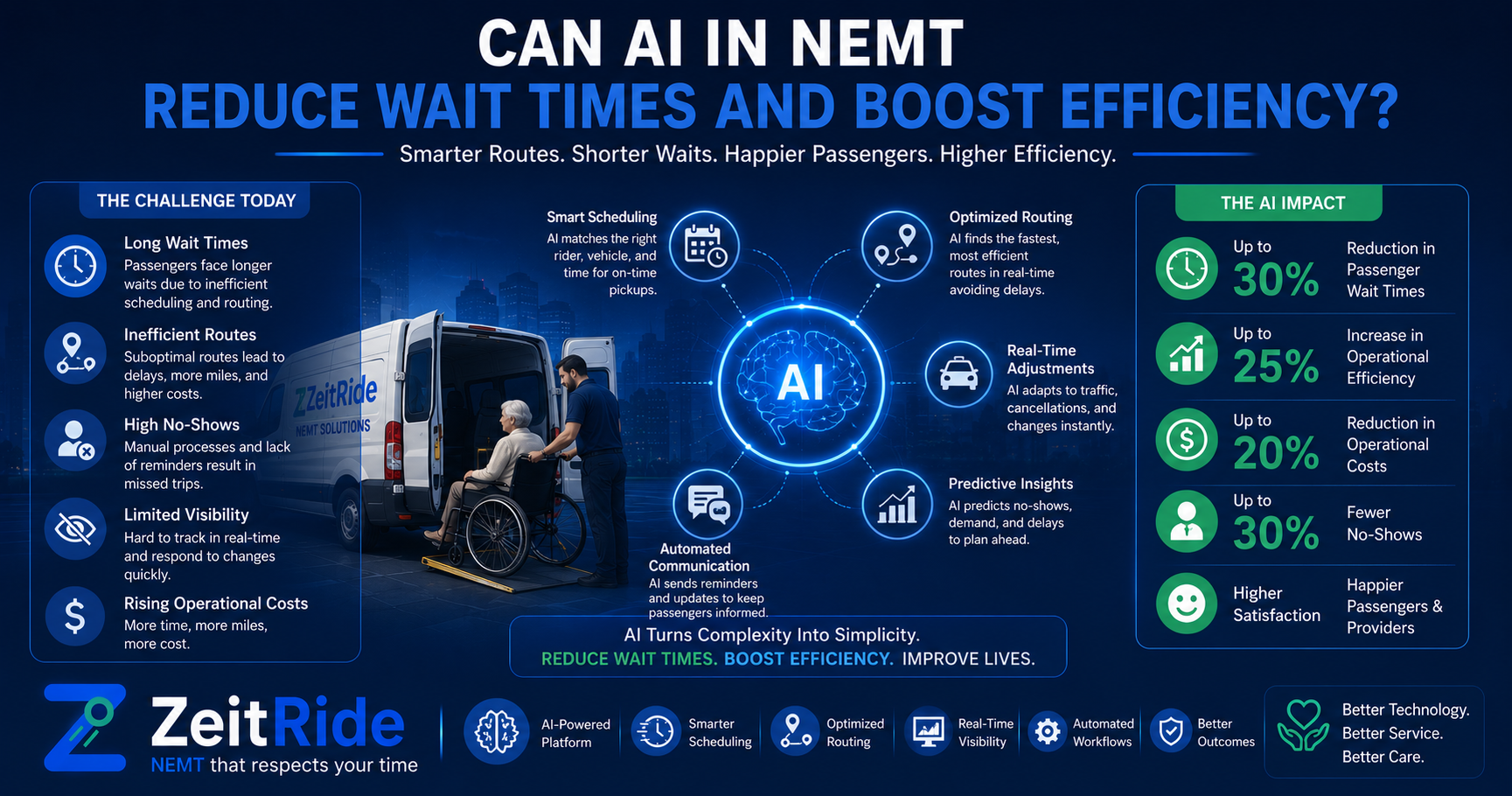
AI-driven service-time predictions and dynamic routing can eliminate avoidable wait times and missed return trips, increasing trip throughput without increasing dispatcher workload.
Bring a route, a couple of drivers, and your current workflow. 15 minutes, zero pitch.